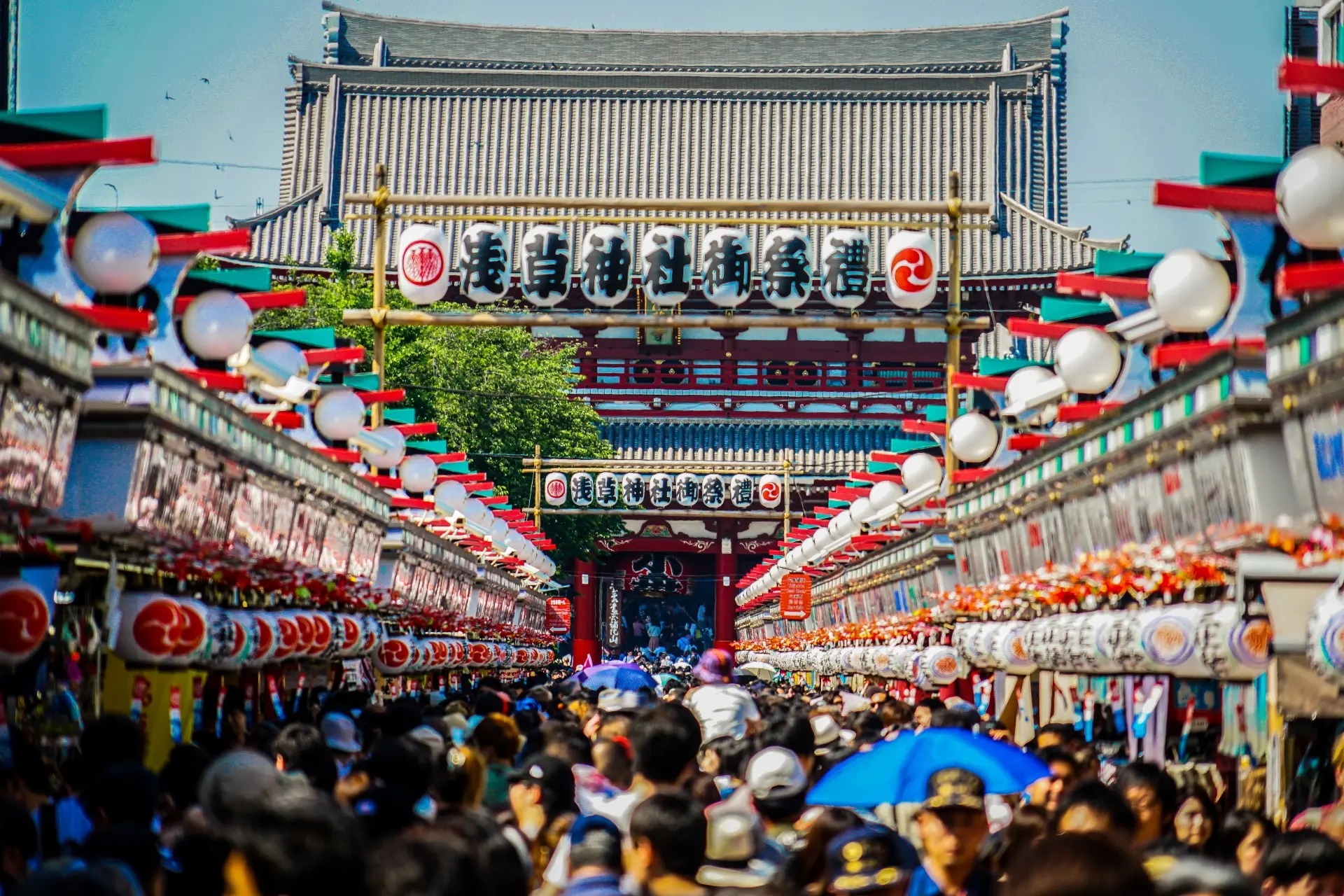
Every May, the streets of Asakusa transform into a roaring sea of portable shrines, chanting crowds, and festival food. Sanja Matsuri (三社祭) is Tokyo’s biggest and most exhilarating Shinto festival, drawing roughly 1.8 million visitors over three days. In 2026, it runs from Friday, May 15 through Sunday, May 17. If you’re anywhere near Tokyo that weekend, it’s easily one of the most exciting free events you can experience. Here’s everything you need to know.
What Is Sanja Matsuri?
Sanja Matsuri is the annual grand festival of Asakusa Shrine (Asakusa Jinja, 浅草神社), a small but historically significant shrine nestled right next to the famous Sensō-ji Temple. The festival dates back to 1312, when it began as a boat procession on the Sumida River. Today it’s a three-day celebration held on the third Friday through Sunday of May, featuring about 100 mikoshi (portable shrines) paraded through the neighborhood by thousands of spirited carriers in traditional happi coats.
The energy is unlike anything else in Tokyo. Carriers hoist the mikoshi onto their shoulders, chanting “Soiya! Soiya!” as they surge through narrow streets. It’s loud, energetic, deeply communal, and unforgettable.
2026 Schedule at a Glance
Friday, May 15 – 1:00 PM: The Daigyōretsu (Grand Parade) kicks things off. Priests, musicians, geisha, and dancers in Edo-period costumes march through the streets of Asakusa. Around 2:20 PM, look for the Binzasara dance—a rare traditional performance with wooden clappers, designated as an Intangible Cultural Property of Tokyo. Friday is comparatively relaxed, so if you just want a taste of the festival atmosphere, this is a great day to visit.
Saturday, May 16 – From noon: This is when the neighborhood mikoshi come out. Nearly 100 portable shrines from Asakusa’s 44 districts depart from Asakusa Shrine one after another and are carried through their respective neighborhoods. You’ll run into mikoshi around every corner, making it the perfect day to soak up the festival energy while exploring the streets. The area around Nakamise-dōri is especially lively.
Sunday, May 17 – From 7:00 AM: The grand finale. Asakusa Shrine’s three main mikoshi emerge at 7:00 AM in a moment called miyadashi. Hundreds of carriers vie for the honor of shouldering them. The first mikoshi (Ichi-no-miya) heads west, the second (Ni-no-miya) south, and the third (San-no-miya) east, each parading through their respective districts. Between 7:00 and 8:00 PM, the mikoshi return to the shrine for the miyairi (homecoming)—the emotional climax of the entire festival. It’s a day of non-stop energy from dawn to dusk, and the crowds peak accordingly.
What to Watch For: Tamafuri and the Sunday Climax
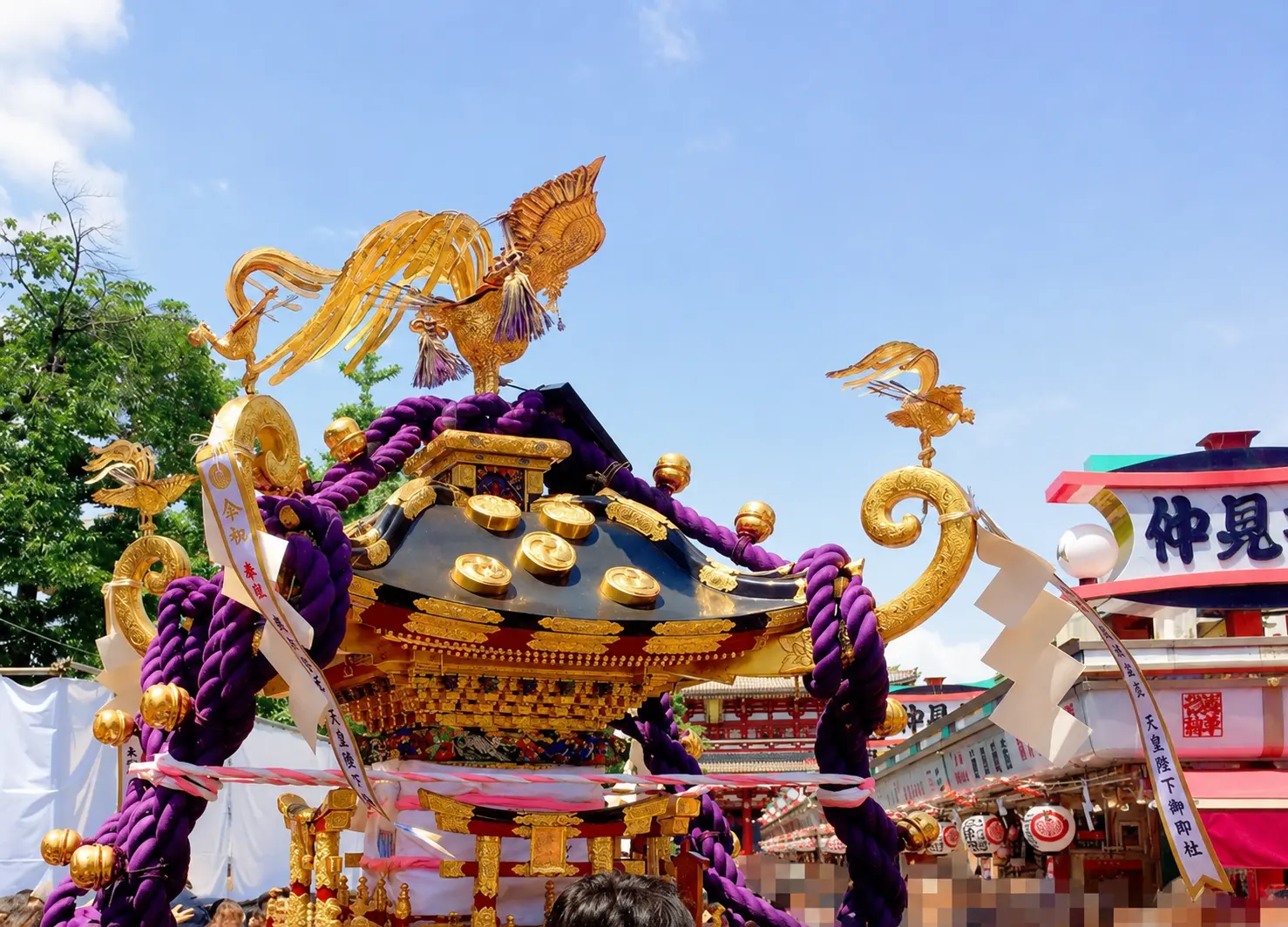
The signature move of Sanja Matsuri is the tamafuri (魂振り)—carriers vigorously shaking the mikoshi up, down, and side to side. This isn’t just showing off. In Shinto belief, the shaking stirs the deity’s spirit, spreading blessings of good harvests, bountiful catches, and the warding off of disease to the surrounding community. About 100 carriers take turns shouldering each mikoshi, and when you see them bouncing a massive gilded shrine while the crowd roars, you’re watching a ritual that’s been performed for centuries.
Sunday’s 7:00 AM miyadashi is the moment to be there if you want peak intensity. The shrine grounds erupt as carriers jostle for position around the main mikoshi. It requires an early alarm, but it’s one of those once-in-a-lifetime Tokyo moments.
Saturday is not to be missed, either. The nearly 100 neighborhood mikoshi head out around noon, and chanting fills the streets across Asakusa. This is also the best day to catch mikoshi passing through Kaminarimon and Nakamise-dōri for great photo opportunities.
Festival Food: Come Hungry
During Sanja Matsuri, the grounds around Sensō-ji fill up with yatai (food stalls) serving classic Japanese festival fare. Think takoyaki (octopus balls), yakisoba (fried noodles), okonomiyaki (savory pancakes), kakigōri (shaved ice), and candy apples. Nakamise-dōri’s permanent shops stay open too, so you can grab ningyo-yaki (sweet bean-filled cakes) and kaminari-okoshi (puffed rice crackers) between mikoshi sightings.
Important: most yatai are cash only. Hit a convenience store ATM (7-Eleven is your safest bet for international cards) before you arrive so you can make the most of the street food.
Getting There
Asakusa Station is served by four lines: the Tokyo Metro Ginza Line, Toei Asakusa Line, Tobu Skytree Line, and Tsukuba Express. Depending on the line and exit, Asakusa Shrine is about a 5–10-minute walk from Asakusa Station. Driving is not an option—traffic restrictions close the surrounding streets during the festival. Take the train and tap your Suica or Pasmo.
Crowds peak on Sunday morning. If you’re hoping to see the 7:00 AM miyadashi, arrive well before it begins. If you’re simply visiting on Sunday, try to get there before 9:00 AM to avoid the worst of the crowds. For a more relaxed experience, Friday afternoon’s Grand Parade and Saturday morning (before the neighborhood mikoshi head out at noon) are your best windows. The main streets can get packed—you’ll often have a better view from the side alleys just off Nakamise-dōri.
5 Tips for First-Timers
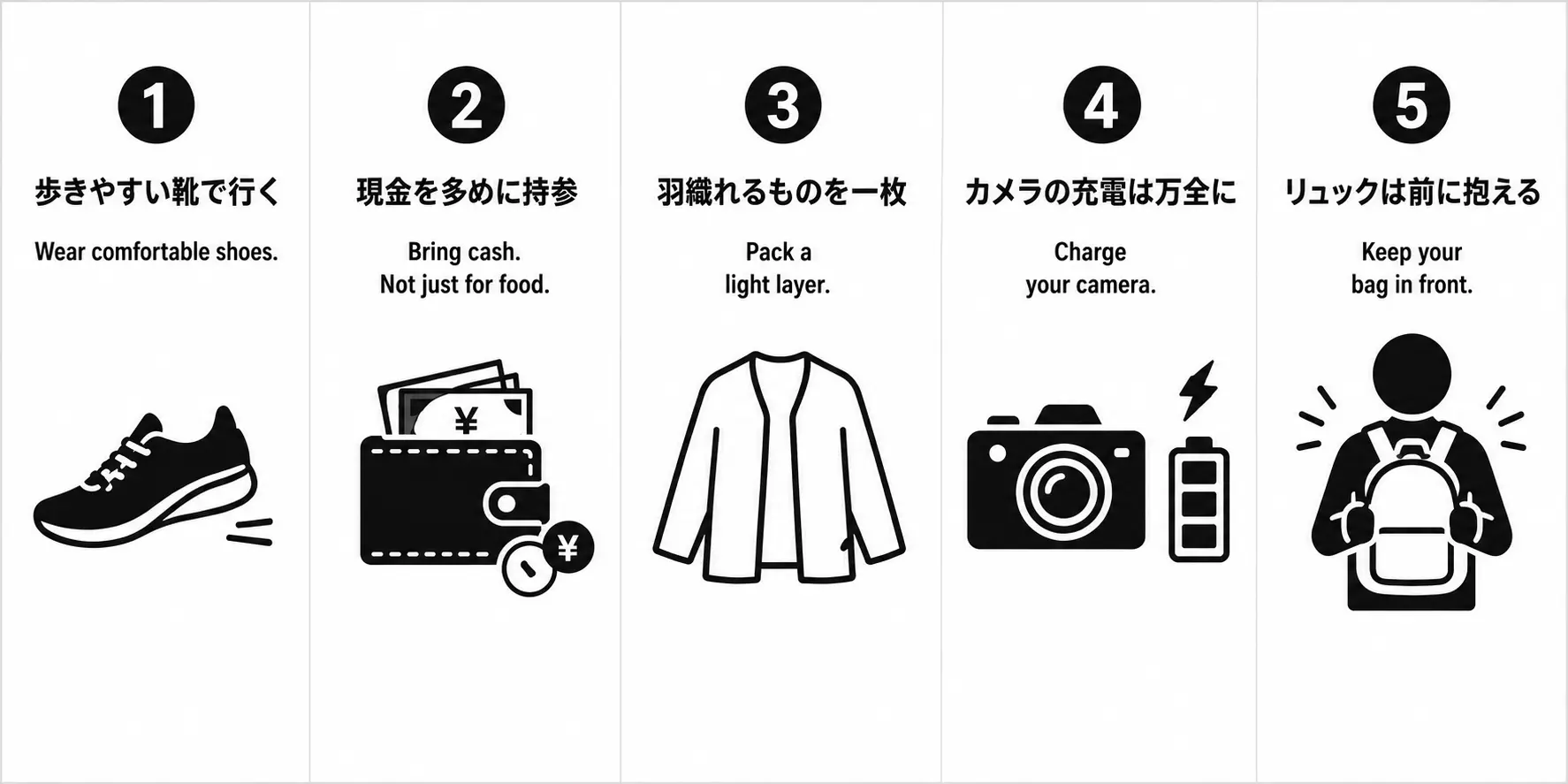
1. Wear comfortable shoes. You’ll be standing and walking on pavement for hours. Sneakers, not sandals.
2. Bring cash. Not just for food—some smaller shops around Asakusa are still cash-only, too.
3. Pack a light layer. Mid-May in Tokyo can be warm during the day but cool down surprisingly fast in the evening.
4. Charge your camera. Mikoshi passing through Kaminarimon, carriers in matching happi coats, taiko drums echoing off the temple walls—every corner is a photo op.
5. Keep your bag in front. Standard crowd-safety advice in Japan. Wear your backpack on your chest to avoid bumping into people and to keep your belongings secure.
While You’re in Asakusa
Make a day of it. Before the mikoshi action heats up, explore Sensō-ji’s main hall, browse Nakamise-dōri for souvenirs, or duck into Hoppy Street, a lively area of casual izakaya-style bars, for drinks and grilled skewers. Walk along the Sumida River promenade for postcard-perfect shots of Tokyo Skytree. Friday before the 1:00 PM parade and Saturday morning are the calmest windows for sightseeing.
No video or blog post can fully capture what it feels like to stand in the middle of Sanja Matsuri—the percussion reverberating in your chest, the smell of yakisoba drifting over from a nearby stall, the sight of a golden mikoshi lurching through a packed street. It’s raw, joyful, and unmistakably Tokyo. If you’re in Japan this May, clear your schedule for the weekend of the 15th. You won’t regret it.
▶ Asakusa Shrine – Sanja Matsuri Official Site
▶ Asakusa Shrine – Sanja Matsuri Schedule
▶ Asakusa Tourism Federation – Sanja Matsuri
This article was translated from the original Japanese with AI assistance and reviewed by our editorial team. The Japanese version is authoritative.