
For two days every October, a cluster of narrow streets in Tokyo's Nihonbashi fills with paper lanterns and the sweet smell of pickled daikon. This is Bettara-ichi (べったら市), an old market tied to Ebisu-ko (恵比寿講), an observance where merchants honor Ebisu, the god of commerce. In 2026 it runs on Monday, October 19 and Tuesday, October 20.
The fair takes its name from bettara-zuke (べったら漬け), daikon radish pickled in starch syrup and rice koji. The market is busy through the day, and after dark the lanterns around Takarada Ebisu Shrine (寶田恵比寿神社) turn the whole neighborhood into a night festival.
Bettara-ichi runs on October 19 and 20, 2026, both days from 10:00 to 21:00. Admission is free. The market goes ahead in the rain but may be canceled in severe weather.
Planning around other autumn events? See our guide to Japan's autumn festivals 2026.
The 2026 Essentials
Detail | Information |
|---|---|
Dates | Mon, Oct 19 – Tue, Oct 20, 2026 |
Hours | 10:00–21:00, both days |
Place | Around Takarada Ebisu Shrine (3-10-11 Nihonbashi-Honcho, Chuo-ku) |
Admission | Free |
Weather | Held in rain; may be canceled in severe weather |
Organizer | Nihonbashi Ebisu-ko Bettara-ichi Preservation Society |
The dates are fixed each year: always October 19 and 20, with the main Ebisu-ko on the 20th and the market opening the day before. Either day is good for shopping and tasting bettara-zuke; typically the 19th adds the mikoshi processions and the 20th brings bon-odori dancing.
Bettara-zuke, and How to Buy It
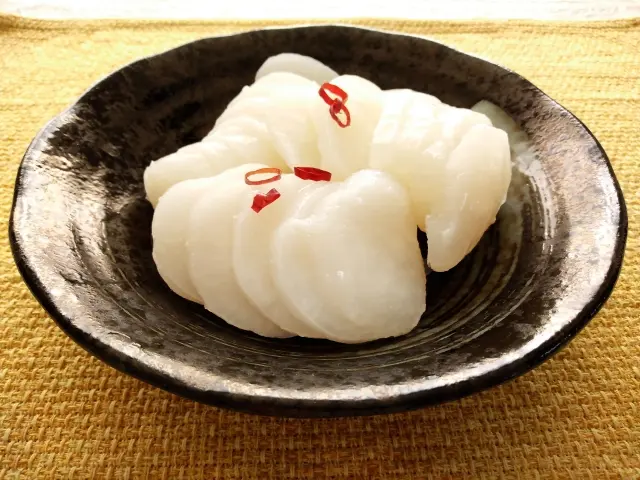
Compared with takuan, the bright-yellow pickled daikon served with many Japanese meals, bettara-zuke is far less salty and has little of the sharp fermented smell. It has the gentle sweetness of koji and a crisp bite, and pairs just as well with plain rice as with a cup of chilled sake. Because it's a fresh pickle, it's best eaten soon after you buy it.
On October 19 and 20, around 30 stalls sell bettara-zuke itself, and long-established pickle shops such as Edoya set up stands with special selections and prices just for the fair. You'll find everything from small pieces to large, gift-grade radishes, and prices vary by shop and size, starting at roughly ¥1,000. Many stalls let you taste before you choose, so try a few and find your favorite.
Bring cash. At a traditional market like this, it's your safest bet.
The Market, Day and Night
The heart of the fair is the block around Takarada Ebisu Shrine. From there it spreads through Horidomecho, Nihonbashi-Honcho 3-chome, and Odenmacho until almost every lane is packed with vendors. Alongside the bettara-zuke you'll find traditional vendors selling shichimi spice blend and spun-sugar candy. In all, some 400 to 500 vendors fill the streets, with the market stretching as far as nearby Suginomori Shrine. Roughly 100,000 people visit over the two days.
Daytime is for browsing and snacking. From early evening, more than 1,500 paper lanterns glow across the area, and strung between Nihonbashi's office towers, they look their best after dark.
According to the official guide, a typical year includes a children's mikoshi (portable shrine) procession (15:00–16:30) and an adults' procession (16:00–20:00) on the first day, the 19th, and bon-odori folk dancing (16:30–19:30) on the 20th. If the processions are what you came for, the 19th is your day. Some years have no mikoshi at all, though, so check the on-site notices for the actual schedule on the day.
About Ebisu-ko
Ebisu-ko is traditionally observed on October 20, when merchants honor Ebisu, the god of commerce, and give thanks for the year's trade. Bettara-ichi began as a market selling offerings on the day before the festival, and the lightly pickled daikon sold there gave the fair its name. Takarada Ebisu Shrine, at its center, is one of the shrines associated with the Nihonbashi Seven Lucky Gods.
Getting There
The nearest station is Kodemmacho (Tokyo Metro Hibiya Line), about a 1-minute walk. Shin-Nihombashi (JR Sobu Rapid Line) is about 2 minutes from Exit 5, and Higashi-Nihombashi (Toei Asakusa Line) is about a 5-minute walk. Mitsukoshimae and Ningyocho stations are also within walking distance.
The lanes fill with vendors and crowds, so a car is not practical. Come by train, and follow the on-site signs and staff directions on the day.
Both days run until 9 p.m. Pick up some sweet bettara-zuke and wander the lantern-lit lanes of Nihonbashi: for two nights, the heart of the city feels like autumn in old Edo.
This article was translated from the original Japanese with AI assistance and reviewed by our editorial team. The Japanese version is authoritative.