

Hakkoda's snow monsters (juhyo, 樹氷), firs that freeze into lumpy white hulks above Aomori, are usually at their best from January to late February, per the Hakkoda Ropeway (八甲田ロープウェー). You see them from the gondola on the way up and from the summit station; a round trip is ¥2,500.
The harder part is the bus. The winter bus from Aomori Station requires a seat reservation and runs only three times each way per day; the last bus back (15:03) leaves before the last gondola even goes up (15:40).
Book the 8:10 Hakkoda-go from Aomori Station if you can. It's the only outbound bus that gives you time to catch any of the three buses back, so if one is full or the gondola runs late, you still have a later one.
If you're weighing Hakkoda against Zao, which usually lights up its snow monsters at night, see Zao Snow Monsters 2026-27. Hakkoda is a daytime-only trip.
Hakkoda Ropeway in Winter at a Glance
Snow monster season | Typically January to late February |
|---|---|
Winter hours (mid-November to February) | First car up 9:00; last up 15:40, last down 16:00 |
Frequency and ride time | Every 15–20 minutes; about 10 minutes each way |
Fares (from August 1, 2026) | Adults ¥2,500 round trip, ¥1,550 one way; children (elementary school) ¥700 / ¥450; preschoolers free |
Closures | Winds of 25 m/s (about 56 mph) or more, or bad weather |
2026 autumn closure | No service through November 20; first day of winter service not yet announced |
Luggage | Held at the counters of both stations, ¥200 per item; no coin lockers |
From March, the last car up is 16:20. The fare went up on August 1, 2026, so if you see ¥2,200 round trip on the ropeway's FAQ or in older guides, that's the old price.
Viewing Spots: Gondola and Summit Station
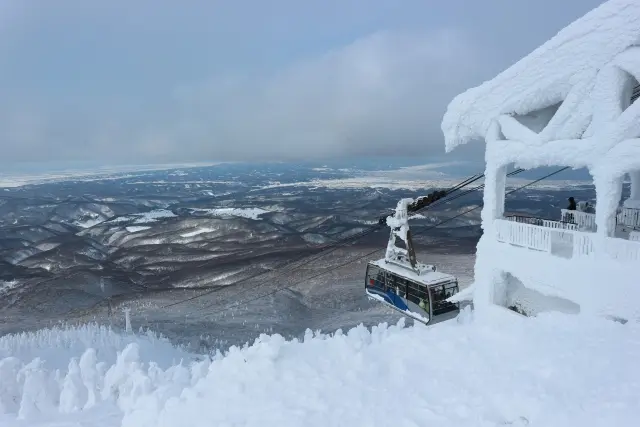
The trees are Maries' firs (Aomori todomatsu, アオモリトドマツ) that collect ice and snow until they turn into the shapes that gave them their name. At the top, Sancho Park Station (山頂公園駅) has an indoor observation room, a viewing deck and a shop.
Don't plan on walking on your own at the top. The Hakkoda Gourd Line (八甲田ゴードライン), the summit walking trail, is snowbound from mid-November, and the ropeway operator says it isn't walkable in winter. There's no hiking trail from the summit station down to the base, so on your own you ride back down.
Hoshino Resorts Oirase Keiryu Hotel, which runs guided snowshoe tours from the summit station down through the snow monsters to the base (about 3.5 km), warns that the wind chill around the summit station can drop below −20°C (−4°F). Dress for that, not for Aomori city.
The Winter Bus from Aomori: Hakkoda-go
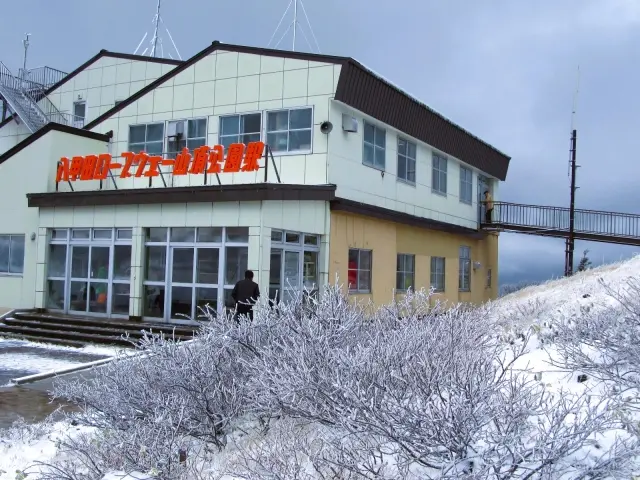
From November 12, 2026 to March 31, 2027, JR Bus Tohoku runs the Hakkoda-go (はっこうだ号) between Aomori Station and Sukayu Onsen. It stops at Ropeway Ekimae (ロープウェー駅前), the stop outside the ropeway's base station. The summer Mizuumi-go (みずうみ号) to Oirase and Lake Towada doesn't run in winter.
Bus | Leaves Aomori Station | Leaves Shin-Aomori | Arrives Ropeway Ekimae | Time at the ropeway before a bus back |
|---|---|---|---|---|
Hakkoda 2 | 8:10 | Doesn't stop | 9:10 | About 2 hours (11:08), 4½ hours (13:43) or almost 6 hours (15:03) |
Hakkoda 4 | 9:20 | 9:40 | 10:45 | About 3 hours (13:43) or 4¼ hours (15:03); 23 minutes to the 11:08 is too tight |
Hakkoda 6 | 10:50 | 11:10 | 12:15 | About 1½ hours (13:43) or just under 3 hours (15:03) |
Buses back leave Ropeway Ekimae three times a day:
Leaves Ropeway Ekimae | Arrives Aomori Station | Arrives Shin-Aomori |
|---|---|---|
11:08 | 12:03 | 12:18 |
13:43 | 14:38 | 14:53 |
15:03 | 15:58 | 16:13 |
Buses leave from Aomori Station East Exit, stop 11, and Shin-Aomori Station East Exit, stop 1. The fare from either station to the ropeway is ¥1,290 (¥650 for children), paid in cash or with a transit IC card when you get off.
The 8:10 leaves only from Aomori Station and skips Shin-Aomori. If you're coming up from Tokyo by shinkansen, stay the night before near Aomori Station, not Shin-Aomori.
Hotels in Aomori City: availability and rates
Booking the Bus
You reserve seats on the three buses from Aomori and Shin-Aomori through WILLER TRAVEL (Japanese-language page), for ¥300 per seat on top of the fare. Japan Rail Pass and JR East Pass holders ride free but still need the reservation and still pay the ¥300.
Booking opens at 10:00 Japan time three months before your travel date and stays open until the bus leaves its first stop. You choose the bus, not the seat.
You can't book the buses back from the ropeway. You board if there's room, and you may be turned away when one is full.
Taxis aren't stationed at the ropeway. If you'd rather not gamble on the last bus, book one of Aomori Taxi's (青森タクシー) flat-rate taxis ahead; the ropeway's access page links to them.
Wind Closures and Your Backup Plan
When the ropeway stops for wind or bad weather, there's no way up to the snow monsters until it restarts. Weather and road conditions can slow the bus too, the timetable warns, so build a spare day into your trip if you can.
Before you leave Aomori, check the ropeway's homepage for the operating status, the temperature and wind speed, and a four-level visibility rating for the summit. You can also call 017-738-0343 (+81-17-738-0343 from abroad).
If the ropeway is already down when your bus pulls in, you can stay on to Sukayu Onsen (酸ヶ湯温泉), about 15 minutes further. The fare from Aomori or Shin-Aomori to Sukayu is ¥1,570 in total (¥790 for children), ¥280 more than to the ropeway.
From December 1, Sukayu's day bathing runs 9:00 to 16:00 (last entry 15:30) and costs ¥1,500 for junior high school students and older, cash only, from a ticket machine.
Until November 30 it's ¥1,000, with longer hours. Its big mixed bath, the Hiba Sennin-buro (ヒバ千人風呂), has four hot springs in one room.
Buses back toward Aomori leave Sukayu at 10:55, 13:30 and 14:50, and you board if there's room.
This article was translated from the original Japanese with AI assistance and reviewed by our editorial team. The Japanese version is authoritative.