
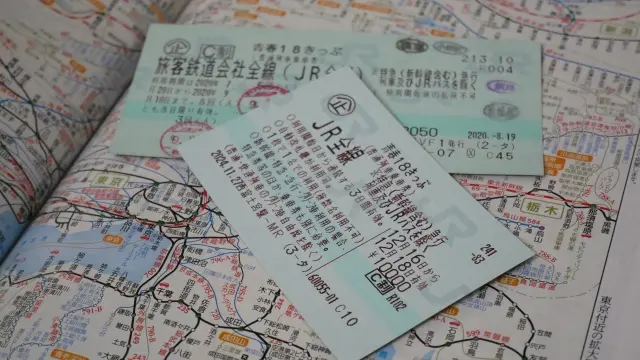
The Seishun 18 Kippu (青春18きっぷ) is back for winter 2026-27. It goes on sale on Friday, November 27, and can be used from December 11, 2026 to January 11, 2027. JR Group announced these dates on February 5, 2026, and I rechecked that announcement on November 13, 2026.
Prices are ¥10,000 for the 3-day version and ¥12,050 for the 5-day version, the same for adults and children. Despite the name (seishun means "youth"), JR's announcement lists no age requirement, and no nationality or residency condition either.
You use it on consecutive days, and each ticket is valid for one person. Some English guides still describe the old rules (any five days in the season, shareable with friends), which JR dropped in winter 2024.
Winter 2026-27 Dates and Prices
Valid for travel | Fri, Dec 11, 2026 – Mon, Jan 11, 2027 (holiday) |
|---|---|
On sale from | Fri, Nov 27, 2026 |
Last day to buy (3-day) | Sat, Jan 9, 2027 |
Last day to buy (5-day) | Thu, Jan 7, 2027 |
3-day ticket | ¥10,000 |
5-day ticket | ¥12,050 |
Tickets go on sale one month before the start date you choose. On November 27, you can buy a ticket starting any day from December 11 to December 27, and later start dates open up day by day.
The last sale dates are simply the last start dates that still fit inside the season. A 5-day ticket starting on January 7 is valid through January 11.
Consecutive Days, One Person Per Ticket
You pick a start date when you buy, and the ticket covers that day plus the next two (3-day) or the next four (5-day). You can't skip a day in the middle and save it for later. You can get off and back on as often as you like.
Each ticket is for one person only. Two friends can't split a 5-day ticket, and two kids can't share one either.
On the last day, the ticket is good until the last regularly scheduled train, even if all-night New Year's service is running.
You can change the start date once, as long as the ticket is unused, either before the original start date or during its valid days. Switching between the 3-day and 5-day versions isn't allowed.
An unused ticket can be refunded for a ¥220 fee. Once you've started traveling, there's no refund, even if trains are canceled or delayed. Lose it and you have to buy a new one; there's no refund even if the lost ticket turns up later.
3-Day or 5-Day?
Days you don't ride still count, so start with the span from your first train day to your last.
Three days or fewer fits the 3-day ticket, and four or five days needs the 5-day to cover everything. If the trip spans six days or more, one ticket won't cover it.
Say you leave on December 30 and come back on January 3: that's five days, and one 5-day ticket covers the round trip. Leave on December 29 instead and it's six days, so a single 5-day ticket can't cover both ends.
Once you know which version fits, add up the regular fares for that span. If the total comes in under ¥10,000 for three days, or ¥12,050 for five, regular tickets are cheaper.
Per day, that's about ¥3,333 on the 3-day ticket and ¥2,410 on the 5-day. Going from the 3-day to the 5-day costs ¥2,050 for two more days.
On a four- or five-day trip, the 5-day ticket wins once the regular fares for the days a 3-day ticket leaves uncovered add up to more than ¥2,050.
Since you can't swap versions after buying, settle your route before you buy.
What It Covers and What It Doesn't
The ticket covers unreserved seats in standard cars on local and rapid trains on every JR line in Japan. It also covers three BRT bus routes (the Kesennuma Line BRT and Ofunato Line BRT in Tohoku, and the Hitahikosan Line BRT in Kyushu) and the JR Miyajima Ferry.
The ferry ride is covered, but Miyajima's ¥100 visitor tax isn't; you pay that separately. JR bus routes other than those three BRT lines aren't covered.
It doesn't cover the shinkansen, limited express or express trains, or reserved Green Car seats. That rules out the Narita Express to and from Narita Airport, since it's a limited express.
To ride any of those, you need a base fare ticket on top of the limited express, express or Green Car ticket. The Seishun 18 Kippu doesn't cover the base fare on those trains.
A few short limited express stretches are exceptions:
Line | Section | Seat | Condition |
|---|---|---|---|
Sekisho Line | Shintoku – Shin-Yubari | Any empty standard-class reserved seat | Whole ride must stay within the section (otherwise, pay fare and limited express charge for all of it) |
Muroran Line | Higashi-Muroran – Muroran | Any empty standard-class reserved seat | Whole ride must stay within the section (otherwise, pay fare and limited express charge for all of it) |
Ou Line | Shin-Aomori – Aomori | Unreserved standard car | Whole ride must stay within the section (otherwise, pay fare and limited express charge for all of it) |
Sasebo Line | Haiki – Sasebo | Unreserved standard car | Can ride past it; pay fare and limited express charge for the part outside |
Miyazaki Airport Line | Miyazaki Airport – Miyazaki | Unreserved standard car | Can ride past it; pay fare and limited express charge for the part outside |
As a rule, the ticket isn't valid on subways or private railways, which charge their own fares. Four non-JR sections are the exception, but only when you use them to connect between JR lines: you enter from a JR line and change back to JR on the same day.
Railway | Section | Where you can get off (to change to JR) |
|---|---|---|
Aoimori Railway (青い森鉄道) | Aomori – Hachinohe | Aomori, Noheji, Hachinohe |
Ainokaze Toyama Railway (あいの風とやま鉄道) | Toyama – Kurikara | Toyama, Takaoka |
IR Ishikawa Railway (IRいしかわ鉄道) | Kurikara – Tsubata | Tsubata |
Hapi-Line Fukui (ハピラインふくい) | Tsuruga – Echizen-Hanando | Tsuruga, Echizen-Hanando |
Get off anywhere else, or ride past the section, and you pay the full fare for everything you rode on that line.
Route-finder apps will happily send you on a shinkansen or a subway, so check each leg before you board.
Buying the Ticket and Using the Gates
You can buy it at major JR stations, including from the reserved-seat ticket machines (指定席券売機), at JR travel centers and at major travel agencies. JR's sales list doesn't include online sales.
Have your start date ready, since you'll be asked for it at purchase. JR says the ticket can be used at automatic ticket gates, so at JR stations with automatic gates you put it through the machine like a regular ticket.
Seishun 18 Kippu or Japan Rail Pass?
The Japan Rail Pass is for foreign visitors who entered Japan with "Temporary Visitor" status. A 7-day ordinary-car pass costs ¥50,000 on the official JR Pass website and covers the shinkansen (Nozomi and Mizuho trains need an extra ticket).
The Seishun 18 Kippu is ¥12,050 for five days, but you're on local and rapid trains the whole time, which means far longer travel days between big cities.
If you want to cover long distances quickly, look at the JR Pass, and our Japan Rail Pass guide runs the numbers. If you have time and want to stop at small towns along the way, the Seishun 18 Kippu is the cheaper option.
If you'll use local trains for most of the trip but need one fast shinkansen ride over New Year, buy that ticket separately: how to book shinkansen seats over New Year.
Crossing to Hokkaido: the Shinkansen Option Ticket
To cross from Aomori to Hokkaido on this ticket, you'll need the Hokkaido Shinkansen Option Ticket (北海道新幹線オプション券), ¥4,650 for adults and children.
It's sold from November 27, 2026 to January 11, 2027, starting one month before the day you'll use it, and only works alongside a valid Seishun 18 Kippu.
It's a one-day ticket good for a single one-way trip per person.
On the Hokkaido Shinkansen between Shin-Aomori and Kikonai, you ride in a standard-class car without a seat reservation: standing, or in any empty seat if there is one. For a reserved seat, you'd need a limited express ticket plus a base fare ticket instead.
From Kikonai, the trip continues on the South Hokkaido Railway (道南いさりび鉄道) to Goryokaku. Kikonai is the only station where you can get off along the way, and both legs have to be used on the same day as one continuous trip.
You have to change to the South Hokkaido Railway at Kikonai. Stay on the shinkansen past Kikonai and you pay the full fare and shinkansen charge for your whole shinkansen ride.
The option ticket comes in two parts, one for the shinkansen and one for the South Hokkaido Railway. At the shinkansen gates, put your Seishun 18 Kippu and the shinkansen coupon in the machine together. On the South Hokkaido Railway, show staff your Seishun 18 Kippu and the railway coupon.
You can only refund the option ticket while it's unused, and both coupons have to go back together. The fee is ¥440.
This article was translated from the original Japanese with AI assistance and reviewed by our editorial team. The Japanese version is authoritative.
