
The Japan Rail Pass used to be a no-brainer. Land in Tokyo, buy the pass, and ride the bullet trains around the country almost for free. Then, in October 2023, the price shot up by about 70 percent (the 7-day pass went from ¥29,650 to ¥50,000), and the easy answer got a lot more complicated.
So here's the honest 2026 version. For some travelers the pass is still a clear win; for many others, paying per trip now works out cheaper. This guide covers what the pass actually costs today, what it does and doesn't cover, what changed in 2026, and a quick way to figure out whether it pays off for your trip.
This is the overview. We'll point you to deeper guides on the specifics—riding the shinkansen, IC cards, getting in from the airport—where they help.
The short answer
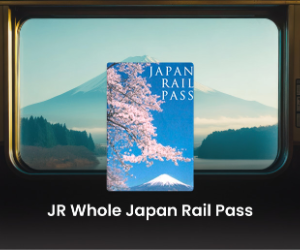
Buy the nationwide Japan Rail Pass if you're covering long distances in a short window—say, Tokyo to Kyoto or Osaka and on to Hiroshima, all within a week. The more long bullet-train legs you pack in, the better it pays.
Skip it if your trip stays in one region—four nights of Tokyo with a Nikko or Kamakura day trip, say, or a Kyoto–Osaka–Nara loop around Kansai—or if you're really just making one round trip between two cities. In those cases, paying for each ticket, or buying a cheaper regional pass, almost always costs less. We'll show you the math below.
Check Nationwide Japan Rail Pass
What the Japan Rail Pass costs in 2026
The nationwide pass comes in two classes—Ordinary and the roomier Green car—each sold in 7-, 14- and 21-day versions. These are the prices on the official online store (JAPAN RAIL PASS Reservation) as of June 2026:
Ordinary car
Period | Adult Price | Child Price |
|---|---|---|
7 days | ¥50,000 | ¥25,000 |
14 days | ¥80,000 | ¥40,000 |
21 days | ¥100,000 | ¥50,000 |
Green car
Period | Adult Price | Child Price |
|---|---|---|
7 days | ¥70,000 | ¥35,000 |
14 days | ¥110,000 | ¥55,000 |
21 days | ¥140,000 | ¥70,000 |
The child price covers ages 6 to 11 (officially, 6 and over but under 12—a child who turns 12 pays the adult fare).
One thing to know for 2026: the price you pay can depend on where you buy it, which brings us to the next point.
Heads-up: a 2026 price change
On April 9, 2026, the JR Group announced that passes sold through overseas agents and travel sites will get more expensive for purchases made from October 1, 2026.
This applies across the board—every duration and both classes—so, for example, the Ordinary 7-day pass bought abroad rises from ¥50,000 to ¥53,000.
Here's the part that matters for most travelers: the official online store (JAPAN RAIL PASS Reservation) is holding its current prices for now.
That keeps booking directly online the cheaper route, at least for the time being. The prices in this guide are the online-store ones.
What it covers—and the Nozomi catch
The pass covers a lot.
It's valid on almost all JR Group lines nationwide—shinkansen, limited express, express, rapid and local trains—plus a few extras like the JR-West Miyajima ferry and the Tokyo Monorail in to Haneda.
But there's one rule that catches first-timers out, and it's worth getting straight before you ride. On the busy Tokaido–Sanyo–Kyushu shinkansen, the two fastest train types, Nozomi and Mizuho, aren't covered by default.
The good news is the workaround is painless: just take the next train down, the Hikari, Kodama or Sakura, which the pass covers in full at no extra cost.
A Hikari from Tokyo to Kyoto is only about 15 to 20 minutes slower than a Nozomi, so most pass holders simply ride Hikari and pay nothing.
If you do want the fastest service, you can buy a "Nozomi/Mizuho ticket" for each ride—a fixed add-on of about ¥4,180 Tokyo–Nagoya, ¥4,960 Tokyo–Osaka, and ¥6,500 Tokyo–Hiroshima. (Our step-by-step shinkansen guide walks through reserving seats and finding the right train.) What the pass never covers: private railways and subways, the premium GranClass seating, and a handful of special sightseeing trains.
Who's eligible
The Japan Rail Pass is for overseas visitors entering Japan on "Temporary Visitor" short-stay status—the standard tourist entry.
You'll need that stamp in your passport to exchange your pass, so if you come through an automated immigration gate (which doesn't stamp), just ask a staff member at a manned counter to stamp you in. Travelers on other statuses, such as work or study, aren't eligible.
Is it worth it? Run the numbers
Here's the simple test. The Ordinary 7-day pass costs ¥50,000. Add up what your planned trips would cost as regular tickets, and if the total clears ¥50,000, the pass wins.
To give you a yardstick, here are typical one-way fares on the Tokaido–Sanyo shinkansen (Ordinary reserved seat, regular season—the base fare plus the express charge):
Route | Fare |
|---|---|
Tokyo–Kyoto | about ¥14,170 (¥8,360 fare + ¥5,810 express) |
Tokyo–Osaka (Shin-Osaka) | about ¥14,720 |
Tokyo–Hiroshima | about ¥19,760 |
These are regular-season fares; they dip a little off-peak and rise in the peak travel periods, so check the official fare finder for your exact dates.
Now line a few real trips up against the ¥50,000 pass:
One round trip, Tokyo–Kyoto
About ¥28,000. Well short of the pass—just buy tickets.
One round trip, Tokyo–Hiroshima
About ¥39,500. Closer, but still under ¥50,000 on its own—tickets still win.
A classic week, Tokyo to Kyoto, on to Hiroshima, and back, with JR day trips like Miyajima or Nara
This pushes past ¥50,000, and every local JR ride and the airport monorail then comes free on top. The pass wins.
Two things to fold into your sums.
If you ride Nozomi or Mizuho, add the per-trip ticket above (or take Hikari and skip it).
And remember the pass only covers JR lines—if your days are mostly subways and private railways inside one city, none of that counts toward the total.
If the numbers say the pass won't pay off, you'll be buying shinkansen tickets one leg at a time. Klook sells them for Tokyo–Kyoto and Tokyo–Shin-Osaka, and you pick the train and class of seat (non-reserved, reserved or Green Car) as you book. The fares in the table above are for reserved seats, so compare them with Klook's reserved-seat price.

Cheaper alternatives: regional passes
If your trip is concentrated in one area, a regional JR pass is often the smarter buy. Two are worth knowing in 2026.
The JR EAST PASS was renewed in 2026 into a single pass covering the entire JR East network and some connecting lines.
It comes in a 5-day version for ¥35,000 and a 10-day version for ¥50,000, and, like the nationwide pass, it's for short-stay overseas visitors. It replaced the older Tohoku and Nagano–Niigata area passes in March 2026, and it's a good fit for a trip built around Tokyo plus the north and Tohoku.
The WEST QR Kansai Area Pass is a fully smartphone-based QR pass for the Kansai region, sold in 1- to 4-day versions from ¥2,700.
It covers local JR trains around Osaka, Kyoto, Nara and Kobe, plus the HARUKA express to Kansai Airport—but not the shinkansen. For a Kansai-only trip, it's ideal. The rule of thumb: one region, go regional; criss-crossing the country, go nationwide.
How to buy, collect and use it
You've got two main routes. Buy online through the official JAPAN RAIL PASS Reservation store, or through an authorized agent in your home country. Booking online has a real perk—you can reserve your seats before you even pick up the pass.
Klook is one of the agents on the official Japan Rail Pass website's list of overseas sales outlets. One catch: agent prices go up for anything bought on or after October 1, 2026. The adult Ordinary 7-day pass then costs ¥53,000 through an agent, compared with ¥50,000 on the official online store, which is holding its price for now.
Also, reserving seats before you pick up the pass only works if you bought it on the official site. Buy through an agent and you'll reserve after exchanging it in Japan.
Check Nationwide Japan Rail Pass
When you arrive, you exchange your order for the actual pass at a JR exchange office, or, as of April 1, 2026, at certain JR East ticket machines fitted with a passport reader.
One practical note on the gates. The Japan Rail Pass is still a physical paper ticket: you feed it into the slot at the automatic ticket gate, the same as an old-style paper ticket. You can't tap it like a Suica, and the IC-only gates won't read it. Japan's rail network is gradually moving toward QR-code ticketing, but the Rail Pass itself is still an insert-the-paper ticket as of mid-2026, so don't count on leaving it in your bag.
The bottom line
The Japan Rail Pass is no longer the automatic buy it once was, but it still earns its price for one kind of trip: covering a lot of ground, fast, in a short stretch of days. If that's you—Tokyo, Kyoto, Hiroshima and back inside a week—it's still one of the best deals going. If you're staying local or moving slowly, price out individual tickets or a regional pass first; in 2026, that's often the cheaper call.
Whichever way you go, the trains themselves are the easy part. Japan's rail network is punctual, spotless and remarkably simple to use once you've got the right ticket in hand.
This article was translated from the original Japanese with AI assistance and reviewed by our editorial team. The Japanese version is authoritative.

