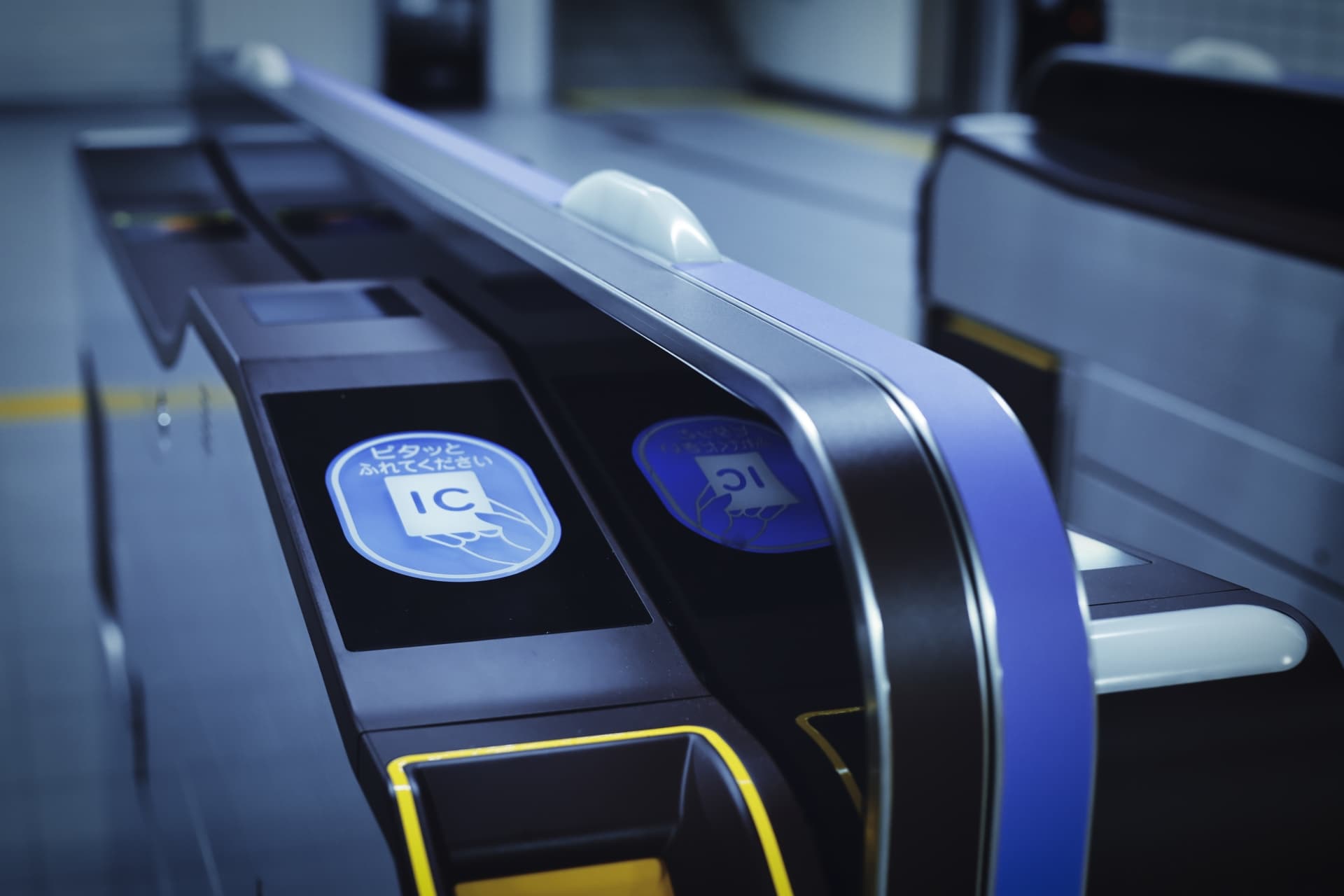
Japan's shinkansen — the bullet train — is one of the best parts of traveling here: fast, punctual, and genuinely comfortable. But if it's your first time, the practical stuff can feel confusing. Where do you buy a ticket? Can you bring a big suitcase? What's the difference between a reserved and a non-reserved seat? This guide walks you through the whole thing, from buying a ticket to stepping off at your stop.
Four Ways to Buy a Ticket
There are four main ways to get a shinkansen ticket. Pick whichever suits you.
1. Station Ticket Machines
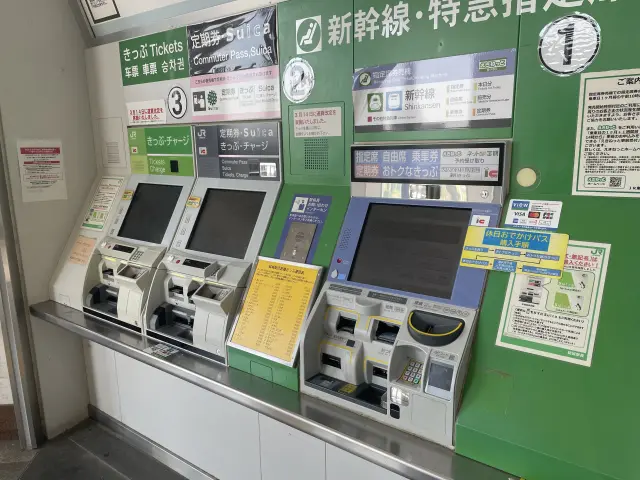
The vending machines at shinkansen stations let you buy on the spot. Most switch to English, and you can choose your destination, train, and seat, then pay by credit card or cash. Handy if you want to buy at the station on the day.
2. The Ticket Office (Midori no Madoguchi)
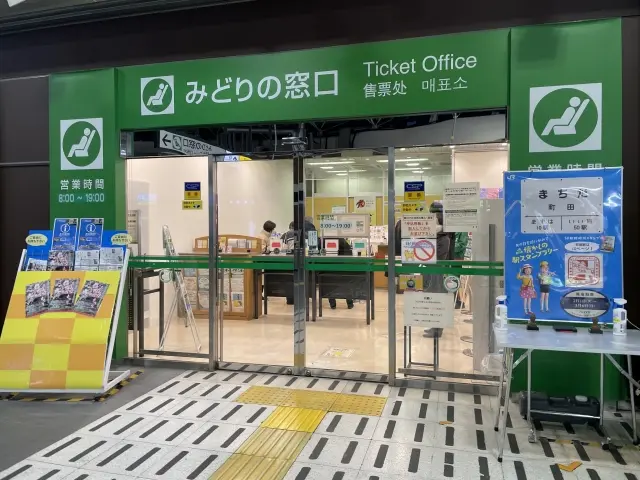
Prefer to talk to a person? Head to the Midori no Madoguchi, JR's staffed ticket office marked with a green sign. Staff can help with complicated routes and rail passes. Just note these counters have been cut back in number, so leave extra time at busy stations.
3. Book Online (Smart EX / Eki-net)
With a smartphone and a credit card, you can reserve a seat online before you travel. Smart EX covers the Tokaido, Sanyo, and Kyushu Shinkansen lines, while Eki-net covers JR East, JR Hokkaido, and routes such as the Hokuriku Shinkansen. On Smart EX, select products can be booked from about a year ahead, even from outside Japan; regular reserved seats go on sale one month before departure, and for those year-ahead bookings the specific train and seat numbers are confirmed from around a month before your travel date. With Smart EX, you can use a QR code or a registered IC card at the gate, so you do not need to line up at a ticket counter.
Klook also sells Tokaido Shinkansen tickets for routes like Tokyo–Kyoto and Tokyo–Shin-Osaka, and you pick the train and class of seat (non-reserved, reserved or Green Car) as you book. Some tickets let you scan a QR code straight through the gate, while others have to be picked up at the station. Check the product page to see which kind it is before you pay.
4. Tap In with an IC Card
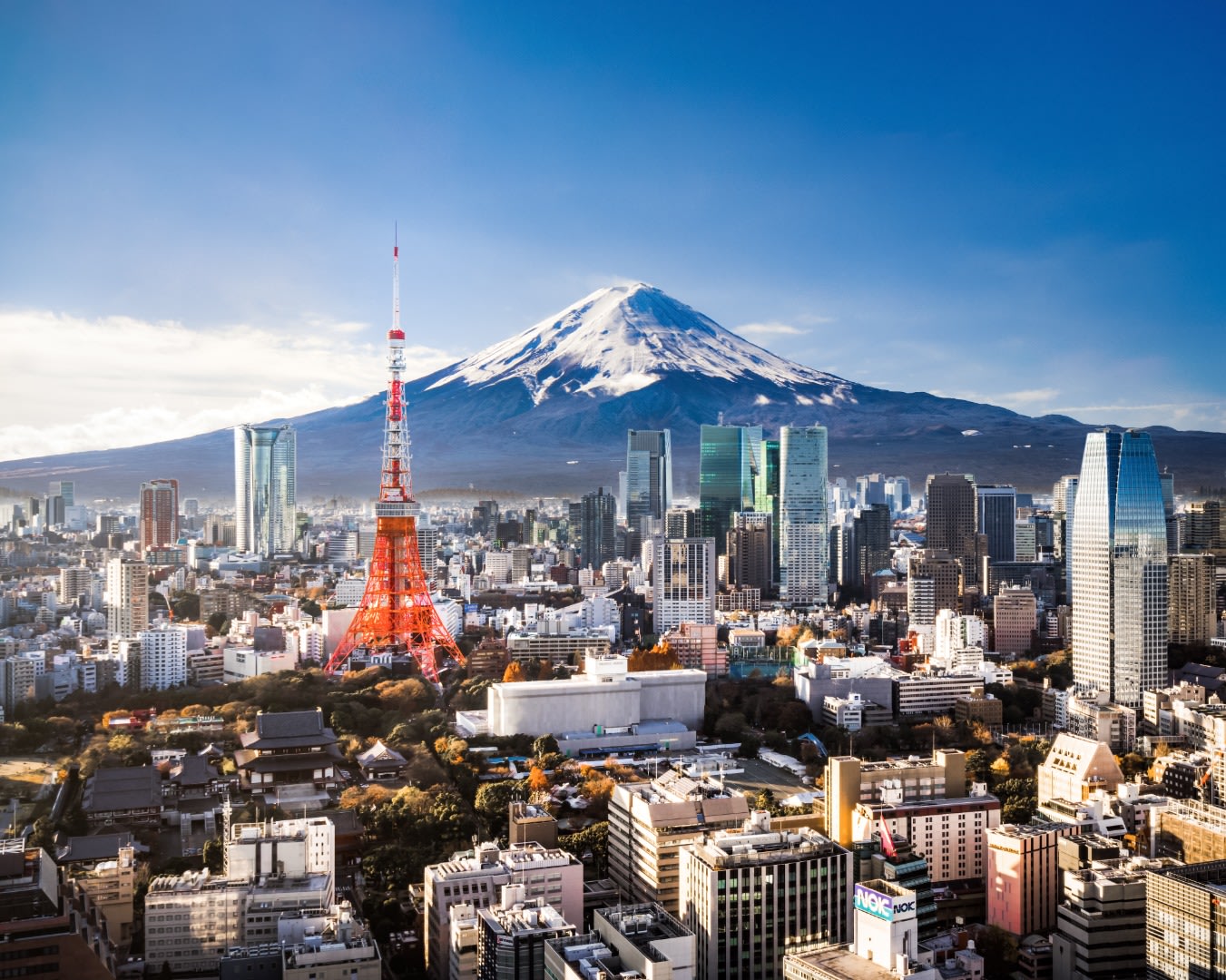
You can also ride by tapping a transit IC card like Suica or PASMO — but only after you register it with a service first. In the JR East area, you can sign up for "Touch de Go! Shinkansen," then tap through the gates and ride non-reserved seats on eligible sections, and the fare comes out of your card balance (with the tourist-oriented Welcome Suica Mobile, you can use it straight away — no registration needed). On the Tokaido and Sanyo lines, you link your IC card through Smart EX.
One thing that trips people up: tapping an unregistered Suica at the gate will not get you onto the shinkansen, even though that's exactly how local trains work. Sort out your ticket or registration in advance.
Reserved, Non-Reserved, and Green Cars
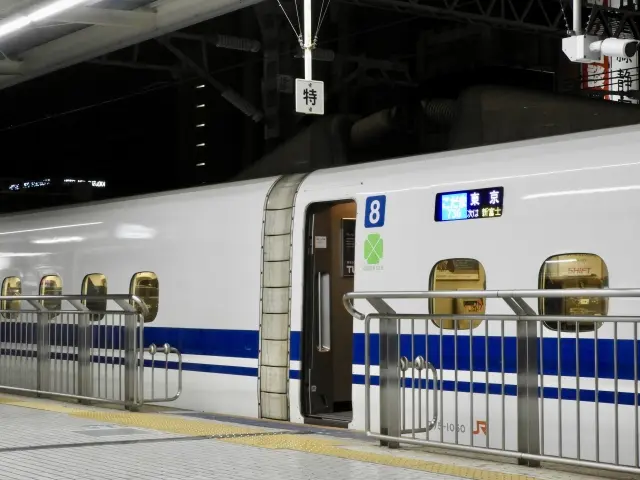
Ordinary shinkansen cars come in two main types: reserved (shitei-seki) and non-reserved (jiyu-seki). A reserved seat guarantees you a specific spot and costs a little more. A non-reserved seat lets you sit wherever's open, but on a busy train you might end up standing. If you want a guaranteed seat, reserve one.
Worth knowing: on the Tokaido and Sanyo lines, Nozomi trains go fully reserved during peak travel periods such as Golden Week, Obon in mid-August, and the New Year holidays — with no non-reserved cars at all. For 2026 the covered periods also include Silver Week (the September holidays), so if your travel dates fall over a major holiday or other busy stretch, reserve a seat in advance. Hikari, Kodama, Mizuho, and Sakura keep their non-reserved cars year-round.
Want a little more room? The Green Car is first class, and a few lines like the Tohoku Shinkansen even have an upper tier called GranClass.
The Big-Suitcase Rule (Don't Skip This)
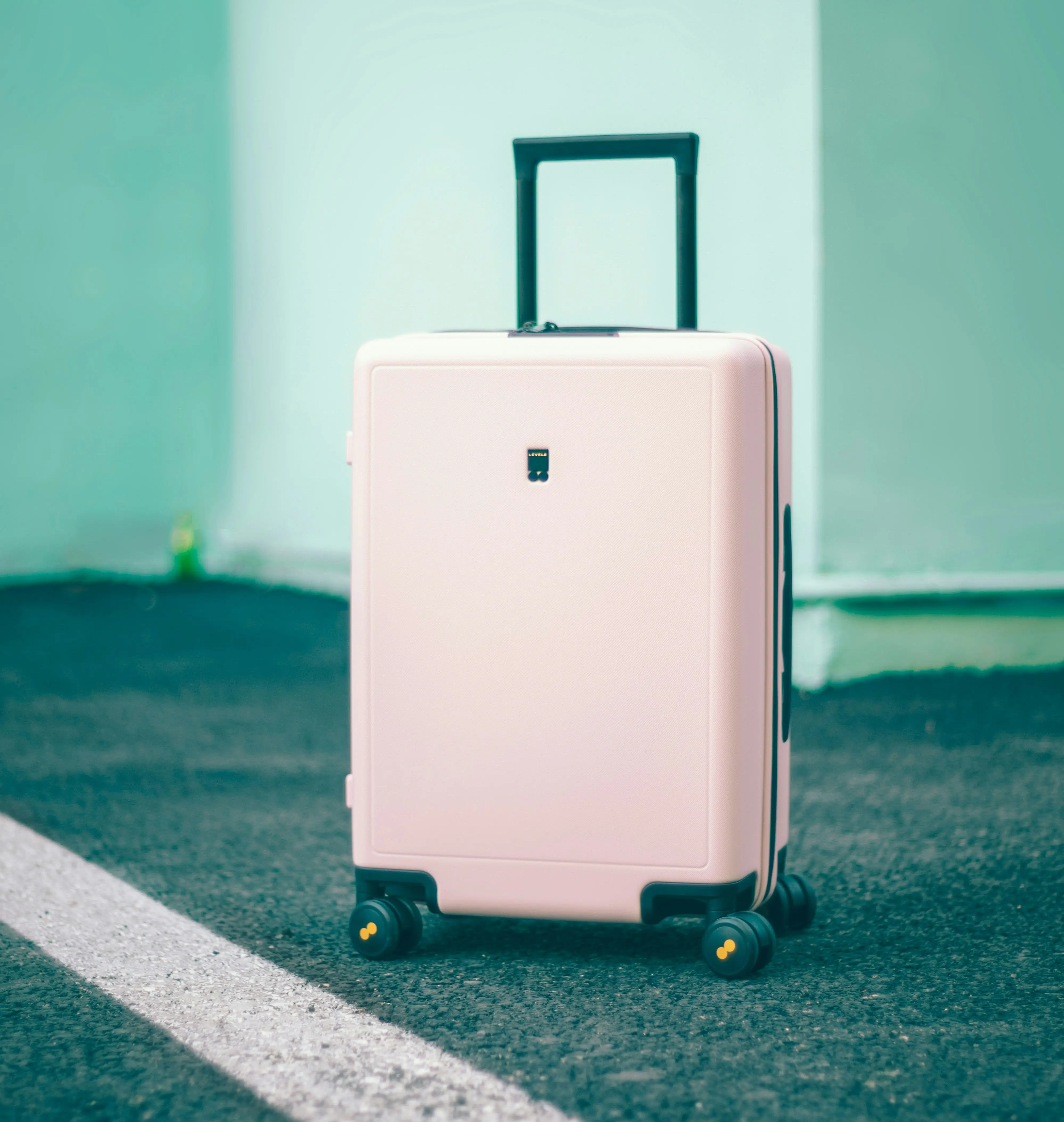
The mistake travelers with large luggage make most often is the oversized-baggage rule. It applies to the Tokaido, Sanyo, Kyushu, and Nishi-Kyushu Shinkansen lines.
If your bag's three sides (height + width + depth) add up to more than 160 cm but no more than 250 cm, you need to reserve a "seat with an oversized baggage area" — and it's free when you book it together with your ticket. Show up with a bag that size and no reservation, and you'll be charged a ¥1,000 fee. Bags over 250 cm total aren't allowed on board at all.
Anything 160 cm or under needs no reservation — it goes on the overhead rack or in the space behind the last row of seats. Most carry-on and mid-size suitcases come in under that limit. If you're not sure, measure all three sides before you go and add them up.
As of July 2025, JR also began trialing luggage spaces on some decks that you can use without a reservation. But if your bag tops 160 cm combined, you still need that reserved seat-with-space.
How to Board, Step by Step
Once you have your ticket, boarding isn't hard. Here's the flow:
- Check your train name, departure time, car number, and seat number.
- Go through the shinkansen ticket gate. With paper tickets, feed both the basic-fare ticket and the limited-express ticket into the gate together, and grab them as they pop out. With a QR ticket, scan it; with a registered IC card, tap.
- Transferring from a local JR line? Use the transfer gate, and take the "Seat Information" slip if one prints out.
- Find your platform or track number on the departure board.
- On the platform, markings on the floor show where each car stops and where to line up — reserved and non-reserved queues sit in different spots, so line up at your car's mark.
- When the train arrives, board, stow your luggage, and find your seat.
Onboard Etiquette
Shinkansen cars are kept calm so everyone can relax. Keep conversations low, put your phone on silent, and take calls in the deck area between cars rather than at your seat.
Eating and drinking at your seat, on the other hand, is totally fine — picking up an ekiben (station lunch box) and a drink to enjoy with the passing scenery is part of the experience.
If you recline your seat, a quick glance or word to the person behind you goes a long way. Keep your bags out of the aisle, take your trash to the bins in the deck, and start getting ready a little before your stop.
A Few Traveler Tips
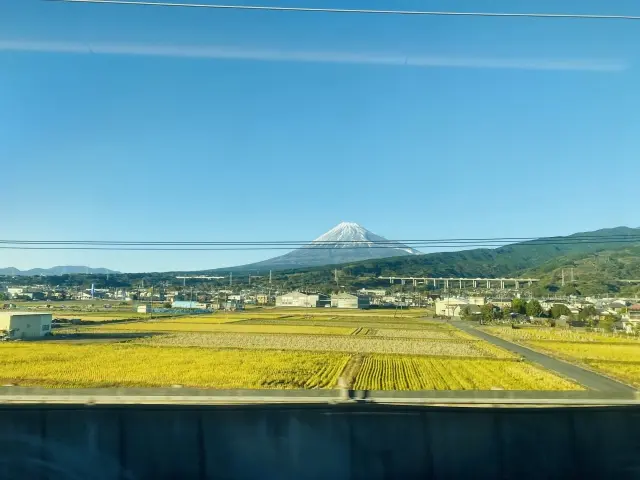
Heading from Tokyo toward Kyoto or Shin-Osaka? Mount Fuji appears on the right-hand side of the train — seat E in ordinary cars, seat D in the Green Car. Your best chance is roughly 40 to 45 minutes after leaving Tokyo, around the Shin-Fuji to Shizuoka area. Just know that June's rainy season often hides the peak behind clouds, so treat a clear view as a bonus.
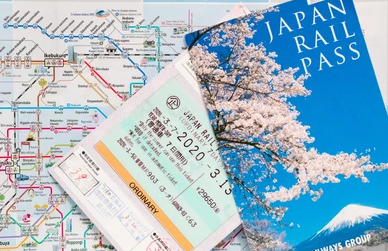
If you'll be covering a lot of ground, look at the Japan Rail Pass. The 7-day ordinary pass is ¥50,000 and covers most JR trains while it's valid — though riding the fastest Nozomi and Mizuho trains needs an extra limited-express fee (about ¥4,960 between Tokyo and Shin-Osaka). Note that the JR Group plans a price revision from October 1, 2026: prices through overseas authorized agents and sales outlets will rise, while the official online sales service (the dedicated website) will hold its price for a limited period. Check the official site for the latest pricing before you buy.
Fares and rules do change. For the latest prices and booking methods, the official JR websites are the place to confirm.
▶ Smart EX (official online booking for the Tokaido / Sanyo / Kyushu Shinkansen)
This article was translated from the original Japanese with AI assistance and reviewed by our editorial team. The Japanese version is authoritative.