
Picture this: you just arrived at Tokyo Station, and your next hotel check-in isn’t for another five hours. You’ve got a 25-kilogram suitcase, a backpack, and a full day of sightseeing planned. There are no large coin lockers available. The only way out seems to be a long flight of stairs. Rush hour is about to start.
Now picture the alternative: you hand your suitcase to the front desk at your current hotel, fill out a simple form, and walk out the door with nothing but your daypack. By the time you check in at your next hotel that evening, your bag is already sitting behind the counter, waiting for you.
This isn’t a premium concierge perk. It’s a standard luggage delivery service known as takkyubin (宅急便), and it typically runs about ¥2,000 to ¥3,500 per suitcase — sometimes more for longer distances or oversized bags. Here’s everything you need to know to use it.
Three Ways to Send Your Luggage
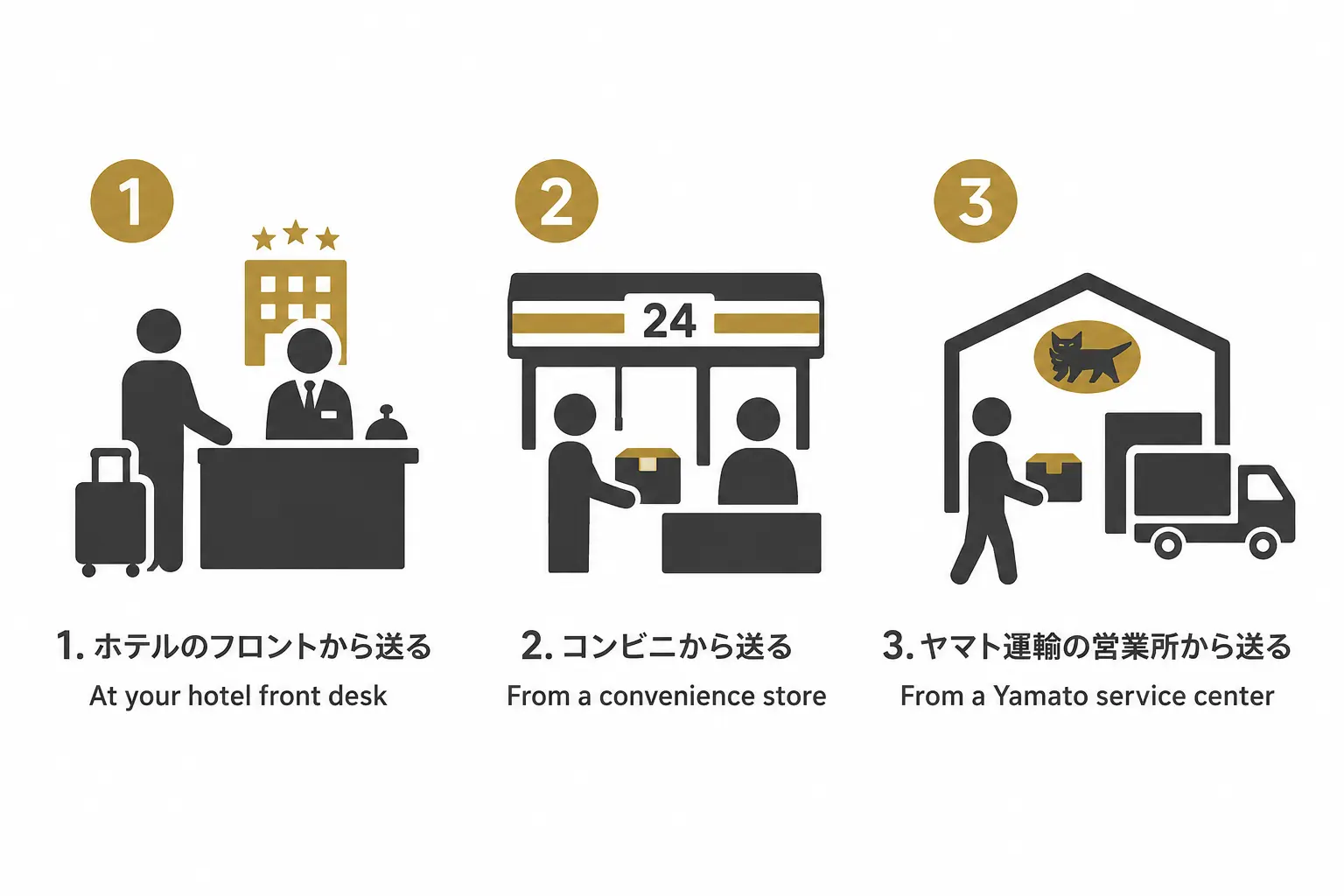
1. At your hotel front desk — the easiest option
Walk up to the front desk and say you’d like to send luggage via takkyubin.
Most hotels are set up for this and will have shipping forms on hand. You’ll need to fill in the destination hotel’s name, address, and phone number.
If you’re not comfortable writing Japanese, save the hotel details on your phone and show them to the staff. Hand over the bag, pay at the desk, and you’re done. If you drop it off in the morning, it’ll usually arrive by the following day.
2. From a convenience store
Head to any 7-Eleven or FamilyMart and tell the cashier "Takkyubin onegaishimasu" (I’d like to send this via takkyubin).
They’ll hand you a shipping slip to fill out. Once you’re done, the clerk measures your bag and calculates the fee. You can pay in cash, and many stores also accept e-money or cashless payments.
You can leave the suitcase with the store staff; the delivery company will pick it up during its regular collection rounds. Since most convenience stores are open 24 hours, this is a handy option if you need to ship your bag outside hotel desk hours.
3. From a Yamato service center
Yamato operates service centers near major train stations throughout Japan.
Walk in, fill out the form with staff assistance, and ship on the spot. Dropping off at a service center, convenience store, or authorized shop earns you a ¥100-per-bag discount. Signing up for a free Kuroneko Members account or using a digital shipping label can save you a bit more.
Airport Luggage Counters: Go Hands-Free from the Moment You Land
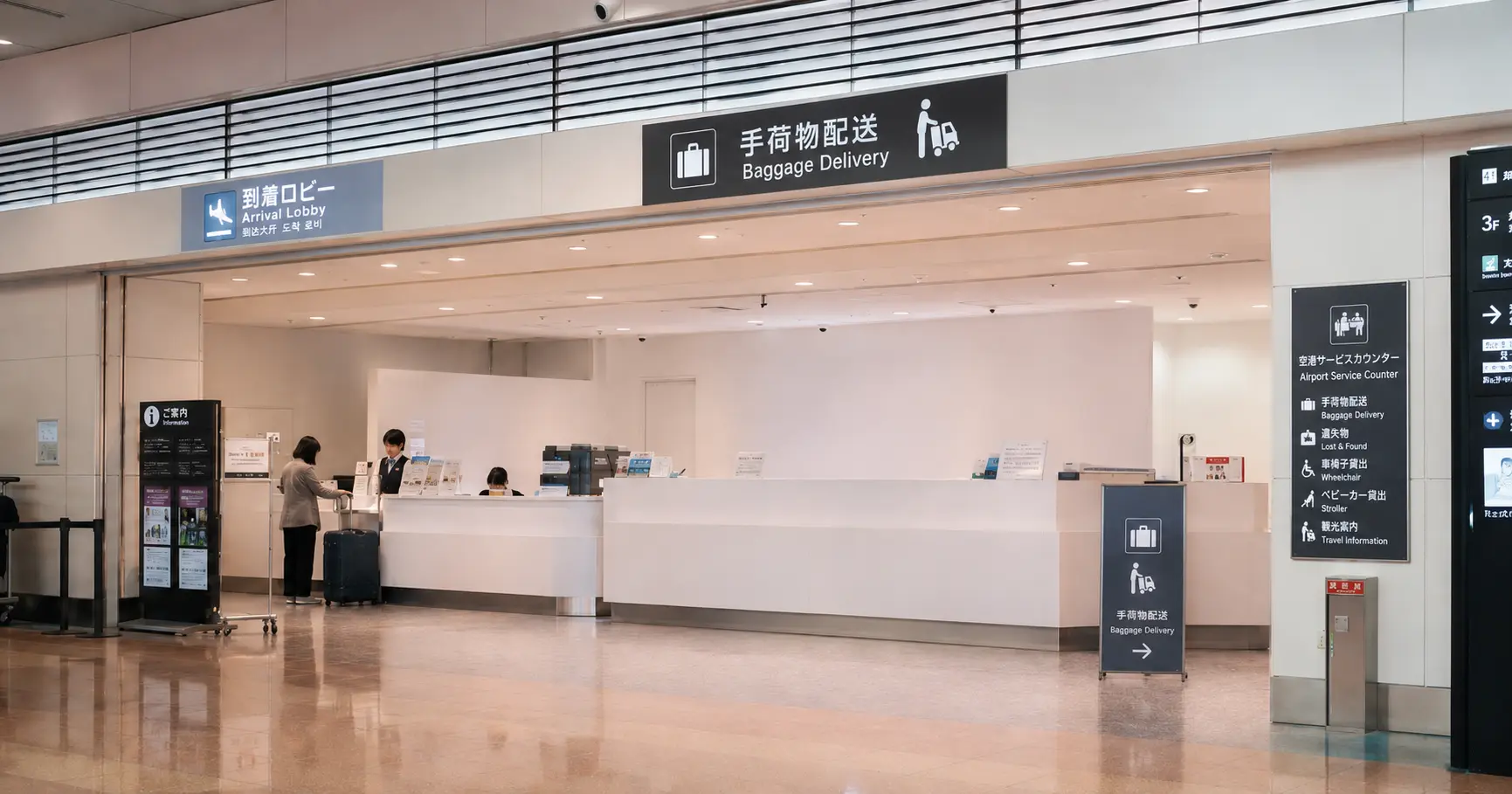
Narita, Haneda, Kansai International, and Chubu Centrair airports all have luggage delivery counters run by Yamato Transport, JAL ABC, and others.
The process is simple: grab your bags from the carousel, walk to the counter in the arrivals lobby, fill out the form, and hand over your suitcase.
At Haneda Terminal 3 and Chubu Centrair, if you drop off your bag by 11 a.m., same-day delivery may be available to nearby areas. Otherwise, most shipments arrive the following day or shortly after — but timing depends on the destination, the time of day, and seasonal demand, so always confirm the estimated arrival date at the counter.
One thing to note: some airports and terminals charge a separate counter-use fee or handling surcharge on top of the shipping rate. Check the latest info at the counter before you ship.
How Much Does It Cost?
Takkyubin pricing is based on two factors: the size of your bag (measured by total length + width + height in centimeters) and the distance it needs to travel. A standard suitcase usually falls in the 120 to 160 size range. For a bag in that range, shipping within Tokyo or the same delivery zone typically costs about ¥2,040 to ¥3,020, while a Tokyo-to-Osaka shipment runs roughly ¥2,170 to ¥3,160. Oversized bags in the 180 to 200 range can push into the ¥4,000–¥5,000 range. Rates are updated periodically, so check Yamato’s official site for the latest numbers before you ship.
You can pay in cash at any location. Service centers and convenience stores generally accept transit IC cards (Suica, PASMO), e-money, and QR code payments as well, though the exact options vary by location.
Size and Weight Limits (Plus a Few Things to Watch Out For)
Yamato accepts packages up to 200 cm in total dimensions (length + width + height) and 30 kg in weight. Most regular suitcases fit well within these limits. Keep your passport, cash, valuables, and fragile electronics with you. The maximum compensation for loss or damage is 300,000 yen.
Here’s a tip that saves a lot of headaches: write the same name on the shipping label as the name on your hotel reservation. If the name doesn’t match, the hotel staff may not know whose bag it is and may set it aside until they can confirm the owner.
Japan's "Hands-Free Travel" Initiative
Lugging heavy bags through crowded stations has long been a pain point for visitors to Japan. The Ministry of Land, Infrastructure, Transport and Tourism has been working to fix that by promoting a "Hands-Free Travel" initiative — supporting luggage storage and delivery counters at airports, train stations, shopping centers, and other tourist-friendly locations across Japan.
Look for the red suitcase logo. It marks spots where you can drop off or ship your bags.
The Bottom Line
Using takkyubin is one of those small decisions that dramatically improves an entire trip. For about the price of a casual meal or two, you get to spend the day exploring without dragging a suitcase behind you.
No wrestling your bag up station stairs, no awkward train rides blocking the doors, no frantic coin locker searches. You can usually choose a delivery time window and track your package, so you can ship with confidence even as a first-time visitor.
Try it once, and you’ll wonder how you ever traveled Japan without it.
You might also enjoy
- What to Wear in Japan in June: Your Complete Guide to Dressing for Rainy Season
- The New Tourist Pasmo Card: Your 28-Day Pass to Seamless Travel Across Japan
- Your First Sento: A Beginner's Guide to Tokyo's Neighborhood Bathhouses
▶ Yamato Transport Hands-Free Travel Service
This article was translated from the original Japanese with AI assistance and reviewed by our editorial team. The Japanese version is authoritative.

