
The very first puzzle you'll solve in Japan is how to get from the airport into the city.
Tokyo has two airports—Narita and Haneda—and they're served by completely different train lines, with very different fares and travel times.
This guide breaks down every realistic option with up-to-date 2026 fares, so you can arrive with a clear plan instead of standing in front of the ticket machines, jet-lagged and unsure what to choose.
Three things to figure out first
Before you pick a route, get clear on three things.
First, which airport you're landing at—Narita or Haneda.
Second, where in Tokyo you're actually headed (Tokyo Station, Shinjuku, Asakusa, Shinagawa, and so on).
Third, how much luggage you have. If you're traveling with big suitcases, a direct express train or a limousine bus with luggage storage is often far more comfortable than a route with multiple transfers.
One tip that applies to most of the options below: grab a transit IC card like Suica or PASMO as soon as you arrive.
On regular trains—the Keikyu Line, the Keisei Access Express, and the Tokyo Monorail—you simply tap in and out, no paper ticket required.
The limited express trains are the exception: the Keisei Skyliner and the JR Narita Express (N'EX) need a separate limited express or reserved-seat ticket on top of your IC fare.
Either way, having a card ready saves you fumbling at the machines, and the same card works on trains, buses, and at convenience stores all over the city.
From Narita Airport to central Tokyo
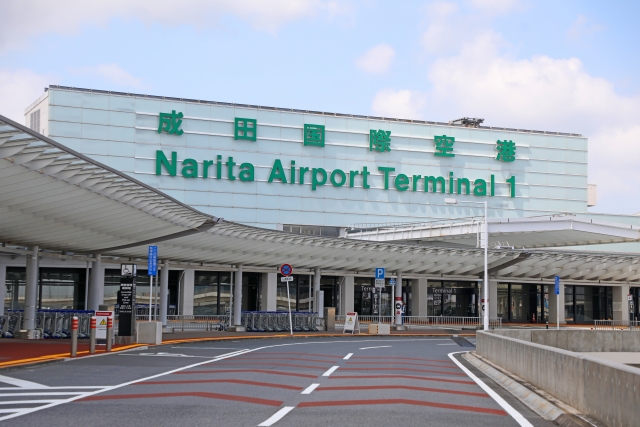
Narita sits in Chiba Prefecture, about 60 km from central Tokyo.
Even the fastest train, the Keisei Skyliner, takes around 36 minutes from Airport Terminal 2 Station to Nippori—and reaching Tokyo Station or Shinjuku means adding transfer time on top.
Your main choices are the Keisei Skyliner, the Keisei Access Express, the JR Narita Express (N'EX), and the airport limousine bus.
Keisei Skyliner (the fastest)
If your priority is speed, the Keisei Skyliner is usually the best choice.
This reserved-seat express reaches Nippori Station in as little as 36 minutes and Keisei-Ueno in 41 minutes.
The fare to Nippori or Ueno is ¥2,470 (¥2,465 with an IC card). At Nippori you can transfer to the JR Yamanote Line for Shinjuku, Shibuya, or Tokyo Station.
Destination | Time | Fare (one way) |
Nippori | from ~36 min | ¥2,470 (IC ¥2,465) |
Keisei-Ueno | ~41 min | ¥2,470 (IC ¥2,465) |
Tokyo Station (transfer at Nippori) | ~50–60 min | ~¥2,650–¥2,800 (varies) |
Fares from the official Keisei Electric Railway site (2026). The Tokyo Station figure is an estimate that includes the onward JR fare and varies by station, route, and ticket type. Discounted tickets can be bought online in advance.
Keisei Access Express (budget-friendly)
If you want to keep costs down, the Keisei Access Express uses a similar route but skips the limited-express surcharge.
Fares run ¥1,235 (IC) to Nippori or Keisei-Ueno, ¥1,276 to Asakusa, and ¥1,318 toward Nihombashi and Shimbashi—roughly half the Skyliner price—in exchange for a longer ride of 60–75 minutes.
Many trains run straight through onto the Toei Asakusa Line, so you can reach Asakusa, Nihombashi, and Oshiage (Tokyo Skytree) without changing trains.
Destination | Fare (IC, one way) | Fare (paper ticket, one way) |
Nippori / Keisei-Ueno | ¥1,235 | ¥1,240 |
Oshiage (Tokyo Skytree) | ¥1,162 | ¥1,170 |
Asakusa | ¥1,276 | ¥1,290 |
Nihombashi / Higashi-Ginza / Shimbashi | ¥1,318 | ¥1,330 |
Shinagawa | ¥1,502 | ¥1,520 |
Fares from the official Keisei Electric Railway site (2026, departing Narita Airport). Fares may vary depending on the route taken (Narita Sky Access Line vs. Keisei Main Line).
JR Narita Express (N'EX)
If you'd rather ride directly to Tokyo Station, Shinjuku, Shibuya, or Yokohama with no transfers, the JR Narita Express (N'EX) is a convenient option.
It reaches Tokyo Station in as little as 53 minutes (around 60 is more typical) for ¥3,140 one way in a reserved Ordinary-car seat—a flat fare that stays the same all year, with no peak-season surcharge.
All seats are reserved, and there is dedicated luggage space, making it a solid choice if you are traveling with large suitcases. Overseas visitors can also buy the N'EX TOKYO Round Trip Ticket (¥5,200), good for a round trip within 14 days—check the official JR East site for current details.
JR East revised its fares in March 2026, so confirm the latest prices on the official site.
Limousine bus
For a one-seat ride to Tokyo Station, Shinjuku, or a major hotel, the Airport Limousine Bus can be a very convenient option.
There are no transfers, and your suitcase rides in the luggage hold—ideal if you're carrying a lot or traveling with small children.
Fares vary by destination—roughly ¥3,100 to Tokyo Station and the Nihombashi area, and around ¥3,600 to Shinjuku and major hotels. Travel time depends on traffic, but you get to stay seated the whole way.
Book Narita Express & JR Pass tickets
From Haneda Airport to central Tokyo
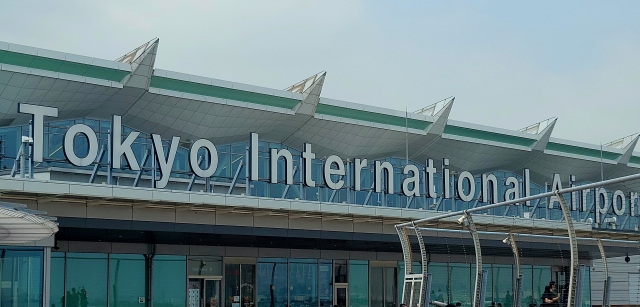
Haneda is located within Tokyo, so it is much closer to the city center than Narita—just 11 minutes to Shinagawa and around 20 minutes to Tokyo Station.
Your three main options are the Keikyu Line, the Tokyo Monorail, and the limousine bus.
Keikyu Line (cheapest and quick)
For most travelers, the Keikyu Line offers the best balance of speed and price.
It reaches Shinagawa Station in as little as 11 minutes for just ¥327 (IC card).
Because it runs through onto the Toei Asakusa Line, you can also ride straight to Shimbashi, Higashi-Ginza, and Asakusa without changing trains.
That balance of price, speed, and reach makes it the default choice for most travelers.
Destination | Time | Fare (IC, one way) |
Shinagawa | ~11 min | ¥327 |
Tokyo Station | ~20 min | ¥505 |
Shimbashi | ~21 min | ¥505 |
Shinjuku | ~30 min | ¥535 |
Asakusa | ~32 min | ¥599 |
Times and fares from the official Haneda Airport Access Guide (Keikyu / Toei), departing Haneda Terminal 3, 2026.
Tokyo Monorail
Heading toward Hamamatsucho? The Tokyo Monorail covers Haneda Terminal 3 to Hamamatsucho in about 13–18 minutes for ¥519 (IC card).
At Hamamatsucho you transfer to the JR Yamanote or Keihin-Tohoku Line for Tokyo Station, Shinagawa, or Ueno.
Bonus: the elevated track serves up sweeping views of Tokyo Bay—a fun first taste of the city.
Limousine bus
Limousine buses also run from Haneda to Tokyo Station, Shinjuku, and major hotels.
Fares start around ¥1,200–¥1,400 depending on destination—noticeably cheaper than from Narita. With late-night and early-morning departures, the bus can sometimes be more convenient than the train, depending on your flight.
So which one should you take?
When you're not sure, here's a quick way to decide:
• Want maximum speed from Narita → Keisei Skyliner
• Keeping costs down from Narita → Keisei Access Express
• Want a direct ride to Tokyo Station or Shinjuku from Narita → N'EX or limousine bus
• Cheapest, fastest way into town from Haneda → Keikyu Line
• Lots of luggage or traveling with kids → limousine bus (from either airport)
Whichever you choose, having a PASMO or Suica ready makes the gates effortless. Load it with some cash and you'll use the same card for trains, buses, and convenience-store snacks throughout your trip.
Also worth a look right now
Once you're in town, here's what's in season in June:
Tokyo's Best Hydrangea (Ajisai) Spots 2026: rainy-season flowers at their most beautiful.
Sanno Matsuri 2026 at Akasaka's Hie Shrine: a grand festival held only every other year.
Where to Buy Rain Gear in Japan 2026: umbrellas and rainwear you can grab right after you land.
▶ Narita Airport Official Access Guide
This article was translated from the original Japanese with AI assistance and reviewed by our editorial team. The Japanese version is authoritative.


