If you want to see Tokyo's autumn leaves lit up after dark, the first surprise is how few places actually do it. Most of the city's famous gardens show their maple and ginkgo colors during the day only, and close before sunset.
So this guide skips the daytime spots and sticks to the four places that put on an evening opening year after year: when they run, what they cost, and whether you need to book ahead.
For daytime viewing spots and peak-color timing across the city, see our separate guide, Tokyo Autumn Leaves 2026. Think of this article as the "after dark" companion to it.
Of the four venues in this guide, two have confirmed 2026 dates: Koishikawa Korakuen (November 13–24) and Rikugien (November 25–December 6). They do not overlap, so you can see both.
Four places, and only two are confirmed so far
Tokyo has plenty of famous autumn-leaf spots, but the list shortens fast once you ask which of them stay open, and lit, after dark. These four have a track record and are the best documented of the city's evening openings.
Venue | 2026 dates | Evening hours | Cost | Booking |
|---|---|---|---|---|
Koishikawa Korakuen | Nov 13–24 | 6:00–9:00 p. | ¥1,000 advance / ¥1,200 same day | Advance from Oct 1 |
Rikugien | Nov 25–Dec 6 | 6:00–8:30 p. | ¥1,000 advance / ¥1,200 same day | Advance date not announced |
Showa Kinen Park | Not announced for 2026 | — | — | — |
Takahata Fudoson | Not announced for 2026 | — | Free (2025) | Not needed |
Koishikawa Korakuen: the earlier of the two
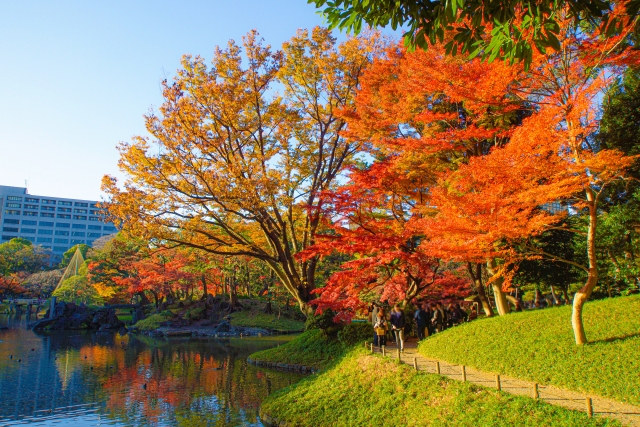
Koishikawa Korakuen in Bunkyo runs its evening opening from November 13 to 24 in 2026. Hours are 6:00 p.m. to 9:00 p.m., with last entry at 8:00 p.m. The garden closes at 5:00 p.m. after the daytime session and reopens at 6:00.
The event has a name worth knowing if you are searching in Japanese: Shinzan Koyo o Tanoshimu. It writes koyo as 光葉, with the character for "light," rather than the usual 紅葉 for crimson leaves.
Entry and exit use different gates: you go in through the West Gate and leave through the East Gate. Worth knowing if you are meeting someone or leaving bags.
The lighting picks out the Hitotsu-matsu pine, Horai-jima island, the Karamon gate and the yukitsuri rope cones, and there is projection mapping at two spots, the Tsukiji-bei wall and the Engetsu-kyo bridge. One thing to know before you go: the Tsutenkyo bridge and the Oi-gawa stream, two of the garden's best-known autumn views, are closed for construction and cannot be seen in 2026. The Tsukiji-bei projection mapping includes footage of their autumn colors.
Kitchen cars, a lantern stall and a limited wagashi set called Tsukiyo no Nishiki at the Biidoro Chaya round out the evening. The lantern stall and the Biidoro Chaya take cash only, and the Biidoro Chaya's last order is 8:00 p.m.; the kitchen cars vary.
Tickets are ¥1,000 in advance and ¥1,200 same day, ¥500 with a disability certificate plus one carer, and free for elementary-school children and younger. Advance tickets go on sale October 1 at 10:00 a.m. and stay available until 11:59 p.m. on November 12, through Seven Ticket, KKday and Asoview. If you miss the advance window, same-day tickets are sold online from midnight on November 13 until 7:30 p.m. on November 24. They are also sold at the West Gate window, 6:00 to 8:00 p.m. each night, cash only and in limited numbers.
Rikugien: the later one, and the better known
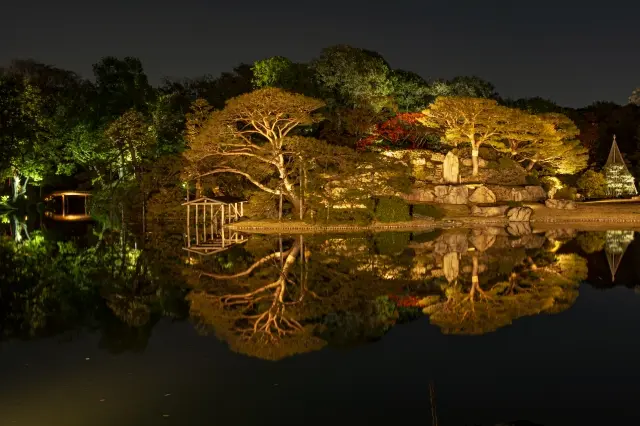
Rikugien in Bunkyo runs from November 25 to December 6 in 2026, 6:00 p.m. to 8:30 p.m., with last entry at 7:30 p.m. Maples ring the central pond and reflect off the water.
As at Korakuen, the garden closes at 5:00 p.m. and reopens at 6:00. After 6:00 p.m. only evening-viewing ticket holders get in; regular daytime admission does not cover it.
Tickets are ¥1,000 in advance and ¥1,200 same day, ¥500 with a disability certificate, free for elementary-school children and younger. The number sold per night is capped across advance and same-day sales combined, so same-day tickets can sell out, and buying online gets you a priority lane at the gate.
The advance-ticket release date has not been announced as of September 18, 2026. Korakuen's went on sale October 1, so check the official Rikugien notice once October begins.
For 2026 there is projection mapping on the storehouse wall and, new this year, in the bamboo grove. Full details are in our Rikugien autumn illumination guide.
The nearest station is Komagome on the JR Yamanote and Tokyo Metro Namboku lines, about 7 minutes on foot; Sengoku on the Toei Mita line is about 10 minutes.
Showa Kinen Park: no 2026 dates yet
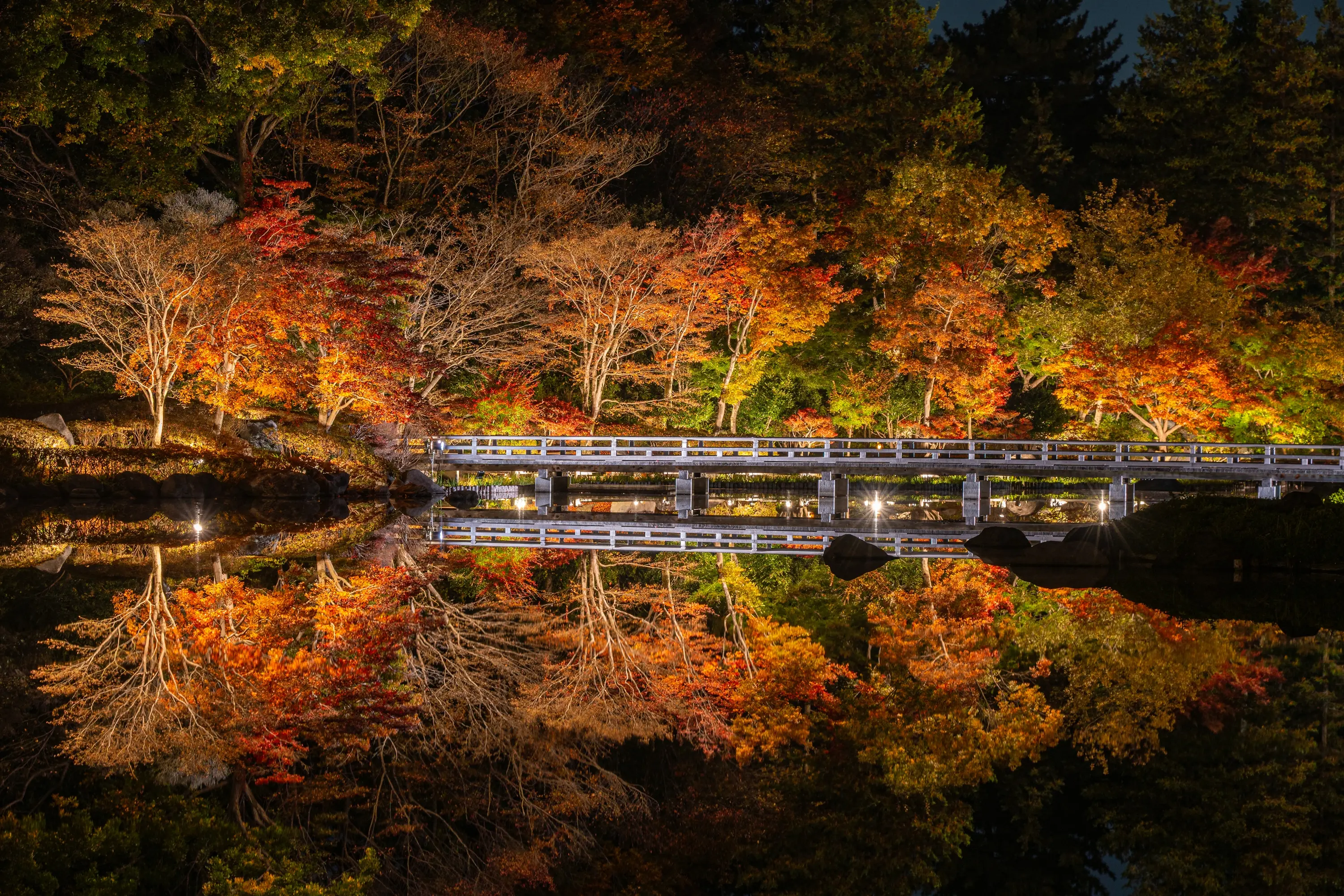
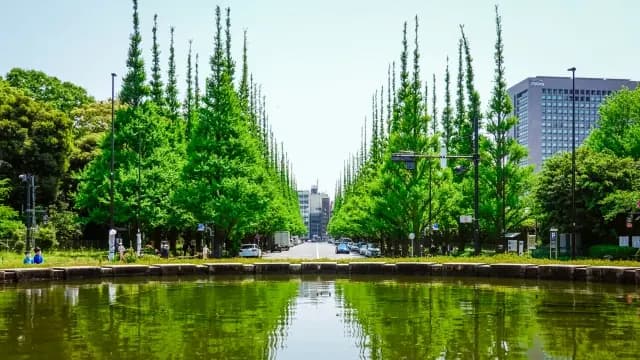
Showa Kinen Park in Tachikawa lets you walk among lit ginkgo avenues and a lit Japanese garden. In 2025 its autumn night walk ran October 30 to November 30, with lighting from 4:30 p.m. to 8:30 p.m., and pricing came in two layers: ¥450 adult park admission plus a separate night ticket for the Japanese garden, ¥1,200 online in advance or ¥1,300 at the window.
It is also the only one of the four whose notice spells out a bad-weather policy. In 2025 the lighting ran in rain, with no refunds given for rain alone, though its notice said refunds applied if storms or other emergencies made the event unworkable.
The 2026 dates have not been announced as of September 18. The park's published events stop at the cosmos festival, which runs September 12 to October 25.
Takahata Fudoson: lit on only a few nights
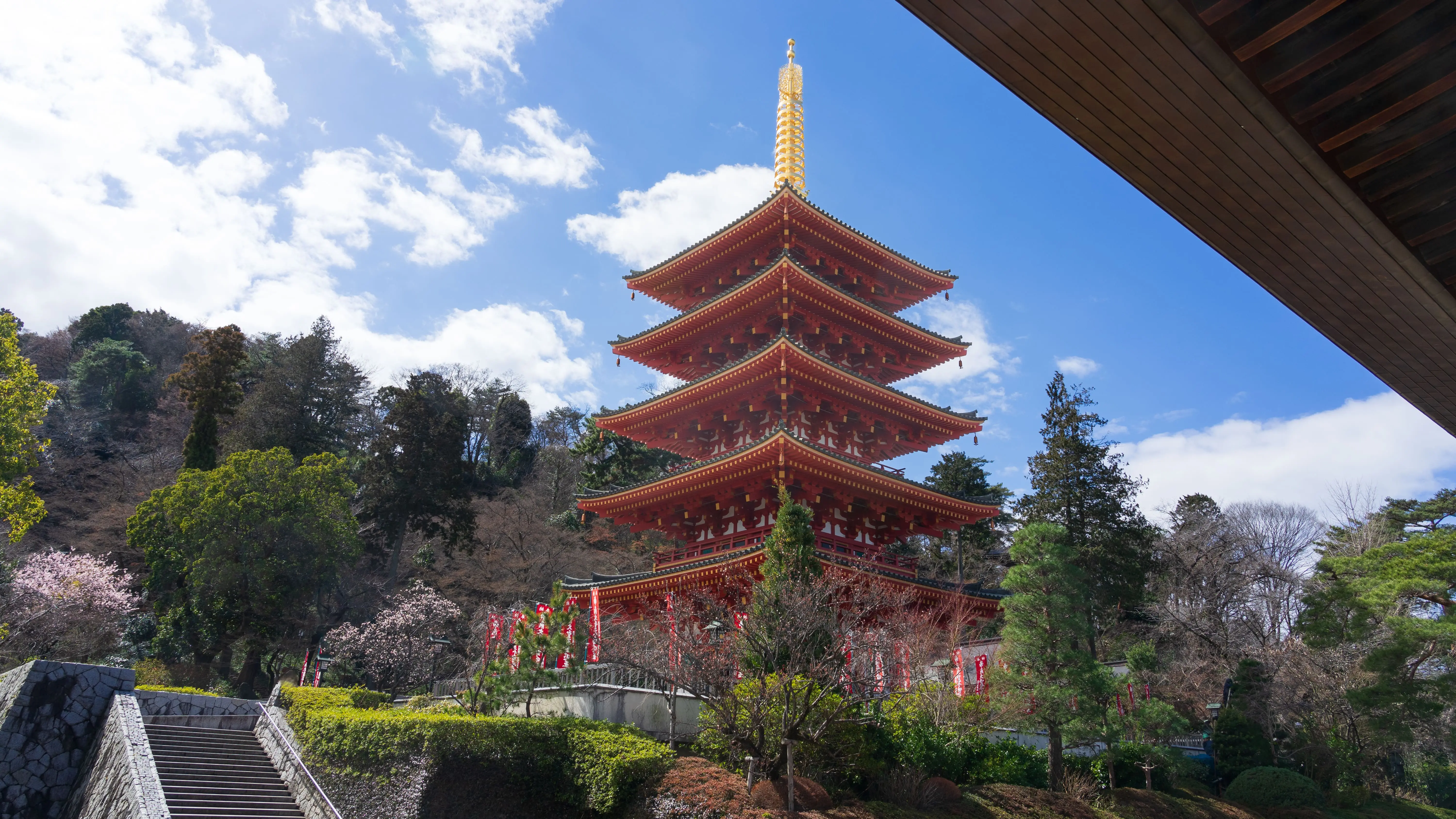
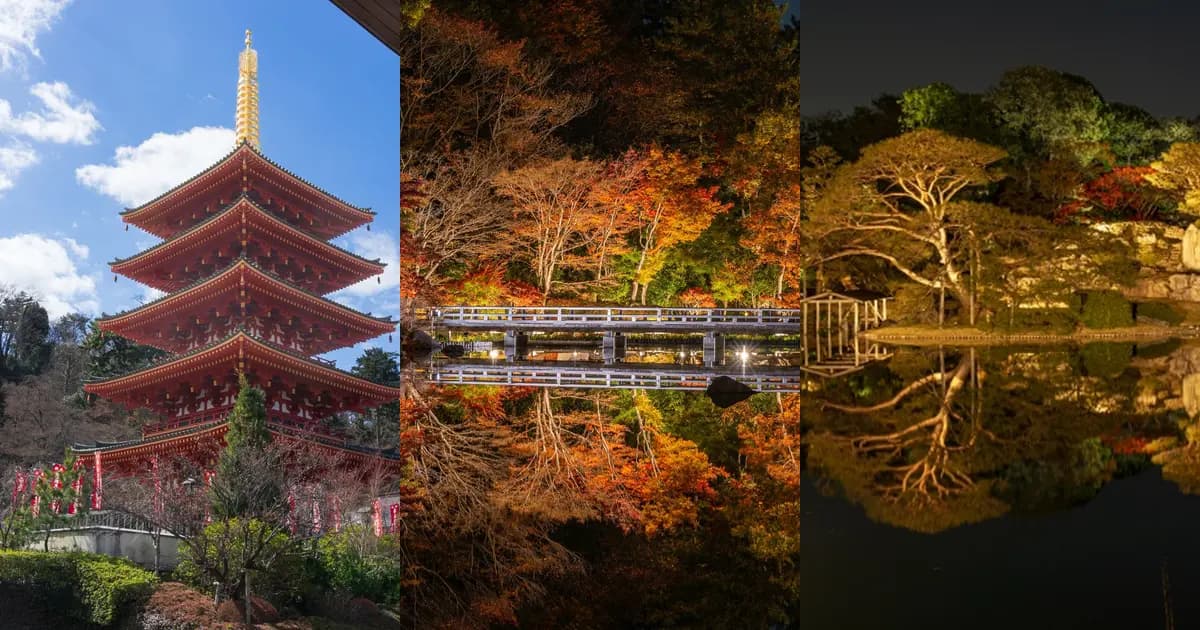
Takahata Fudoson in Hino is known for the maples along its approach and its lit five-storey pagoda. The catch is that the lights only come on for a handful of nights inside the maple festival, not every evening. In 2025 the festival ran November 18 to 30, but the nights with lighting were November 22 and 23.
Those two nights carry two separate events that happen to fall on the same dates. The pagoda lighting belongs to Mandoe, a Buddhist memorial service run by the temple. The lantern path along the approach, Takahata Momiji Toro, is a neighborhood event centered on the shopping streets, under different organizers.
The temple's own calendar of annual observances lists Mandoe on November 23 alone, and in past years it has been a single night. Two nights is not guaranteed. The 2026 dates are not out, so match your date to the temple's own announcement and the Hino tourism association before you go.
Smaller options beyond the four
The four above are the large, well-documented ones. They are not the only places in Tokyo where leaves are lit after dark, though — wards and suburban cities run smaller evenings of their own.
- Kyu-Shibusawa Garden, Asukayama Park (Kita ward): November 29 to December 7 in 2025, sunset to 9:00 p.m., last entry 8:30, free
- Momijidani, Shiba Park (metropolitan, Minato ward): billed as Momijidani no Taki Akari, December 6 to 25 in 2025, 4:30 to 9:00 p.m., free
- Mejiro Garden (Toshima ward): billed as TERASU, November 22 to December 7 in 2025, 5:30 to 9:00 p.m., last entry 8:30, ¥300
None of the three has announced 2026 dates as of September 18. Asukayama and Shiba Park cost nothing, which makes them easy to slot in on a night when the ticketed gardens do not fit.
Shinjuku Gyoen is worth a mention too: it lit its autumn leaves in 2019 and again in 2023. Whether it does so in 2026 has not been announced by the Ministry of the Environment or the parks association.
Before you head out at night
It gets cold. Tokyo evenings from mid-November into December are much colder than the daytime, so bring an extra layer. What to wear in Japan in autumn goes into more detail.
Neither the Koishikawa Korakuen nor the Rikugien notice for 2026 says what happens in bad weather, so check the official page on the day if rain is forecast. Tripod and photography rules differ by venue.
One extra: the nine metropolitan gardens run an autumn stamp rally from October 10 to December 6. It costs nothing beyond each garden's admission, and both Koishikawa Korakuen and Rikugien are on the list.
This article was translated from the original Japanese with AI assistance and reviewed by our editorial team. The Japanese version is authoritative.