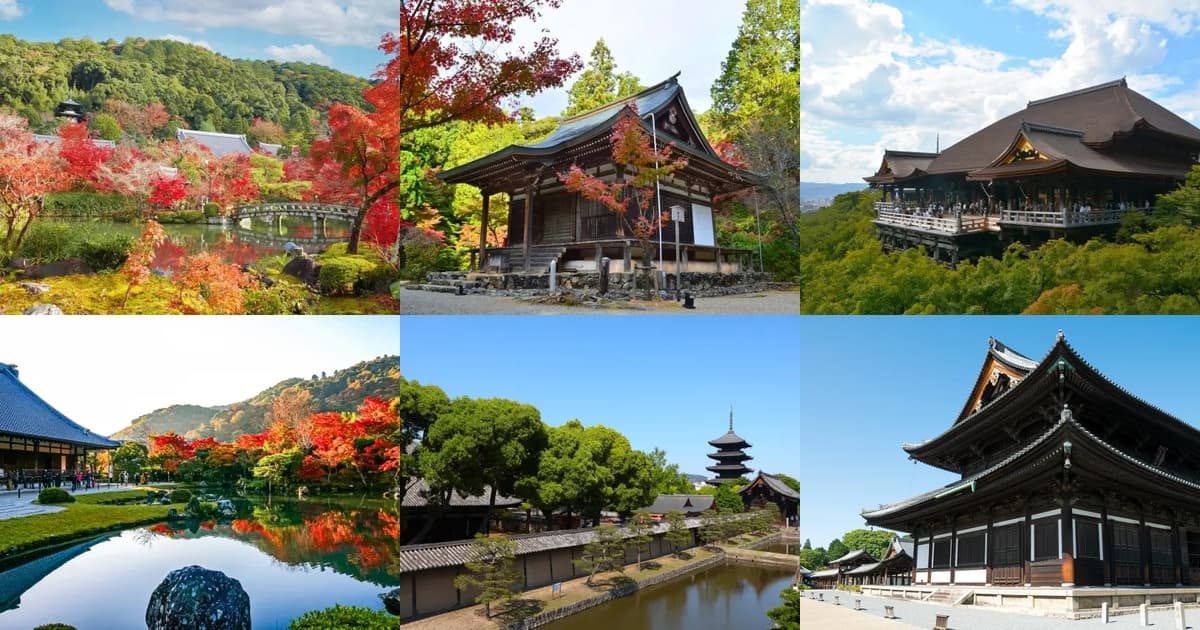
Autumn is one of the best times to travel in Japan, but it is also the season when a single suitcase has to cover the widest range of weather. In Kyoto you can walk through a temple garden in a light sweater at midday and still want a scarf by the time temples open for evening viewing. Go up into the mountains, or north to Hokkaido, and it is already winter.
Here is the short answer: autumn in Japan is a layering season. Daytime in the cities is mild (highs around 22°C in October and 17°C in November), but mornings, evenings, and high places are cold, so you pack pieces you can add and take off through the day rather than one warm coat.
This guide breaks it down by region and by altitude, using Japan Meteorological Agency climate normals, so you can see exactly how much warmth you need for where you are actually going. It pairs with our summer guide and our national autumn-foliage calendar.
October is a light-layers month, November wants a real jacket, and anything above about 1,000 meters is a season ahead of the city.
Autumn temperatures across Japan
Two numbers decide what you pack: the daytime high and the early-morning low. The gap between them in autumn is wide, which is why layering beats a single thick coat. These are JMA climate normals (1991–2020).
City | October (high / low) | November (high / low) |
|---|---|---|
Tokyo | 22.0°C / 14.8°C | 16.7°C / 8.8°C |
Kyoto | 23.4°C / 14.4°C | 17.3°C / 8.4°C |
Toyama (for Tateyama) | 21.6°C / 13.1°C | 15.7°C / 7.3°C |
Odawara (for Hakone) | 22.2°C / 14.1°C | 17.4°C / 8.3°C |
Asahikawa (for Daisetsuzan) | 14.9°C / 4.4°C | 6.2°C / −1.5°C |
Read the columns as a calendar. In October, Tokyo and Kyoto still feel like a long, mild autumn: a shirt with a light sweater or cardigan will see you through most of the day. By November, the same cities drop to morning lows around 8°C, so you want a proper jacket and something warm around your neck. Hokkaido runs a full month ahead of the main islands: Asahikawa is already near freezing on November mornings.
Western cities like Osaka, Hiroshima, and Fukuoka run close to Tokyo and Kyoto. Only the far south stays warm enough to skip autumn layers almost entirely; in Okinawa you can dress much as you would in early fall elsewhere.
The morning-to-afternoon swing is the part travelers underestimate. In Kyoto in November the average high is 17.3°C but the average low is 8.4°C, a gap of about 9°C in a single day. If you are up before dawn for a quiet temple, or out late for an evening temple visit, dress for the low, not the high.
The one rule for autumn: dress in layers
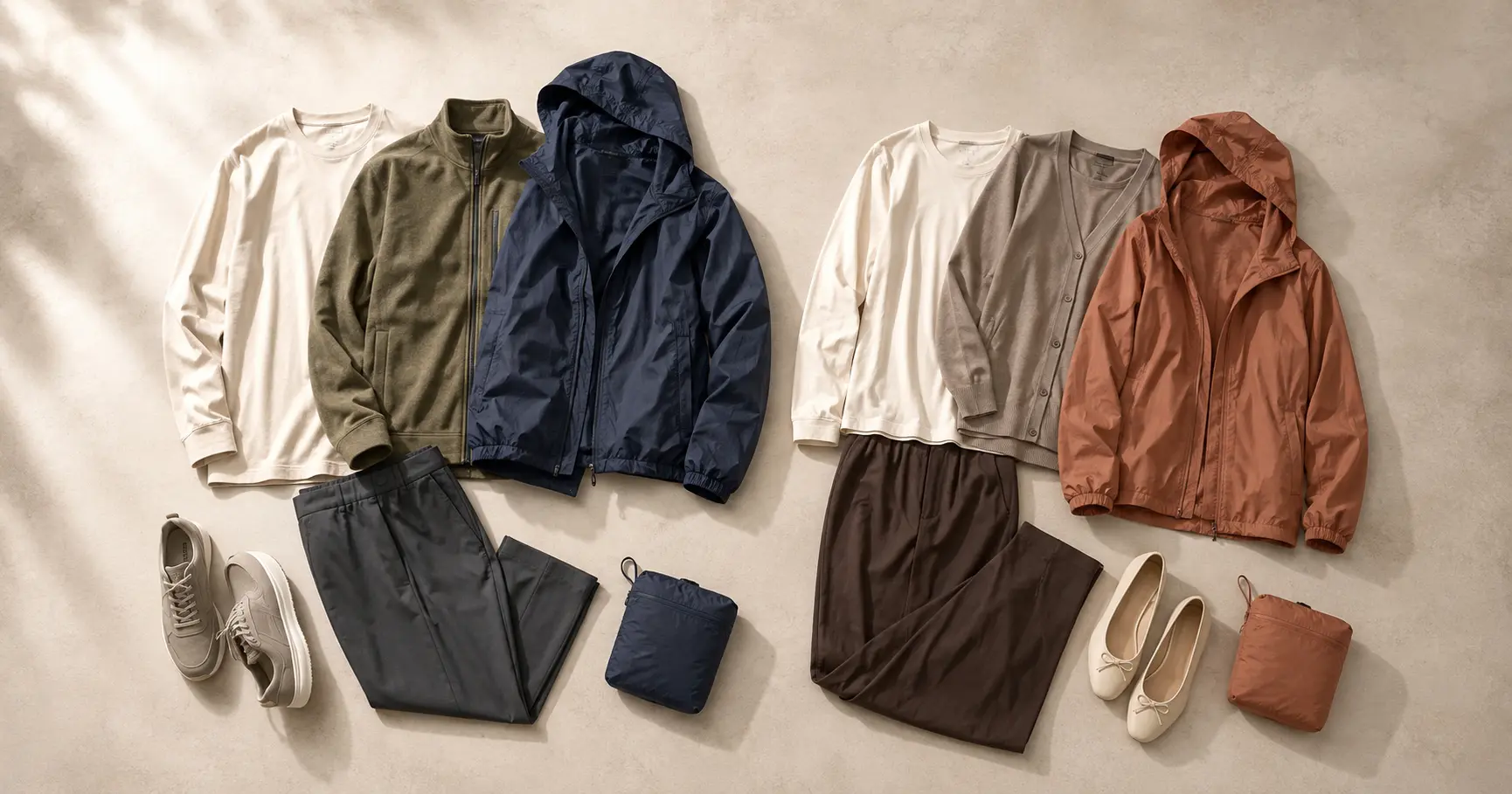
Autumn is not about one heavy piece. It is about three light ones you can add and remove as the day warms up and cools down: a base layer (a shirt or long-sleeve tee), a mid layer (a sweater, fleece, or cardigan), and a wind-resistant outer layer you can fold into your bag when the sun is out.
A packable jacket that blocks wind matters more than thickness alone. Japanese autumn days are often still and sunny at noon and sharply colder in shade, wind, and after sunset. A thin down or a shell you can stuff away handles that swing better than a bulky coat you are stuck carrying.
If you arrive one layer short, you can add one cheaply on the spot. Uniqlo and GU sell light down, fleece, and their Heattech base layers at low prices in almost every city, and they are a normal part of how residents dress for the season. Buying one warm layer after you arrive is often smarter than guessing the weather from home.
Up high and up north: already winter
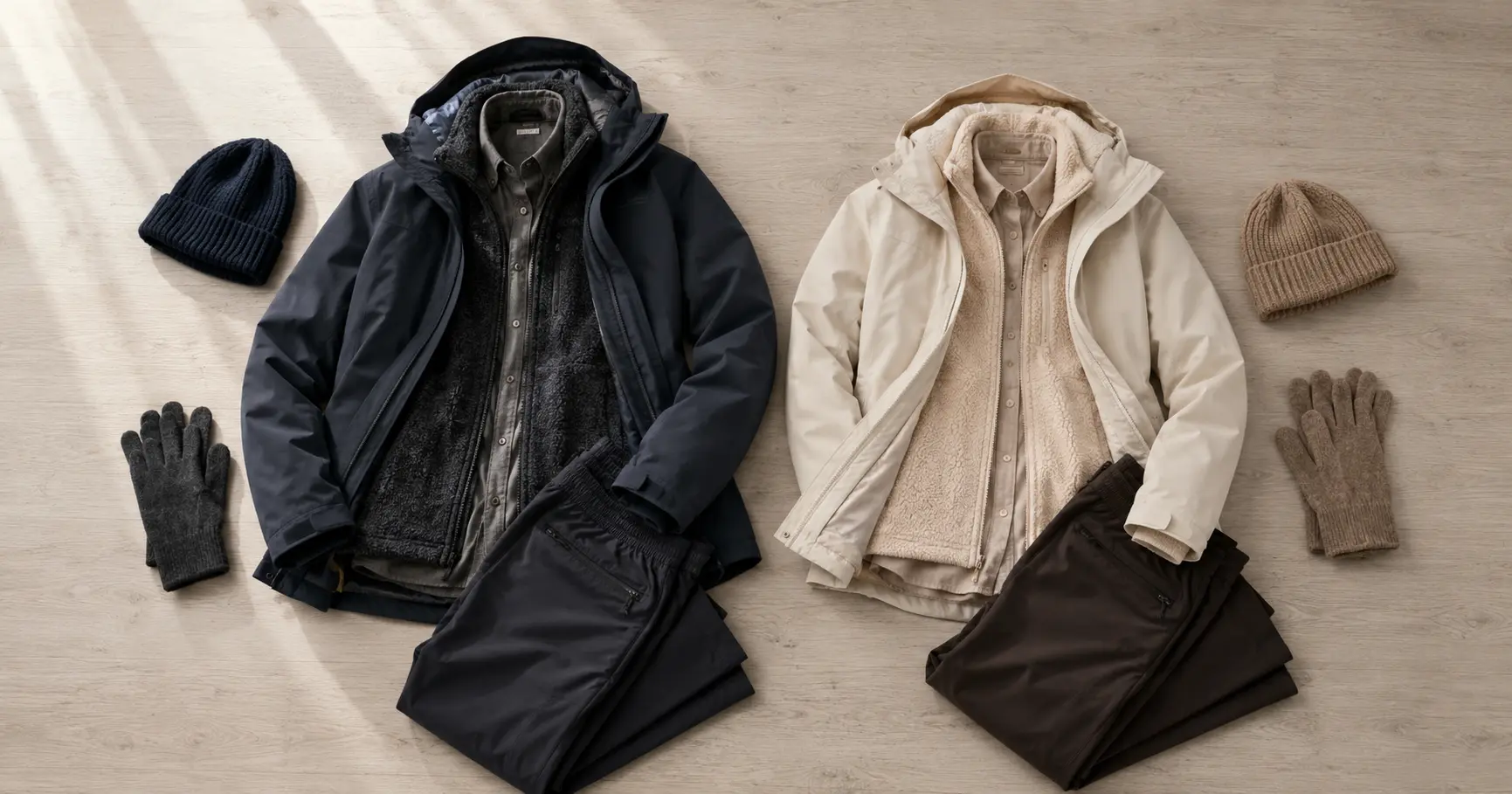
If your trip includes the mountains or Hokkaido, pack a real winter layer, not just an autumn one. Altitude and latitude change the temperature faster than the calendar does. As a rough guide, the air cools by roughly 0.6°C for every 100 meters you climb, so a mountain viewpoint can sit 10°C or more below the town at its base.
The clearest example is the Tateyama Kurobe Alpine Route. At Murodo (2,450 m), Toyama's official tourism data puts the 9 a.m. temperature in late October at about 3.7°C, and the route operator warns that snow can already fall up there in October. Its guidance recommends a heavy wool long-sleeved top, a fleece, and a windbreaker even during the autumn foliage weeks. Treat it as a winter day trip launched from an autumn city.
Winter arrives even earlier in Hokkaido's high country. On Mount Asahidake in Daisetsuzan, the first dusting of snow arrives around September 25 in an average year, which is also when its foliage peaks, the earliest in the country. Nikko's Oku-Nikko highlands and the upper slopes of Hakone are milder than that but still noticeably colder than Tokyo, so carry gloves and a warm hat if a high viewpoint is on your list. For the cities themselves, our Kyoto and Tokyo foliage guides cover when each spot turns.
Rain and typhoons in early autumn
Keep a folding umbrella in your bag through September and October. Early autumn overlaps with typhoon season: JMA's climate normals put the peak for typhoons making landfall in September (about one a year on average), and storms can still approach in October. A typhoon can mean heavy rain, flight delays, and planned train suspensions, so build a little slack into an early-autumn itinerary.
For everyday showers, a compact folding umbrella is easier than buying a new plastic one each time it rains, and that packable jacket doubles as your rain layer.
Shoes, temples, and nice dinners
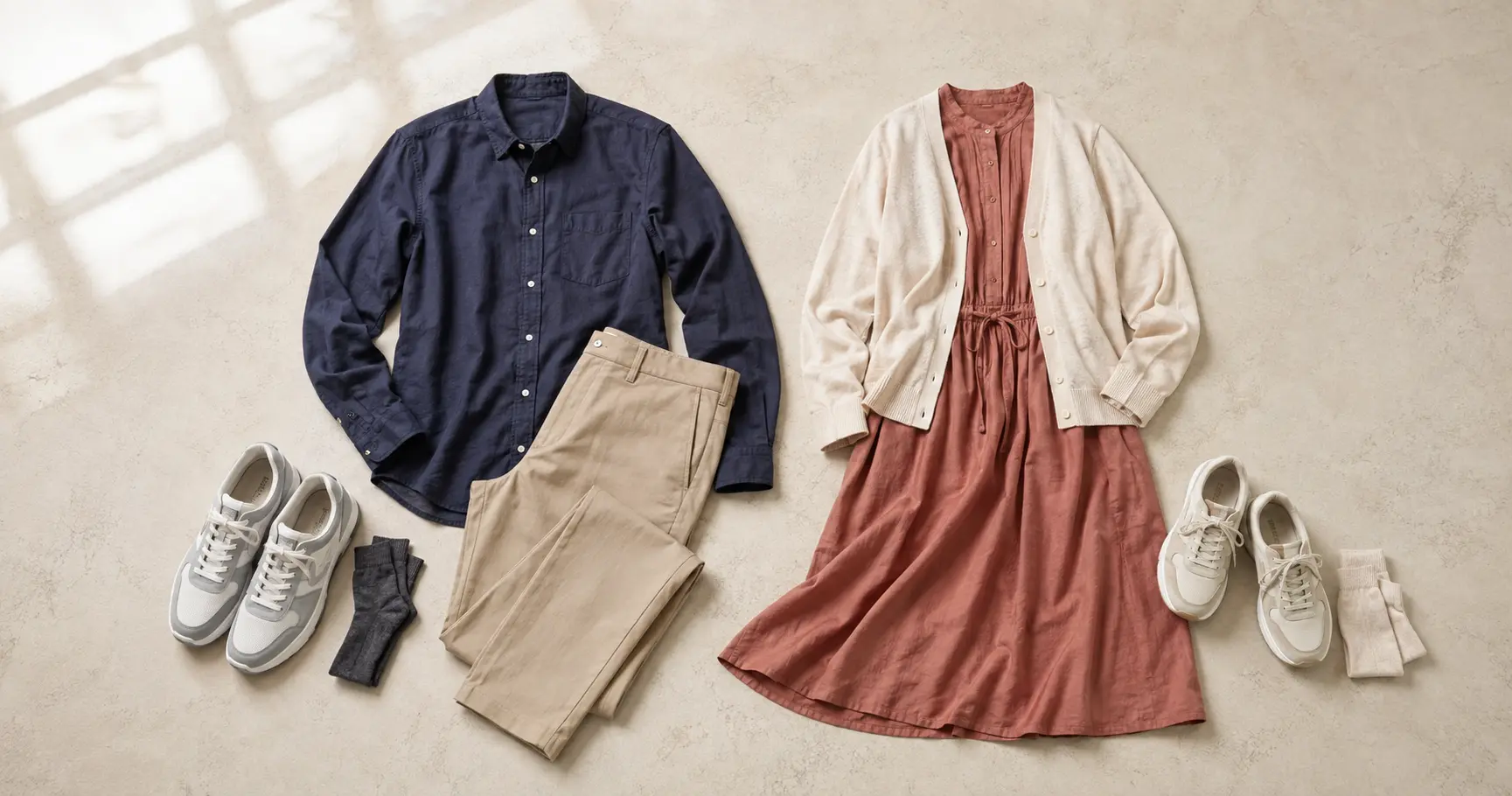
Pack shoes you can walk long distances in, because autumn is peak sightseeing and you will cover more ground than you expect: long station transfers, temple approaches, and hillside foliage paths. Broken-in sneakers or comfortable walking shoes beat anything new. Clean socks are worth a thought too, since you take your shoes off inside many temples and traditional buildings.
For temples, there is no strict dress code, but covering your shoulders and knees is the polite norm at places of worship. For a high-end sushi counter, a kaiseki restaurant, or a hotel dining room, skip the shorts and sandals and bring one tidier outfit, such as a collared shirt or a simple dress, so a nicer dinner never leaves you underdressed.
Pack it, buy it, or rent it?
You have three ways to cover autumn's range, and the right one depends on how much luggage you want to carry. Bulky layers eat suitcase space fast, especially if only one cold mountain day is on your itinerary.
Option | Rough cost | Best for |
|---|---|---|
Bring from home | Free, but fills your case | Trips that stay in one climate |
Buy in Japan (Uniqlo, GU) | From about ¥1,500 a layer | Adding one warm piece you will reuse |
Rent (Laplace closet) | From ¥400 a day plus ¥800 delivery and return | One cold day, or traveling carry-on only |
Laplace closet is a clothing rental service for travelers in Japan: you collect your clothes at your hotel's front desk when you check in and hand them back at checkout, with cleaning included. Rentals start at ¥400 a day, delivery and return is a flat ¥800, and signing up is free; you book before your trip, and it delivers nationwide apart from some remote islands.
It is worth a look if a single mountain day would otherwise force a winter coat into your carry-on, or if you would rather not haul cold-weather layers around for a two-week trip. If you are traveling light in general, our Tokyo luggage-storage guide covers where to leave bags for the day.

Your autumn packing checklist
A short list for an autumn trip that includes both cities and mountains:
- A base layer plus a sweater or fleece (the two you will wear most days)
- A packable wind- and water-resistant jacket
- A scarf, and gloves plus a warm hat if you are heading to the mountains
- A folding umbrella for typhoon-season showers
- Comfortable, broken-in walking shoes and clean socks
- One tidier outfit for temples and nicer restaurants
- A heavier warm layer only if Tateyama, Daisetsuzan, or another high point is on your route
Get the layers right and autumn is the easiest season to enjoy in Japan: mild afternoons for walking, cool clear air, and the best foliage in the country. When in doubt, pack for a 9°C morning and a 20°C afternoon, and let the layers do the rest.
This article was translated from the original Japanese with AI assistance and reviewed by our editorial team. The Japanese version is authoritative.