
Picking the date is the hard part. Every guide says "late November," which is true and completely useless when you're deciding which week to book.
The Japan Meteorological Agency has been recording the exact day Tokyo's ginkgo and maple turn each year, at reference trees in Kitanomaru Park. That data gets you to an actual week.
I've used it here to pick a first-choice week, then laid out the closing times that trip people up. They aren't the same at every garden.
The JMA Averages: Ginkgo November 23, Maple November 28
The JMA publishes each year's observation date along with how many days it differed from the average. Work backward and you get the averages themselves.
Event | Average (derived from the published deviation) | 2025 | 2024 |
|---|---|---|---|
Ginkgo (イチョウ) turning yellow | around Nov 23 | Nov 22 | Dec 3 |
Maple (イロハカエデ) turning red | around Nov 28 | Nov 23 | Dec 3 |
In practice the two have been arriving together. They were one day apart in 2025, and in 2024 both landed on December 3. Going by that, one day has covered both the ginkgo avenues and the maple gardens.
The bigger variable is the year itself. In 2024 the ginkgo ran ten days late and the maple five. The average is a thirty-year statistic, but two recent years alone swung that far, so treat a late season as the real risk.
If you only get one day, make it the last week of November. If you can keep the first week of December loose, you're covered in a late year.
One caveat on the definition: the JMA's "turning" date is when most of the leaves have changed, not when color first appears. Read these as the dates the color is fully in, not the start.
Source: JMA phenological observations
Official Timing Estimates, Park by Park
Almost none of them say anything. Rikugien (六義園) and Koishikawa Korakuen (小石川後楽園) list hours and admission, and say nothing about when the leaves turn.
Of the places covered here, Showa Kinen Park (国営昭和記念公園) is the only one whose official site puts a date range on it. So the table below shows where each estimate comes from.
Place | Estimated timing | Basis |
|---|---|---|
Central gardens (Rikugien, Koishikawa Korakuen, Hamarikyu) / Shinjuku Gyoen | Late Nov – early Dec | JMA maple average, around Nov 28 |
Showa Kinen Park ginkgo avenue | November | Official: "the peak of the yellow leaves in November" |
Mount Takao (599 m) | No estimate given | Lowland averages don't apply at elevation. |
Todoroki Valley | No estimate given | No timing published |
Mizumoto Park metasequoia | No estimate given | Species not covered by JMA observations |
Tokyo peaks late by Japanese standards. If the mountains are also on your route, check those separately rather than assuming Tokyo's dates carry over.
Mount Takao: 30 Minutes Earlier for December's Last Cable Car
.webp)
The cable car operator's official page reports foliage conditions separately for the summit area, the cable car line, and the base — a roundabout way of saying the mountain doesn't turn all at once.
Departure times shift by month and by day of the week. From September through November the last car leaves at 5:45pm on weekdays and 6:00pm on weekends and holidays. In December that moves to 5:15pm and 5:30pm, and if your first-choice week slides that late, the half hour matters.
The chairlift stops even earlier: 4:30pm from May through November, 4:00pm from December through April. Check only the cable car times and you'll get up fine, then find the lift closed when you want to come down.
Item | Detail |
|---|---|
Cable car fare | Adult ¥490 one way / ¥980 return; child ¥250 / ¥500 |
First departure | 8:00am year-round |
Last departure (Sep–Nov) | Weekdays 5:45pm / weekends and holidays 6:00pm |
Last departure (Dec) | Weekdays 5:15pm / weekends and holidays 5:30pm |
Journey time | About 6 minutes, every 15 minutes (extra runs when busy) |
Chairlift closes | 4:30pm May–Nov / 4:00pm Dec–Apr (about 12 minutes, same fare) |
Getting there from Shinjuku is covered in Mount Takao Day Trip 2026: No Transfers From Shinjuku, ¥1,090 Each Way.
Official site: Mount Takao
The Central Gardens: Rikugien, Koishikawa Korakuen, Hamarikyu
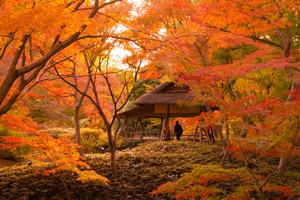
All three charge ¥300 general admission, ¥150 for junior high school students, and ¥150 for visitors 65 and over. Elementary school children and younger are free.
They open at 9:00am and close at 5:00pm, with last entry at 4:30pm. In late November the light is going well before that, so if you're shooting, aim to be inside before 3:00pm.
Koishikawa Korakuen has two gates on opposite sides of the garden, which is worth sorting out before you set off. From the west exit of Suidobashi Station on the JR Sobu Line it's five minutes to the east gate and eight to the west gate; from exit C3 at Iidabashi on the Toei Oedo Line it's three minutes to the west gate.
Rikugien is a seven-minute walk from Komagome Station (JR Yamanote and Tokyo Metro Namboku lines). Komagome and Suidobashi are easy to fit into one day.
Hamarikyu (浜離宮恩賜庭園) sits on the bay side of the city and keeps the same hours and admission, though its official page doesn't publish a timing estimate.
Official site: Tokyo Park
Shinjuku Gyoen: Monday Closures in Peak Week
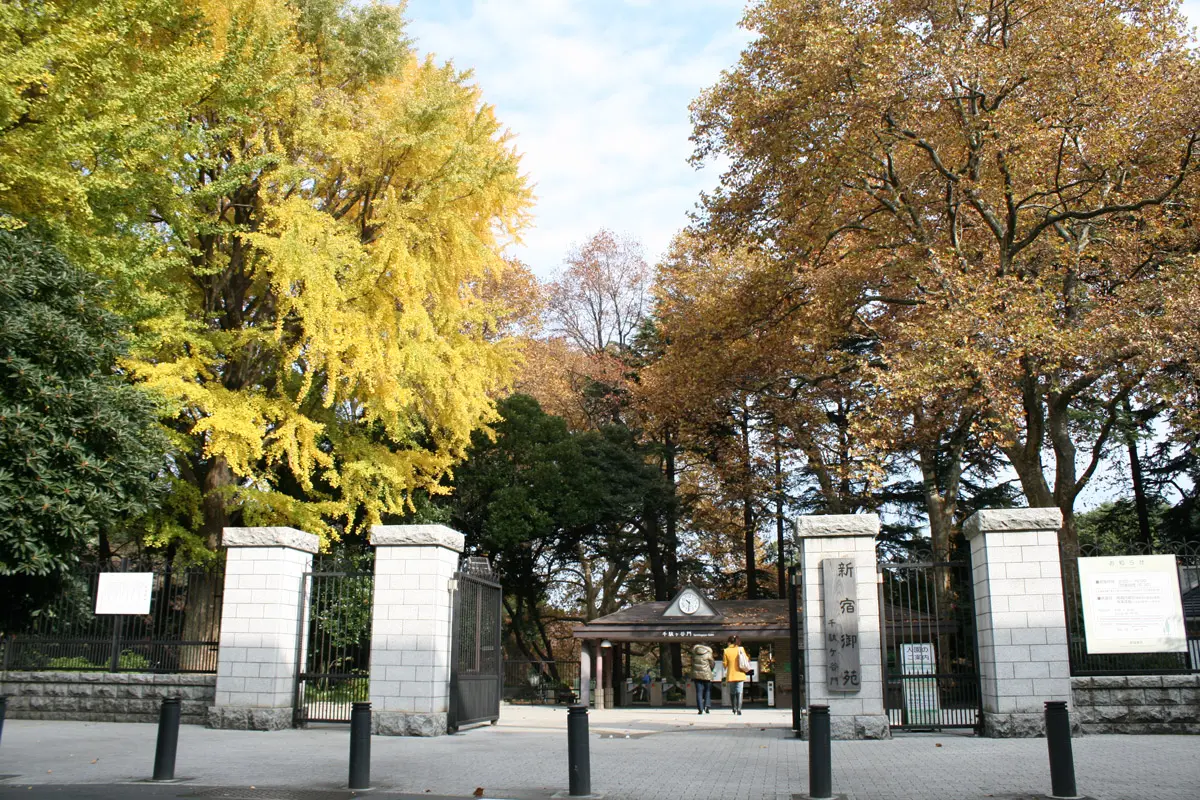
From October 1 to March 14, Shinjuku Gyoen (新宿御苑) runs 9:00am to 4:30pm with last entry at 4:00pm — half an hour earlier than the metropolitan gardens. Admission is ¥500 general, ¥250 for visitors 65 and over and for students in high school and above, free for junior high and younger.
It closes on Mondays, shifting to the next weekday when a Monday falls on a public holiday. It stays open every day from November 1 through 15, but that window ends before the last week of November, which is the week this article recommends.
Here's how that lands in 2026. November 23 is a Monday and a public holiday, so the garden stays open and the closure moves to Tuesday, November 24. Monday, November 30 is a normal closing day. If either of those is your garden day, go to Rikugien or Koishikawa Korakuen instead.
Official site: Shinjuku Gyoen
Showa Kinen Park: The Ginkgo Avenue and a 4:30pm Close
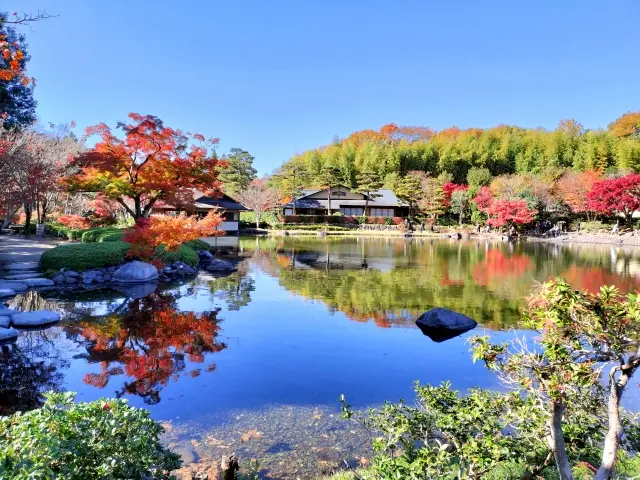
The Katarai ginkgo avenue (かたらいのイチョウ並木) runs about 300 meters. The park calls it "a tunnel of gold" at the November peak.
Watch the hours here. From November through February the park runs 9:30am to 4:30pm, closing half an hour earlier than the metropolitan gardens. Show up late in the afternoon on central-Tokyo hours and you won't get in.
Admission is ¥450 for adults, ¥210 for visitors 65 and over, free for junior high and younger. From Tokyo Station it's about 40 minutes to Tachikawa on the Chuo Rapid Line, then one stop on the Ome Line to Nishi-Tachikawa, and two minutes on foot to the Nishi-Tachikawa gate.
The Japanese garden has maples, but the park has announced that its pond is being drained and cleaned from June 24 "into September or later." The refill waits on a national leak survey, so the end date isn't fixed.
If the Japanese garden is the reason you're going, check the notices page. Weather closures are posted there too.
Item | Detail |
|---|---|
Hours (Nov–Feb) | 9:30am–4:30pm |
Admission | Adult ¥450 / 65+ ¥210 / junior high and younger free |
Access | Tokyo Station → Tachikawa about 40 min → Ome Line one stop to Nishi-Tachikawa → 2 min walk |
Japanese garden pond | Drainage and cleaning, June 24 "into September or later" (end date not fixed) |

Todoroki Valley: First Autumn Since Reopening and a Photography Notice
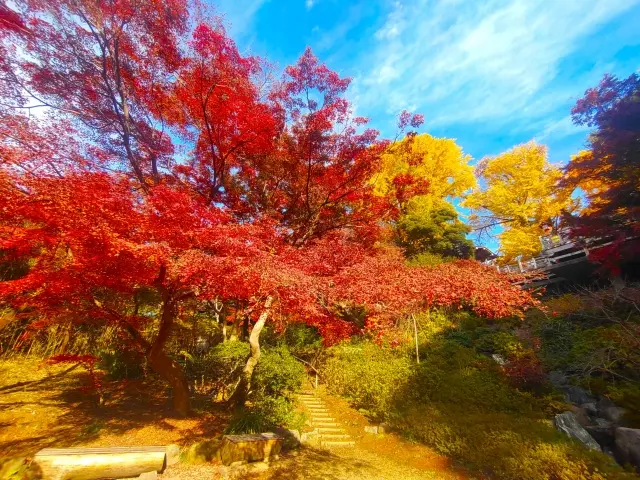
A tree came down in July 2023 and most of Setagaya's Todoroki Valley Park (等々力渓谷公園) was closed off. According to the ward, it reopened on March 24, 2026, which makes this the first autumn since.
There's one notice to read first if you're going for photographs. Citing crowding and visitor safety, the ward states: "As crowding is expected, we are not currently accepting photography at Todoroki Valley Park." The ward doesn't define what this covers, so check its page before you plan any shoot.
Hours are 9:00am to 4:30pm from November through February, and it's a three-minute walk from Todoroki Station on the Tokyu Oimachi Line. Parts of the path have no lighting and the ward asks visitors not to enter after dark, so plan to be out while it's still light.
Official site: 
等々力渓谷公園
Mizumoto Park: The Metasequoia Grove
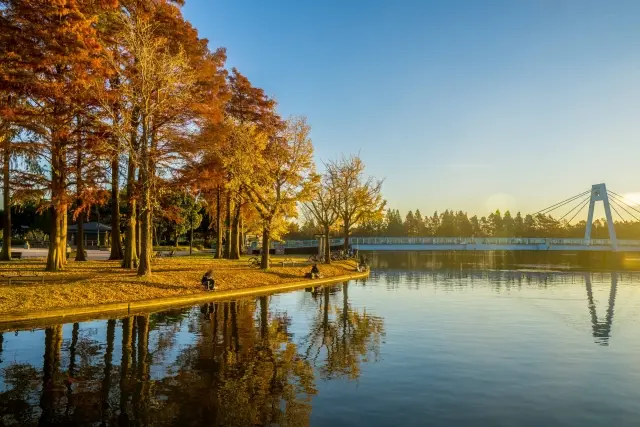
Mizumoto Park (水元公園) in Katsushika has a grove of roughly 1,500 metasequoias (dawn redwoods), the largest stand in Tokyo's metropolitan parks. They're conifers, so they go a rust brown rather than red or gold.
Entry is free and the park never closes, which means no 4:30pm scramble. The species isn't part of the JMA's observations and the park doesn't publish timing, so the park's own page is the only place to check conditions.
From Kanamachi Station (JR Joban and Tokyo Metro Chiyoda lines) take a Keisei bus bound for the Togasaki depot (戸ヶ崎操車場) or Nishi-Mizumoto Sanchome (西水元三丁目), get off at Mizumoto-koen (水元公園), and walk seven minutes.
Official site: Mizumoto Park
Evening Light-Ups 2026: Rikugien and Showa Kinen Park
Rikugien's evening viewing runs November 25 (Wed) to December 6 (Sun) in 2026, 6:00pm to 8:30pm with last entry at 7:30pm. Tickets are ¥1,000 in advance (online only) or ¥1,200 on the day, and the advance-sale date hasn't been announced yet. Our Rikugien light-up guide has the details.
Showa Kinen Park runs its Autumn Night Walk (秋の夜散歩) from October 29 (Thu) to November 29 (Sun), lit 4:30pm to 8:30pm (last entry 8:30pm, closing 9:00pm). Park admission covers the ginkgo avenue. After 4:30pm the Japanese garden needs a separate light-up ticket, except on October 29 and 30.
Meiji Jingu Gaien is a different case. The most recent ginkgo festival listed on its official events page ran November 15 to December 1, 2019, and the page hasn't been updated since. There's nothing to plan around, so don't build a late-November itinerary on the festival.
Redevelopment is underway across the area and there's little official information about access to the avenue itself, so I'm not going to guess at what you'll find there.
Spot-by-Spot Guides
For illumination tickets, entry fees, and directions, see the full guide to each spot.
In Tokyo
- Mount Takao Autumn Leaves 2026
- Shinjuku Gyoen Autumn Leaves 2026
- Rikugien Autumn Illumination 2026
- Meiji Jingu Gaien Ginkgo Avenue 2026
- Tokyo Autumn Illumination 2026
Day Trips from Tokyo
- Kamakura Autumn Leaves 2026
- Hakone Autumn Foliage 2026
- Kawaguchiko Autumn Leaves 2026
- Nikko Autumn Leaves 2026
Across Japan
Before You Go
The peak clusters in late November, so if your dates fall on a weekend, expect crowds at the metropolitan gardens and on Takao. In 2026, November 23 is a Monday public holiday, making November 21–23 a three-day weekend right before peak. Worth avoiding if your dates are flexible.
Once your week is close, go straight to each site's autumn conditions page. One windy night or heavy rain can strip the trees, so if you can move by a few days, decide the final date on the forecast.
If you're combining this with Ueno, Ueno Park One-Day Itinerary 2026: Time It Around the Morning Lotus sets out the order to do it in.
This article was translated from the original Japanese with AI assistance and reviewed by our editorial team. The Japanese version is authoritative.
