
The color starts in November, around Kita-Kamakura, and the city as a whole peaks from late November into early December. The Kamakura City Tourist Association calls Kamakura late compared with other areas.
Where there's a fee, it's 400 or 500 yen, and most gates shut between 4:00 and 4:30pm. December is what trips people up: at one temple, the hours actually get shorter. Arrive after 4pm without checking and you're looking at a closed gate.
Engaku-ji closes at 4pm from December through February. Of the six sites here, it's the only one whose hours shift during the foliage season.
Tokyo peaks in the last week of November, so Tokyo first, Kamakura second is a sequence that actually works. I've covered the Tokyo side, including which parks close at 4:30pm, in Tokyo Fall Foliage 2026: Peak Week and 4:30pm Park Closings.
Peak Timing: Late November to Early December
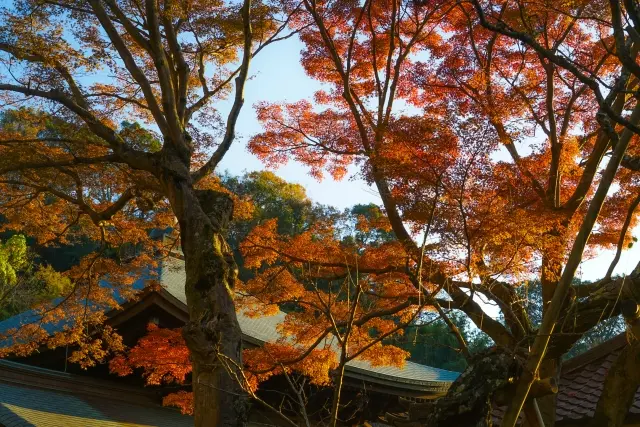
The tourist association's 2025 color reports show how much the timing swings from temple to temple. At Tsurugaoka Hachimangu, the cherry trees along the raised Dankazura (段葛) approach were in autumn color by November 25, and the parent-and-child ginkgo (親子イチョウ) on the grounds had turned as well. Kencho-ji was logged at peak throughout the grounds on November 28.
There's still color in December, but you have to pick where you go. On December 2, the maples in Meigetsu-in's rear garden were peaking, and Hokoku-ji was too. Engaku-ji had passed its overall peak by then, though color was still holding around the staircase up to the Sanmon (三門) gate.
One caveat on Meigetsu-in: that rear garden opens only during the iris season and the foliage season, and getting in costs an extra 500 yen. More on that below.
By December 16, most of Hase-dera's trees were past peak. The stretch between the sutra repository and the start of the viewing trail was still holding, though.
If you only have half a day, work backwards from those records. Kencho-ji was logged at peak on November 28 and Engaku-ji had already passed its peak by December 2, which makes the last week of November the safer bet for the Kita-Kamakura pair — both sit a walk from the same station. Come in December instead and Meigetsu-in and Hokoku-ji are the steadier choices.
Every date above comes from the 2025 season. For 2026, check the association's site for current color reports before you commit to a day.
Hours and Admission: Six Temples and Shrines
These are six of the sites the tourist association tracked in its 2025 color reports, in order of who shuts the gate first.
Temple / Shrine | Visiting hours | Admission (high school and up) | Access |
|---|---|---|---|
Meigetsu-in (明月院) | 9:00–16:00 | 500 yen | 10 min walk from JR Kita-Kamakura Station |
Hokoku-ji (報国寺) | 9:00–16:00 | 400 yen | Bus from Kamakura Station, 3 min walk from Jomyoji stop |
Engaku-ji (円覚寺) | 8:30–16:30 (16:00 from December to February) | 500 yen | 1 min walk from JR Kita-Kamakura Station |
Kencho-ji (建長寺) | 8:30–16:30 | 500 yen | About 15 min walk from JR Kita-Kamakura Station |
Hase-dera (長谷寺) | Last entry 16:30 (gates open 8:00, grounds close 17:00) | 400 yen | 5 min walk from Hase Station on the Enoden line |
Tsurugaoka Hachimangu (鶴岡八幡宮) | Romon gate (楼門) 6:00–20:00 | No admission fee listed (treasure hall 200 yen) | 10 min walk from Kamakura Station east exit |
Two of the six publish a second time on top of their opening hours: Hase-dera gives a last-entry time, and Engaku-ji gives a time you have to be off the grounds by. The other four publish neither, so whether the posted closing time is the ticket window or the gate itself is left unstated — except at Meigetsu-in, where the listing calls it a gate close.
That silence isn't permission to turn up at 3:58. Treat 30 minutes before the posted closing time as your own cut-off, and you'll be fine at all six.
Tsurugaoka Hachimangu is the odd row here. It lists no admission fee at all and runs on the Romon gate hours instead — hours it has posted since April 1, 2024 as a temporary arrangement rather than a permanent schedule.
Japanese temples price by school level rather than by age. Elementary and junior high school students pay 200 yen at Hokoku-ji, Engaku-ji, and Kencho-ji, and 300 yen at Meigetsu-in. Hase-dera is the exception: its English guide puts the 200 yen rate at ages 6 to 11, so plan on the adult rate for a junior high school student.
Hokoku-ji sells a matcha ticket for 600 yen on top of admission, and sales end at 3:30pm. If you want matcha with the bamboo grove in front of you, be through the gate by 3pm. The temple also notes that ticket sales may pause when it gets crowded.
Kencho-ji states on its site that all payments are cash only. None of the other five publish anything about payment methods, so bring cash either way.
Engaku-ji: 4pm Closing from December
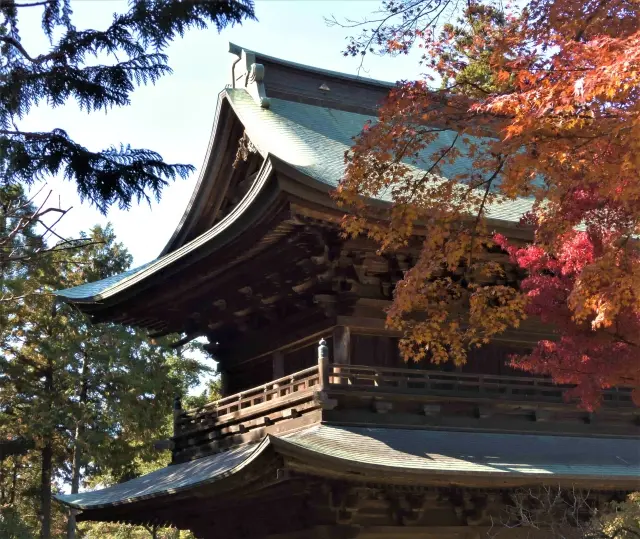
Engaku-ji runs 8:30 to 16:30 from March through November, and 8:30 to 16:00 from December through February. You need to be off the grounds by 17:00 in the warmer months, 16:30 in winter.
It's a one-minute walk from Kita-Kamakura Station, which makes it the temple people tack on at the end of the day. Since Kamakura's peak runs into early December, that thirty minutes is easy to miss.
Tripods and monopods aren't permitted at Engaku-ji, and Kencho-ji has the same rule. The staircase up to the Sanmon gate holds its color into December, but you'll be shooting handheld.
Reference: 【拝観時間】8:00〜16:30(12月〜2月は16:00)/【拝観料】大人:500円(高校生以上),小人:200円(小中学生)/【アクセス】JR横須賀線「北鎌倉駅」下車徒歩1分 建長寺の境内の見どころをご案内。拝観案内やアクセス方法、鎌倉散策となっているハイキングコースもご紹介。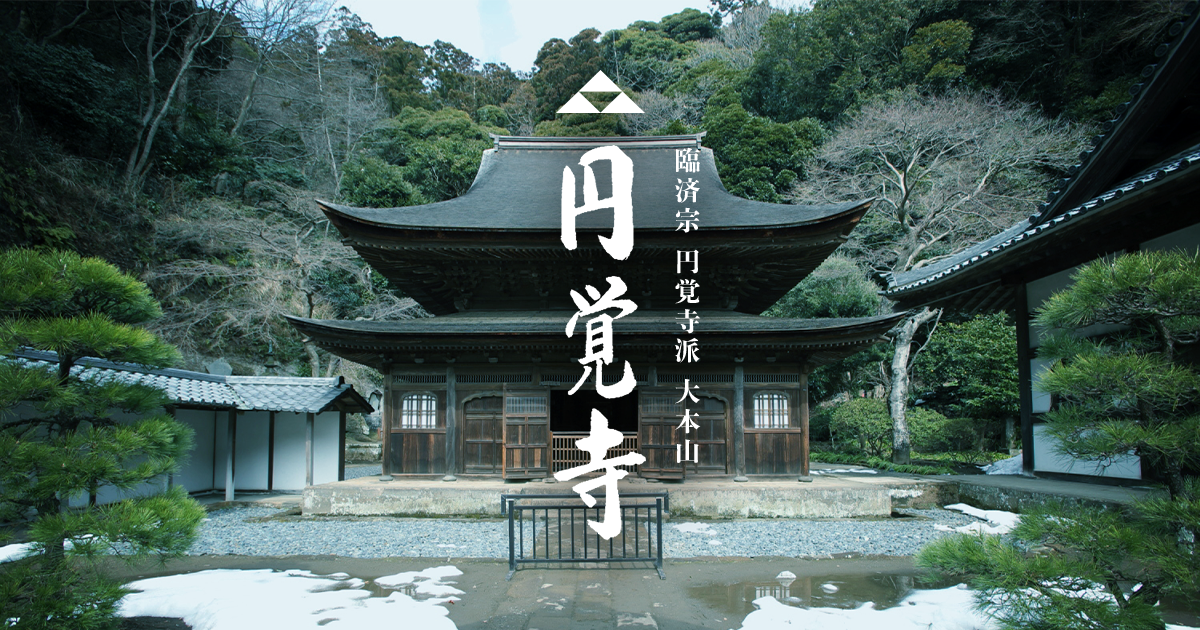
拝観案内・アクセス | 臨済宗大本山 円覚寺
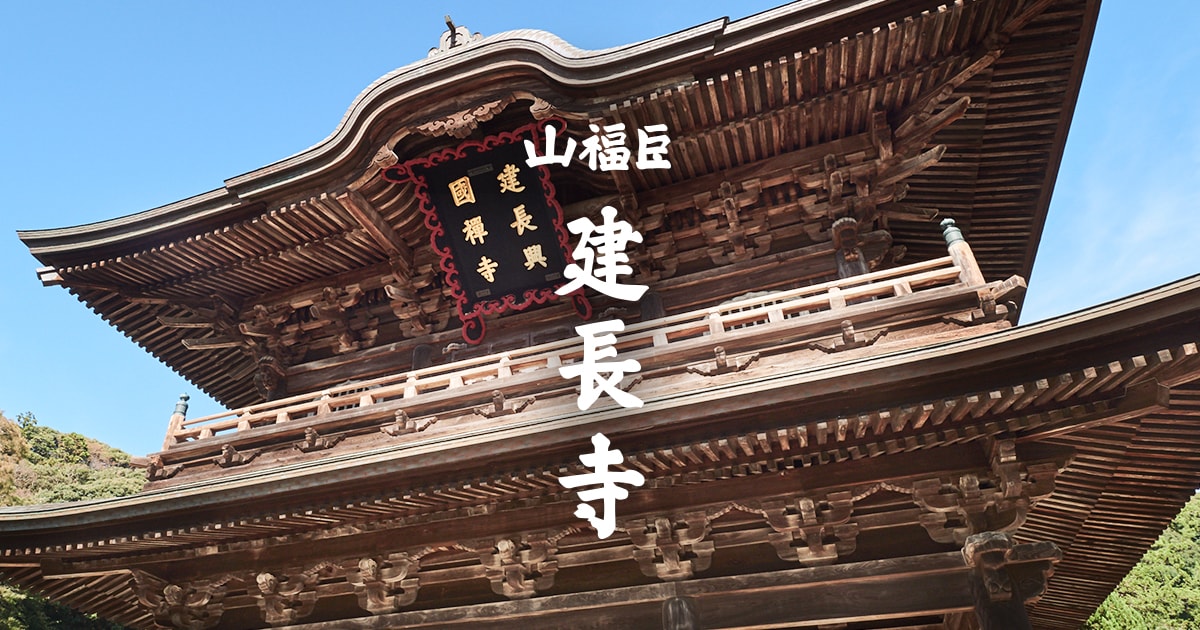
拝観案内、アクセス、境内のご案内、御朱印、鎌倉散策 | 巨福山 建長寺
Meigetsu-in's Rear Garden: An Extra 500 Yen
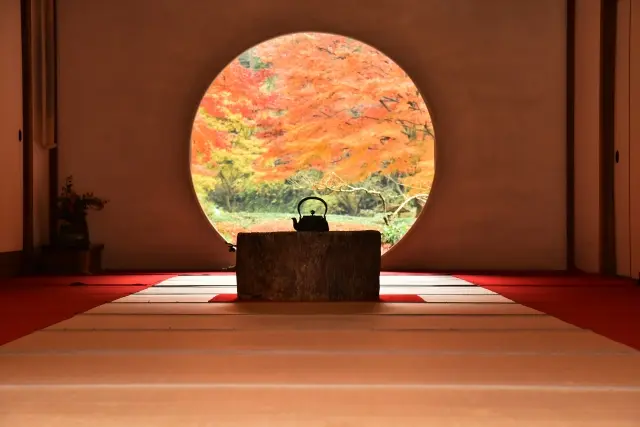
Meigetsu-in, better known for its hydrangeas, opens the garden behind the main hall only during the iris season and the foliage season. That garden is what you see through the round window in the main hall.
Entering it costs 500 yen on top of the 500 yen admission, so 1,000 yen all in.
The opening dates aren't announced in advance. In 2025 the garden was recorded as open on December 2, so if the round window is the reason you're going, check the association's color reports before you commit to a date.
Meigetsu-in doesn't run its own website, so hours and fees come from the Kamakura City Tourist Association instead. For the hydrangea season at the same temple, see Kamakura Hydrangeas 2026: A Guide to Meigetsuin, Hasedera & How to Beat the Crowds.
Night Illuminations: Not Announced as of August 5, 2026
As far as I could confirm, two temples run their own autumn illuminations: Hase-dera and Kakuon-ji (覚園寺). Neither had announced 2026 dates as of August 5, 2026. Kakuon-ji isn't one of the six in the table above, so check its own site for daytime hours and directions.
Hase-dera's autumn evening opening ran from November 22 to December 7 in 2025, sunset to 19:00 with the grounds closing at 19:30. Admission was the same as daytime: 400 yen for adults, 200 yen for elementary school students. Bad weather can cancel it, and tripods aren't allowed on the pathways.
Kakuon-ji's autumn viewing ran from November 28 to December 10 in 2025, 9:00 to 19:00 with last entry at 18:40. Admission was 500 yen for adults and 200 yen for elementary and junior high school students.
One catch: Kakuon-ji prohibits photography, video, and eating past the admission gate. If you came for night shots of the maples, this isn't your temple.
Kencho-ji's Evening Event: Separate Organizer, Separate Ticket
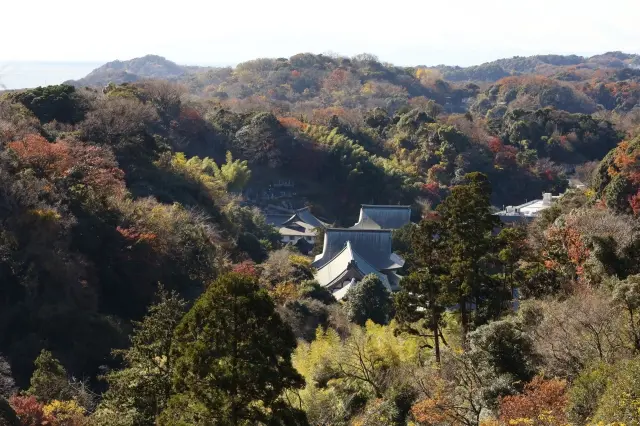
"VIE presents ZEN NIGHT WALK KAMAKURA" ran October 28 to December 7 in 2025, 17:00 to 20:00 with last entry at 19:30. VIE and Nikkei ran it, with Kencho-ji credited as a special cooperating partner (特別協力).
Pricing was separate from the 500 yen daytime admission: advance tickets in 2025 were 2,900 yen for adults on weekdays and 3,400 yen on weekends. Same-day tickets were available at higher prices, and buying one at the venue meant digital payment only, no cash — the reverse of the cash-only daytime rule at the same temple.
Everything above is from 2025, and 2026 won't necessarily follow the same dates. If an evening visit matters to your itinerary, check each temple's site and the tourist association's event pages from October onward.
Reference: 鎌倉市観光協会の公式サイトです。鎌倉の基本情報、祭り・イベント、グルメやお土産情報、季節の花など鎌倉ならではの旅の楽しみ方やお役立ち情報、旬の情報をお届けします。 鎌倉市観光協会の公式サイトです。鎌倉の基本情報、祭り・イベント、グルメやお土産情報、季節の花など鎌倉ならではの旅の楽しみ方やお役立ち情報、旬の情報をお届けします。 鎌倉の禅寺「建長寺」で体験する、音と静寂、光と影を楽しむサウンドアートナイトイベントです。
秋の夜間特別拝観(長谷寺)
紅葉特別参拝(覚園寺)

Zen Night Walk KAMAKURA | 鎌倉建長寺夜間拝観 サウンドアートナイトイベント
Before You Go: Times, Reservations, Weather
Three cut-offs are worth writing down: Engaku-ji at 4pm in December, Meigetsu-in and Hokoku-ji at 4pm right through the foliage season, and Hokoku-ji's matcha tickets at 3:30pm. Bring cash as well, since only Kencho-ji publishes a payment policy and it's cash only.
None of the six list a reservation option for daytime visits, and Hokoku-ji says outright that it doesn't take bookings, even for groups. For the evening openings, Hase-dera's listing says nothing either way about reservations.
Hokoku-ji may close to visitors in bad weather, and Kakuon-ji counts severe-weather days among its regular closures. Engaku-ji is open year-round but can close for typhoons or snow.
Meigetsu-in, Kencho-ji, and Tsurugaoka Hachimangu publish nothing about what happens in bad weather, so check their notices the morning you go. For most people, though, the weather won't be what ruins the afternoon. The 4pm gate will be.
This article was translated from the original Japanese with AI assistance and reviewed by our editorial team. The Japanese version is authoritative.
