
Each winter, zelkova trees along a roughly one-kilometer stretch of Omotesando glow in champagne gold. It is one of Tokyo's signature winter light displays, and it is free to visit.
This guide covers what to expect and how to get there, plus last year's dates and hours for reference while the 2026 schedule is still pending.
The 2026 dates have not been announced yet (as of November 2, 2026). In recent years the illumination has run from around December 1 to late December, from sunset to 22:00. Viewing is free and no ticket is needed.
If you are planning a winter evening in Tokyo, the Marunouchi Illumination and the Tokyo Midtown Illumination are a short train ride away. They are easy to pair with Omotesando, which in a typical year starts around December 1.
2026 dates and hours
The organizer has not yet published the dates or hours for the 2026-2027 winter (as of November 2, 2026). The lights have returned every year in recent winters, so they are expected to return in 2026, although the official schedule is still pending.
The dates usually appear on the official site between late November and around December 1, so check there before you go.
For reference, here is the most recent schedule, from 2025. The timing is similar most years.
Item | 2025 (for reference) |
|---|---|
Lighting period | December 1 to December 28, 2025 |
Low shrubs | December 1, 2025 to January 5, 2026 |
Hours | Sunset to 22:00 |
Cost | Free, no ticket |
The tall zelkova trees stay lit until late December, while the lights on the low shrubs continue into early January. If you visit after New Year, the shrub lights may still be on, although the main tree display will have ended.
What you'll see
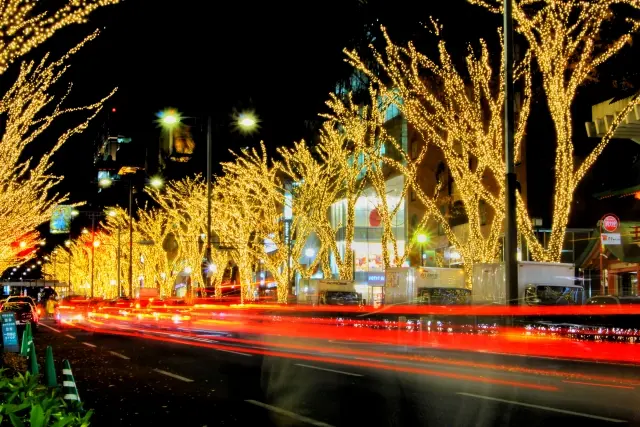
The display extends about one kilometer along Omotesando, from Jingubashi crossing on the Harajuku side to Omotesando crossing. According to media reports, FENDI decorates 154 zelkova trees with roughly 900,000 LEDs in a warm champagne-gold hue.
One popular vantage point is in front of Omotesando Hills. The lights follow the gentle slope into the distance, forming a golden ribbon. If you take photos, step to the edge of the sidewalk so you do not block others.
The display began in the 1990s and was paused in 1998 because of the crowds it drew and the heat of the old bulbs, which burdened the zelkova trees.
It returned in 2009 with LEDs. The number of bulbs has grown from about 630,000 at the time to roughly 900,000 today, and FENDI has been the sole sponsor since 2022.
Getting there
The closest stations are Meiji-jingumae (Harajuku) and Omotesando on the Tokyo Metro, with JR Harajuku also within walking distance. The Harajuku-side stations and Omotesando station are at opposite ends of the lit stretch, so you can start at either end and walk the entire lit avenue.
It is an open-air walk, so dress warmly for a winter evening.
Good to know before you go
The sidewalks along Omotesando stay open as usual during the event, and the official site lists no special road arrangements.
The organizer states that security during the event is coordinated with local police. Follow the on-site guidance on the day.
Nearby lights to add
The Marunouchi and Tokyo Midtown displays mentioned above are a short train ride away. The three below are close enough to add on foot in the same evening.
Omotesando Hills, by Omotesando station, sets up a Christmas tree about 10 meters tall on its central staircase. Tokyu Plaza Omotesando, by Meiji-jingumae station, hosts a rooftop light display.
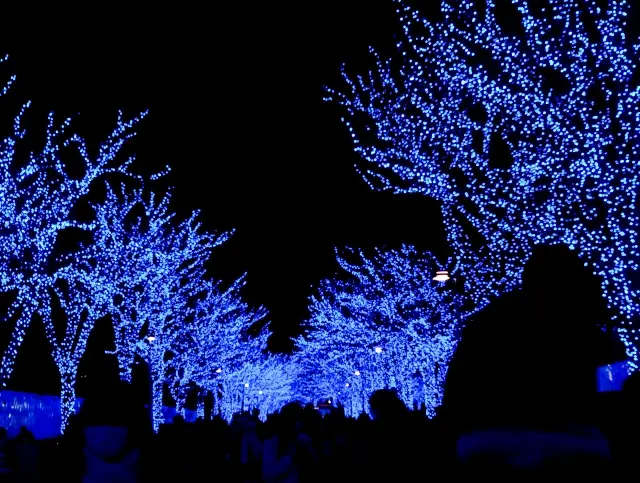
A little further out, "Ao no Dokutsu SHIBUYA" (the "Blue Cave") turns the zelkova trees from Shibuya to Yoyogi Park blue.
All of these run most winters, but the 2026 dates and whether they return vary by venue, so check each official site before you go.
This article was translated from the original Japanese with AI assistance and reviewed by our editorial team. The Japanese version is authoritative.
