
In winter, Kinosaki Onsen (城崎温泉) in northern Hyogo fills with travelers who come for one thing: Matsuba snow crab (松葉がに). The local way to enjoy it is a crab dinner at a ryokan, then a yukata stroll through the old streets, hopping from one public bath to the next.
Two things trip up first-time visitors. The male and female crab carry different names and are in season at different times, and of the seven famous baths, one has been closed for an extended period.
This guide sorts out both, using the Kinosaki Onsen Tourism Association and prefectural fishing records.
What's available depends on when you come: female Seko crab through late December, and male Matsuba crab through March 20.
For the wider picture of snow crab across the Sea of Japan coast — Matsuba, Echizen, Kano and the other regional names — see our guide to Japan's snow crab season.
Snow crab season dates and timing
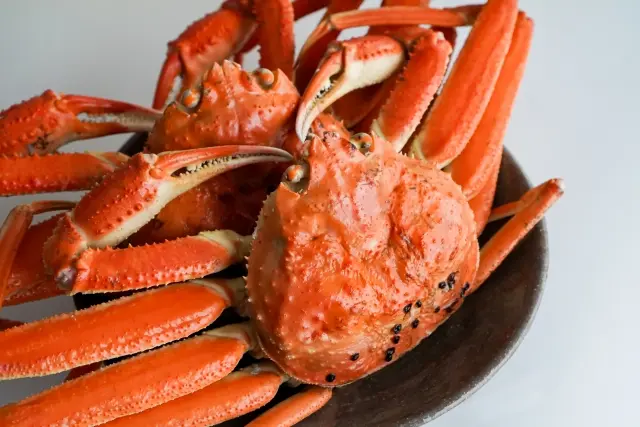
The main snow crab season opens on November 6 every year. The date is fixed by national regulation, so it does not move, though rough seas can keep the boats in port on any given day. From that day, Matsuba crab starts arriving in the Tajima region, where Kinosaki sits.
Male and female snow crab have very different seasons. The season for male Matsuba crab runs through March 20 of the following year.
The season for female Seko crab is much shorter and usually ends in late December. The exact closing date shifts with the year and the area.
If you want the female's prized roe, come in November or December. The male Matsuba crab is on the menu from opening day right through March, so once the year-end holidays are over, you can take your time with it in the new year.
The Tourism Association's winter campaign, "Kani Kingdom" (かに王国), runs from November 2026 to March 2027. The exact start and end dates have not been officially announced yet. During the campaign, fish shops sell fresh crab and restaurants add limited-time crab menus.
Matsuba, Tsuiyama, Kasumi and Seko: the names explained
You will see several names on the menus in Kinosaki. Most of these names refer to the same snow crab, with the term changing according to the crab's sex and the port where it was landed.
The one exception is Kasumi crab, which is a different species, the red snow crab.
Name | What it is | Best season | In a word |
|---|---|---|---|
Matsuba crab (松葉がに) | Male snow crab (Tajima) | Nov 6 – Mar 20 | The winter headliner |
Tsuiyama crab (津居山ガニ) | Matsuba crab landed at Tsuiyama Port | Nov 6 – Mar 20 | Blue tag on the leg |
Kasumi crab (香住ガニ) | Red snow crab (Kasumi Port, a different species) | around Sept – May | Reaches shops earlier than Matsuba |
Seko crab (せこがに) | Female snow crab | Nov 6 – late Dec | Full of roe, and well priced |
The blue tag is proof that a crab was landed at Tsuiyama Port and passed the grading there. Only Matsuba crab from Tsuiyama earns it.
Keep the Seko crab's short season in mind. Kani Kingdom runs through the end of March, but the female fishing season usually ends by late December, and roe-bearing Seko crab is rarely available after New Year's.
Crab dinners and booking a room
The classic way to eat Kinosaki's crab is a crab-kaiseki dinner at a ryokan. Many inns serve kani-suki hotpot or full-course menus, and some restaurants in town also serve day visitors.
Prices for a ryokan crab plan vary widely with the amount of crab and the dishes included. Decide first which crab you want most — boiled, grilled, or hotpot — and the plans are easier to compare.
During Kani Kingdom, the dishes are grouped into a hearty "Kanari Kani Zanmai" (kani-suki and course meals) and a lighter "Hodoyoku Kani Mankitsu" (noodles and single dishes).
The most popular inns fill up quickly on winter weekends and during the year-end holidays. Once your dates are set, book your room well ahead.
Pairing crab with the public baths
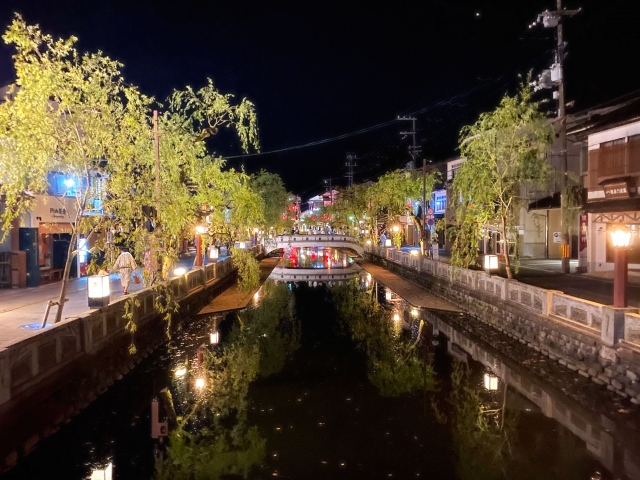
In Kinosaki, the crab and the baths go together. Many guests soak before dinner, then set out again after the crab course or the next morning, strolling along the Otani River (大谿川) in a yukata and geta from one public bath to the next.
Six public baths are normally in operation: Konoyu, Mandarayu, Goshonoyu, Ichinoyu, Yanagiyu and Jizoyu. Each costs 800 yen for adults and 400 yen for children, and last admission is 30 minutes before closing.
Opening hours and closing days differ from bath to bath. Some open as early as 7 a.m., while others do not open until 3 p.m.
If you plan to hop between several baths, check their closing days and opening hours first, then set your route.
If you plan on two or more soaks, the "Yumepa" all-day pass is the better deal: 1,500 yen for adults and 750 yen for children, sold at each bath's counter.
Some ryokan hand their guests a bath pass, but the terms vary by inn, so confirm when you book.
One note: Satonoyu, the seventh bath by the station, has been closed since the end of March 2024, with no reopening date set. Baths also close now and then for repairs, so check the Association's hours-and-crowds page for the latest before you go.
Getting to Kinosaki Onsen
Limited express trains reach Kinosaki Onsen from several directions: about 2 hours 20 minutes from Kyoto on the Kinosaki limited express, about 2 hours 40 minutes from Osaka on the Kounotori, and about 2 hours 30 minutes from Sannomiya on the Hamakaze.
From JR Kinosaki Onsen Station (城崎温泉駅), the town and the baths are within walking distance. If you are carrying large bags, the local ryokan association runs a shared shuttle bus.
Highway buses also link Kinosaki with Osaka (Umeda) and Kobe (Sannomiya) in about 3 hours 10 minutes. Roads can get busy in crab season, so give yourself some extra time.
This article was translated from the original Japanese with AI assistance and reviewed by our editorial team. The Japanese version is authoritative.


