
On December 31, Japan sees out the old year quietly. Families eat a bowl of toshikoshi soba (year-crossing noodles), temple bells toll 108 times, and many head to a shrine as the clock passes midnight.
This guide answers the three questions visitors ask most about Ōmisoka (New Year's Eve). Can you ring the bell yourself, or only watch? When are the tickets handed out, and do the trains still run after the usual last service?
It closes with the classic meal and what to wear for the cold.
If you're thinking about the next morning too, we cover the timing of your first shrine visit separately (How to time your first shrine visit, or hatsumode).
Whether you can ring the bell yourself depends on the temple: some need a paid token, some a free numbered ticket, some let anyone join, and at some only monks or temple members ring it.
Joya no Kane: the bell of 108 tolls
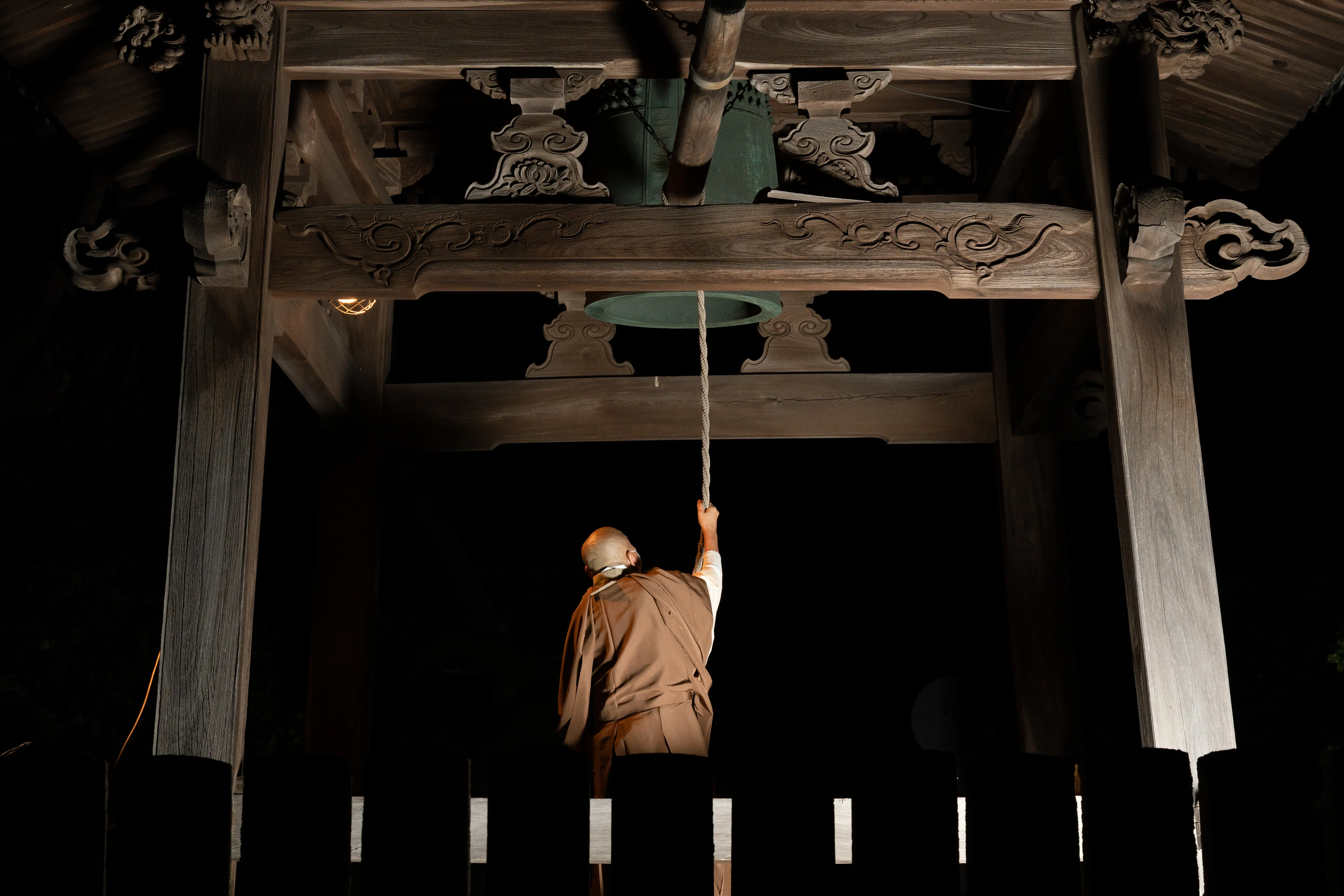
Joya no Kane is the ringing of a temple's great bell 108 times through the night of December 31. The number is usually explained as the count of bonnō, the earthly desires a person carries, though temples note that there are several readings.
The timing is not the same everywhere. Most temples ring through midnight, straddling the new year, but a few start and finish earlier in the evening. Decide first whether you want to hear the bell exactly at midnight or earlier in the evening.
Ringing the bell, temple by temple
The same custom plays out very differently from one temple to the next. At some, ordinary visitors take turns on the rope; at others, only monks or temple members ring.
The table below is built from each temple's official notice. Every temple can change its rules from year to year, so check the latest notice before you go.
Temple (area) | Can you ring it? | Ticket / entry | Bell time | Cost |
|---|---|---|---|---|
Zōjō-ji (Shiba, Tokyo) | Yes (groups of 4) | Bell token (from ~Dec 1, 9:00, temple office) | From 0:00 | ¥2,000 offering |
Ikegami Honmon-ji (Ōta, Tokyo) | Yes (groups of 6) | Numbered ticket (from 23:00 at the bell tower, first 600) | From 0:00 | Free |
Tsukiji Hongwanji (Chūō, Tokyo) | Yes (no booking) | None (varies by year) | 21:00–23:00 (ends before midnight) | Free |
Sensō-ji (Asakusa, Tokyo) | No (a members' group rings) | — | From 0:00, about 40 min | — |
Chion-in (Higashiyama, Kyoto) | No (monks ring) | Close viewing is by advance application | From ~22:40 | ¥3,000 to attend |
Kawasaki Daishi (Kanagawa) | Ask the temple (not stated) | — | After a late-night service | — |
Naritasan Shinshō-ji (Chiba) | Not stated — ask | — | — | — |
At Zōjō-ji, the head priest strikes the first bell at midnight, and visitors then take the rope in groups of four until all 108 have been rung.
At Sensō-ji in Asakusa, the bell on Bentenyama, a small hill in the temple grounds, is rung by a members' group called the Hyakuhachi-kai, so visitors watch from the grounds rather than ring.
At Kyoto's Chion-in, visitors watch rather than ring. Seventeen monks pull the main and secondary ropes together, and the temple states plainly that visitors cannot ring the bell.
The great bell, which weighs about 70 tons, is struck from around 22:40. To view it up close, you must apply in advance.
The only free, no-booking options are the rehearsal strike on December 27 (around 14:00) and the temple's live stream on YouTube.
Kawasaki Daishi (Heiken-ji) in Kanagawa also rings 108 tolls after a late-night service. Its notice does not say whether visitors or monks ring, so ask the temple directly if you want to take part.
Naritasan Shinshō-ji in Chiba holds a midnight fire ritual (goma) on New Year's Day. Its notice does not say whether visitors may ring the bell, so choose another temple if ringing is your goal.
Tickets: how to get one, and when to line up
Of the temples that let you ring, two require a pass. Ikegami Honmon-ji hands out a numbered ticket on the night, and Zōjō-ji a token in advance; Tsukiji Hongwanji needs neither. Chion-in is a separate case, where you apply to watch up close rather than ring.
- Ikegami Honmon-ji (Ōta): one ticket per person, and it is void if you are not there when your group is called. Tickets start at 23:00, so arrive before then and stay by the bell tower.
- Zōjō-ji (Shiba): the bell token is handed out in advance at the temple office, not on the night. It comes with a small gift and is limited, so collect it early once distribution opens.
- Chion-in (Higashiyama): applications for the close-viewing "Joya no Kane" open around December 1 at 14:00. Each group is capped at 500, elementary-school children and younger are free, and there are no same-day applications.
Tsukiji Hongwanji is the easy one: no token, no booking, and anyone may ring between 21:00 and 23:00. Note that this ends before midnight, so you ring during the old year, not at the turn.
Even here the format has changed in some years, so read the current notice.
Getting home: all-night trains
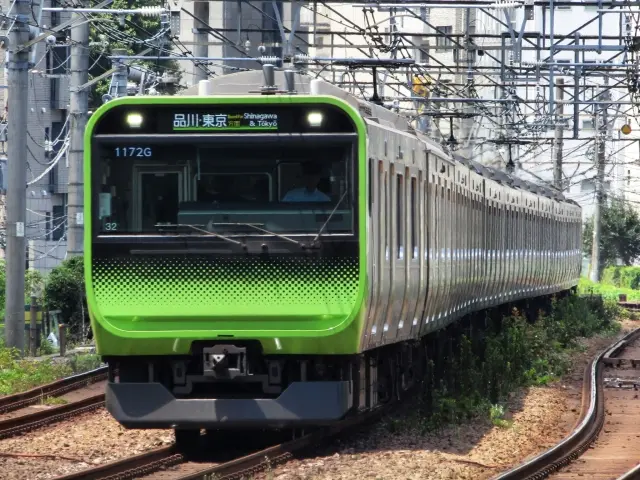
On New Year's Eve some lines run "all-night" service after the usual last train. Whether they do depends on the railway, and even a single company may decide differently from one year to the next.
For the 2025–2026 turn of the year, JR East ran all-night service on six Tokyo-area lines: the Yamanote, Keihin-Tōhoku/Negishi, Chūō-Sōbu local, Chūō rapid, Yokosuka, and Sōbu-Narita lines.
Whether that helps depends on which temple you pick. Of the Tokyo temples above, only Zōjō-ji is within walking distance of a JR all-night line: about a 10-minute walk from Hamamatsuchō (Yamanote and Keihin-Tōhoku lines).
Sensō-ji, Tsukiji Hongwanji and Ikegami Honmon-ji sit on subway or private lines instead (Tokyo Metro, Toei, Tokyu). Tokyo's Toei subway did not run all night in 2025–26, so for these temples plan a taxi or a walkable route home.
The 2026–2027 timetables come out from autumn onward, so confirm your line's official notice before you set out.
Toshikoshi soba and the customs of the night
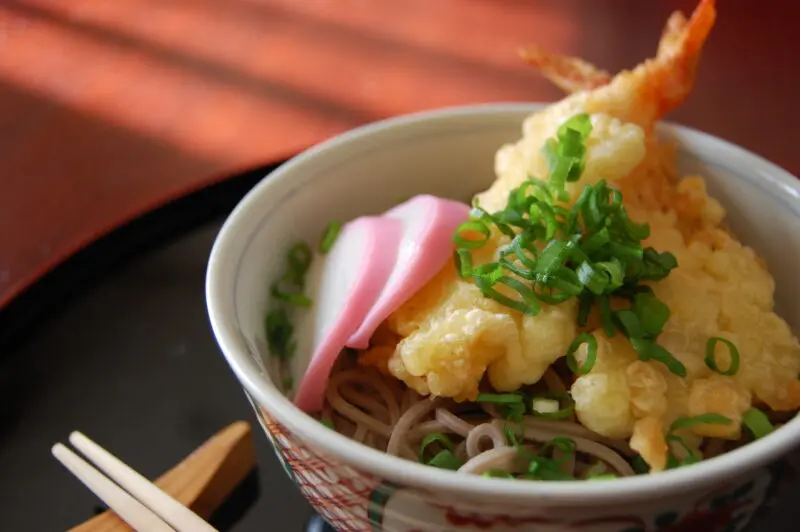
The classic New Year's Eve meal is toshikoshi soba. According to Japan's Ministry of Agriculture, the habit of eating buckwheat noodles on this night spread among ordinary people in the Edo period.
The reasons given vary. The long, thin shape stands for a long life, while the noodles' tendency to break stands for cutting off the past year's hardships.
There is no official rule about when to eat them, and the timing differs by region. In the Aizu region, soba is eaten on New Year's Day, and Niigata has a "fourteenth-day soba" eaten on January 14.
Visiting a shrine or temple across midnight is called ninen mairi in some regions. The old custom of staying up at the local shrine on New Year's Eve gradually separated into a late-night visit and a New Year's Day visit, and the latter is considered the origin of today's hatsumode.
Where to go and when it is least crowded is covered in How to time your first shrine visit, or hatsumode. Most shops and services also close over the first days of the year (What is open in Japan over the New Year holidays).
What to wear for a midnight visit
Joya no Kane and the midnight shrine visit fall in the coldest hours of the year. In Tokyo, the average daily low is 3.8°C in December and 1.2°C in January, and the hours just after midnight sit around or below those figures.
Temple grounds have little shelter from the wind, and you may stand still for a long time while you wait for a numbered ticket. A heavy coat with gloves, a scarf, and a hand warmer will keep you comfortable while you wait.
This article was translated from the original Japanese with AI assistance and reviewed by our editorial team. The Japanese version is authoritative.
