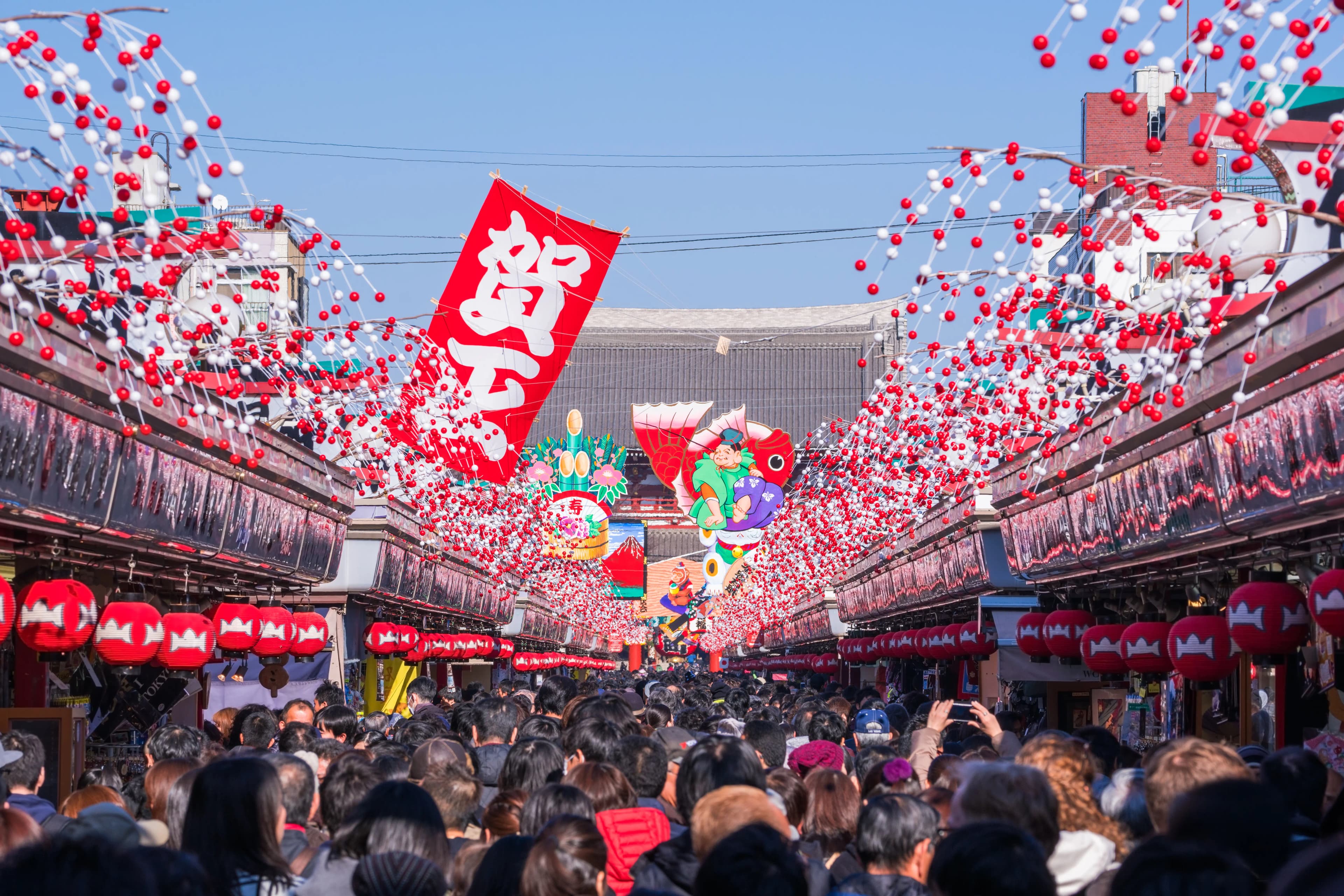
Hatsumode (初詣), the year's first visit to a shrine or temple, is the biggest New Year ritual in Japan. Tens of millions of people go in the first days of January. For a visitor, the real question isn't whether to go — it's when and where, so you don't end up stuck in a two-hour line in the cold.
This guide covers Tokyo's best-known spots, the specific times when crowds peak, New Year's Eve all-night train service, and the differences between praying at a shrine and at a temple.
The crush is worst from late on New Year's Eve through the early morning hours of January 1, and again from mid-morning on January 1 through 3. If you dislike crowds, aim for dawn on the 1st or late afternoon during the first three days.
Hatsumode dates: the san-ga-nichi and the matsu-no-uchi window
There is no hard deadline. Most people go during the san-ga-nichi — January 1 to 3 — while others visit through matsu-no-uchi, the period when New Year decorations stay up. That window differs by region: through January 7 in the Kanto area (Tokyo), and through January 15 in the Kansai area (Osaka, Kyoto).
Hatsumode has no real cutoff, and a visit later in January still counts. For a traveler who wants to avoid the worst of it, going a few days after the 3rd is an easy way to skip the crowds.
In 2027, January 1 falls on a Friday, so the first three days are a Friday–Sunday long weekend, and it should be busier than usual.
Tokyo's main hatsumode shrines and temples
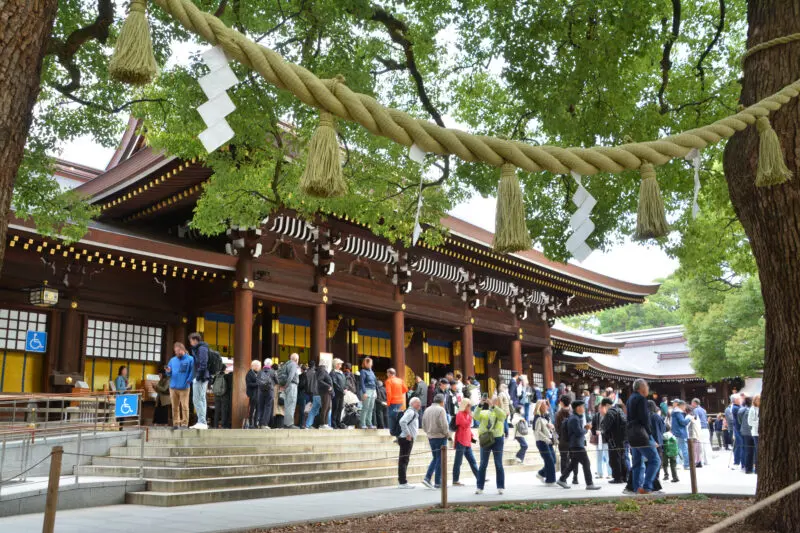
Meiji Jingu (明治神宮), in Harajuku, draws the largest hatsumode crowd in Japan, widely reported at roughly three million people over the New Year (there is no official nationwide count anymore, so treat the figure as a rough one). It stays open all night from New Year's Eve into January 1, which is also when it's most packed. There are three entrances, each about a 10-minute walk to the main hall; the nearest station is Harajuku on the JR Yamanote Line.
Sensoji (浅草寺) in Asakusa is one of Tokyo's best-known temples, home to the Kaminarimon gate and the Nakamise shopping street. New Year's visits begin at midnight on January 1, right after the temple bell. Through January 7 the main hall also holds Shinnen Daikito-e, a special New Year prayer service. It is crowded through the daytime on the 1st–3rd.
Kanda Myojin (神田明神), near Ochanomizu and Akihabara, is the guardian shrine of old Edo and is known for blessings for success in business and — fittingly for the electronics district — in IT. Many people stop here on their first workday of the year. JR Ochanomizu Station is about five minutes away on foot.
Hie Jinja (日枝神社) in Akasaka is a stately shrine set in the business district, which makes it calmer than the big-name spots. It is about a 3-minute walk from Akasaka Station (Chiyoda Line) or Tameike-Sanno Station (Namboku Line). If you are looking specifically for a shrine known for matchmaking, Tokyo Daijingu (東京大神宮) near Iidabashi is a famous choice.
Just outside Tokyo, Kawasaki Daishi (川崎大師) in Kawasaki, Kanagawa is one of the country's most-visited temples, known for warding off misfortune. It is not inside Tokyo, but it makes an easy day trip. From Kawasaki-Daishi Station on the Keikyu Daishi Line it's an eight-minute walk.
When to go to avoid the worst crowds
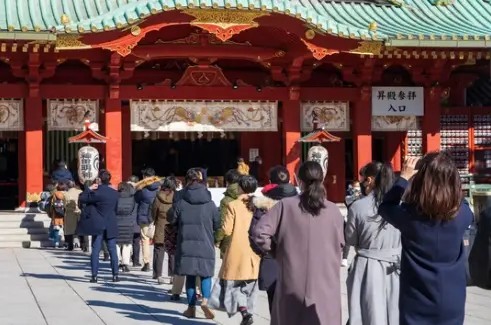
At Meiji Jingu, crowds typically peak from about 10 p.m. on New Year's Eve to 3 a.m. on January 1, and again from 10 a.m. onward across the first three days. The other big spots follow the same rhythm; quieter shrines like Hie Jinja stay manageable even mid-morning.
If you want to be there for the stroke of midnight, go for it, but be ready for a long, slow line. To avoid it, arrive at dawn on January 1, when crowds are comparatively light, or visit in the late afternoon during the first three days, when fewer people are arriving.
Hours vary by shrine. At Meiji Jingu, in a typical year (these were the 2026 New Year hours), the shrine was open from midnight to about 6:30 p.m. on January 1, and from about 6:40 a.m. into the evening on the 2nd and 3rd. The 2027 hours are usually announced in November or December, so check each shrine's official site before you go.
Getting there on New Year's night: all-night trains and access
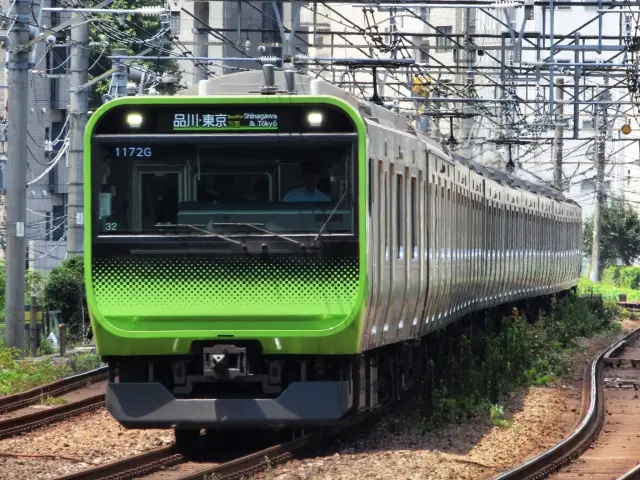
On New Year's Eve, trains run late specifically for hatsumode. JR East usually runs all-night service on major lines such as the Yamanote Line, after the last regular train and continuing into the early hours of January 1.
That said, the 2027 New Year service has not been announced yet (it is typically published in November or December). Which lines run varies year to year, and in some years the subways do not run all night at all, so check the operators' official notices before you plan a late trip.
Driving is not recommended. At Meiji Jingu, during the first three days (January 1–3), cars typically cannot enter the grounds, and there are road closures around Harajuku Station over those dates. Traffic backs up on the streets around the big shrines, so take the train.
How to pray: shrine versus temple
The etiquette differs slightly between a shrine and a temple. Both begin at the temizuya, the water pavilion at the entrance: use the ladle to rinse your left hand, then your right, and then pour water into your left hand to rinse your mouth.
At a shrine, after your offering, the form is ni-hai ni-hakushu ip-pai — bow deeply twice, clap twice at chest height, then bow deeply once more. At a temple such as Sensoji or Kawasaki Daishi, you generally do not clap; you quietly press your palms together and bow. The rule to remember: clap at shrines, not at temples.
There is no set amount for the offering, and a small coin is fine. Many people use a 5-yen coin because its name, go-en, puns on "a good connection," but it's really just for luck, so whatever you have is plenty. You can also pick up omikuji fortunes and omamori charms at the amulet counters in the grounds. For more on shrine and temple etiquette, see our guide to getting a goshuin seal.
What to wear: how cold Tokyo gets in early January
Early January is Tokyo's coldest stretch of the year. According to the Japan Meteorological Agency's 1991–2020 averages, Tokyo's average January high is 9.8°C (about 50°F), while its average low is 1.2°C (about 34°F). Even at midday it barely clears 10°C, and it is far colder from midnight to dawn.
If you plan to stand in line outdoors for the midnight visit, it will feel colder than those numbers. A heavy coat, gloves, a scarf and a disposable hand warmer make a long wait far more bearable, and warm, comfortable shoes matter more than you'd think.
Hatsumode offers one of the clearest glimpses of the Japanese New Year. Plan your timing, dress warmly, and even your first visit should go smoothly.
This article was translated from the original Japanese with AI assistance and reviewed by our editorial team. The Japanese version is authoritative.