
Winter is snow crab season along the Sea of Japan coast. For many travelers, the highlight of a cold-weather trip is a crab-kaiseki dinner at an onsen ryokan. The season opens on November 6 and runs into late March.
If you only remember one name, make it Kinosaki Onsen (城崎温泉), the hot-spring town in northern Hyogo that is the best-known base for a crab stay.
But the same crab is landed and branded up and down the coast. A little planning decides when to go, which region to choose, and whether you want male or female crab.
Male snow crab is in season from November into late March, but the smaller female crab (Seko-gani, せいこがに) ends around New Year. Decide which one you want before you book, because the timing is different.
Snow crab season: November 6 to late March
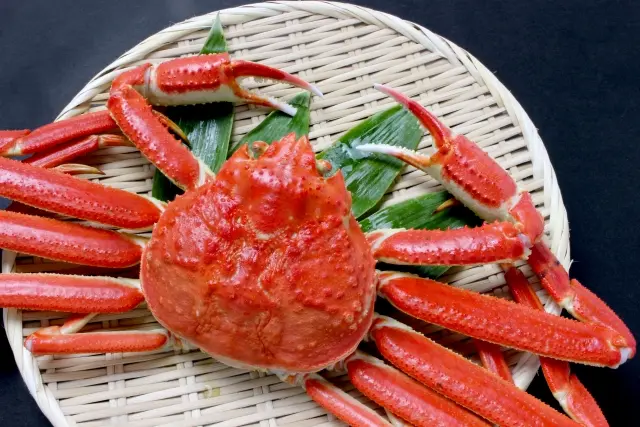
The snow crab fishery on the Sea of Japan coast opens on November 6 every year. The date is fixed, because the closed season runs from March 21 to November 5.
Boats leave port the evening before and set their nets at midnight on the 6th, and the first crab reaches markets later that day or the next.
One thing to know: the opening date doesn't always mean crab lands that day. Rough seas can keep the boats in port. In 2024 the weather delayed the first Fukui landing by two days, to November 8.
Male crab stays in season until about March 20. The smaller female crab, called Seko-gani (せいこがに), has a much shorter season and ends around the end of the year, December 31 in Fukui.
If you are coming for the female crab and its roe, plan for November or December.
Kinosaki Onsen and where to eat snow crab
For a first-time visitor, Kinosaki Onsen is the easiest place to turn snow crab into a full experience. The town sits on the San'in coast of northern Hyogo, so the crab served at its ryokan is Matsuba crab (松葉ガニ), the snow crab of this coast.
Through the winter you can stay overnight and sit down to a crab-kaiseki dinner built around a whole crab. Kinosaki also publishes a good deal of English-language travel information, which makes planning a stay from abroad straightforward.
The rest of the coast gives you other options. The San'in coast around Tottori (鳥取) is the other Matsuba heartland, landing crab at ports such as Sakaiminato and Karo. Further east, three more coasts each have their own famous crab:
- Fukui (福井): home of Echizen crab (越前がに), landed at Echizen Port, where the season's first auction is held
- Ishikawa (石川): Kano crab (加能ガニ) from the Kaga and Noto coasts, with the hot-spring towns of Kaga nearby
- Kyoto (京都): the rare Taiza crab (間人ガニ) of the Tango Peninsula, from the small port of Taiza
Whether you choose a ryokan dinner at Kinosaki or a specialist restaurant at another fishing port, the region you pick shapes the trip as much as the crab itself.
Matsuba, Echizen, Kano: one crab, many brand names
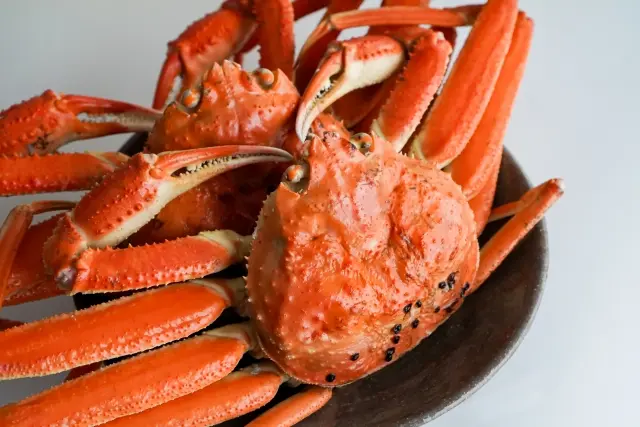
Matsuba crab, Echizen crab, Kano crab and Taiza crab are all the same animal: snow crab, and mostly male. The different names simply mark where the crab was landed, so a "brand" is really a place of origin.
Brand name | Main region / port | Tag color | Top grade |
|---|---|---|---|
Matsuba crab | Tottori, Shimane, northern Hyogo (the San'in coast) | — | Itsukiboshi (Tottori) |
Echizen crab | Fukui / Echizen Port | Yellow | Kiwami |
Kano crab | Ishikawa / Kaga–Noto | — | Kagayaki |
Taiza crab | Kyoto / Taiza Port | Green | no set grade |
The "—" in the tag column means the color is not officially confirmed, not that there is no tag. The colors confirmed by the prefectures are yellow for Echizen and green for Kyoto.
Many ports attach a tag to a crab's leg to certify where and on which boat it was landed. That is why the color shows the origin.
The top grades in the table (Itsukiboshi, Kiwami, Kagayaki) are titles given only to crabs that meet each region's standards for size and quality.
One name that causes confusion is Kasumi crab (香住ガニ). Despite the similar sound, it is a different species, the red snow crab, with a season from September to May. That is a different crab from the November 6 snow crab described here.
Male and female crab: what you'll be served
Snow crab is sold under different names, and in different seasons, depending on sex. The large, meaty male is the showpiece, the "Matsuba" or "Echizen" crab you picture.
The smaller female goes by regional names such as Seko-gani, Kobako-gani or Oya-gani.
The female crab is prized for something the male does not have: the roe held inside and outside the shell, served as a dense, rich mouthful. It is a delicacy in its own right, not a smaller version of the male.
Because the female season ends so early, the two crabs barely overlap. Male crab runs all winter, while the female is really a short-season treat that is gone by the New Year.
Prices, from ryokan kaiseki to auction records
Prices swing widely by brand and size, and the headline figures you may have read are not what you pay at dinner.
At the opening auctions, a Tottori Itsukiboshi crab sold for 5 million yen in 2019, reported as a record high. An Ishikawa Kagayaki crab went for 4.5 million yen in 2025, the second highest on record. These are ceremonial, one-off prices.
For a realistic sense of cost, Fukui's official figures put a whole Echizen crab (1.0–1.1 kg) at direct-sale prices around 38,300 yen. A serving of Seko-gani roe in the shell runs 1,800 to 2,150 yen.
A ryokan crab-kaiseki course runs to tens of thousands of yen, and the price depends on the course and the inn.
Planning and booking your crab trip
Wherever you go, the winter weekends and the New Year holidays are the busiest times of the season at both ryokan and specialist restaurants.
If you want an unhurried ryokan dinner, aim for the stretch after the opening rush, once supply settles, rather than the first hectic days.
Crab-kaiseki stays fill up fast in peak weeks, so decide on your region and dates early, and book your inn or restaurant well ahead.
This article was translated from the original Japanese with AI assistance and reviewed by our editorial team. The Japanese version is authoritative.


