
Autumn in Japan drifts downhill and southward, taking about two months to spread from the high mountains to the cities. By November the mountains of Okunikko have already faded, while the lowlands of Kyoto and Tokyo are only just turning.
This guide gathers the foliage spots that travelers visit most, across the Kanto, Central, and Kansai regions, with the peak timing, cost, and nearest station for each. Pick the one that fits your trip, then follow the link to its full article.
Most city-center spots peak from mid- to late November. Only the mountains of Okunikko turn early, from around mid-October.
How Autumn Spreads: North to South, Mountains to Cities
Autumn color follows the cold, so it begins in the high mountains and works its way down to the lowland cities. The mountains of Hokkaido start turning in mid-September, cities like Tokyo, Kyoto, and Nara peak from mid- to late November, and southern Kyushu follows around mid-December.
Peak timing shifts by a week or two from year to year. Each autumn, Japan's weather services release their foliage forecasts from around October. If you're locking in dates, check the latest forecast once October rolls around.
8 Top Spots at a Glance
Here are eight spots travelers love, listed from earliest to latest peak. Some are free to stroll, while temple grounds charge admission. Note that Jingu Gaien is golden ginkgo rather than red maple.
Spot (Area) | Peak timing | Cost | Nearest station |
|---|---|---|---|
Okunikko / Irohazaka (Tochigi) | Mid–late Oct | Free to stroll | Bus from Tobu/JR Nikko |
Lake Kawaguchiko / Momiji Corridor (Yamanashi) | Early–mid Nov | Free to stroll | Bus from Fujikyu Kawaguchiko |
Mt. | Mid-Nov–early Dec | Free to hike (cable car extra) | Keio Takaosanguchi |
Korankei (Aichi) | Mid–late Nov | Free to stroll | Bus from Meitetsu Toyotashi |
Kyoto temples (Kyoto) | Mid–late Nov | Admission per temple | Varies by temple |
Jingu Gaien Ginkgo (Tokyo) | Mid–late Nov | Free (public street) | Gaienmae / Aoyama-itchome |
Tokyo gardens & parks (Tokyo) | Around late Nov | Paid at some gardens | Komagome, Shinjuku, etc. |
Kamakura temples (Kanagawa) | Late Nov–early Dec | Admission per temple | Kita-Kamakura / Kamakura |
Kanto: Four Spots In and Around Tokyo
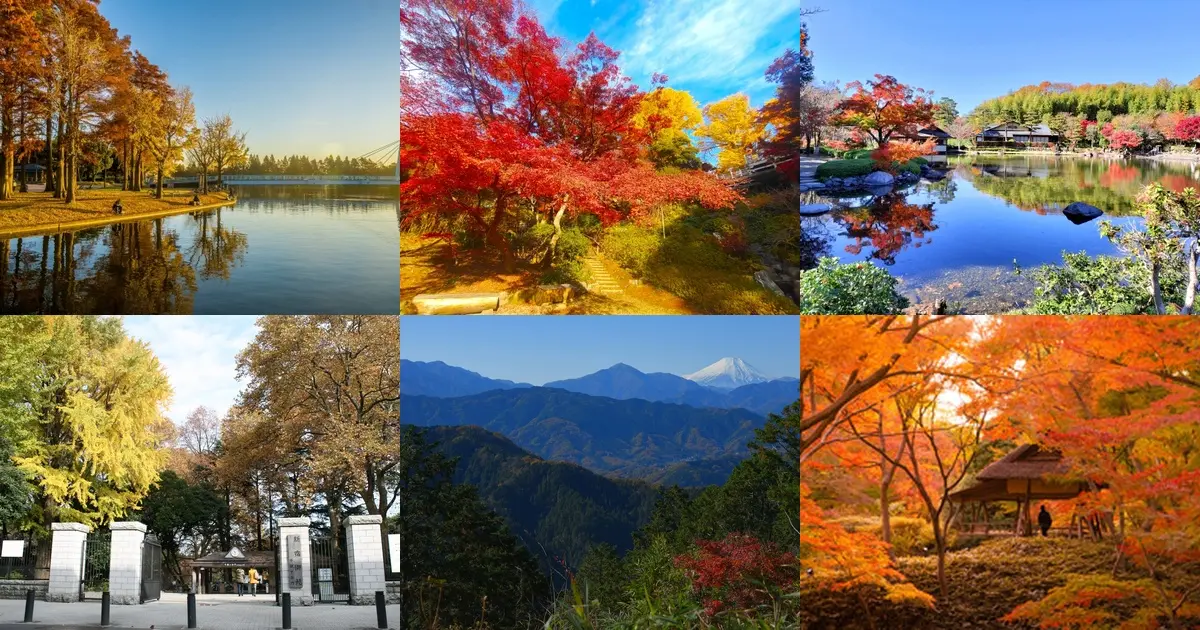
In central Tokyo, gardens and parks such as Rikugien and Shinjuku Gyoen turn in late November. Closing times differ by garden: Rikugien closes at 5:00 p.m., while Shinjuku Gyoen closes at 4:30 p.m. The full rundown is in Autumn Leaves in Tokyo 2026.
For a short trip out of the city, try Mt. Takao. It sits right by Takaosanguchi Station at the end of the Keio Line, and the cable car reaches the mid-mountain Takaosan Station in about six minutes (adults ¥490 one way, ¥980 round trip). From there, the summit is another 40 to 50 minutes on foot. Peak color runs from mid-November into early December (Mt. Takao Autumn Leaves 2026).
To catch color earlier, head up to Okunikko. The high ground of Irohazaka and Lake Chuzenji turns from mid-October.
One caveat: the Akechidaira Ropeway is closed for renovation through autumn 2026, and the Irohazaka road gets crowded from about 9 a.m. to 3 p.m. (Nikko Autumn Leaves 2026).
For something older and quieter, Kamakura is the pick. Temples like Engaku-ji and Meigetsu-in peak later than the city, from late November into early December (Kamakura Autumn Leaves 2026).
Central Japan and Kansai: Mt. Fuji, a Gorge, and the Old Capital
At Lake Kawaguchiko, the maples along the shore turn from early to mid-November, with Mt. Fuji rising behind them. Strolling the Momiji Corridor is free. During the Fuji Kawaguchiko Autumn Leaves Festival 2026 (November 7–29), the corridor is lit up from sunset until 9:00 p.m. (Lake Kawaguchiko Autumn Leaves 2026).
Korankei, in Aichi, is a gorge where roughly 4,000 maples line the Tomoe River. Walking through is free. The Iimoriyama illumination runs every day from November 1 to 30, from sunset to 9:00 p.m., and the surrounding roads jam up on weekends (Korankei Autumn Leaves 2026).
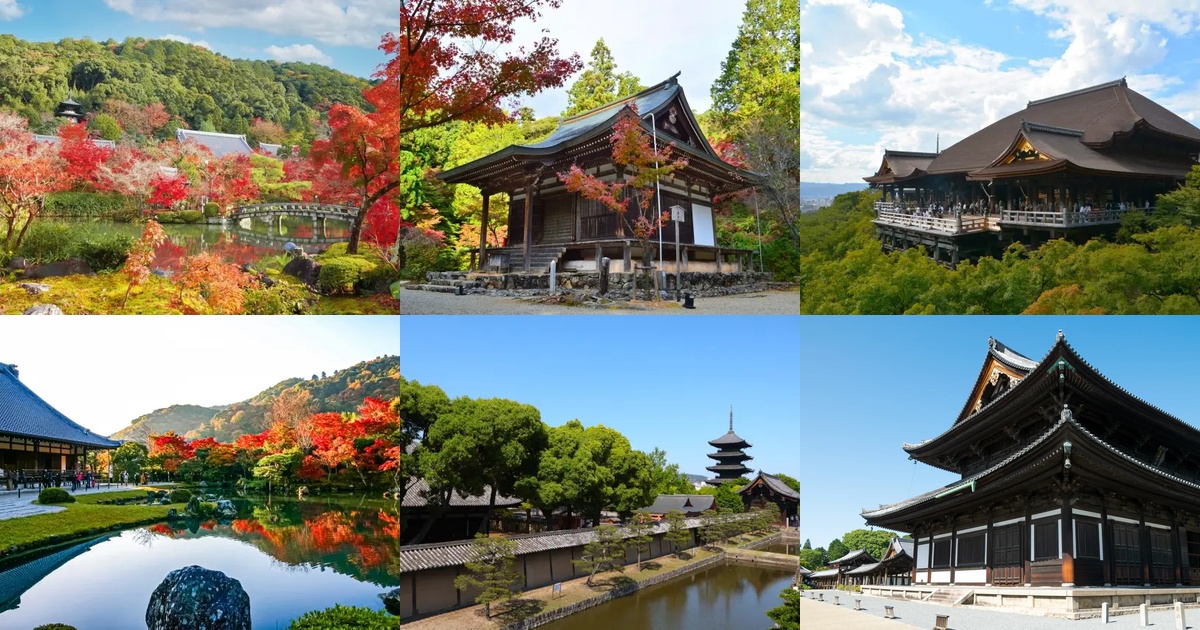
In Kansai, Kyoto is the classic choice. Its temples peak from mid- to late November, and several are famous for their maples after dark. For opening hours and each temple's schedule, check its official site or the Kyoto Autumn Leaves 2026 guide.
Golden Ginkgo: Meiji Jingu Gaien (Tokyo)
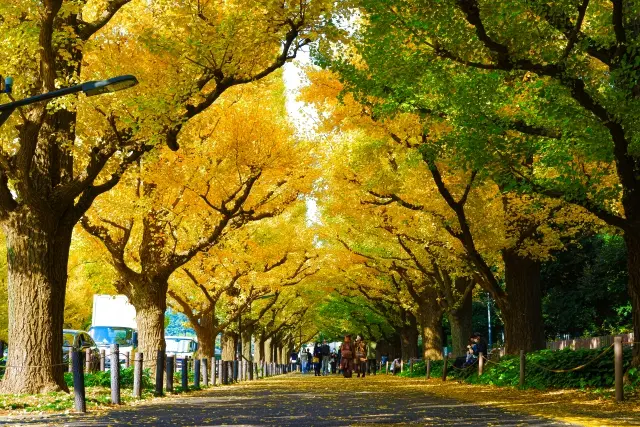
The same season brings a different color. The icho, or ginkgo, glows yellow instead of maple red, and its avenue at Tokyo's Meiji Jingu Gaien turns into a golden tunnel from mid- to late November.
The avenue is a public street, so walking it is free and needs no reservation. What's on around the avenue changes from year to year, so check the Meiji Jingu Gaien Ginkgo Avenue 2026 guide for the latest.
More Autumn Guides by Region
Beyond the eight spots above, we have detailed guides to peak timing, fees, and access for each of these places.
Hokkaido
Tokyo and Kanto
- Shinjuku Gyoen Autumn Leaves 2026
- Rikugien Autumn Illumination 2026
- Tokyo Autumn Illumination 2026
- Hakone Autumn Foliage 2026
- Sengokuhara Pampas Grass Fields, Hakone (2026)
- Hitachi Seaside Park Kochia 2026
Central Japan and Hokuriku
Kyoto
- Arashiyama Autumn 2026
- Sagano Romantic Train 2026
- Kiyomizu-dera Autumn Illumination 2026
- Eikando Autumn Illumination 2026
- Tofuku-ji Autumn Leaves 2026
- To-ji Temple Autumn Illumination 2026
- Kodai-ji Autumn Illumination 2026
- Rurikoin Autumn 2026
- Kitano Tenmangu Autumn Illumination 2026
Western Japan
Before You Go
How to Time Your Visit
- Peak timing shifts more than a month with elevation. The mountains, like Okunikko, turn in October; the lowland cities peak in late November.
- Each year's forecast comes out from around October, so check it before you fix your dates.
- Separate the free spots (Okunikko, Kawaguchiko, Korankei, Jingu Gaien) from the ones that charge (temples in Kyoto and Kamakura, some Tokyo gardens, and the Mt. Takao cable car) when you plan. Keep cash on hand for temple and garden entry.
- Well-known spots get busy on weekends. If your schedule allows, weekday mornings are quieter.
This article was translated from the original Japanese with AI assistance and reviewed by our editorial team. The Japanese version is authoritative.


