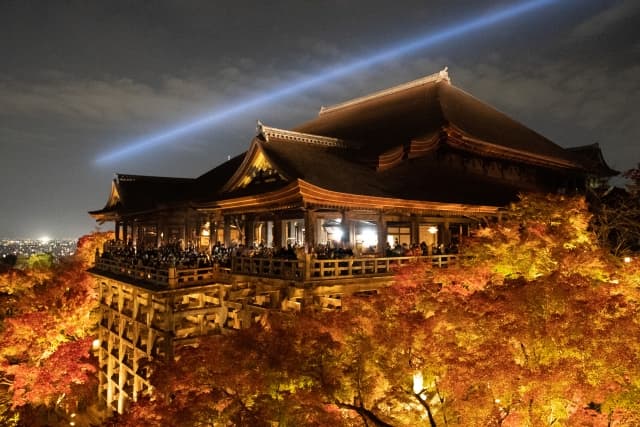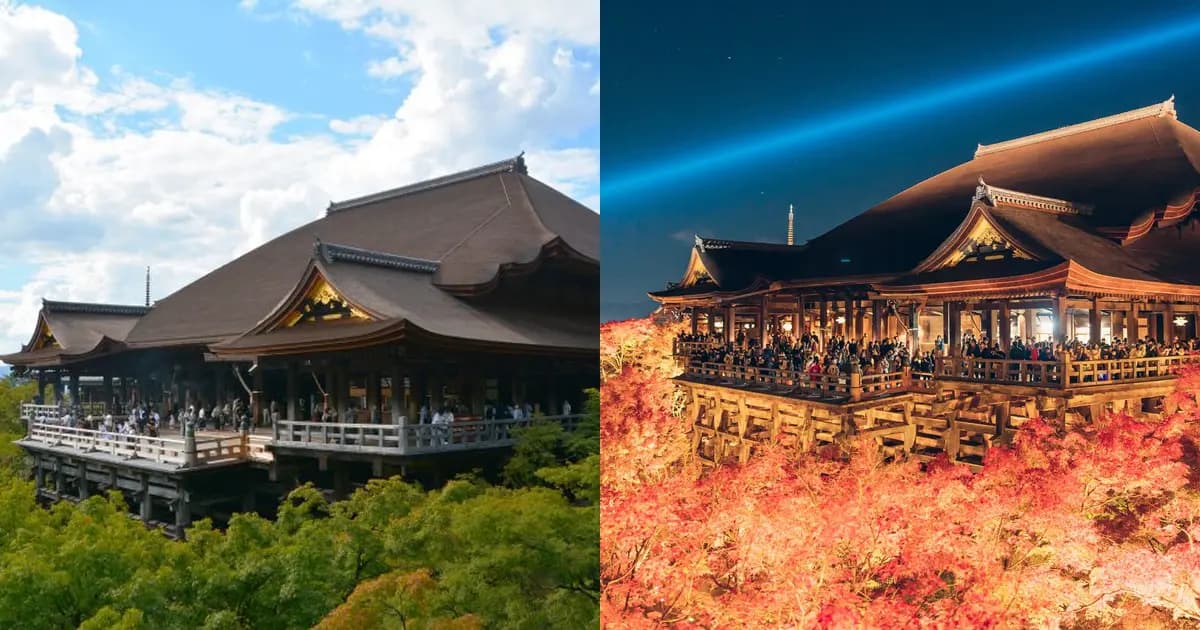
At Kiyomizu-dera (清水寺), autumn is really two visits. By day you look out from the temple's wooden stage over a valley of red maples; after dark, the main hall glows under floodlights and the maples deepen to a richer red. The catch: the autumn evening illumination opens for only about ten days (November 21–30 in 2026), and it is a separate ticketed session from the daytime visit.
Kiyomizu-dera sits in Kyoto's Higashiyama (東山) district, where several of the city's best foliage spots cluster together. For ideas on pairing Kiyomizu-dera with other temples, see Kyoto Autumn Leaves 2026.
The 2026 evening illumination runs only November 21–30. Day and night are separate visits with separate tickets, so plan on two visits, not one.
Foliage Peak and Illumination Dates (November 21–30)
Kiyomizu-dera's maples usually peak from late November into early December. Around a thousand maple trees fill the grounds, framing the wooden stage and the temple halls. No official 2026 color forecast is out yet as this article goes live, so check the seasonal forecasts again just before your trip.
The autumn evening illumination is confirmed for November 21 (Sat) to November 30 (Mon), 2026. Those ten nights fall around the start of the usual peak. If color is your priority, the later nights — roughly November 28–30 — tend to be further along, though the timing becomes clearer once the seasonal forecasts come out. Miss this window and there's no night viewing at all; the dates come straight from the temple's official site.

The daytime visit: hours and admission
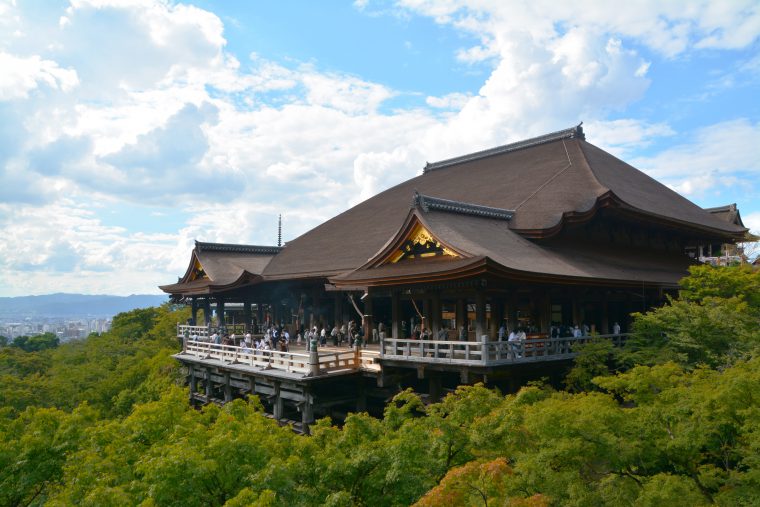
The temple opens early, at 6:00, and closes at 18:00 (18:30 in July and August). That 6:00 opening is early even by Kyoto standards, and the first hour on the stage — before the crowds — is one of the best reasons to come at dawn.
Admission is typically 500 yen for adults (high school age and up) and 200 yen for elementary and junior high students. Prices are revised from time to time, so confirm the current figure at the gate if it matters to your budget.
The night session: the blue light and a separate ticket
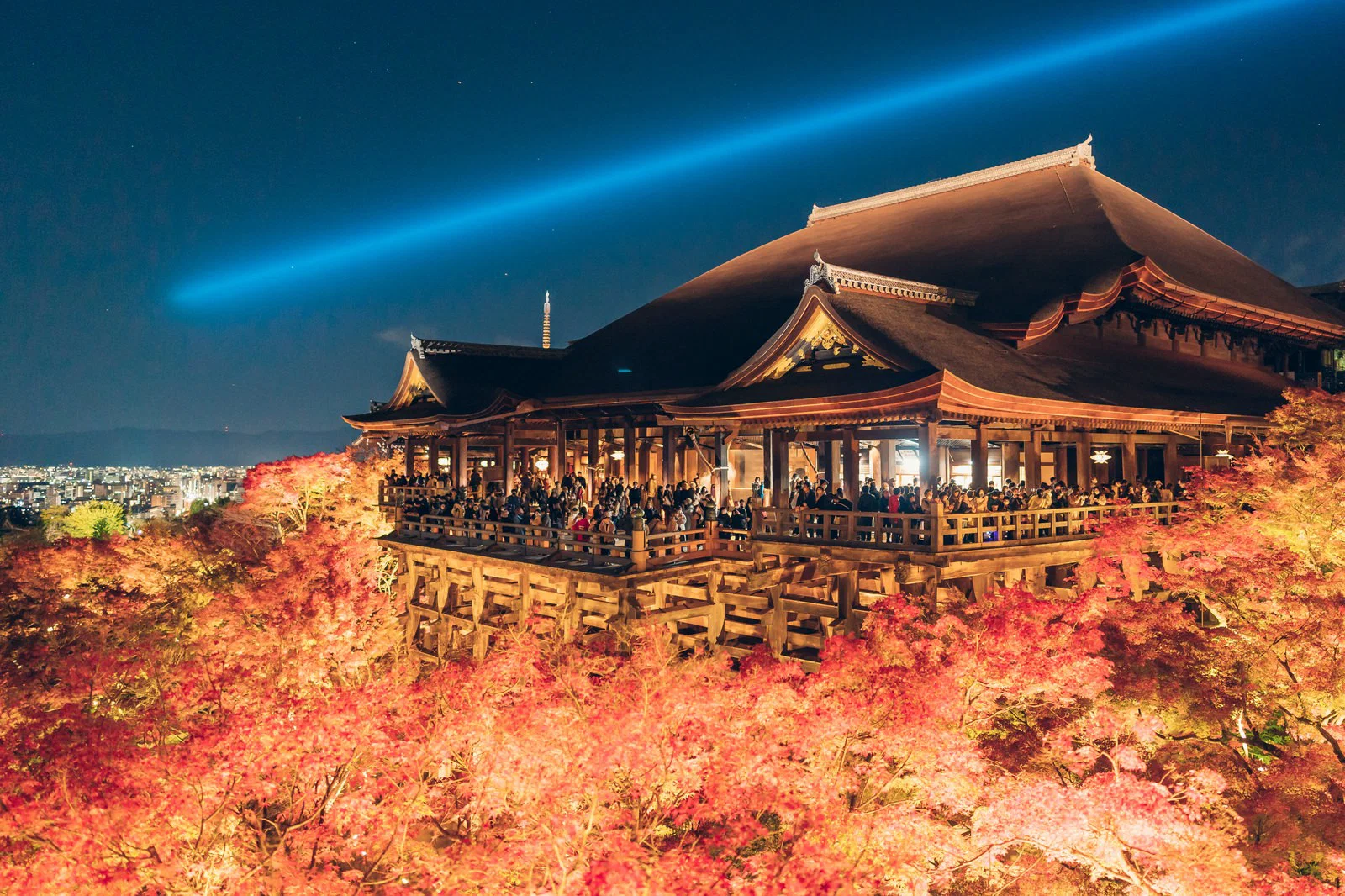
The evening illumination requires separate admission and a new ticket. During the 2026 dates (November 21–30), the lights come on and evening admission begins around 17:30, the last entry is at 21:00, and the gate closes at 21:30. These times can shift, so check the official site close to your visit.
No reservation is needed — you buy a ticket at the window within those hours. The evening admission is the same as the daytime rate, around 500 yen for adults and 200 yen for students. It is not a night surcharge, but even if you went in earlier that day, you buy a separate ticket for the evening session.
The most distinctive sight at night is a single blue beam that rises straight from beside the main hall into the sky, a symbol of the compassion of Kannon (観音), the Buddhist goddess of mercy. Against the floodlit maples and the dark temple halls, the effect is nothing like the daytime scene.
One practical note for foreign visitors: late-November evenings in Kyoto turn genuinely cold once the sun is down, and much of the visit is outdoors and uphill. Bring a warm layer for the night session — you will be standing and walking in the dark for over an hour.
Day, night, or both — how to choose
Because day and night are separate tickets, seeing both is a real choice, not a default. Doing both means two admissions and a plan to fill the afternoon in between: you leave after the daytime visit and buy a fresh ticket for the night. If your time or energy is limited, it is fine to pick one — come by day if the maple color matters most, or come at night for the floodlit halls and the blue beam of Kannon.
If you do both, a good rhythm is to arrive when the temple opens at 6:00, while the stage is still quiet, then walk the Sannenzaka (産寧坂) and Kiyomizu-zaka (清水坂) approach and nearby temples through the day, and come back for evening admission at 17:30.
To dodge the worst crowds, aim for two windows: right at the 6:00 opening, and right when evening admission begins at 17:30. The streets leading up to the temple get busy from late morning through the afternoon, and they are narrow and steep, so leave extra time. Buses fill up too; for moving around Kyoto in peak foliage season, see Getting Around Kyoto in Autumn 2026.
Getting there
From JR Kyoto Station, take city bus 206 or 100 to the Gojo-zaka (五条坂) stop, then walk about 10 minutes. On foot from Keihan Kiyomizu-Gojo Station it is about 25 minutes. The final approach climbs the Kiyomizu-zaka and Sannenzaka slopes, so wear comfortable shoes.
Staying on the Higashiyama side makes the dawn visit far easier. For choosing a base, see Where to Stay in Kyoto 2026.
This article was translated from the original Japanese with AI assistance and reviewed by our editorial team. The Japanese version is authoritative.