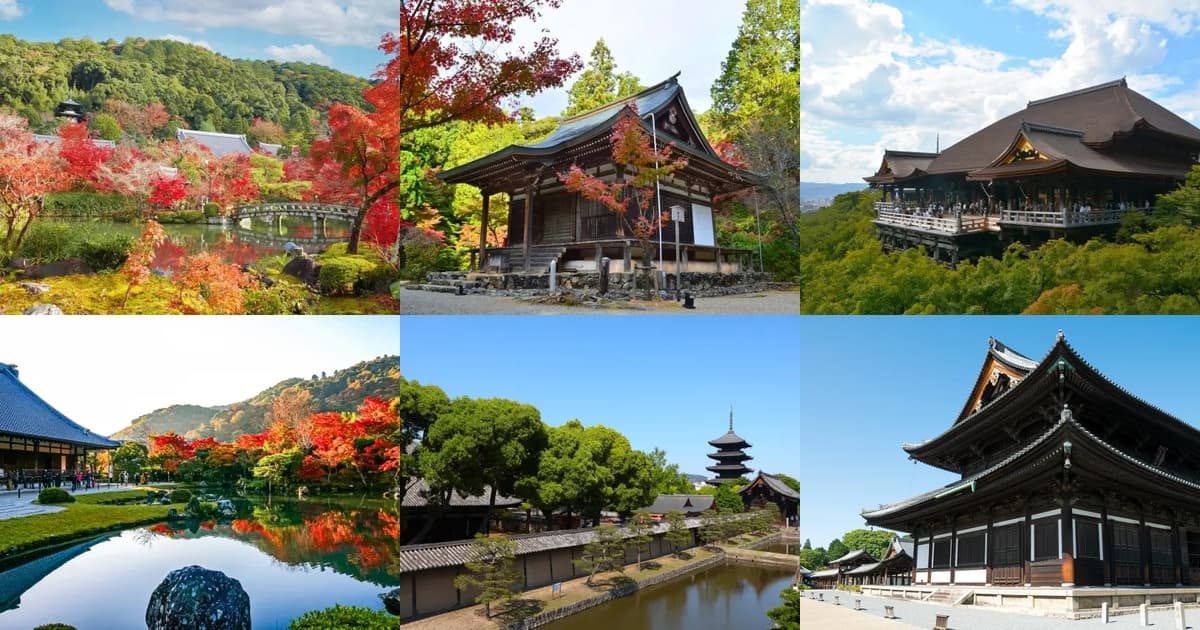
In most years the maples across central Kyoto peak between the middle and the end of November. In Takao (高雄), northwest of the city, the turn comes earlier, from the first week of the month.
There's no 2026 forecast yet. The Japan Weather Association says it will begin publishing peak-foliage dates around September.
As far as we could verify, three temples have published evening-opening dates: To-ji (東寺) from October 31 to December 13, Eikando (永観堂) from November 20 to December 6, and Kiyomizu-dera (清水寺) from November 21 to 30. Tenryu-ji (天龍寺) has set its early-morning garden hours.
Be careful with dates you find elsewhere. Some temples still have last year's notice sitting on their homepage, so a date you copy in August may turn out to be from 2025. Everything below reflects official announcements as of August 1, 2026.
Among the major foliage spots, four have dates you can lock in now: evening openings at To-ji (from October 31), Eikando (from November 20) and Kiyomizu-dera (November 21–30), plus Tenryu-ji's 7:30 garden entry from November 14. Book lodging and transport around those; everything else needs a check in October.
Typical Peak Dates by Spot
The averages below come from Kyoto City's official tourism site, spot by spot.
Spot | Typical peak |
|---|---|
Jingo-ji 神護寺 (Takao) | early to late November |
Saimyo-ji 西明寺 (Takao) | around November 10 |
Kosan-ji 高山寺 (Takao) | mid to late November |
Sanzen-in 三千院 (Ohara) | early November to early December |
Ruriko-in 瑠璃光院 (Yase) | late November to early December |
Tenryu-ji 天龍寺, Jojakko-ji 常寂光寺 (Sagano, Arashiyama) | mid to late November |
Eikando 永観堂, Nanzen-ji 南禅寺 (Philosopher's Path, Okazaki) | mid to late November |
Kiyomizu-dera 清水寺, Tofuku-ji 東福寺, To-ji 東寺 (Higashiyama, Kyoto Station area) | mid to late November |
Even within Takao, the three don't turn at the same time: Jingo-ji from early November, Saimyo-ji around November 10, Kosan-ji from mid-month onward.
The experience differs too. At Tofuku-ji you stand on a bridge and look down into a maple-filled ravine; Arashiyama pairs a temple garden with the bamboo grove in one walk; Takao is a climb up a mountain approach. If you only have half a day, Higashiyama and Arashiyama involve the least moving around.
Check hotel availability and rates in Kyoto
Takao: Three Temples, Three Bus Stops
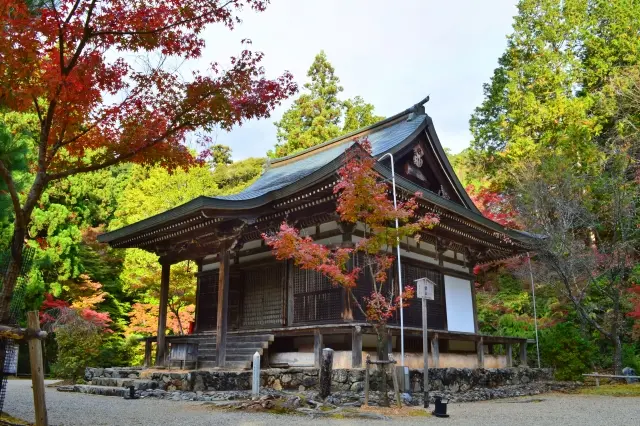
The three Takao temples use three different bus stops: Yamashiro-Takao for Jingo-ji, Makinoo for Saimyo-ji, Toganoo for Kosan-ji. All three sit inside the flat-fare JR bus zone between Kyoto Station and Toganoo, so one Subway & Bus One-day Pass (see below) covers the ride to each. The pass covers fares only — admission is separate.
Kosan-ji is open 8:30–17:00 and charges ¥1,000 for Sekisui-in. Its site also lists a separate ¥500 autumn entry fee but doesn't say which dates it covers, and its parking lot charges a fee in November only.
Jingo-ji is the awkward one. Its own website was unreachable when we checked on August 1, and Kyoto City's listing carries no hours or admission price for it. It's roughly 50 minutes from Kyoto Station by bus, so pin down the hours and the price before you commit a morning to it.
Official sites (Japanese): 京都市公式の「紅葉だより」では、京都の紅葉名所を定番から穴場まで、現在の色づき状況をお届け!京都観光に役立つライトアップ・特別公開などの情報もご案内します。
紅葉だより|【京都市公式】京都観光Navi
To-ji: Evening Opening from October 31, Peak Color Mid-November
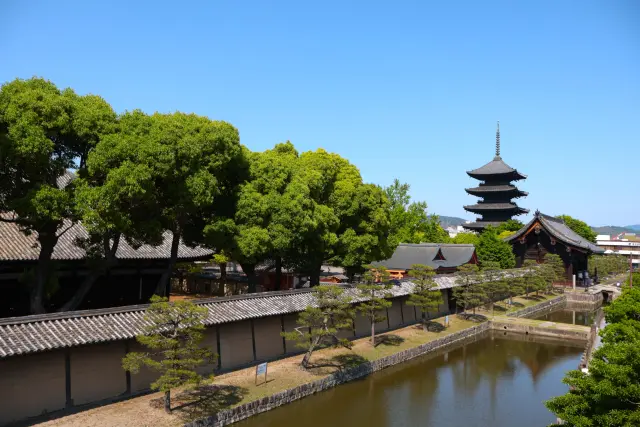
To-ji's 2026 admission page lists an autumn illumination and evening opening of the Kondo and Kodo halls from October 31 to December 13. Admission is ¥1,000 for adults and ¥500 for high school students, with no group discount and no combination ticket for the evening. The evening ticket covers those two halls only, not the five-story pagoda.
The start date is not the peak. In an average year central Kyoto has barely begun to turn at the end of October. The run lasts about six weeks, so if the leaves are the point, aim for mid-November or later.
Opening and last-entry times haven't been published. Check the temple's site from October.
Official site (Japanese): 真言宗総本山 東寺〔教王護国寺〕の公式サイトです。境内・歴史の紹介、特別公開のお知らせ。法要や拝観のご案内。
東寺 – 世界遺産 真言宗総本山 教王護国寺
Eikando Zenrin-ji: Illumination from November 20, Separate Day and Night Tickets
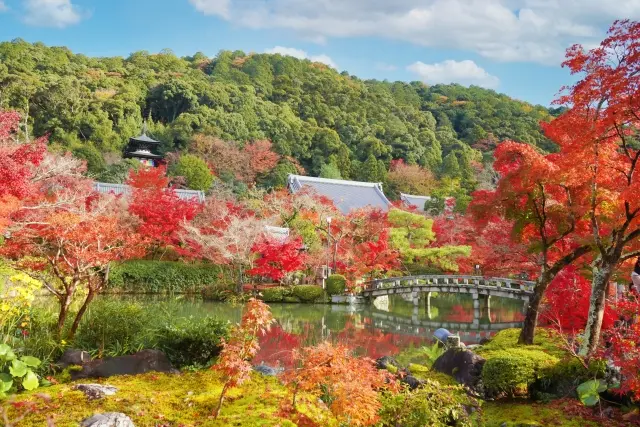
Admission | Dates, hours, price |
|---|---|
Autumn Treasures Exhibition | November 11 – December 6, 2026 / ticket office 9:00–16:00, gates close 17:00 / ¥1,500 adults |
Illumination | November 20 – December 6, 2026 / ticket office 17:30–20:30, gates close 21:00 / ¥1,000 junior high and up |
For the overlap between November 20 and December 6, the temple runs the two as separate sessions and says you can't stay through from one into the other. So an afternoon ticket won't carry you into the evening.
The evening is a second ¥1,000 ticket, and the temple doesn't say whether elementary-age children pay a reduced fare or are admitted at all.
A camera is fine. A tripod isn't — monopods and tripods are both banned anywhere on the grounds, and selfie sticks are barred indoors. You also can't photograph the cultural properties inside the halls, and eating, smoking and pets are prohibited across the site.
Eikando also says private cars and tour buses (minibuses excepted) are not admitted "during the period." It doesn't say which dates that covers, so assume you'll need public transport from November 11, when the exhibition opens, through December 6.
Kiyomizu-dera: Evening Opening November 21–30
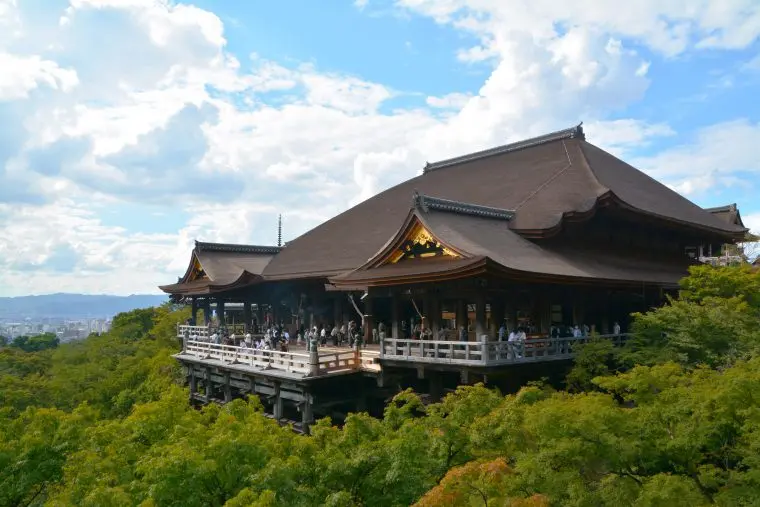
Kiyomizu-dera's published 2026 gate schedule marks November 21 to 30 as the autumn evening viewing, with the gate opening at 6:00 and closing at 21:30 (last entry 21:00). Through November 20 and again in December the gate closes at 18:00, so those ten days are the exception.
Nothing else has been announced for those dates, so there's no price yet and no list of what's included. The schedule doesn't say whether 6:00 to 21:30 is one continuous visit or two separate sessions. The temple doesn't publish its regular admission fee on its website either.
Official site (Japanese): 京都府京都市。「清水の舞台」で知られる寺院。北法相宗の本山(一寺一宗)。縁起、年中行事、境内案内。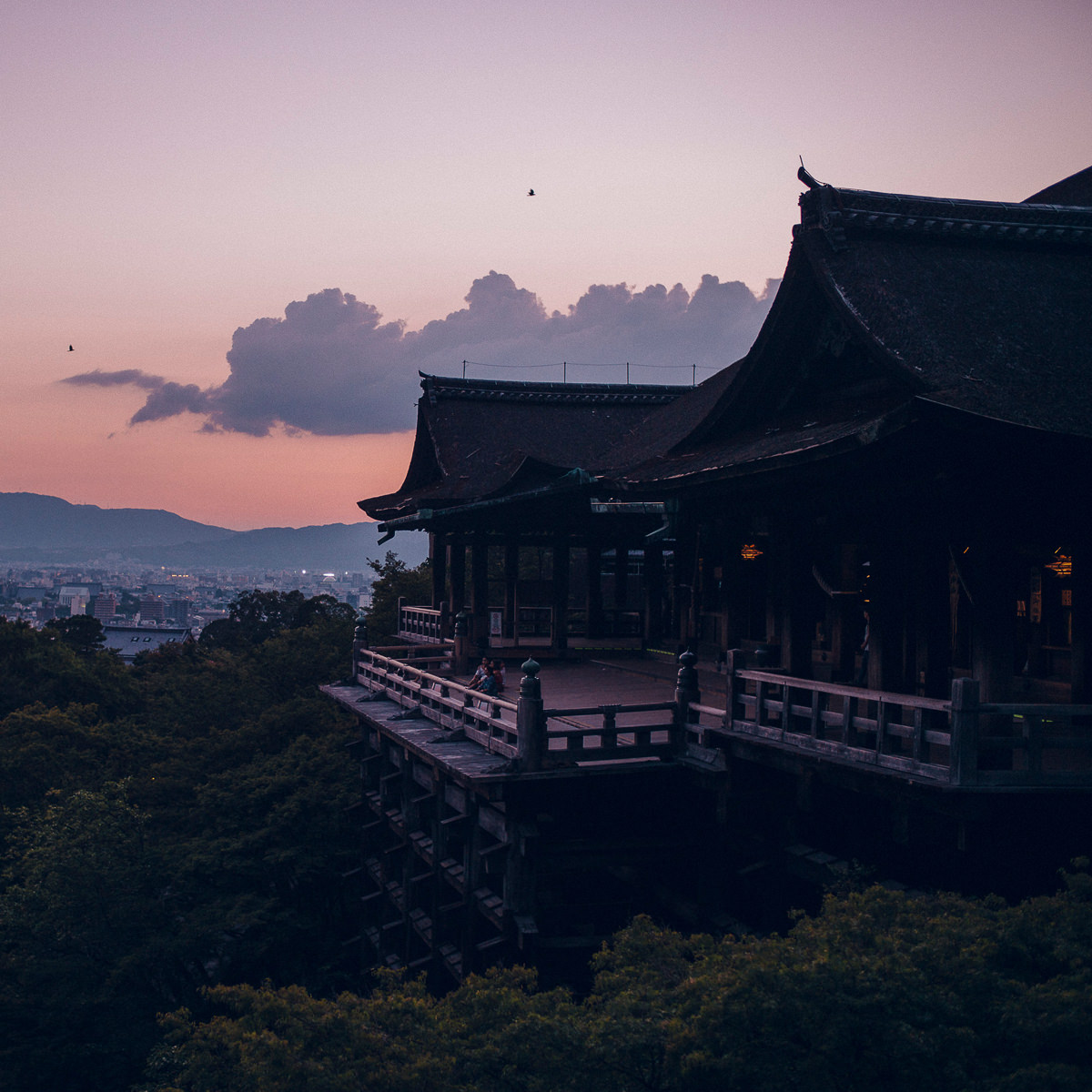
交通 | 音羽山 清水寺
Six Events Still Without 2026 Dates
Six well-known autumn events still had no 2026 dates as of August 1, 2026.
- Daigo-ji evening viewing (the 2025 notice, November 22 – December 7, is still on the homepage)
- Kodai-ji autumn evening viewing
- Kitano Tenmangu maple garden
- Kifune Shrine momiji lantern illumination
- Eizan Railway maple tunnel
- Kiyomizu-dera Joju-in garden opening (a different event from the November 21–30 evening viewing)
Booking rules are unsettled for 2026 too. The 2025 edition of Kyoto City's foliage page listed Ruriko-in as reservation-only from November 8 to December 7, and Enko-ji (圓光寺) from November 10 to December 10.
Bookings for Enko-ji opened on October 20 that year. There's no guarantee 2026 works the same way.
The Higashiyama and Arashiyama Hanatouro lantern walks are a separate case. They ended after the fiscal 2021 season, which closed in March 2022, and the organizers now only lend lanterns to other events.
If Hanatouro appears on an itinerary you're reading for autumn 2026, that itinerary is out of date.
Reservations and Bad Weather
For the evening openings at To-ji (October 31 – December 13), Eikando (November 20 – December 6) and Kiyomizu-dera (November 21–30), none of the official sites mentions advance booking or timed tickets. None of them says what happens in heavy rain either.
Tenryu-ji: Early Entry November 14–30, Garden Only
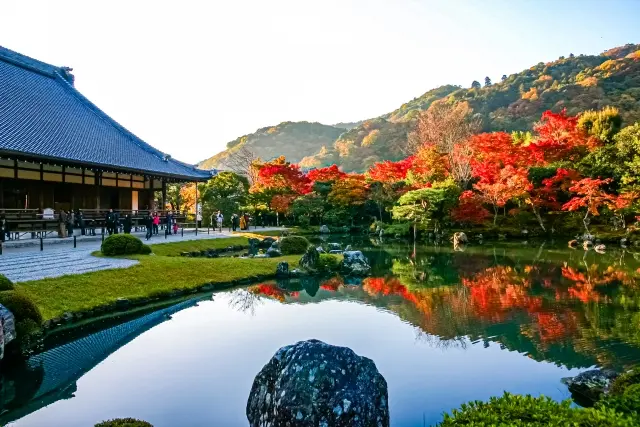
From November 14 to 30, 2026, Tenryu-ji in Arashiyama opens the Sogenchi garden (曹源池) early. Entry starts at 7:30, an hour before the usual gate time.
Only the garden takes visitors that early, and only through the garden entrance. The north gate on the bamboo-grove side doesn't open until 8:30.
The Cloud Dragon painting in the Dharma hall, or Hatto (法堂), is on view daily from September 19 to December 6, 2026, instead of the usual weekends and holidays. It costs ¥500 on top of garden admission and is shown 9:00–16:30 (last entry 16:20). That means the hall is closed during the early-morning slot.
Garden admission is ¥500 for high school and up, ¥300 for elementary and junior high.
Kyoto Tourism Comfort Map: Crowd Forecasts by Time of Day
Kyoto City and the Kyoto City Tourism Association run the Kyoto Tourism Comfort Map, which forecasts crowding by time of day across seven areas, including Sagano-Arashiyama and Gion-Kiyomizu. It also carries live camera feeds and points visitors toward quieter districts such as Keihoku, Ohara and Takao.
How far ahead the forecast runs isn't stated on the page. Open the map from late September to see whether November has appeared yet.
Shift the hour or shift the district. On a day built around Eikando's evening opening, spend the daylight hours in a different part of the city. That's the whole trick.
Official site (Japanese): ビッグデータをもとに予測したエリア別の混雑情報を発信しています。ライブカメラの映像や、おすすめスポット記事も参考に、混雑する時間や場所を上手に避けながら、快適な京都観光をお楽しみください。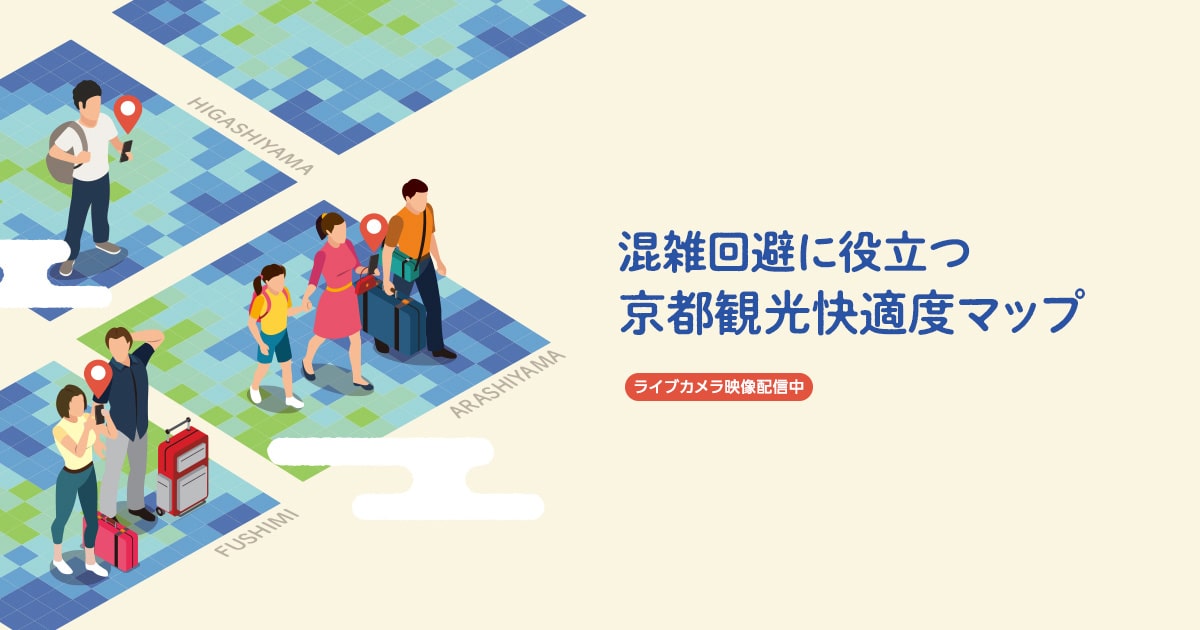
混雑回避に役立つ京都観光快適度マップ|【京都市公式】京都観光Navi
Admission Fees and Opening Hours
Three of the six sites below have their full autumn schedule published. Kodai-ji's and Daigo-ji's hours will change once each announces its evening viewing (Daigo-ji's ran November 22 – December 7 in 2025), and Kifune Shrine hasn't published hours past November 30.
Tenryu-ji has its own section above, and Tofuku-ji one below.
At Nanzen-ji you pay separately for three places — the Hojo garden, the Sanmon gate and Nanzen-in — instead of one temple-wide fee. In the Admission column, a slash means a separate ticket, not a price tier.
Temple / Shrine | Hours | Admission |
|---|---|---|
Nanzen-ji 南禅寺 | 8:40–17:00 through November 30 / 8:40–16:30 from December 1 (last entry 20 minutes before) | Hojo garden ¥600 / Sanmon gate ¥600 / Nanzen-in ¥500 |
Kodai-ji 高台寺 | 9:00–17:30 (last entry 17:00) | ¥800 adults, or ¥1,200 combination ticket with Entoku-in |
Jojakko-ji 常寂光寺 | 9:00–17:00 (last entry 16:30) | ¥600 |
Sanzen-in 三千院 | 8:45–16:45 in November / 9:00–16:30 from December | ¥700 adults, ¥400 junior high and high school, ¥150 elementary and under |
Daigo-ji 醍醐寺 | 9:00–17:00 through December 6 / 9:00–16:30 from December 7 (last entry 30 minutes before) | Three-site ticket ¥1,500 adults, or ¥600 for a single site |
Kifune Shrine 貴船神社 | Main shrine 6:00–20:00 through November 30 | Free |
Ruriko-in is not in the table because its 2026 opening hasn't been announced. The Sanzen-in figures come from Kyoto City's tourism listing rather than the temple's own site. Nanzen-ji closes from December 28 to 31.
December closing times are easy to miss. Nanzen-ji and Daigo-ji close 30 minutes earlier, and Sanzen-in moves both ends by 15 minutes. Ohara and Yase can still hold color into early December, so work back from the closing time if you're going in the afternoon.
Tofuku-ji: Higher Fee from November 1, No Combination Ticket in Autumn
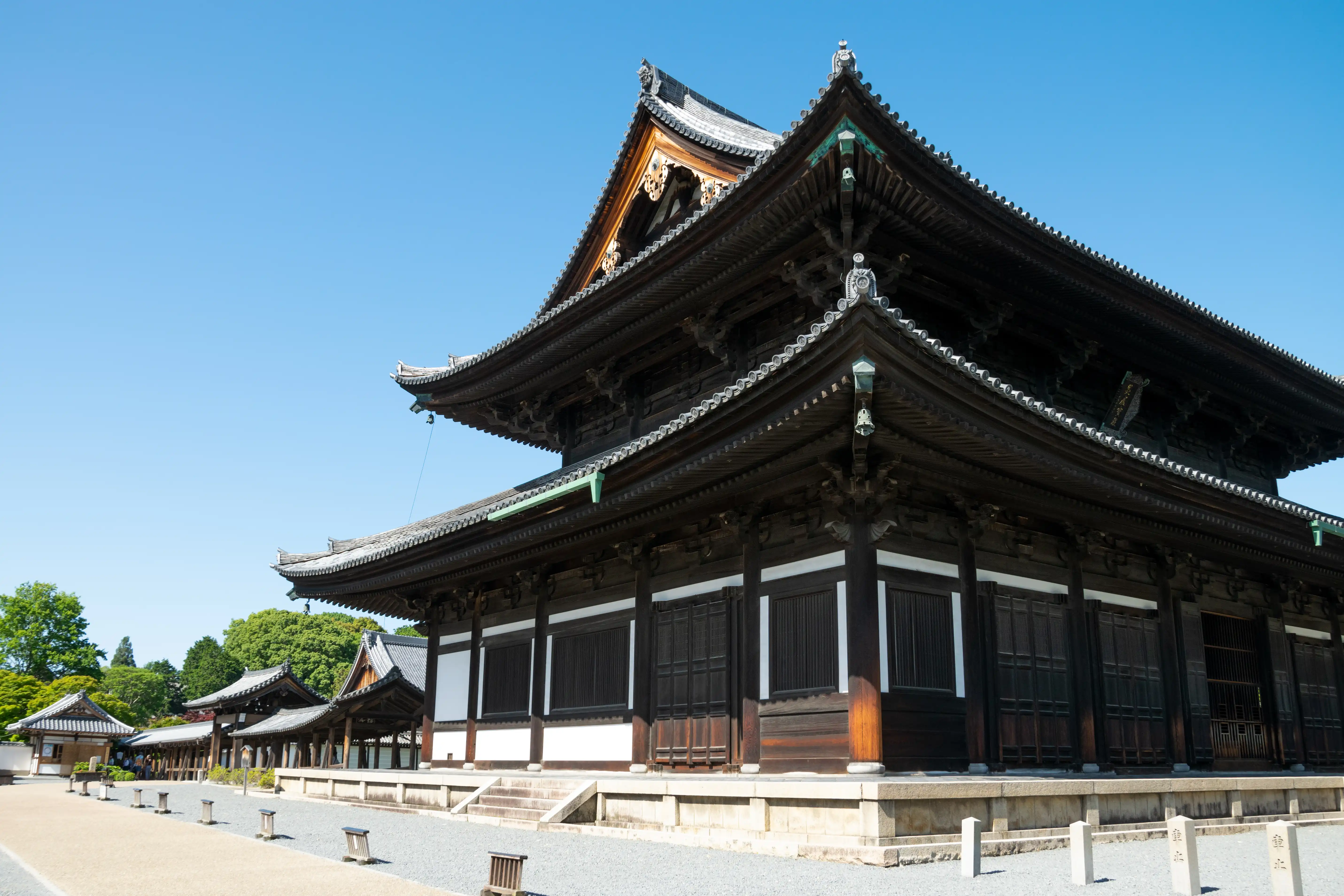
Tofuku-ji (東福寺) announced a price change on July 1, 2026. Adult admission to the Hojo garden goes from ¥500 to ¥600 on November 1, 2026. Outside the autumn season, Tsutenkyo Bridge (通天橋) and Kaisando (開山堂) cost ¥600 for adults and the combination ticket is ¥1,000.
Start with the dates, because the temple's own website gives two different sets. The admission page says November 14 to December 6; the fee page says November 10 to 30.
If you're going between November 10 and 13, assume Tsutenkyo may already be ¥1,000. The site also doesn't make clear whether autumn pricing still applies from December 1 to 6.
In the autumn season the pricing works differently. Only Tsutenkyo and Kaisando cost more, at ¥1,000 for adults, and no combination ticket is sold. The Hojo garden is ¥600 for adults under the July announcement, so once autumn pricing is in effect the two together come to ¥1,600.
The child fare is inconsistent on the site: ¥300 on the price-change notice, ¥500 on the admission page. Budget ¥500 if you're traveling with children.
Hours change too. From November 1 to 13 everything runs 9:00–16:00, and Tsutenkyo's 8:30 opening starts on November 14. In the autumn season Tsutenkyo runs 8:30–16:00 and the Hojo garden 9:00–16:00, with gates closing at 16:30 and the ticket office at 16:00.
From December 7 to March 31 the hours are 9:00–15:30, with the ticket office closing at 15:30 and the gates at 16:00. If you're combining Ohara or Yase with Tofuku-ji in early December, do Tofuku-ji first. The same page notes that autumn dates and hours change every year, so confirm from October onward.
During the autumn opening, you may be asked not to take photos on the Tsutenkyo and Gaunkyo bridges. It's not a blanket ban, but between November 10 and December 6 don't count on setting up on either bridge for long.
The temple also asks you not to eat on the grounds or set up a tripod. There's no re-entry, so decide your route before you go in.
Official sites (Japanese): 拝観時間 拝観料金 境内図 パンフレット 拝観時の注意事項 拝観時間 期間 拝観時間 拝観受付終了 閉門時間 4月1日~10月31日まで 9:00~16:00 16:00 16:30 11月1日~11月 13日まで […]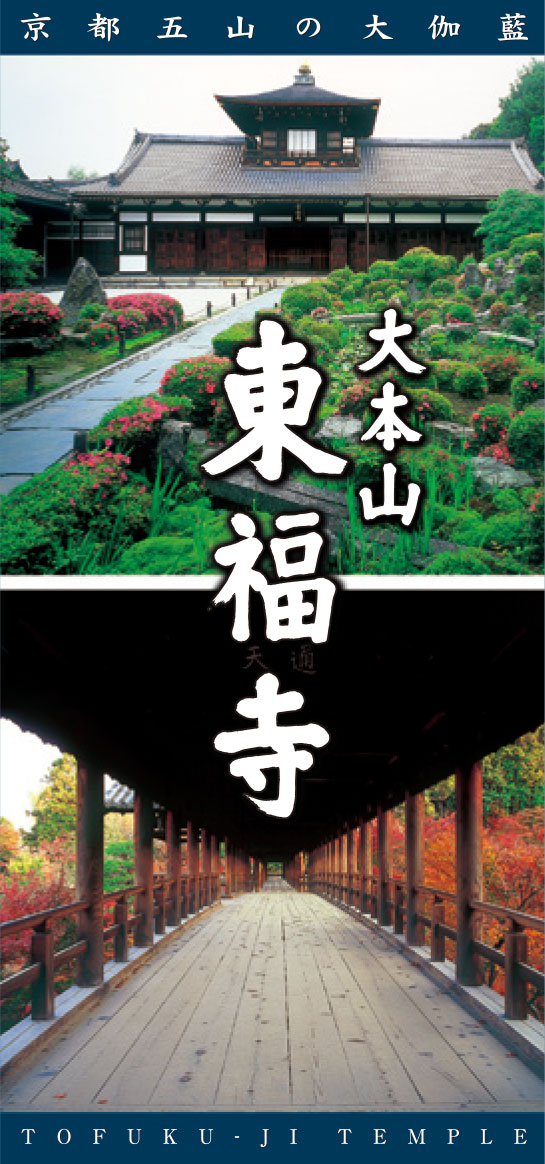
拝観案内 - 臨済宗大本山 東福寺
Bus One-day Pass Withdrawn: What Replaced It, at ¥1,100
Kyoto City stopped selling the Bus One-day Pass at the end of September 2023 and stopped accepting it at the end of March 2024. Older guidebooks still print it.
The current ticket is the Subway & Bus One-day Pass (地下鉄・バス一日券) at ¥1,100 for adults. It covers the whole subway network and all city buses, plus Kyoto Bus as far as Ohara, Iwakura Muromatsu, Iwakura Jissoin, Ichihara, Daikaku-ji, Kiyotaki and Kokedera. Seasonal special routes are excluded.
The JR bus between Kyoto Station and Toganoo runs inside the flat-fare zone, so one ticket gets you to all three Takao temples. The EX100 and EX101 sightseeing express buses run on weekends and holidays and normally cost ¥500 for adults; the pass covers them at no extra charge.
It doesn't cover the Eizan Railway, which is how you get to Ruriko-in, or Kyoto Bus route 33 out to Kibune for Kifune Shrine. Budget separate fares for those two.
Official sites (Japanese): 
京都市交通局:地下鉄・バス1日券
Traffic Restrictions: Nothing Announced for 2026 (2025: September 26)
Kyoto City has announced nothing about traffic restrictions for autumn 2026. In 2025 the city published its autumn tourism measures on September 26. A follow-up report from the city on October 15 described private-car limits at the Kiyomizu-zaka parking area and special parking charges in Arashiyama.
These decisions come from Kyoto City and the prefectural police, not from the temples. If 2026 follows 2025, that's late September. Start checking the city's site then.
Official sites (Japanese): 京都市:令和7年秋の観光シーズンにおける観光課題対策
Lodging Tax: Revised March 2026
Kyoto City's lodging tax changed for stays on or after March 1, 2026 — which means every autumn 2026 booking inside the city. It's charged per person per night, not per room, and it's based on the room-only rate, excluding meals and consumption tax.
Room-only rate per person per night | Tax |
|---|---|
Under ¥6,000 | ¥200 |
¥6,000 to under ¥20,000 | ¥400 |
¥20,000 to under ¥50,000 | ¥1,000 |
¥50,000 to under ¥100,000 | ¥4,000 |
¥100,000 and above | ¥10,000 |
Where a rate is set per room, the city divides it by the number of guests. A ¥30,000 twin shared by two counts as ¥15,000 each, so the tax is ¥400 each per night, or ¥800 for the room. Applying the ¥30,000 room rate directly would push you into the next bracket up — ¥1,000 a person instead of ¥400.
If you booked before the change, you pay the difference at the property, as long as the stay itself falls on or after March 1, 2026.
Official sites (Japanese): 京都市:令和8年3月1日からの宿泊税の見直しが正式決定
What to Check in September and October
- Around September: the Japan Weather Association's 2026 peak-foliage forecast
- Late September onward: Kyoto City's autumn tourism measures (2025's came on September 26; traffic restrictions and parking limits at Kiyomizu-zaka)
- October: dates for Daigo-ji, Kodai-ji, Kitano Tenmangu, Kifune Shrine, the Eizan Railway and Kiyomizu-dera's Joju-in garden
- October: the price and what's included for Kiyomizu-dera's November 21–30 evening viewing
- October: booking open dates for Ruriko-in and Enko-ji
- October: To-ji's illumination start time (October 31 – December 13), and Tofuku-ji's autumn dates and fees
We'll update this article once the forecast is out in September.
Pairing Kyoto with Tokyo? The Kanto side runs on its own schedule. Note that Mount Takao below is west of central Tokyo and unrelated to Kyoto's Takao.
This article was translated from the original Japanese with AI assistance and reviewed by our editorial team. The Japanese version is authoritative.

