Rurikoin, up in the hills of Yase in northern Kyoto, is famous for one image: a polished writing table that mirrors the maple leaves outside like a sheet of glass. But you cannot just show up. The temple is closed most of the year and opens only for special spring, summer, and autumn viewings. In autumn 2026 it opens from October 1 to December 13, and only the stretch from November 13 to December 6 requires a reservation.
This guide explains when to go, what admission costs, and whether you need to book ahead in 2026. If you are pairing it with other spots, start with our Kyoto Autumn Leaves 2026: Areas and Timing guide to slot it into your route.
The 2026 autumn opening runs October 1 to December 13. You need a reservation only from November 13 to December 6; October 1 to November 12 and December 7 to 13 are walk-in.
Dates, Hours, and Admission
Here's how the 2026 autumn viewing breaks down. The price is the same across the spring, summer, and autumn openings. The dates and reservation rules change by season, and in autumn the reservation-only weeks also keep longer hours.
Item | Details |
|---|---|
Autumn period | October 1 (Thu) to December 13 (Sun), 2026 |
Hours | 10:00 to 17:00 (last entry 16:30); 9:00 to 18:00 (last entry 17:30) from November 13 to December 6 |
Admission | ¥2,000 for adults; ¥1,000 for middle and high school students with student ID |
Reservation | Required November 13 to December 6 only (postcard lottery, closed August 20); walk-in the rest of the run |
Nearest station | Eizan Railway "Yase-Hieizanguchi" station, a 10 to 13 minute walk |
At 2,000 yen, Rurikoin sits at the higher end for a Kyoto temple. Think of it as paying for time in the shoin hall and a beautifully kept garden, rather than a quick photo stop. One elementary-school child or preschooler per adult enters free; a second child is ¥1,000.
How Reservations Work
This is where Rurikoin trips people up, so let's take it step by step.
For autumn 2026, the reservation-only stretch is November 13 (Fri) to December 6 (Sun). Every other day of the run—October 1 to November 12, and December 7 to 13—is walk-in, so you can turn up at the gate.
For those dates, entry is by lottery, and applications closed with an August 20, 2026 postmark. You applied by return-reply postcard, winners were mailed their reply cards around September 25, and only winners get in. The temple's Q&A also says there is no same-day booking.
That means there is no way to get a daytime visit between November 13 and December 6 now. If you didn't win and still want to go in that window, the JR Tokai Tours evening viewing (covered below) is the only option, and it runs only on November 14 and 15 and from November 20. There is no evening session on November 13 or November 16 to 19.
If you're planning now, the walk-in days are October 1 to November 12 and December 7 to 13. If you did win a slot, arrive at the entry time printed on your reply card.
- October 1 to November 12: walk-in, though expect a wait on weekends
- November 13 to December 6: lottery winners only. Applications closed on August 20. In the evening, JR Tokai Tours runs a separate night viewing
- December 7 to 13: walk-in again, and a quieter way to catch the tail of the season
Where to Stay
Rurikoin sits out at Yase, on the northeastern edge of Kyoto, and there is no lodging to speak of around the temple itself. Almost everyone comes up for half a day and heads back into the city afterwards.
Settle where you're sleeping first, then build the day around your visit: walk-in days have no time slot, and lottery winners have their entry time on the reply card.
Check hotel availability and rates in Kyoto
Peak Timing and Beating the Crowds
Yase usually peaks from late November into early December. Sitting higher than central Kyoto, it can color up a little earlier some years. If you are after that image of the table drenched in red, aim for November 20 onward to stay on the safe side. Daytime entry in that stretch is lottery-only, though, so if you're planning now, your options are the evening viewing or December 7 onward.
Rurikoin is a sit-and-look kind of visit, so a line forms at the table once the hall fills up. On walk-in days, target the 10:00 opening to see it quietly. Arriving from Kyoto Station or Demachiyanagi tends to put you there around midday, just when it gets busy. Because Yase is a bit of a trek, building your morning around an early arrival pays off, and you'll have more time to compose your shots.
To pair it with nearby maples, consider Tofuku-ji Autumn Leaves 2026, known for the view from its Tsutenkyo bridge, and Eikando Autumn Leaves 2026, known for its evening maples; each offers a different autumn feel from Rurikoin. For working out the transit, see Getting Around Kyoto in Peak Autumn 2026.
Shooting the Famous Table Reflection
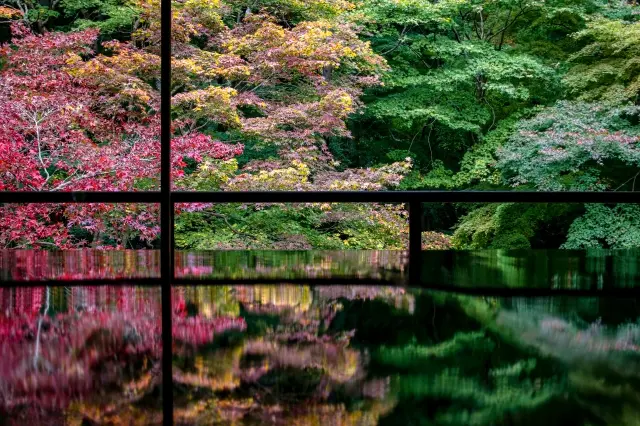
Rurikoin's signature shot is the reflection seen from the second floor of the shoin hall. The black, mirror-polished tabletop catches the maples outside the window like glass.
It is a popular spot, so during the busy weeks everyone takes turns at the best angle. Take your shot, then step aside so the next person can have theirs.
The temple's official site bans tripods and monopods, photo shoots, and unauthorized commercial photography. Shoot handheld, and follow the signage and the staff's instructions on the day.
Evening Special Viewing (JR Tokai Tours)
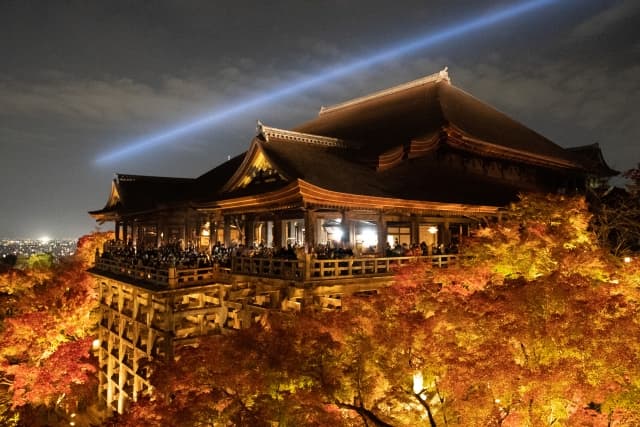
The "Rurikoin illumination" people search for is run not by the temple but as a JR Tokai Tours travel plan. For 2026 it runs on November 14 and 15 and nightly from November 20 to December 6 (weekdays November 20 to December 4; weekends and holidays November 14, 15, and November 21 to December 6). Session 1 is 18:15 to 19:30 (last entry 18:45), and Session 2 is 19:45 to 20:30 (last entry 20:00).
It costs ¥6,000 per person and bundles the evening admission with an Eizan Railway one-day pass and a round trip on the Eizan cable car and ropeway. You book it through JR Tokai Tours' booking site, not through the temple. Weekday Session 2 comes with a special paper-cut goshuin (temple seal), and weekend and holiday Session 2 adds live music.
It is booked separately from the daytime lottery. Check availability on JR Tokai Tours' Rurikoin plan page.
One more note on hours: walk-in days run 10:00 to 17:00 (last entry 16:30). The reservation-only weeks, November 13 to December 6, run 9:00 to 18:00 (last entry 17:30), and each winner enters at the slot assigned on their reply card.
Getting There and the Basics
The nearest stop is Eizan Railway's "Yase-Hieizanguchi" station. The temple's own directions: from Kyoto Station, take the Karasuma subway line to Kokusaikaikan (about 20 minutes), change to Kyoto Bus route 19 toward Ohara and ride to Yase-ekimae (about 12 minutes), then walk about 10 minutes. Kyoto Bus route 17 toward Ohara also runs from Kyoto Station to Yase-ekimae (about 52 minutes). From Demachiyanagi, the Eizan Railway reaches Yase-Hieizanguchi in about 14 minutes, followed by a walk of about 12 minutes.
A few things to square away before you go:
- There is no parking; come by public transit
- Admission is paid at the desk before the main gate, in cash only
- Tours organized by travel agencies and group tours are not accepted
- The temple is not open year-round, so it can only be visited during the spring, summer, and autumn openings
- Autumn dates, hours, and reservation rules can change, so make a final check on the official site before you set out
This article was translated from the original Japanese with AI assistance and reviewed by our editorial team. The Japanese version is authoritative.