
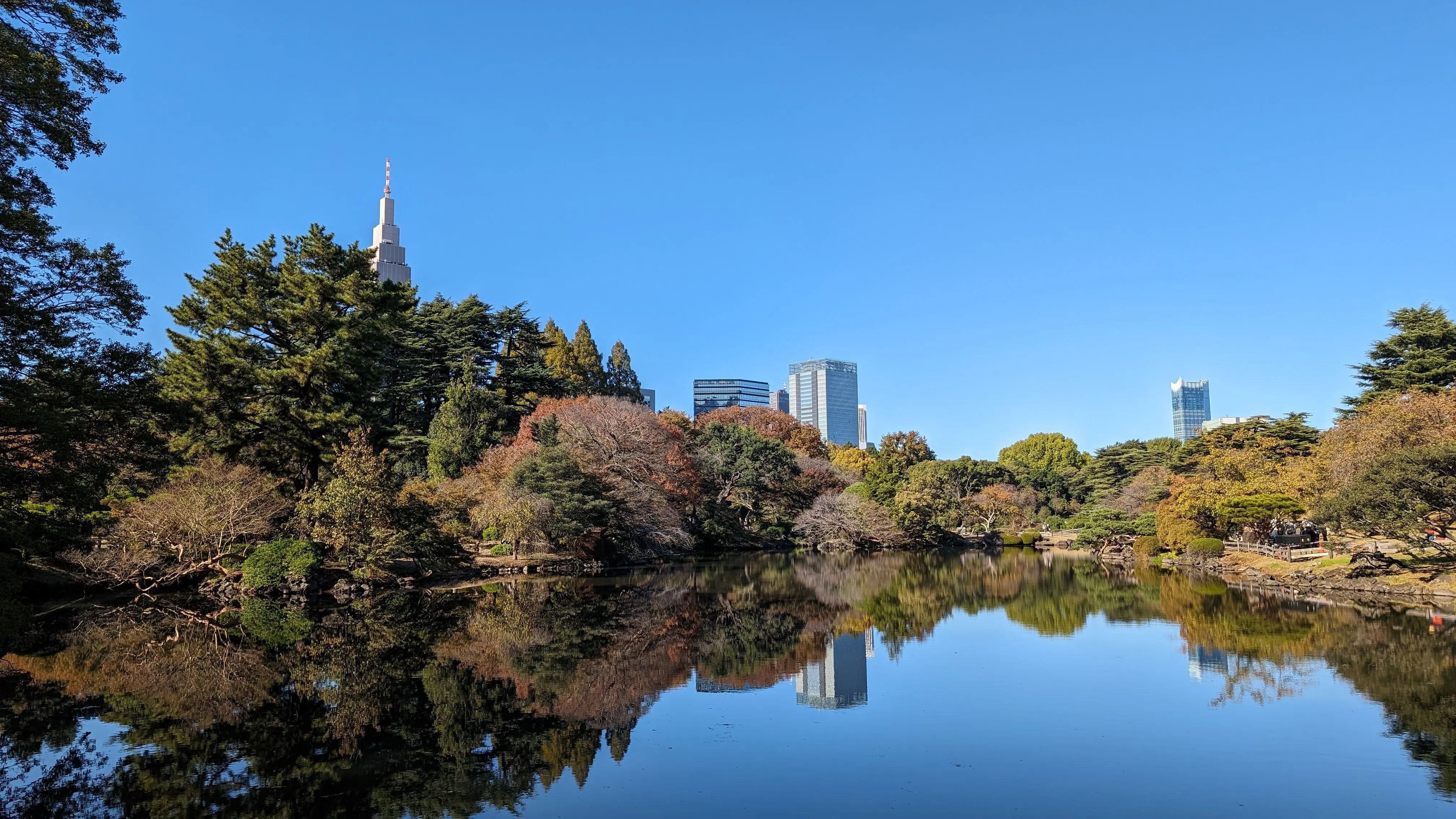
Every November, Shinjuku Gyoen in central Tokyo fills its Japanese Garden with chrysanthemums grown in a tradition that reaches back to the Imperial court. In 2026 the Chrysanthemum Exhibition (菊花壇展, Kikka-danten) runs from Sunday, November 1 to Sunday, November 15.
There's no separate ticket for the exhibition; the garden's regular ¥500 admission covers it. With no advance reservation required, it's an easy outing to add on a whim.
These are also the weeks when the garden's maples and ginkgo begin to turn. If you're timing an autumn visit, see our guide to Shinjuku Gyoen Autumn Leaves 2026.
Your ¥500 garden admission covers all seven pavilion beds and two open-air beds — there's no separate exhibition fee and no reservation to arrange. Buy a ticket at the gate and walk in on any day of the period, Mondays included.
Dates and hours
Item | Details |
|---|---|
Dates | Sunday, Nov 1 – Sunday, Nov 15, 2026 |
Hours | 9:00–16:30 (last entry 16:00) |
Open | Daily during the exhibition, including Mondays |
Venue | The Japanese Garden, Shinjuku Gyoen |
Admission | ¥500 adults / ¥250 seniors (65+) and students / free for children (junior high and under) |
Shinjuku Gyoen usually closes on Mondays, but it stays open every day from November 1 to 15 for the exhibition. In 2026 that includes Monday the 2nd and Monday the 9th.
The garden closes at 16:30, with last entry at 16:00, so it's better to go earlier in the day than leave it late.
Admission and whether you need to book
Admission is ¥500 for adults, ¥250 for visitors aged 65 and over and for students (high school age and up), and free for children in junior high school and under. Visitors with a disability certificate, plus one helper, enter free on showing the certificate.
The exhibition adds nothing on top of that.
You don't need to book ahead during the exhibition, so you can just buy your ticket at the ticket window, where transport IC cards are accepted.
To skip the line, you can also buy an online ticket in advance through Asoview, a third-party ticketing site, and scan the QR code at the gate.
Seven display pavilions and two open-air beds
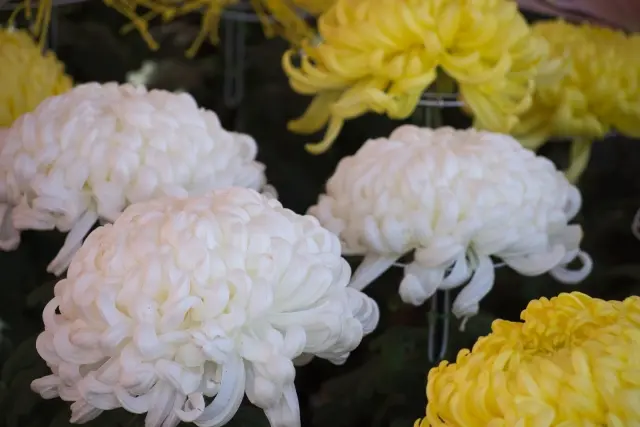
The Japanese Garden holds seven flower beds set under uwaya — temporary wooden pavilions built to show the chrysanthemums — plus two open-air beds. Each is grown and trained differently, so walking through them in order shows how varied the flower can be.
- Ogiku (large chrysanthemums): 311 plants across 39 varieties, planted in yellow-white-red order in the garden's own "tazuna-ue" rein-planting style.
- Ozukuri (one plant, hundreds of blooms): a single plant trained over more than a year into hundreds of flowers, arranged in a half-circle.
- Kengai (cascade-style): small-flowered mums trained over a bamboo-and-wire frame to spill like wild chrysanthemums down a cliff, with a water channel in front.
- Edo-giku: a classic cultivar whose petals shift in shape and color after they open, also called "dancing chrysanthemums."
- Ichimonji and kudamono-giku: the single-layer Ichimonji has about 16 petals and resembles the imperial crest, while the kudamono type has tubular petals that fan outward.
- Ise, choji and Saga chrysanthemums: three classic cultivars shown together — Ise petals curl and droop, choji petals mound up in the center, and Saga petals stand up flat and straight.
- Higo-giku: an heirloom variety developed as a discipline by samurai in Higo (Kumamoto); it fills the smallest bed.
The seven beds above are the pavilion displays; the two open-air beds sit elsewhere in the garden.
A free companion display, the Chrysanthemum Exhibition Guide, runs at the Information Center just outside the Shinjuku Gate from October 27 to November 15.
An imperial tradition
The exhibition traces back to 1878, when the Imperial Household Ministry held a chrysanthemum viewing for the Imperial Family at Akasaka Palace. In 1880 it became the "Chrysanthemum-Viewing Party," a diplomatic occasion that welcomed foreign envoys.
Cultivation moved to Shinjuku Gyoen from 1904, and the event itself relocated here in 1929. After wartime interruptions it reopened to the public once the garden became a national park in 1949, and it has been held every autumn since.
Getting there
Shinjuku Gyoen has three gates — Shinjuku, Okido and Sendagaya. The Japanese Garden is a short walk inside, so check the official park map for the closest gate on the day.
- Shinjuku Gate: 5 min from Shinjuku-gyoemmae (Tokyo Metro Marunouchi line, Exit 1); 5 min from Shinjuku-sanchome; 10 min from Shinjuku Station South Exit (JR, Keio, Odakyu).
- Okido Gate: 5 min from Shinjuku-gyoemmae (Exit 2).
- Sendagaya Gate: 5 min from JR Sendagaya; 5 min from Kokuritsu-kyogijo (Toei Oedo line, Exit A5).
Before you go
Weekends draw the biggest crowds during the period, so a weekday morning is the calmest time to walk around. Late afternoons cool off quickly before the 16:30 close, so a light jacket is worth packing.
Casual photos are fine, but when the garden is crowded, as it is during the exhibition, you can't set up gear to photograph a specific person; paid shoots need permission.
Alcohol, smoking (including e-cigarettes) and open flames are not allowed inside, and pets other than service dogs cannot come in.
This article was translated from the original Japanese with AI assistance and reviewed by our editorial team. The Japanese version is authoritative.