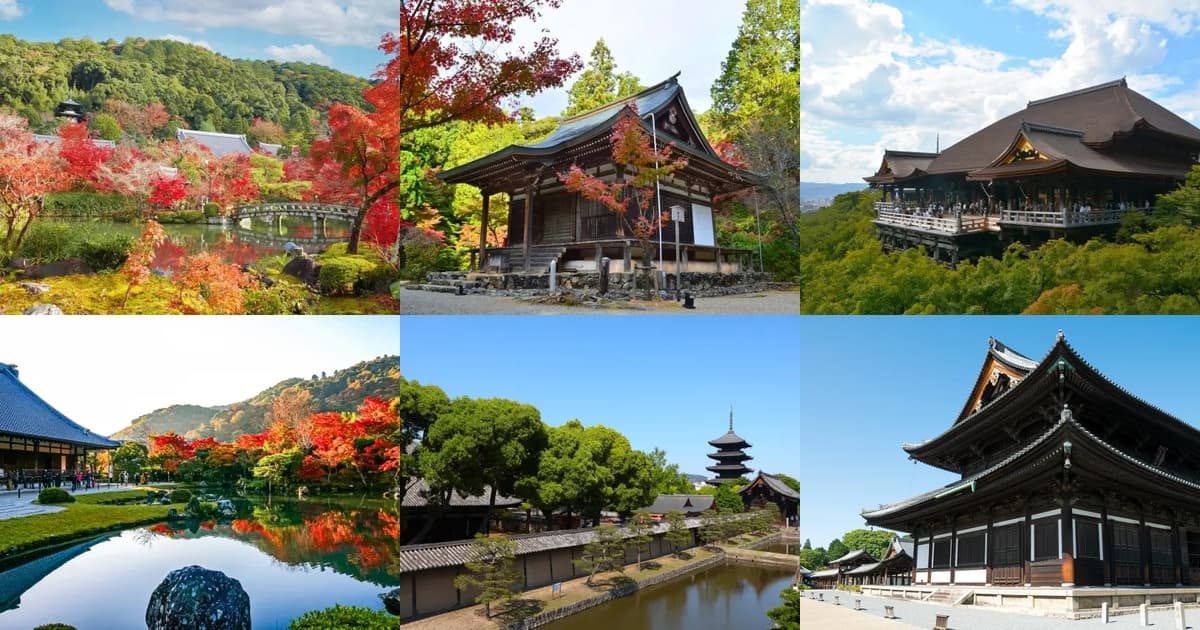
Most travelers planning an autumn-foliage trip to Japan think of Kyoto or Tokyo in November. If you are visiting earlier, head north instead. On the Daisetsuzan range in Hokkaido, crowned by 2,291-meter Mount Asahidake, the colors start turning in mid-September, a month or two ahead of Honshu.
The season moves downhill. It begins high on Asahidake's Sugatami plateau around mid-September and reaches the valley floor at Sounkyo Gorge by mid-October. This guide covers when to go, which ropeway to ride, and how to get there, with fares and access.
Daisetsuzan is often said to be the first place in Japan to show its autumn colors. During Japan's mid-September Silver Week holidays, the slopes are already red and gold while Honshu still feels like summer.
For the full picture of the season, see our Japan Autumn Leaves 2026: Where and When to See the Colors guide.
Peak color, area by area
Daisetsuzan turns early because it is high and cold. Asahidake's upper slopes usually see their first snow around late September. That early chill pushes the foliage weeks ahead of the mainland.
Here are the typical timings. They shift by a week or two from year to year, so treat them as a guide, not a promise.
- Asahidake, Sugatami plateau (about 1,600 m): peak around mid-September; first color from early September
- Kurodake, on the Sounkyo side (5th to 7th station): color from early September, peak late September to early October
- Sounkyo Gorge, the valley floor by the Ginga and Ryusei waterfalls: color from late September, peak early to mid-October
The higher the elevation, the earlier the leaves change. Pick your elevation to match your travel dates.
Bear in mind that Asahidake's mid-September peak overlaps Japan's Silver Week holidays, when the ropeway is especially busy. If your dates are flexible, a weekday morning or the tail end of the peak is calmer.
No operator has published a pinpoint 2026 forecast yet, so check the Asahidake Visitor Center or the Sounkyo tourism association for current conditions before you set out.
Riding the Asahidake Ropeway to Sugatami Pond
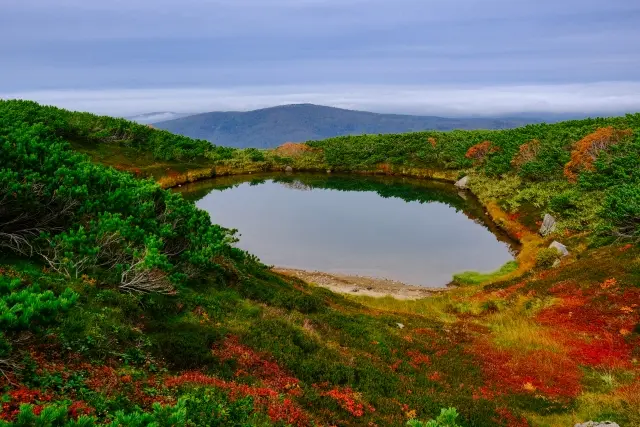
The easiest way to see Asahidake's foliage is to take the ropeway. It climbs from the base station at Asahidake Onsen (1,100 m) to Sugatami Station (1,600 m) in about ten minutes. At the top, Sugatami Pond mirrors the peak, ringed by crimson alpine ground cover.
During the top season from June 1 to October 31, an adult round trip is 3,500 yen and a one-way ticket is 2,200 yen. Elementary-school children pay 1,750 yen round trip. Cars run roughly every 15 minutes.
First and last departures shift with the season and the day of the week. The calm early-morning reflection is what most photographers come for, but the first departure time varies by date, so check the official timetable before you go. High winds or bad weather can suspend or shorten service, so look at the day's operating status that morning too.
From Sugatami Station, a loop trail of about 1.7 km circles the pond in roughly 90 minutes. It is not paved, so wear sturdy shoes.
Official site: Mt. Resort ASAHIDAKE
Sounkyo: the Kurodake Ropeway and chairlift
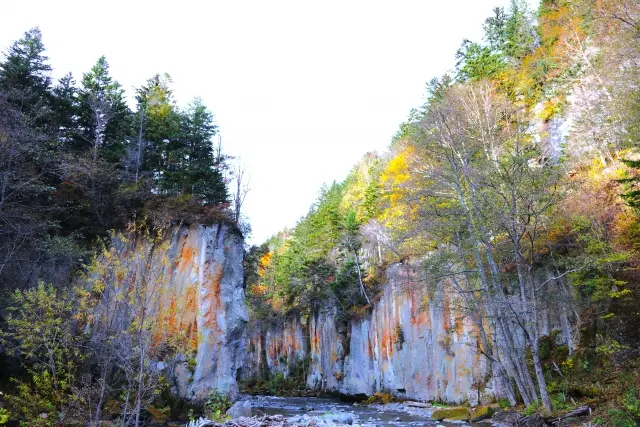
The other base is Sounkyo, a hot-spring town. From here the Kurodake Ropeway rises from the valley station (670 m) to the 5th station (1,300 m) in about seven minutes, an easy way to reach the higher slopes straight from town.
To go higher, walk about 200 m to the two-person chairlift up to the 7th station (1,520 m). In September the best color is usually around the 5th station and mid-slope; by October the slopes along the chairlift blaze with red and gold.
The ropeway round trip is 3,000 yen for adults and the chairlift 1,200 yen. A combined ticket is 3,900 yen round trip, cheaper than buying them separately.
Hours change through the season. During the autumn foliage season, the ropeway runs from 6 a.m. to 6 p.m. through the end of September, and from 7 a.m. to 5 p.m. in early October. From mid-October the operating dates and times change, so confirm on the official site. The last uphill car leaves 40 minutes before service ends (30 minutes for the chairlift), so work backward from that when you plan your descent.
Getting to Asahidake Onsen and Sounkyo
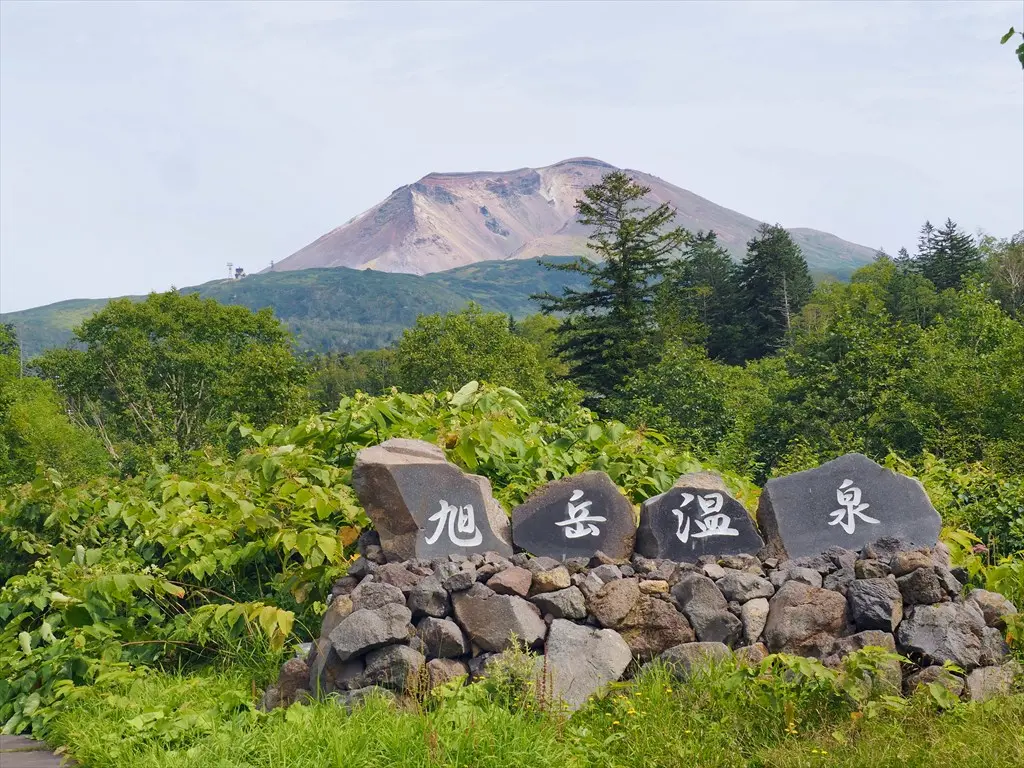
Asahikawa is the gateway to both areas, so plan around Asahikawa Airport and Asahikawa Station. Asahidake and Sounkyo sit far apart on the same range, and traveling between them by bus is inconvenient, so treat them as separate day trips rather than one loop.
For Asahidake Onsen, the Asahikawa Electric Railway "Ideyu-go" bus (route 66) is the simplest option. From Asahikawa Station to Asahidake it is 2,300 yen for adults (from September 1), about 1 hour 48 minutes via the airport.
There are four round trips a day, leaving Asahikawa Station at 7:15, 9:15, 12:15 and 14:15 and reaching Asahidake around 9:03, 11:03, 14:03 and 16:03. It is a scheduled local bus and does not wait for late flights, so leave time to connect from your flight to the bus and then the ropeway.
For Sounkyo, the Dohoku Bus Sounkyo line runs from Asahikawa Station for 2,140 yen in about two hours. There is no direct highway bus from Sapporo, so the realistic route is to reach Asahikawa first and change there (about 4 hours 30 minutes in total).
By rental car, it is about an hour from Asahikawa Airport to Asahidake Onsen. Sounkyo Gorge is about 30 minutes from the Kamikawa-Sounkyo interchange on the Asahikawa-Monbetsu Expressway, with parking at the Sobakudai lookout over the Ginga and Ryusei falls.
What to pack: warm layers and bear safety
Above all, pack plenty of warm layers. Even when downtown Asahikawa is mild, Sugatami at 1,600 m and Kurodake's 7th station are close to winter by late September. On Asahidake's summit, temperatures drop below freezing from September into October, and the first snow can fall while the valleys are still green.
Bring a windproof jacket and layers you can add or shed. Wear sturdy shoes with good grip, especially after rain, since the trails are unpaved.
Daisetsuzan is also bear country. Brown-bear tracks and droppings turn up even around the Sugatami Pond trails. Carry a bear bell, walk with others where you can, and check the latest sightings with the Asahidake Visitor Center (tel. 0166-97-2153) before you head up.
Chasing autumn from the peaks to the valleys
Daisetsuzan's autumn opens on Asahidake's Sugatami plateau in mid-September and closes in the Sounkyo valley in mid-October. Because the autumn color moves down the mountains as the season goes on, match your timing to the height you want and you can catch it across both months.
To beat the crowds, ride one of the earliest cars of the day. In the clear morning air, you can chase a Japanese autumn that arrives weeks before the rest of the country, from the peaks down to the valleys.
This article was translated from the original Japanese with AI assistance and reviewed by our editorial team. The Japanese version is authoritative.