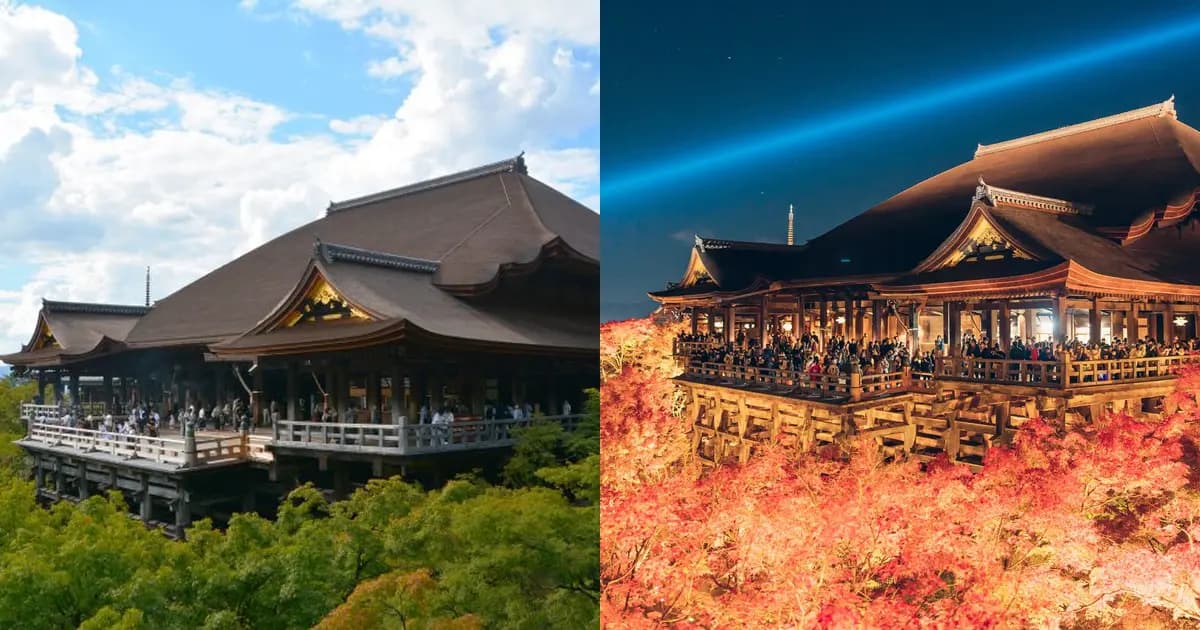
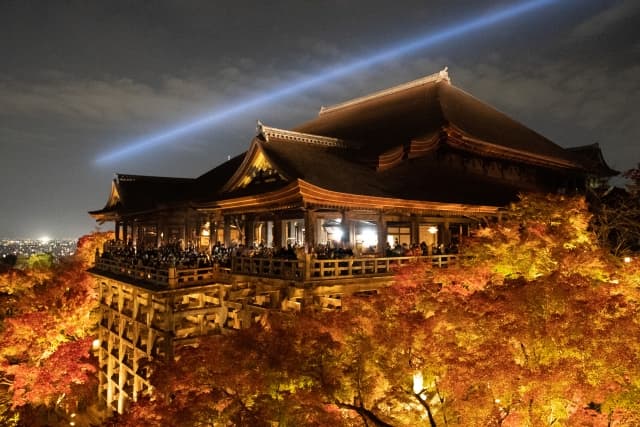
Kodai-ji (高台寺), a Zen temple in Kyoto's Higashiyama district, holds a special evening opening each autumn when its dry garden is lit by projection mapping and the pond garden glows after dark. The temple was founded in memory of Toyotomi Hideyoshi by his widow, Nene, and its evening opening is one of the quieter ways to see Kyoto's autumn colors.
The 2026 autumn evening viewing runs from October 23 to December 13. This guide covers the dates, hours, admission, whether you need a reservation, when the leaves actually peak, and how to get there.
For other temple evening events and how to move around the city during the busy season, see our Kyoto Autumn Leaves 2026 guide.
Kodai-ji's autumn evening viewing runs Oct 23 to Dec 13, 2026. Lights come on at 5:00 p.m. with last entry at 9:30 p.m.; adult admission is ¥800. The temple has not indicated that reservations are required.
2026 Evening Viewing at a Glance
The temple opens separately for evening viewing after the daytime visiting hours. If the evening colors are what you're after, arrive at or after 5:00 p.m., when the lights come on.
Item | Details |
|---|---|
Dates | October 23 (Fri) – December 13 (Sun), 2026 |
Evening hours | Lights on 5:00 p. |
Daytime hours | 9:00 a. |
Adult admission | ¥800 |
Junior/senior high | ¥400 |
Elementary & younger | Free with an accompanying adult |
What You'll See at Night
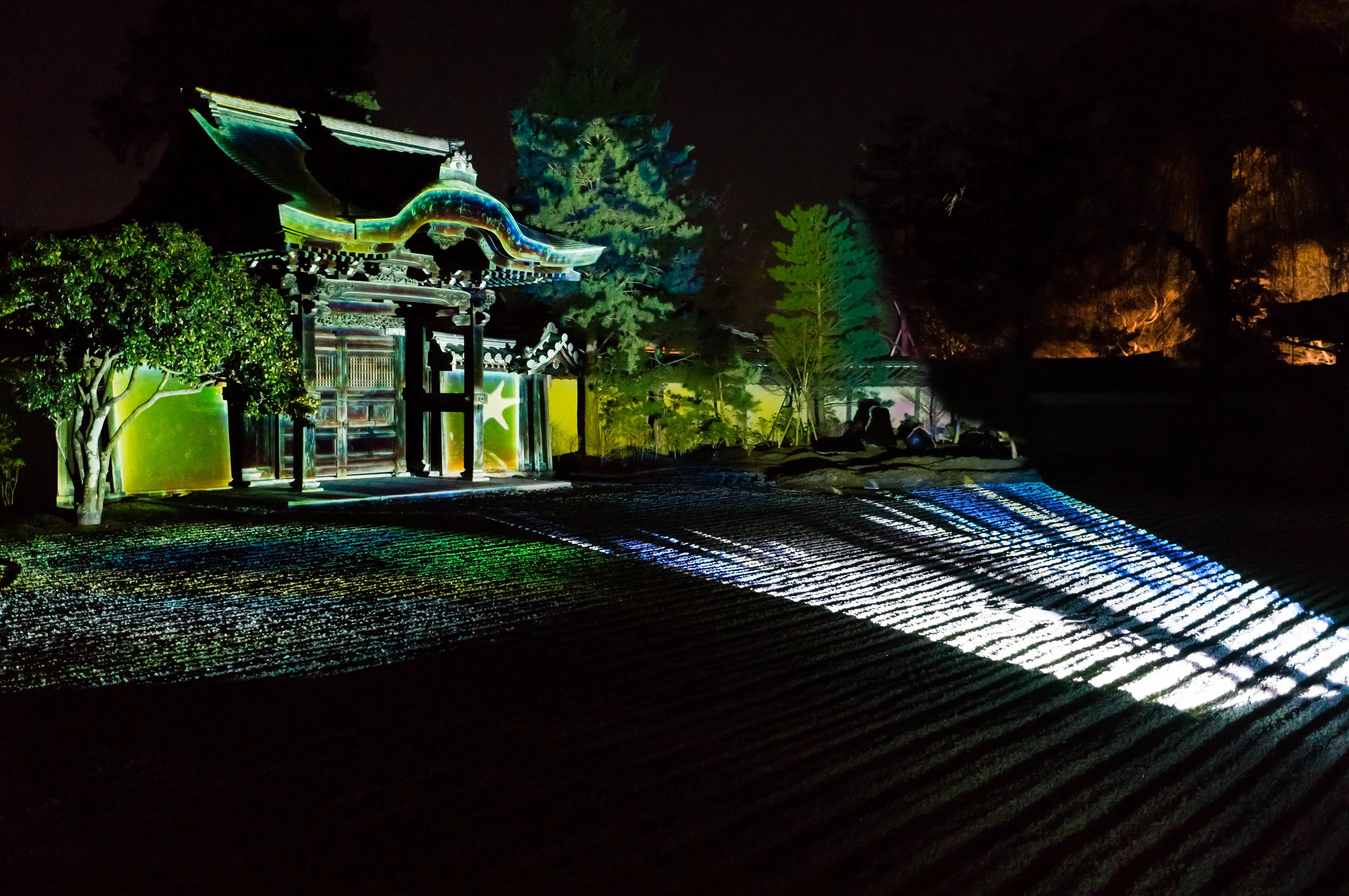
The centerpiece is the projection mapping in front of the Hōjō (abbot's hall), where images are cast across the white-sand garden and you can take it in slowly, without the daytime crowds.
The pond garden, attributed to the tea master and garden designer Kobori Enshū, is also lit. As you walk the paths around the lit trees and pond, the grounds take on a stillness they don't have by day.
The colors read differently under the lights than in daylight, so if you have time, arrive in the late afternoon and let the garden shift as the lamps come on.
Admission, Combined Ticket, and Reservations
Admission is the same for the daytime and evening visits, with no additional fee for special exhibitions.
If you also want to visit Entoku-in (圓徳院), the sub-temple a short walk away, a combined discount ticket for the two sites is ¥1,200. Entoku-in is also associated with Nene and offers its own evening viewing in autumn.
As of August 2026, the temple has not posted any requirement for advance booking, numbered tickets, or timed entry for the evening viewing. In practice you pay at the gate on the day, but because the temple doesn't say either way, check the official site shortly before you go for the latest notice.
Peak Foliage and Quieter Hours
The temple doesn't publish a specific peak date, but autumn foliage in central Kyoto generally peaks from mid- to late November. Because the run is long, the lit garden is worth a visit even a little off-peak.
Weekends during the peak are busy across Higashiyama all day. For a calmer visit, try the first hour after the lights come on at 5:00 p.m., or the period shortly before last entry.
Late-November evenings in Kyoto get cold once the sun is down, so bring a warm layer for a night walk in the garden. The temple does not provide specific guidance on rain or entry restrictions, so check its latest notices before setting out if the weather looks uncertain.
Getting There
Kodai-ji is at 526 Kōdaiji Shimokawara-chō, Higashiyama-ku, Kyoto. It's walkable from the nearest stations:
- About 15 min on foot from Keihan "Gion-Shijō" Station
- About 20 min on foot from Hankyu "Kyoto-Kawaramachi" Station
- About 7 min on foot from the "Higashiyama Yasui" city bus stop
The stone-paved lanes of Ninen-zaka and Sannen-zaka (Sannei-zaka) and the Nene-no-Michi path make the walk up part of the experience. Kiyomizu-dera is just to the south. Note, though, that Kiyomizu-dera's autumn evening viewing runs only for a short window in late November, so seeing both temples after dark on the same night is only possible when the dates overlap — check the linked guide for its exact dates.
Kodai-ji sits partway up the Higashiyama lanes, so an evening visit is easiest when you are already sleeping on that side of Kyoto. For weighing up areas, see Where to Stay in Kyoto 2026.
This article was translated from the original Japanese with AI assistance and reviewed by our editorial team. The Japanese version is authoritative.