
Few places in Japan photograph better in autumn than Lake Kawaguchi (Kawaguchiko), where red maples turn against the backdrop of Mt. Fuji. The star of the season is the Momiji Corridor (Momiji Kairo), a riverside walk on the lake's north shore where old maple trees arch overhead into a tunnel of red.
Below is what the official sources say — when the leaves peak, what the Momiji Corridor and the Fujikawaguchiko Autumn Leaves Festival cost and when they open, and how to get there from Kawaguchiko Station. Since the colors here turn earlier than in the capital, it pairs well with Tokyo Autumn Leaves 2026 if you are planning a longer autumn trip.
Peak color usually lands between late October and mid-November. The Momiji Corridor is free to enter, and in 2026 the festival runs November 7–29. Sources disagree on when the lights go off, so aim to be there before 9 p.m.
When the Leaves Peak at Lake Kawaguchi
The maples along the lakeshore and the Momiji Corridor usually color up from late October through mid-November. Yamanashi's official tourism site and the town tourism federation both give that same window.
The festival and the peak are not the same thing. The festival runs November 7 to 29, but the color often peaks in the first half of that stretch or just before it, so dates weighted toward late November can land after the leaves have dropped.
That said, the timing shifts a little each year with the weather. The higher ground around Mt. Fuji cools sooner than central Tokyo, so aim for a slightly earlier window than the city's own autumn. Check the current color report just before you go.
The Momiji Corridor at a Glance
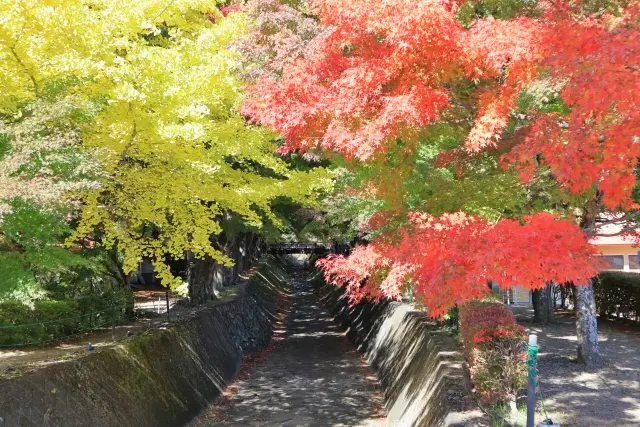
The Momiji Corridor runs along both banks of the Nashi River in the Kawaguchi district, on the lake's north shore, where about 150 maples line the path, by the town tourism federation's count. At the height of the season the branches close over your head, so you walk through a tunnel of red and gold.
Entry is free, and the lake is only steps away. At the peak, the lakeside walk is reason enough to come.
The Fujikawaguchiko Autumn Leaves Festival After Dark
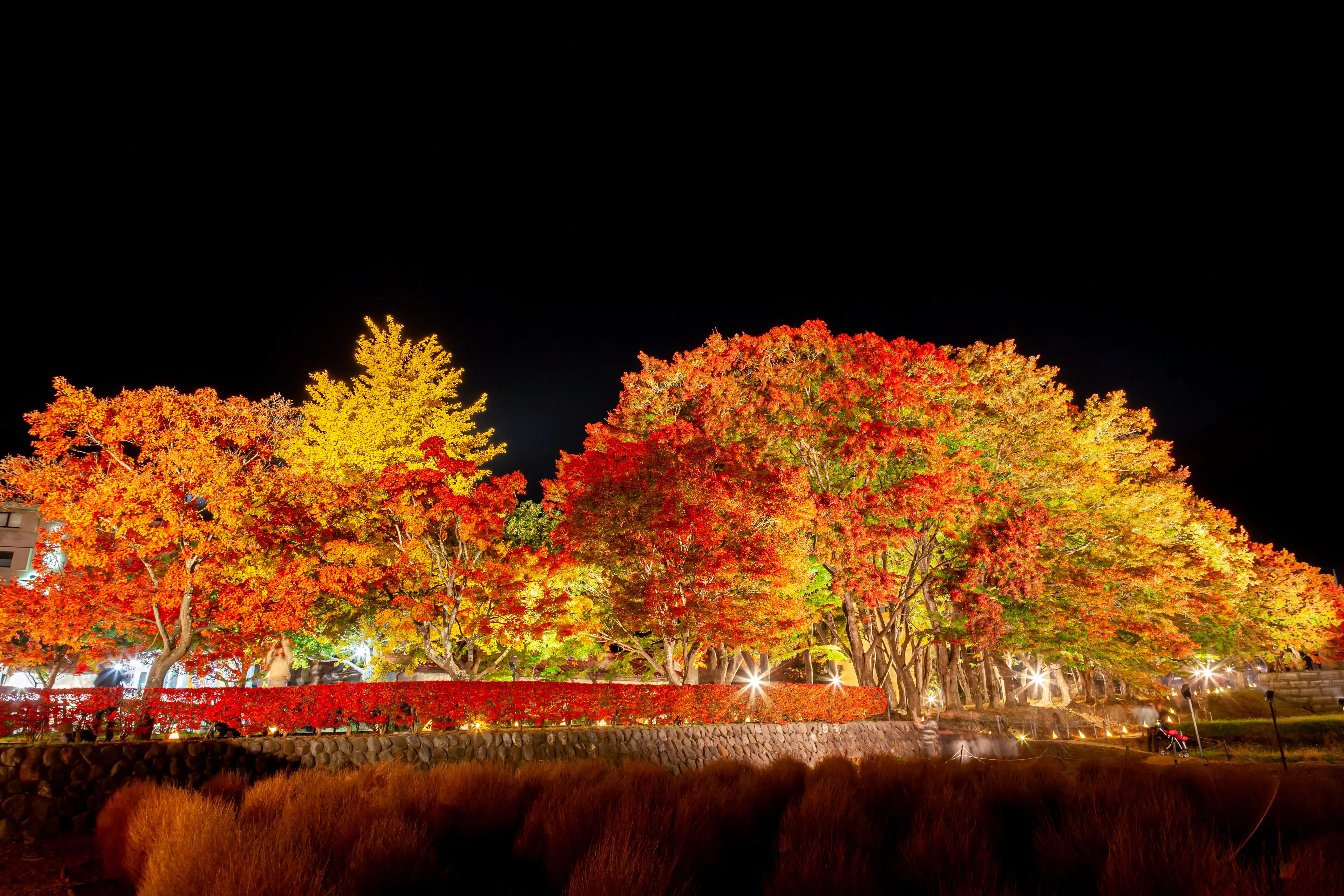
Each autumn, the Fujikawaguchiko Autumn Leaves Festival centers on the Momiji Corridor. In 2026 it runs from Saturday, November 7 to Sunday, November 29, announced by the town tourism federation on July 10, 2026.
The 2026 notice says nothing about daytime hours. Past years ran 9 a.m. to 7 p.m., but that is not carried over in writing, so check close to your date if you are counting on it.
The light-up runs on a separate, later schedule, starting at dusk — around 4:30 to 4:45 p.m. in November — with the maples mirrored in the water.
Sources disagree on when it ends. The town tourism federation's 2026 notice says 9 p.m. Past years ran to 9:30 p.m., and some sites carrying the correct 2026 dates say 10 p.m. Plan to be there before 9 p.m., and check the federation's page close to your date. Whether the lights run every night is not spelled out in the 2026 notice.
Festival dates do move from year to year — 2024 began on October 26 and 2025 on November 1, so 2026's November 7 start is about a week later than last year. The festival contacts are the Fujikawaguchiko Town Tourism Division (0555-72-3168) and the town tourism federation (0555-28-5177).
Where to See Mt. Fuji With the Autumn Colors
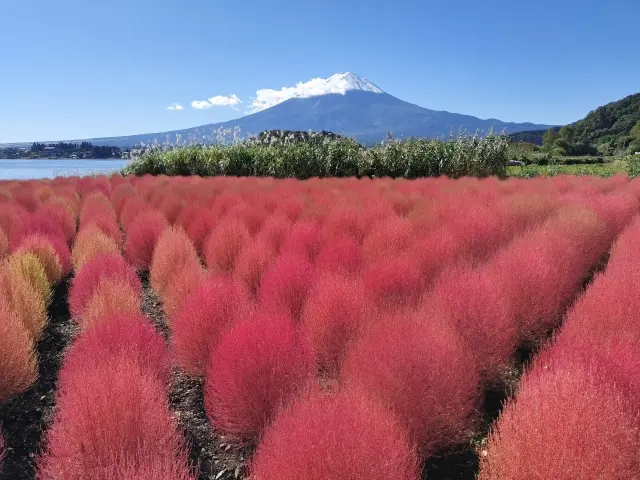
The north shore, where the Momiji Corridor sits, is one of the easier places to frame Mt. Fuji and the fall colors in a single shot. On a clear day you can look past the red maples to the first snow settling on the mountain.
Nearby is Oishi Park (Oishi Koen), a well-known Fuji viewpoint — though its main draw is flower beds and the mountain rather than maples, and it sits apart from the corridor. Combine those with "Momiji Kaido," a road lined with maples, and the "Momiji Tunnel" about 15 minutes away by car, and you can spend a full day chasing Mt. Fuji and autumn color.
Getting There from Kawaguchiko Station (and Parking)
From Tokyo, you reach Kawaguchiko Station by highway bus from Shinjuku (Busta Shinjuku) or by the Fujikyuko Line (changing at Otsuki). The station is the closest gateway to the festival. From the station, take the Kawaguchiko Sightseeing Bus (the Retro Bus / Red Line), get off at the "Itchiku Kubota Art Museum" stop; the corridor is about a five-minute walk from there. The bus ride is around 20 minutes.
If you drive, it is about 15 minutes from the Kawaguchiko IC on the Chuo Expressway. In past years free temporary parking opened for the festival, but whether it does in 2026, and where, had not been announced as of September 18 (a few paid lots also operate nearby). The peak weekends get crowded, so give yourself extra time.
Before You Go
The 2026 notice does not go beyond the dates, November 7 to 29, and the light-up hours. Parking, which days the stalls open, and what happens in bad weather were all still unannounced as of September 18, and we could not find an official notice about traffic control either way. The temporary car parks only open for the festival period, so if you are driving, check the official notice in late October.
One more thing on timing: peak color, late October to mid-November, comes earlier than the festival. If the leaves are the point, weight your dates toward the first half.
This article was translated from the original Japanese with AI assistance and reviewed by our editorial team. The Japanese version is authoritative.