The single choice that shapes a Lake Kawaguchi (Kawaguchiko) trip is which side of the water you sleep on. Mt. Fuji stands to the south of the lake, so the postcard shot — water in front, the mountain rising behind it — comes from the north shore, not from the busy area around the station.
This guide sorts the choice by shore: the north side for Fuji views and photos, the station side for getting around without a car. An onsen soak is not a separate area but a preference you layer on top, on whichever shore you have chosen. It pairs with our companion piece on Kawaguchiko autumn leaves 2026, if you are timing a visit for the November foliage.
Mt. Fuji sits south of the lake, so the "lake plus Fuji" view comes from the north shore — but that shore is a 27–30-minute bus ride from Kawaguchiko Station.
Which shore for the view
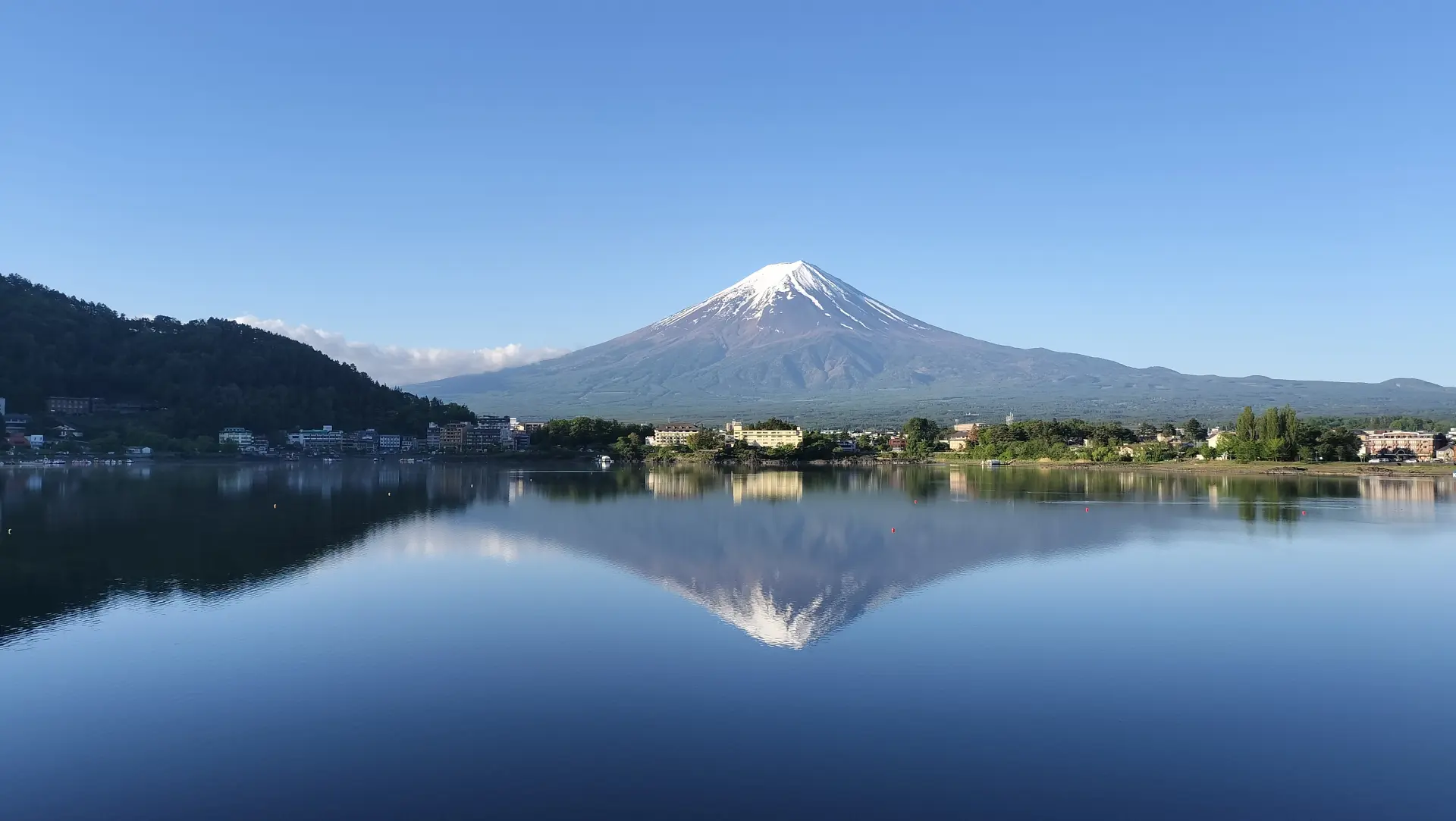
Lake Kawaguchi has the longest shoreline of the Fuji Five Lakes, and where you stay decides what you see. The north shore is the side that fills postcards: with the water between you and the mountain, a still morning gives the mirror image the tourist boards call "upside-down Fuji."
One caveat worth setting straight before you book: Mt. Fuji is not guaranteed. The mountain is often wrapped in cloud, and whether it shows depends on the weather and the season. Records of how often it's visible go back more than thirty years — proof enough that a clear view is something to plan around, not to count on.
So a lake-view room raises your odds; it does not promise the mountain. Book for the location, and treat a clear morning as the bonus it is.
The north shore: best for Fuji views
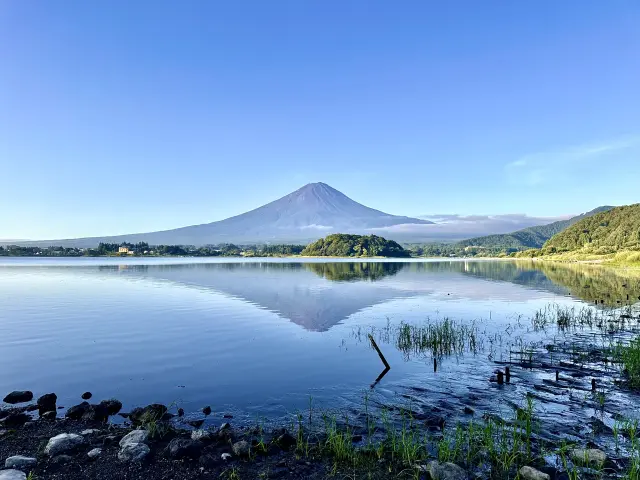
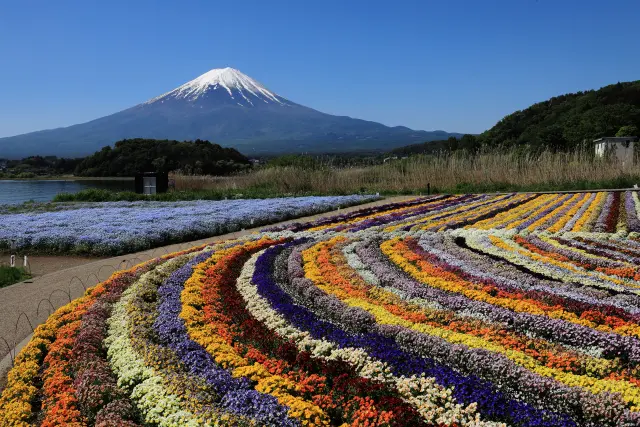
If the view is why you are coming, sleep on the north shore, in the Oishi and Kawaguchi districts. The reason to stay over rather than day-trip is the light: you get the still, clear air of early morning before the tour buses arrive.
Oishi Park (大石公園), on the north shore, is the classic spot: lavender in early summer, red-tinged kochia in autumn, and the lake-and-mountain framing in one shot. Ubuya Cape is another well-known vantage point on this side. The north shore is also where the Momiji Corridor (もみじ回廊) autumn-leaves festival is held, so a November stay here puts you inside the foliage.
The trade-off is access. Oishi Park is about 27–30 minutes from Kawaguchiko Station on the Red Line retro bus, so this shore suits travelers with a rental car, or those happy to plan around the bus timetable.
Search north-shore hotels on Lake Kawaguchi
Around Kawaguchiko Station: best for car-free trips
If you are arriving by bus or train and want to move without a car, base yourself near Kawaguchiko Station, in the Funatsu district on the station-and-interchange side of the lake. This is the transport hub: the Fujikyuko Line trains, the Shinjuku highway buses, and all three retro-bus loops start here, and the Kawaguchiko interchange off the Chuo Expressway is close by.
The view across the water to Fuji is less head-on here than from the north shore, but you trade that for the easiest logistics on the lake. That is worth a lot on a first visit, or a short one, when you would rather not build the day around a bus schedule.
Onsen inns: best for a soak
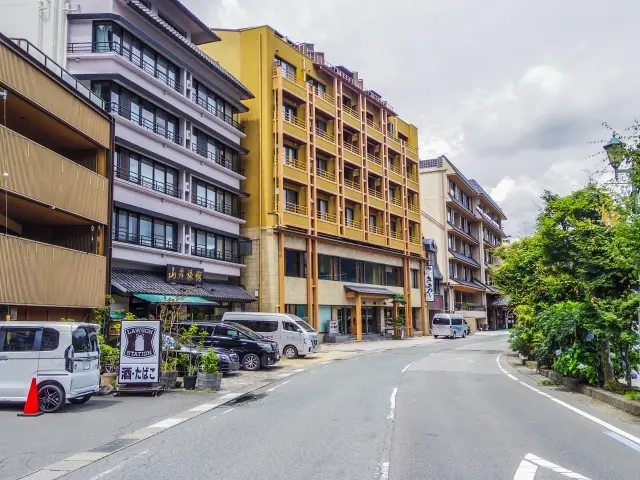
Fujikawaguchiko is also an onsen destination, and the hot-spring inns are spread around the lake rather than clustered on a single spa street. Because they are scattered rather than concentrated, a soak works best as an add-on to the shore you have already picked: choose the north side for the view or the station side for convenience, then look for an inn with a bath on that side. The water is classed as a chloride spring, the kind valued for warmth that lingers on the skin.
Some inns are built so the bath looks out over the lake or the mountain, which is the draw of staying here: the view without leaving your slippers. As with the rooms, whether Fuji actually appears from the bath comes down to the weather and which way the inn faces, so read what a property promises rather than assuming.
Getting there and getting around
From Tokyo, the simplest route is the highway bus from Shinjuku's Busta terminal direct to Kawaguchiko Station — about one hour 45 minutes, roughly 2,000–2,200 yen, with dozens of departures a day. By train it is the Fujikyuko Line, changing at Otsuki.
Around the lake, the Fujikyu retro buses run color-coded loops from the station. The one that matters for the lakeside is the Red Line, which circles Lake Kawaguchi and stops at the lakeside museums, the ropeway and Oishi Park.
A one-day pass is 1,500 yen for adults; a two-day pass is 2,000 yen. Frequencies and timetables shift with the season, so check the current schedule for your dates.
When to book
Once you have settled on a shore, the accommodation itself books up fastest in autumn.
Compare Lake Kawaguchi hotels and prices
For an autumn-foliage trip the peak is generally mid-November, and the north-shore inns near the festival are the ones people chase, so book early rather than close in. If your priority is the view over the season, weight your dates toward that mid-November window. The mountain shows on its own schedule; the area is worth the trip either way.
For the foliage dates, opening times and any traffic control, see our Kawaguchiko autumn leaves 2026 guide, which tracks the festival once the official 2026 schedule is announced.
This article was translated from the original Japanese with AI assistance and reviewed by our editorial team. The Japanese version is authoritative.