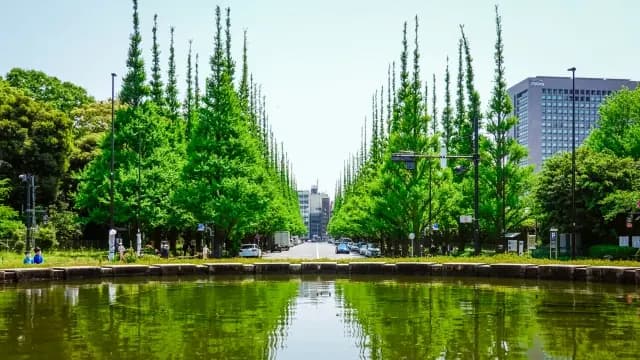
Every autumn, Japan sets aside a night to do almost nothing but look at the moon. It's called tsukimi (月見), literally "moon-viewing," and in 2026 the main night falls on Friday, September 25.
If you searched "harvest moon japan 2026" to get here, one thing up front: Japan celebrates the moon of the old lunar 15th, not the exact full moon. So the night everyone marks, September 25, comes two days before the moon is actually full on September 27.
In 2026, Japan's harvest moon (September 25) and the real full moon (September 27) land two nights apart. That gap last happened in 2017 and won't return until 2043.
Tsukimi also sits right at the front of the fall calendar, weeks before even the earliest highland leaves start to turn. For where the color goes next, see our guide to Japan's autumn-leaf season.
What tsukimi means
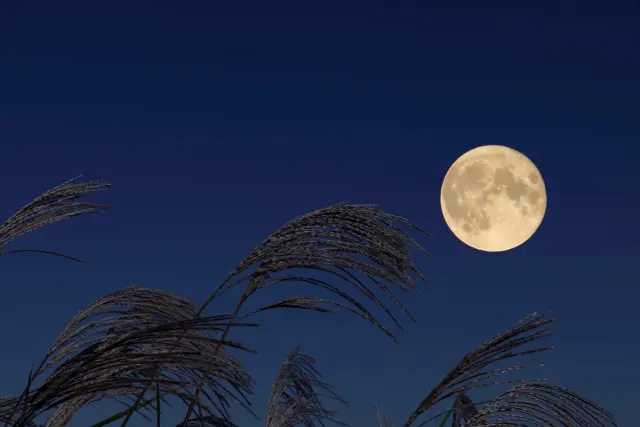
At heart, tsukimi is a night for admiring the full autumn moon and giving thanks for the harvest. The custom is said to have grown out of China's Mid-Autumn Festival, which the Ministry of Agriculture traces to the Tang dynasty and says reached Japan in the Heian period (794–1185).
In its early days it was an elegant pastime, with moon-viewing gatherings of poetry and music, so the story goes. Over the centuries it settled into something warmer and more rural: a quiet thank-you for the rice and vegetables the season brought in.
You'll hear the September moon called two things. One is chūshū no meigetsu, the "mid-autumn moon." The other is jūgoya, "the fifteenth night," after its date on the old lunar calendar.
The 2026 dates: two viewing nights, one full moon
The headline night is jūgoya, Friday, September 25, 2026. The moon won't be quite full that evening: on the old calendar the fifteenth night rarely matches the exact full moon, since it takes a little under 15 days on average to go from new moon to full.
This year, the full moon lands two nights later, on September 27.
Then comes a second night. Jūsanya, the "thirteenth night," falls on Friday, October 23, 2026, and celebrating it is a Japanese invention.
Tradition frowned on seeing only one of the two. Viewing just jūgoya or just jūsanya was called katami-zuki ("one-sided moon-viewing") and thought to bring bad luck. One story even pins the idea on old Edo pleasure districts hoping to draw guests back a second time. True or not, the polite thing was to catch both nights.
The tsukimi table: three offerings
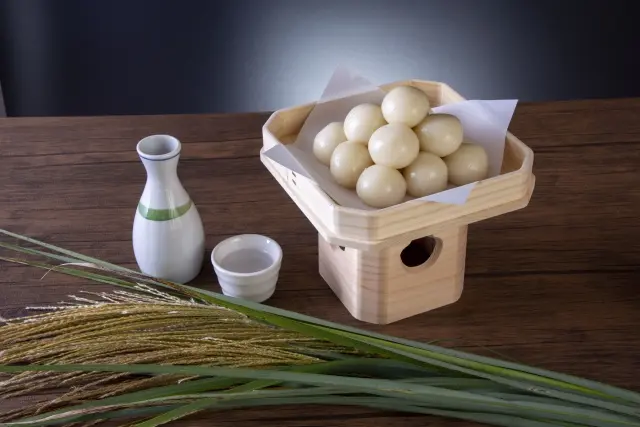
Set out a simple display and you'll recognize a tsukimi scene anywhere in Japan. Three things show up again and again:
- *Tsukimi dango* — small round rice dumplings, stacked into a little pyramid. The Ministry of Agriculture says the pyramid shape is meant to carry your thanks and wishes up toward the moon. The count is often said to be fifteen, though it varies by region.
- *Susuki* (pampas grass) — tall silvery plumes displayed in place of rice stalks, which aren't ready to cut in September. By tradition, they also keep bad spirits away.
- The harvest itself — taro is so tied to the September moon that jūgoya has a second nickname, imo-meigetsu, the "potato moon." October's jūsanya, when chestnuts and beans come in, is likewise the "chestnut" or "bean" moon (kuri-meigetsu, mame-meigetsu).
The egg on "tsukimi" foods
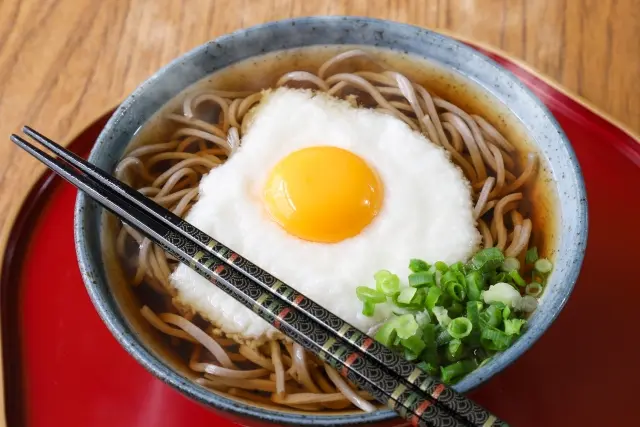
Here's a piece of tsukimi that follows you into everyday restaurants. Order tsukimi udon or tsukimi soba and it arrives with a raw egg on top, the round yolk standing in for the full moon. Japanese dictionaries define the dish in exactly those terms.
Once you know the trick, you'll spot it all autumn. Fast-food chains and cafés roll out limited "tsukimi" burgers, rice bowls and sweets on the same idea: a round egg on top, a pale moon-white sauce, that seasonal wink. It's one of the easiest, and tastiest, ways for a visitor to join in.
How to enjoy tsukimi as a visitor
The best part is that you need nothing at all. The near-full moon rises in the east around sunset, so find an open patch of sky, look low toward the horizon after moonrise, and let your eyes adjust. A riverbank, a park, or a hotel window facing east all work.
Look closely and you may see the shape Japan sees: not a "man in the moon" but a rabbit pounding rice cakes, an image said to have traveled here long ago from Chinese legend.
Around this time, convenience stores and traditional sweet shops fill up with rabbit- and moon-shaped sweets (wagashi). Many gardens and temples also stay open after dark for moon-viewing, which makes for an easy, atmospheric night out.
You don't have to understand every custom to enjoy tsukimi. Step outside on the right night, look up, and you're already doing it.
This article was translated from the original Japanese with AI assistance and reviewed by our editorial team. The Japanese version is authoritative.