Winter in Japan gets cold fast, and not only outdoors. Train doors open and close, older buildings leak drafts, and your hands and feet feel every bit of it. The quickest fix is a disposable hand warmer, sold almost everywhere under the name kairo (カイロ).
The trouble usually starts at the shelf. There are stick-on and handheld versions, the numbers on the package are confusing, and if you are flying home you may wonder whether you can even pack them.
This guide covers how to choose a kairo, where to buy one and what it costs, how to avoid a low-temperature burn, and what the airlines say. Everything here comes from official Japanese sources.
Decide first whether you want a stick-on or a handheld warmer. Stick-on types warm one spot for hours through your clothes, while handheld types are for warming your fingers on the go. Neither should touch bare skin.
Choosing a type
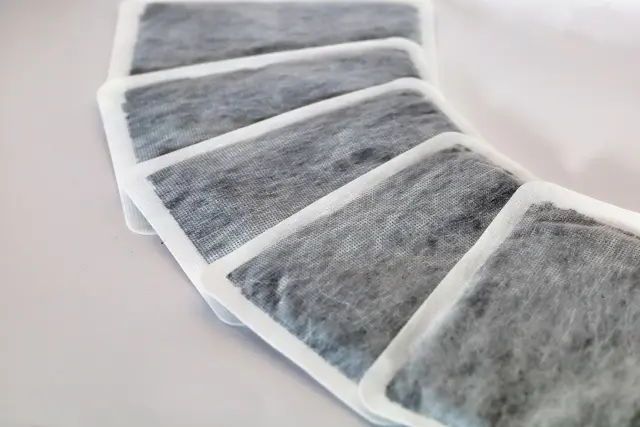
Disposable warmers come in three main forms: stick-on (haru 貼る), handheld (haranai 貼らない), and shoe or toe warmers (kutsu-you 靴用).
Stick-on warmers attach to the outside of your clothing. They're best for long, steady warmth on your back, lower back, or stomach. Never stick them straight onto skin, even though they have an adhesive side (more on burns below).
Handheld warmers go in a pocket or sit in your palm. Use one to warm cold fingers, then tuck it away until you need it again.
Shoe and toe warmers sit inside your shoe or on your sock for cold feet. They run at a lower temperature by design and don't last as long.
Type | How you use it | Rough duration* | Best for |
|---|---|---|---|
Stick-on | On top of clothing | About 10–14 hrs | Steady warmth on back, waist, stomach |
Handheld | Pocket or hands | About 12–24 hrs | Warming hands on the go |
Shoe/toe | Inside shoe or sock | About 7 hrs | Cold feet |
*Examples are the official figures for Kiribai (桐灰, made by Kobayashi). They vary from product to product.
Sizes run from a standard "regular" down to a smaller "mini." A mini is lighter and easier to stick on but does not last as long.
There are also high-heat versions for the outdoors and deep winter, such as Kiribai's Maguma (マグマ). The hotter the warmer, the more you have to watch for a low-temperature burn.
One more thing: a rechargeable "electric hand warmer" is a different product altogether. It heats with a battery rather than a chemical reaction, and the flight rules for it are completely different, so we cover it on its own below.
What the temperature numbers mean
The "maximum temperature," "average temperature," and "duration" on the package are quality-control figures, measured by the method set out in the Japanese Industrial Standards (JIS). The Japan Kairo Industry Association says these figures are not the temperature you actually feel.
The "maximum temperature," for instance, is the highest reading among ten test samples, adjusted upward by a set margin. Most products never actually reach that temperature.
The "average temperature" is the average while the warmer stays above 40°C, and "duration" is the length of time it holds above 40°C.
So the printed numbers are not the heat you feel on your skin. Even so, an average temperature around 50°C is well above body temperature. Knowing what the figures mean helps you compare products and use them safely.
Where to buy them and what they cost
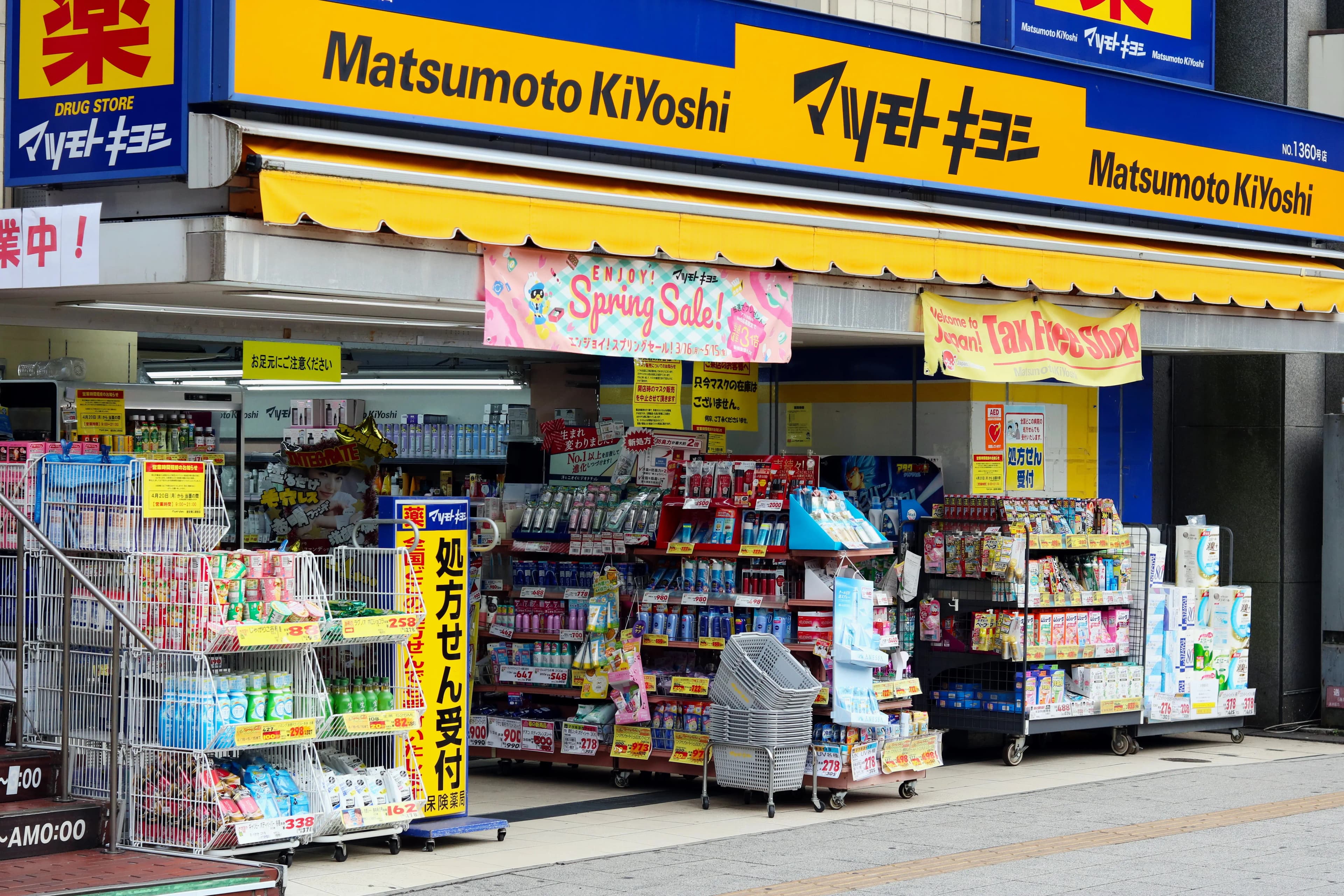
Once winter arrives, kairo turn up in all sorts of shops: convenience stores, drugstores, supermarkets, 100-yen shops, discount stores, and station kiosks.
As our guide to Japanese convenience stores explains, konbini (コンビニ) are everywhere and handy, but they often stock kairo only in winter and tend to be pricey by the pack. If you want several, you'll pay less at a drugstore or 100-yen shop.
If you are picking them up alongside medicine or toiletries, our guide to buying medicine at Japanese drugstores is worth a look.
As a rough price guide, most disposable warmers at the 100-yen chain Daiso (ダイソー) are 110 yen including tax. A six-pack of stick-on warmers, a six-pack of handheld warmers, and a two-pair pack of sock warmers each cost 110 yen.
Convenience stores often sell packs of one or two, handy when you only want a few.
Using them safely
The one thing to watch with a kairo is a low-temperature burn (teion yakedo 低温やけど). It happens when something a little warmer than body temperature rests against your skin for a long time, leaving redness or blisters.
Often there is no clear pain or sense of heat at all, which is what makes it easy to miss.
The Japan Kairo Industry Association says that if the same spot stays under pressure, a burn can develop in about one minute at 60°C, or three minutes at 50°C. One experiment even reported that tissue changes after six hours of contact at 42°C.
The basics for avoiding it:
- Keep it off bare skin (stick-on types go over clothing)
- Do not keep pressure on the spot the warmer is touching
- Do not leave it in one place for too long
- Take it off as soon as it feels hot
- Take extra care while you are asleep
Used in bed under the covers, a warmer can trap heat and rise above the maximum temperature on its label. The same can happen when you use one alongside another heat source, like a heated carpet or a stove.
Children, people with limited mobility, and those with sensitive skin should be especially careful.
If you think you may have a low-temperature burn and catch it early, cool it under running water for 10 to 30 minutes. These burns can be deeper than they look, so it is safest to see a doctor sooner rather than later.
Taking them on a plane
The rules for flying with a kairo depend entirely on which type you are carrying.
Disposable warmers (the iron-powder kind) are the ordinary chemical-reaction type. The Japan Kairo Industry Association lists 19 companies whose disposable warmers have been tested by public institutions and found not to qualify as dangerous goods under UN recommendations.
Kiribai (Kobayashi) and Hokkairon (Kowa) are among those 19 companies.
Even so, JAL and ANA do not name "disposable hand warmers" on their own rules pages, and handling can vary from one departure country to the next. Check the official guidance for your flight to confirm whether you may carry or check them, and how many are allowed.
Oil-type warmers (such as the Hakkin brand) burn a flammable fuel like benzine, and ANA says they are prohibited in both carry-on and checked baggage. A fuel-burning warmer cannot go on a plane, no matter how small it is.
A rechargeable (electric) warmer has a lithium-ion battery inside, so it is treated like a power bank: carry-on only, never in checked baggage. One with a large capacity, over 160Wh, cannot be carried or checked at all.
On top of that, from April 24, 2026, Japanese airlines have capped how many power banks you may bring on board. Charging a power bank in the cabin, or using one to charge another device, is now banned as well.
If you are bringing a rechargeable warmer, confirm the number allowed and the latest conditions in your flight's official guidance.
Type | Carry-on | Checked |
|---|---|---|
Disposable (iron powder) | Confirm with your airline (not UN dangerous goods, per the industry association) | Confirm with your airline |
Oil-type (Hakkin etc. | No | No |
Rechargeable (lithium) | Yes (not over 160Wh) | No |
*Handling varies by airline and by destination. Check the latest rules and figures with your airline, such as ANA or JAL, before you travel.
Throwing one away
Under a Tokyo ordinance, the wrapper of a used kairo tells you to dispose of it as "non-burnable waste." How trash is sorted, though, differs from one city to the next.
While you are traveling, follow the local disposal rules. When in doubt, throw it out as non-burnable waste, or ask at the place you're staying.
The contents are iron powder, so there is no risk of it catching fire on its own. The association says that tests for spontaneous combustion and self-heating found no hazard in its members' products.
In a Japanese winter, a hand warmer costs a few hundred yen and is never far away. Choose the type that suits you, and keep it off bare skin.
For flights, remember that iron-powder, oil, and rechargeable types are handled differently, so check your airline's guidance before you leave.
This article was translated from the original Japanese with AI assistance and reviewed by our editorial team. The Japanese version is authoritative.