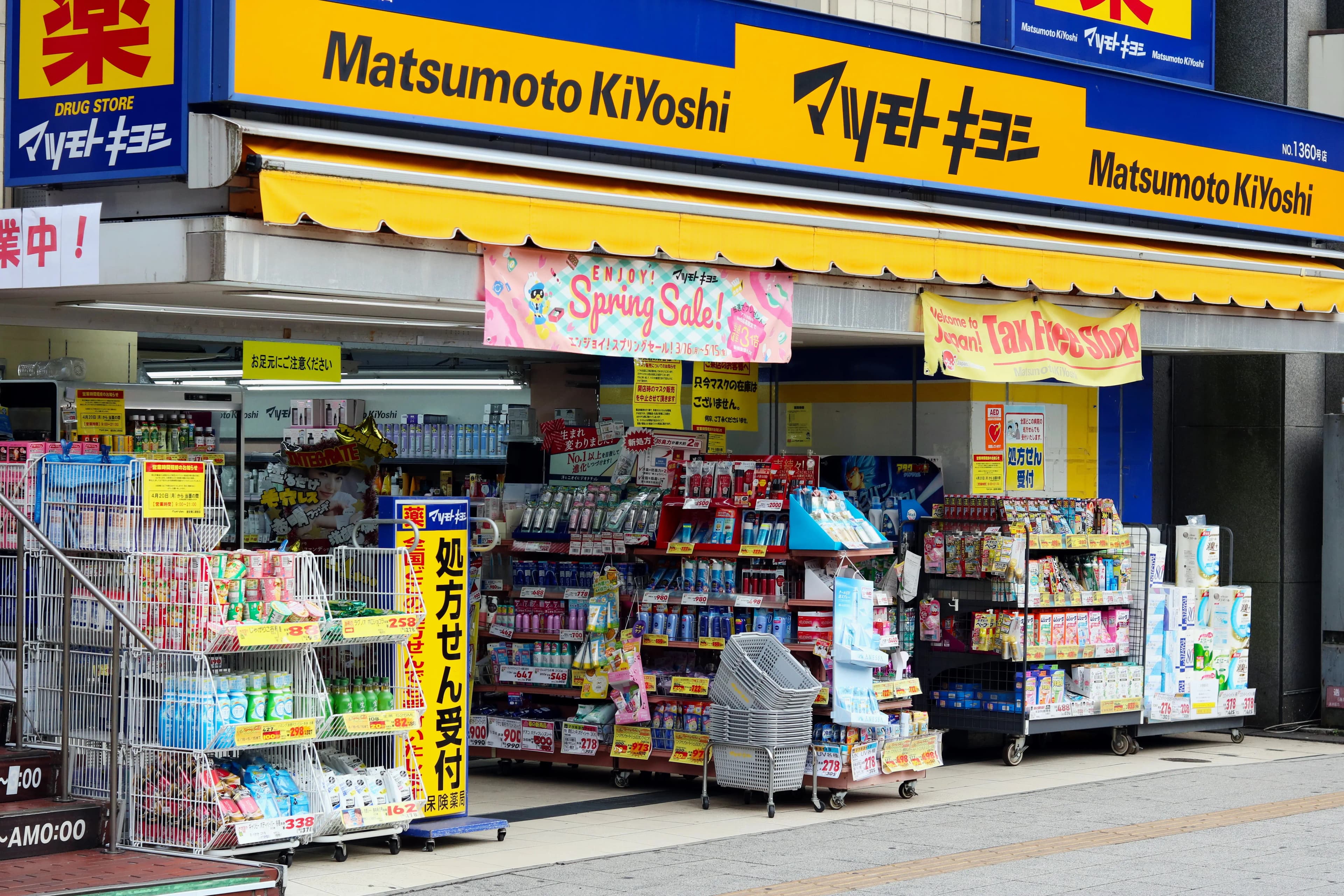
You'll find a drugstore on almost every block in Japan, and cold medicine, painkillers, and eye drops are all sold without a prescription. For most everyday problems, you can walk in and buy what you need.
Two things catch travelers off guard, though. A handful of stronger medicines can only be sold by a pharmacist, so they aren't always available. And some medicines that are ordinary back home — Sudafed, certain Vicks products, anything with codeine — are actually restricted or banned in Japan, even with a prescription.
This guide covers where to buy over-the-counter medicine, how to find it on the shelf, and the rules for bringing your own medication into the country. It's about how to get medicine, not medical advice on what to take for a given symptom. If you feel unwell, ask the pharmacist in the store or see a doctor.
Most cold, pain, and stomach medicines are Class 2 or Class 3 drugs you can pick off the shelf. But a few — like Loxonin S and Gaster 10 — are Class 1 drugs that only a pharmacist can sell, so they aren't available when no pharmacist is on duty.
Drugstore or pharmacy: where to buy without a prescription
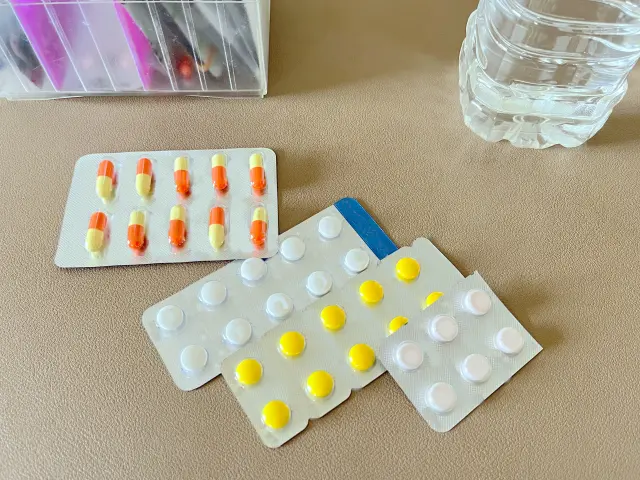
Japan has two kinds of shops that sell medicine. A drugstore (ドラッグストア) stocks over-the-counter medicine alongside cosmetics, toiletries, and snacks. The big chains you'll see everywhere are Matsumoto Kiyoshi (マツモトキヨシ, often shortened to Matsukiyo), Welcia (ウエルシア), Sundrug (サンドラッグ), Tsuruha (ツルハドラッグ), Cocokara Fine, Sugi Pharmacy, and Cosmos.
A dispensing pharmacy (調剤薬局) fills prescriptions written by a doctor. Without a prescription, the only thing you can buy is over-the-counter (OTC) medicine. If you run out of a prescription drug mid-trip, you'll need to see a clinic first.
For the everyday problems a traveler runs into, a drugstore has you covered. Opening hours, whether a branch is open 24 hours, and tax-free or multilingual service all vary by store, so a large branch near a major station or shopping district is your safest bet.
Some convenience stores carry a small range of OTC medicine too, but only at branches with a licensed seller on staff, and the selection is thin. If you actually need medicine, head for a drugstore rather than a konbini — we cover what konbini do stock in our full guide to Japanese convenience stores.
What you can grab off the shelf, and what needs a pharmacist
Japanese OTC medicine is sorted into classes by risk, and the class decides how you buy it — which is the part that trips travelers up.
- Class 1 and "guidance-required" drugs: only a pharmacist can sell these. They're kept behind the counter, not on the open shelf, and you can't buy them when no pharmacist is on duty, or at a store without one.
- Class 2 and Class 3 drugs: a pharmacist or a licensed seller can sell these. Most cold remedies, painkillers, stomach medicine, and eye drops fall here, and you can take them off the shelf and pay at the register.
The takeaway: nearly everything you'll reach for is on the open shelf, but a few stronger drugs — Loxonin S and Gaster 10, below — need a pharmacist. If you're after those, go to a large branch during daytime hours, when a pharmacist is most likely to be in.
Finding cold, pain, stomach, and eye remedies
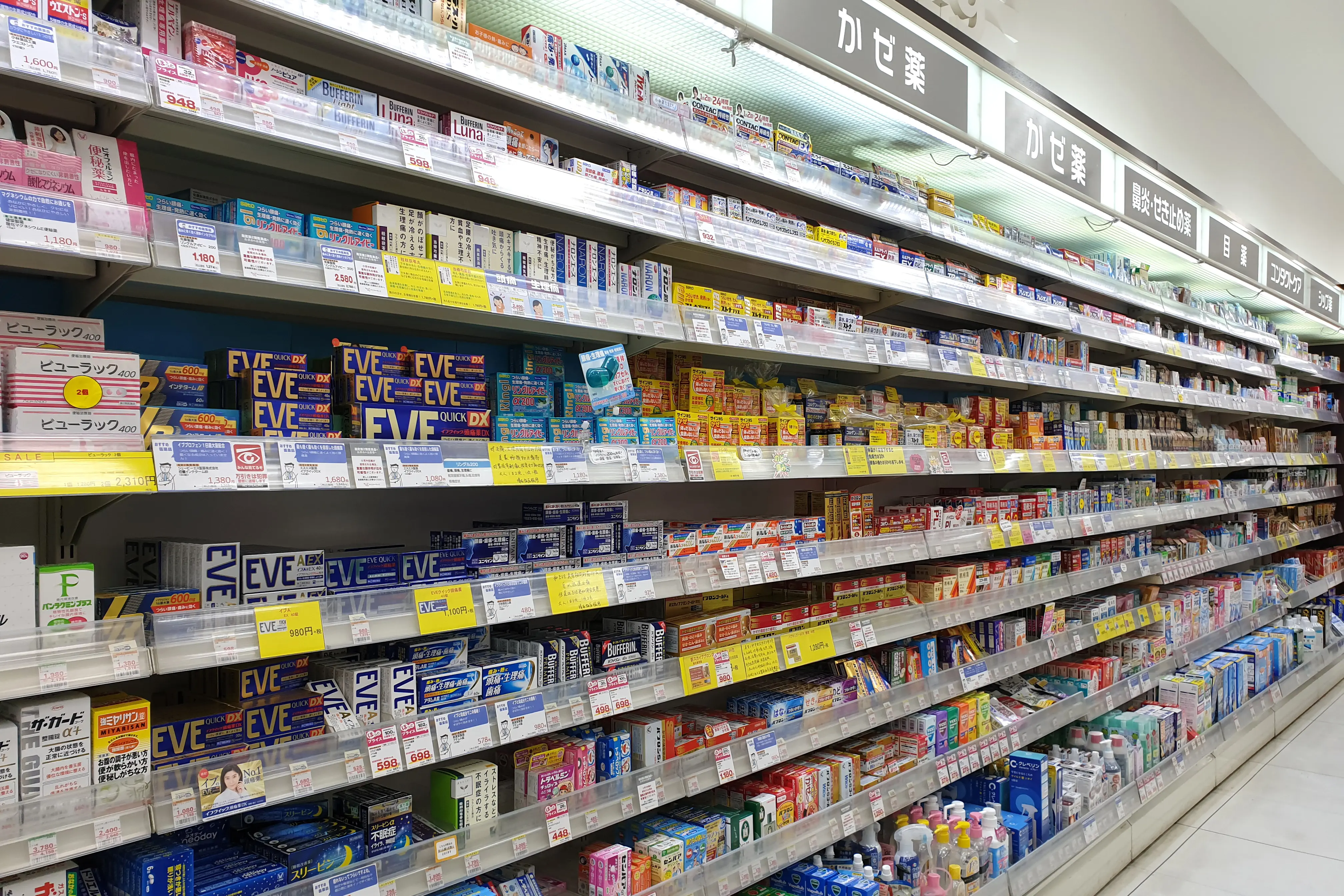
Shelves are grouped by category — colds, pain and fever, stomach, eyes — and even if you can't read the labels, the packaging colors and layout give you a good sense of where you are. Knowing a few brand names also helps when you ask a staff member.
Cold medicine: popular options include Pabron (パブロン), Lulu (ルル), and Benza (ベンザ). Most are designated Class 2, so they're on the open shelf.
Painkillers and fever relief: Eve (イブ) and Bufferin (バファリン) are designated Class 2 and sit on the shelf. Loxonin S (ロキソニンS) is a Class 1 drug, so you'll need to ask at the pharmacist's counter.
Stomach medicine: Ohta's Isan (太田胃散) and Seirogan (正露丸) are Class 2 and out on the shelf. Gaster 10 (ガスター10) is Class 1 and needs a pharmacist. Shin Biofermin S, a well-known probiotic, isn't classed as a drug at all (it's a "quasi-drug"), so any store sells it freely.
Eye drops: brands like Rohto (ロート) and Sante (サンテ) run from Class 2 to Class 3. Eye drops made for use while wearing contact lenses sit on a separate shelf, so check the package for the word "contact."
One caution: within a single brand, different versions — regular, premium, quick — can have different ingredients and a different class. Don't rely on the brand name alone; tell the pharmacist or licensed seller about your symptoms and ask them to help you pick the right one.
Buying in bulk: the 2026 purchase limits
Since May 2026, Japan has tightened the rules on cold and cough medicines that contain ingredients prone to misuse. Sales to anyone under 18 are generally limited to a single small package, and staff will ask your name and check your age at the register.
The ingredients covered include ephedrine, codeine, pseudoephedrine, and dextromethorphan, and they turn up in familiar cold medicines such as Pabron.
There's no quantity cap for adults. But if you buy a large package or several boxes, staff may ask your reason and how much you need. If your plan is to stock up and carry a pile home for the family, expect that you may be turned down. These medicines are sometimes kept out of reach, so you have to ask a staff member for them.
Tax-free medicine and the November 2026 change
For tax-free shopping, medicine counts as a "consumable." Under the rules in place through the end of October 2026, you qualify once your same-day purchases at one store reach ¥5,000 before tax; the goods are then sealed in a special bag that you can't open inside Japan. You have to take them out of the country within 30 days, and you'll need your passport.
Note, though, that tax-free shopping changes substantially from November 2026. It moves to a refund model — you pay the consumption tax at purchase and get it back when you leave the country — and the purchase threshold and packaging rules are being revised. Because it depends on when you travel, check the Japan Tourism Agency's current terms before you buy. We break down the change in our guide to Japan's new tax-free system (from November 2026).
Bringing your own medication: limits and banned ingredients
Plenty of people travel with the medicine they're used to. For personal use, you can bring in up to a two-month supply of OTC medicine and quasi-drugs, or a one-month supply of prescription medicine, with no special paperwork. For external-use items and cosmetics, the limit is 24 units per product. Anything above those limits needs a document called a Yakkan Shoumei (import confirmation) arranged in advance.
Here's the part to take seriously: some ingredients simply can't come into Japan. In particular, cold and allergy medicines containing pseudoephedrine (such as Sudafed and Actifed), Vicks inhalers that contain a methamphetamine-type ingredient, and anything with codeine may be restricted or refused entry. Having a prescription doesn't always make you an exception.
You might notice pseudoephedrine turns up in Japanese cold and allergy medicine too — being sold in a store here and being allowed through customs from abroad are governed by separate rules, so the same ingredient can be fine in one case and a problem in the other.
If you're not sure whether your medication is affected, check before you leave. Japan's Ministry of Health takes medication questions by email (yakkan@mhlw.go.jp), and your local Japanese embassy or consulate can advise too. If you're carrying a large quantity, or you're unsure about an ingredient, confirming ahead is the safe move.
When in doubt, just ask the pharmacist. Many large drugstores offer multilingual guides or translation apps, and if you describe your symptom they'll help you find something that fits.
This article was translated from the original Japanese with AI assistance and reviewed by our editorial team. The Japanese version is authoritative.