For a lot of visitors, one of the small, unexpected joys of a trip to Japan is the konbini — Japan's convenience stores, found on practically every corner.
They may not be like the convenience stores you're used to. A Japanese konbini is clean, brightly lit, open around the clock, and stocked with genuinely good food. It also quietly doubles as a service counter that can rescue your trip: ATMs that actually take foreign cards, parcel drop-off and pickup, in-store machines for printing documents, paying certain bills, and buying event tickets — plus clean restrooms.
There are more than 55,000 convenience stores across Japan, and three chains run most of them: 7-Eleven, FamilyMart and Lawson. Government tourism data shows that a large majority of overseas visitors shop at a konbini during their stay — and after your first midnight onigiri run, you'll understand why.
Think of this as your starting point. Below we cover what to eat, how to pay, how to get cash, the services worth knowing about, and a few etiquette points that help you blend in. Where it's useful, we point you to deeper guides on the specifics.
First, what exactly is a konbini?
“Konbini” (コンビニ) is simply the Japanese shorthand for convenience store. What sets the Japanese version apart is how much it packs into a small space, and how reliable it is. Most are open 24 hours, every day of the year, and fresh food is delivered and restocked several times a day, so the shelves stay surprisingly fresh.
The big three dominate: 7-Eleven has roughly 21,700 stores, FamilyMart around 16,400, and the Lawson Group around 14,700. You'll also spot smaller players like Ministop, Daily Yamazaki and Seicomart (a Hokkaido favorite). For a traveler, the upshot is simple: wherever you are in a Japanese city, a konbini is rarely more than a few minutes' walk away.
The big three: 7-Eleven, FamilyMart and Lawson
In everyday use, the three big chains are more alike than different, and you won't go wrong with any of them. But each has its own personality and signature snacks, so it's worth knowing the basics.
7-Eleven is the largest, and is known for a strong own-brand range (Seven Premium), excellent counter coffee from the Seven Cafe machine, and the Seven Bank ATM that's a lifeline for foreign cardholders. Its fried-chicken snack is called Nanachiki.
FamilyMart is the home of Famichiki, the boneless fried chicken that launched in 2006 and is still one of the best-known hot snacks in Japanese convenience stores. The chain has also branched into surprisingly good basics under its “Convenience Wear” apparel line (plain socks and T-shirts that locals genuinely buy) and a private-label food range called Famimaru.
Lawson is the dessert specialist — its Premium Roll Cake has a cult following — and the maker of Karaage-kun, the bite-sized popcorn chicken sold in little boxes. Lawson also runs the periodic “Morisugi” (“way too much”) campaigns that pile on extra portions for the same price. Look out, too, for its sister formats: the upmarket Natural Lawson and the budget-focused Lawson Store 100.
What to eat at a konbini
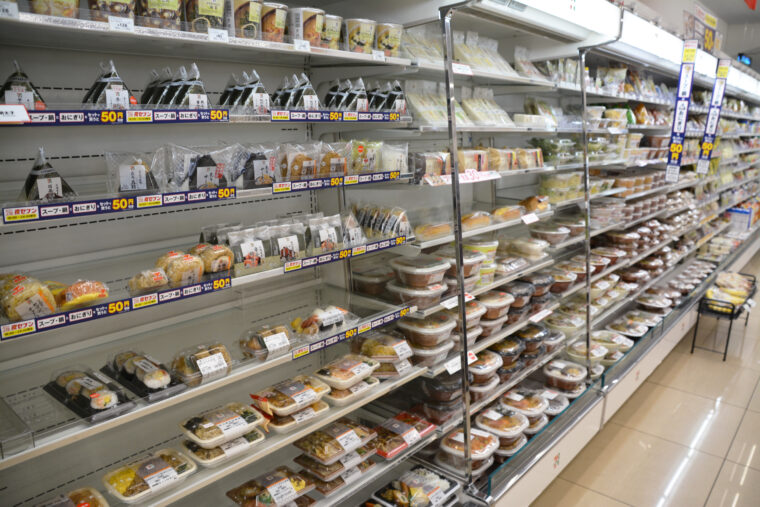
If you do nothing else, eat your way through a konbini at least once. Start with onigiri — triangular rice balls wrapped in nori, with fillings from tuna-mayo to grilled salmon and pickled plum. They're cheap, filling, and the clever packaging keeps the seaweed crisp until you open it.
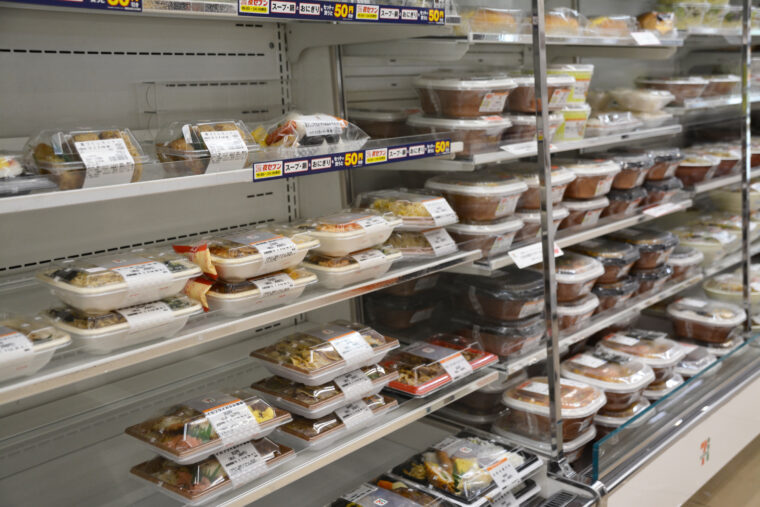
From there, the chilled cases hold bento boxed meals (the staff will heat them for you at the register), pasta, noodle sets, fresh salads, and Japan's beloved sandwiches — the fluffy egg-salad “tamago sando” is a rite of passage. By the register, you'll find hot snacks: FamilyMart's Famichiki, Lawson's Karaage-kun, 7-Eleven's Nanachiki, and skewered fried chicken. In the colder months, look for oden (a simmered hotpot of fish cakes, egg and daikon) and steaming nikuman buns.
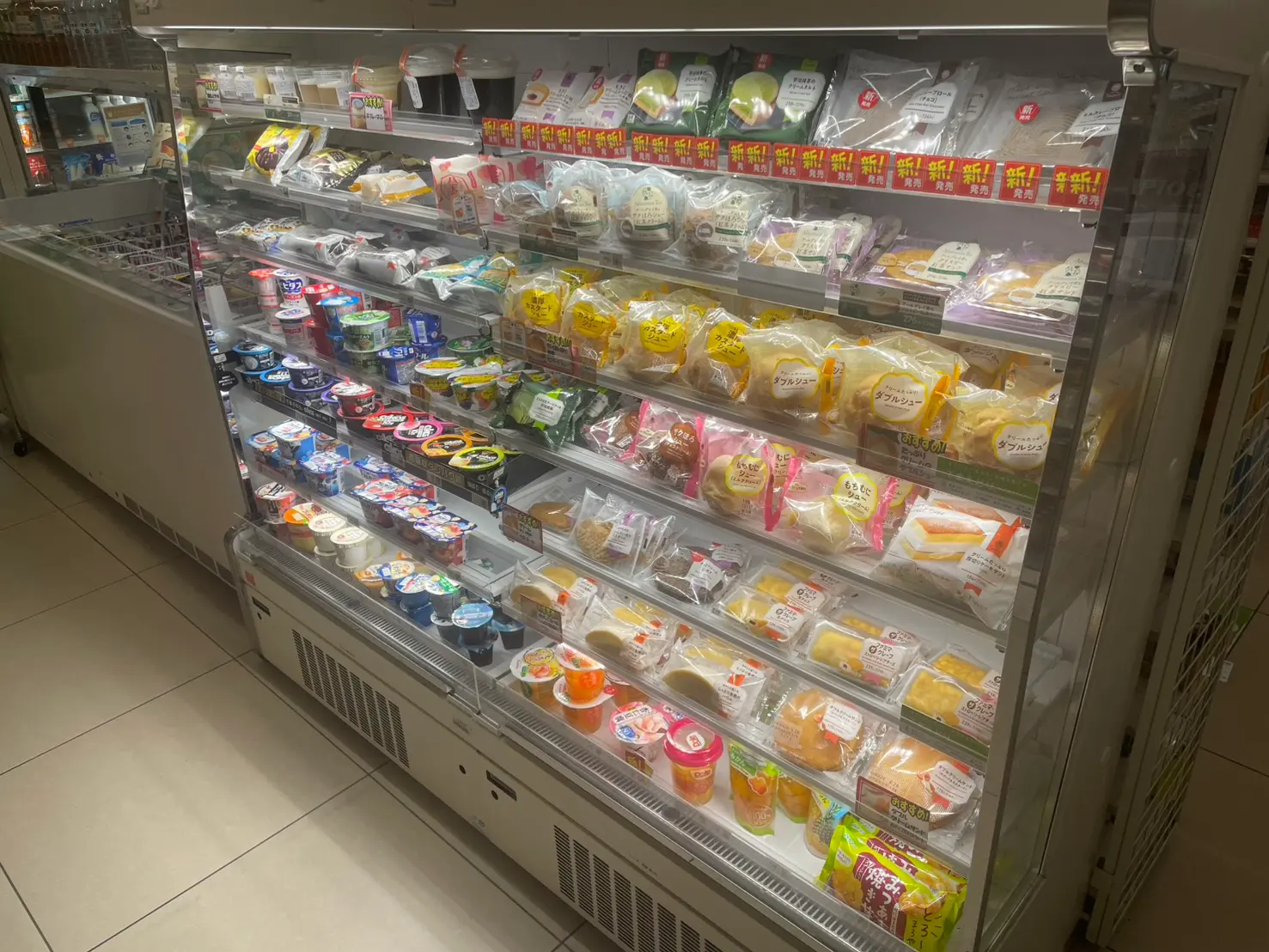
Save room for the dessert section, which is a genuine highlight: chilled cream puffs, fruit sandwiches, pudding and rotating seasonal flavors. And don't overlook the drinks wall — bottled green tea, barley tea, sports drinks and seasonal coffees, plus freshly ground counter coffee for a little over ¥100.
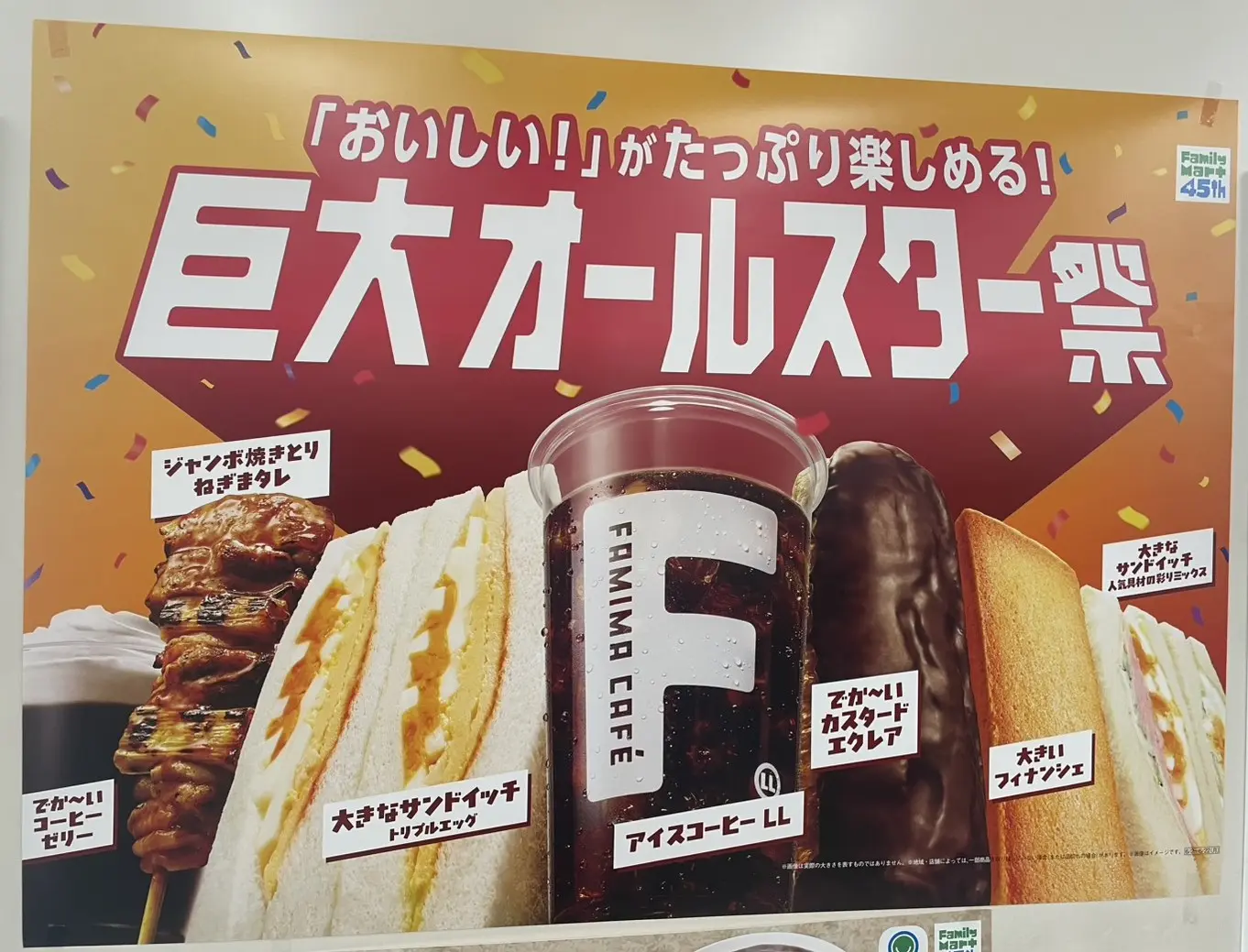
Half the fun is the limited-edition stuff, which changes constantly. To see what's on right now, we track the latest konbini deals and limited runs — from 7-Eleven's summer cold-noodle discount and half-price smoothie days to the chains' oversized “more is more” campaigns.
How to pay
Cash is still useful, but konbini also widely accept transit IC cards (tap your Suica or PASMO), credit and debit cards including contactless, and the major QR-code apps like PayPay. Many stores now have self-checkout machines with an English option, though there is usually a staffed register if you'd rather.
A handy trick: you can top up your Suica or PASMO with cash at the register, which is useful when station machines are busy. If you're still getting the hang of IC cards, our PASMO guide walks through it.
Getting cash: konbini ATMs
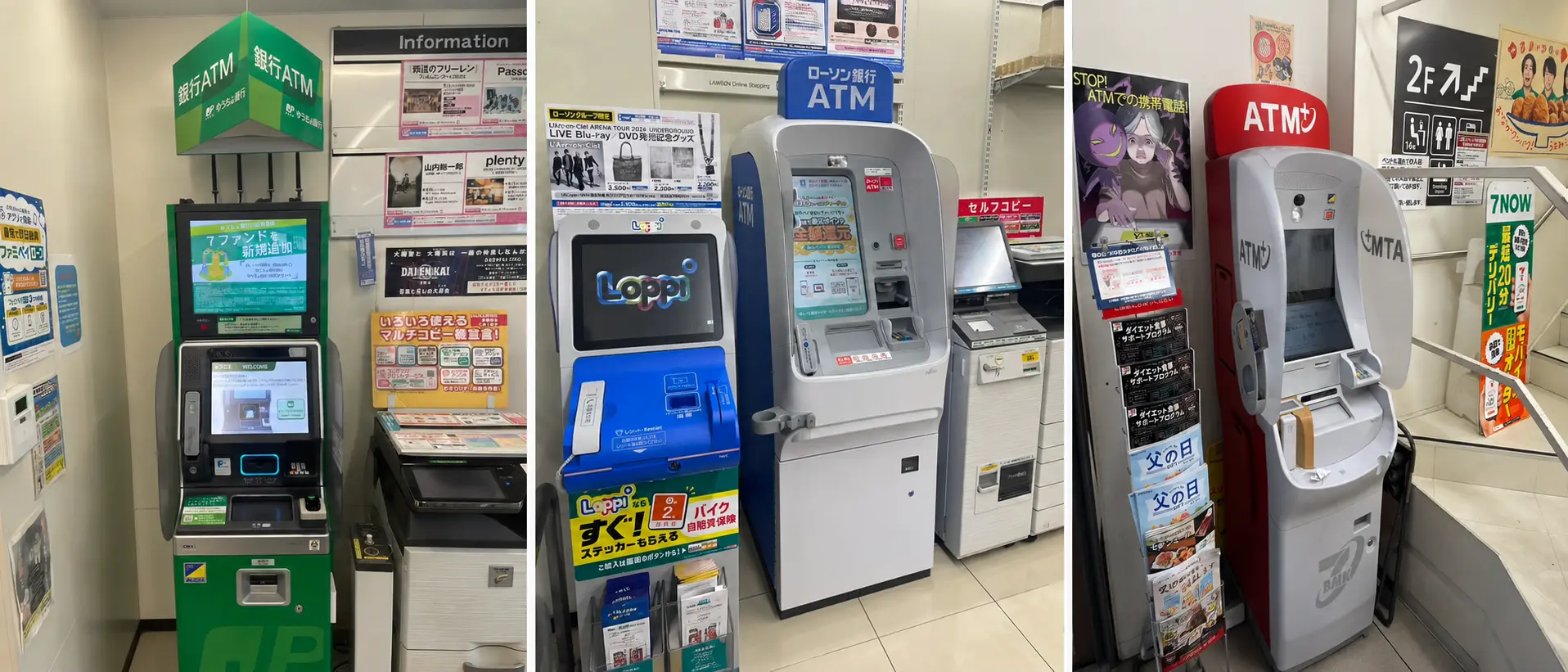
This is the big one. Many ordinary Japanese bank ATMs reject foreign cards — but the Seven Bank ATMs inside almost every 7-Eleven generally accept them. There are more than 28,000 of them nationwide (plus many in stations and airports), they're available almost around the clock, year-round (a few foreign-card networks pause briefly overnight), and the ATM interface supports 12 languages.
They accept the major international networks — Visa, Mastercard, UnionPay, American Express, JCB and more — with a limit of ¥100,000 per withdrawal (¥30,000 for older magnetic-stripe-only cards). One money-saving rule: when the machine asks whether to charge you in yen or your home currency, always choose Japanese yen to avoid the ATM's unfavorable conversion rate. Our full guide to withdrawing cash with a foreign card covers fees and the other konbini-bank ATMs in detail.
More than a shop: services travelers can use
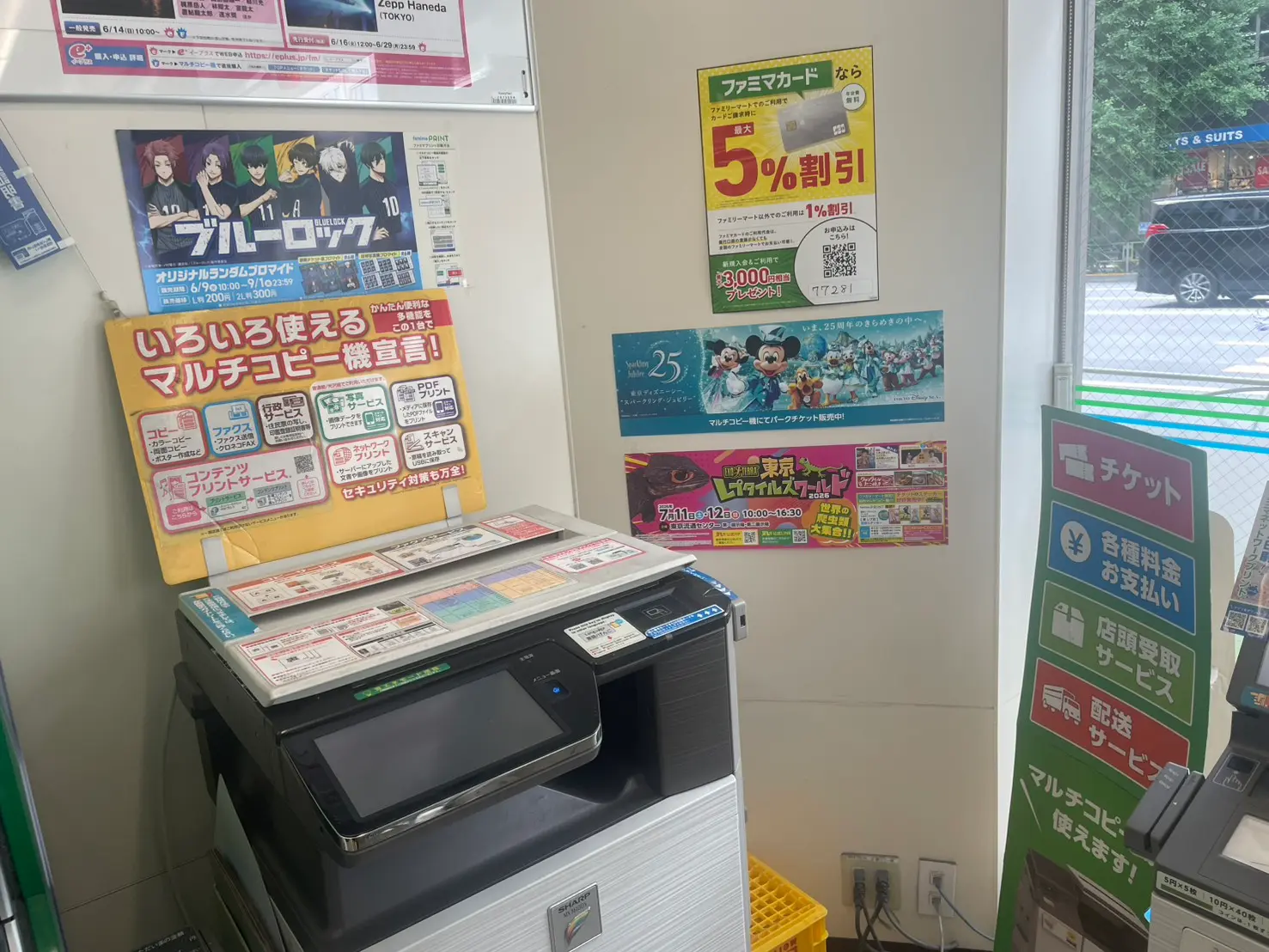
Most branches have a multi-function machine — 7-Eleven's multicopy machine, Lawson's Loppi, FamilyMart's multicopy terminal — that does far more than photocopying. You can print documents or photos straight from your phone or a USB stick (genuinely useful for a boarding pass or a missing reservation printout), buy tickets for concerts, museums and theme parks, and pay certain bills.
Konbini are also useful access points for Japan's parcel network. At many stores, you can send parcels, including luggage via the takkyubin courier service — an easy way to forward a suitcase to your next hotel or to the airport. Accepted sizes and drop-off hours vary by store and courier, and we explain how in our luggage-forwarding guide. Many travelers also use a konbini to pick up online orders, and many stores have restrooms available to customers, though some don't, so it's best to ask a staff member first.
One more for shoppers: a number of konbini in tourist areas and airports offer tax-free shopping on purchases of ¥5,000 or more before tax — look for the “Tax-Free” sticker on the door. Note that Japan's tax-free system is shifting to a refund-at-departure model on November 1, 2026; our tax-free shopping guide has the current rules.
Konbini etiquette and useful tips
A few small customs will help you feel more at ease. Japan has a soft norm against eating while walking, so enjoy your snack at the store's eat-in area, a nearby park, or back at your hotel rather than on the move. If a store has an eat-in counter, food eaten there is taxed at 10% rather than the 8% takeout rate — staff may ask whether you're eating in or taking it to go.
Heating is free and easy: hand your bento to the cashier and they'll microwave it, give you chopsticks or a spoon, and can supply hot water for cup noodles. Konbini are also one of the few places where you may still find trash bins, but they're meant for things you bought there — and you'll be expected to sort them into burnable, plastics, cans and bottles.
Otherwise, just queue at the register, have your payment ready, and you're set. It's one of the easiest, friendliest introductions to everyday life in Japan.
Note: store counts, services and product line-ups can change. Check each chain's official site for the latest.
This article was translated from the original Japanese with AI assistance and reviewed by our editorial team. The Japanese version is authoritative.