
Japan still has a reputation for being cash-heavy, but these days that's only half true.
Cashless payments reached 58.0% of consumer spending in 2025, according to Japan's Ministry of Economy, Trade and Industry, and in the big cities you can tap a card or phone almost everywhere. But cash is still essential at small family-run restaurants, temples and shrines, market stalls, festival food carts, older ryokan, and just about anywhere off the tourist trail. Sooner or later, you'll need yen in your wallet.
Here's the catch that surprises a lot of first-time visitors: most ordinary Japanese bank ATMs — the ones inside bank branches — simply won't accept a card issued outside Japan. You insert your card, only for the machine to reject it and return it.
The trick is knowing which ATMs actually work with foreign cards, and how to avoid paying more than you need to. This guide covers exactly that.
The one rule: not every ATM takes foreign cards
If you remember nothing else, remember this: in Japan, head for convenience-store and post-office ATMs, not bank-branch ATMs.
The machines that reliably accept overseas cards are Seven Bank (inside 7-Eleven), Japan Post Bank (at post offices), Lawson Bank, the ATMs inside FamilyMart, and Aeon Bank (in malls and supermarkets). Most other bank ATMs on the street are built for domestic cards only.
The good news is that 7-Eleven and the other big convenience stores sit on practically every corner in Japan's cities, so in urban areas you can often find a foreign-friendly ATM within a few minutes' walk.
7-Eleven (Seven Bank) — your default choice
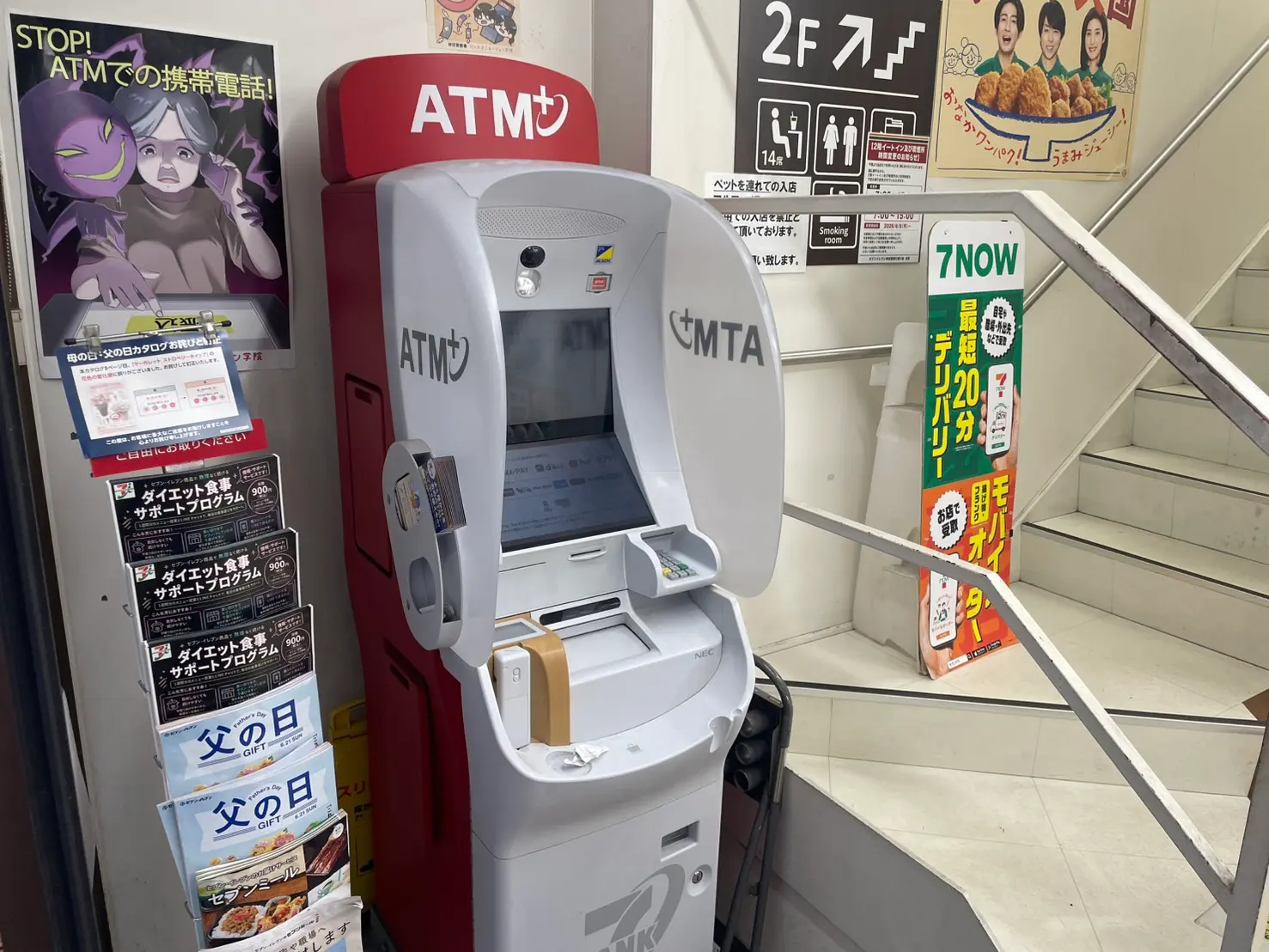
For most travelers, the Seven Bank ATM inside any 7-Eleven is the easiest first stop.
There are more than 20,000 of them across the country, they run 24 hours a day, 365 days a year, and the screen can switch into 12 languages: Japanese, English, Chinese (Simplified and Traditional), Korean, Thai, Malay, Indonesian, Vietnamese, French, German, and Portuguese.
Seven Bank ATMs accept a long list of international networks: Visa and Plus, Mastercard, Maestro and Cirrus, UnionPay, American Express, JCB, Discover, and Diners Club. In other words, whatever's in your wallet, there's a good chance it'll work here.
A couple of limits to know: you can take out up to ¥100,000 in a single withdrawal. If your card only has a magnetic stripe (no IC chip), that drops to ¥30,000 per transaction. If the machine refuses a large amount, just try again with a smaller number.
Japan Post Bank — best for the countryside
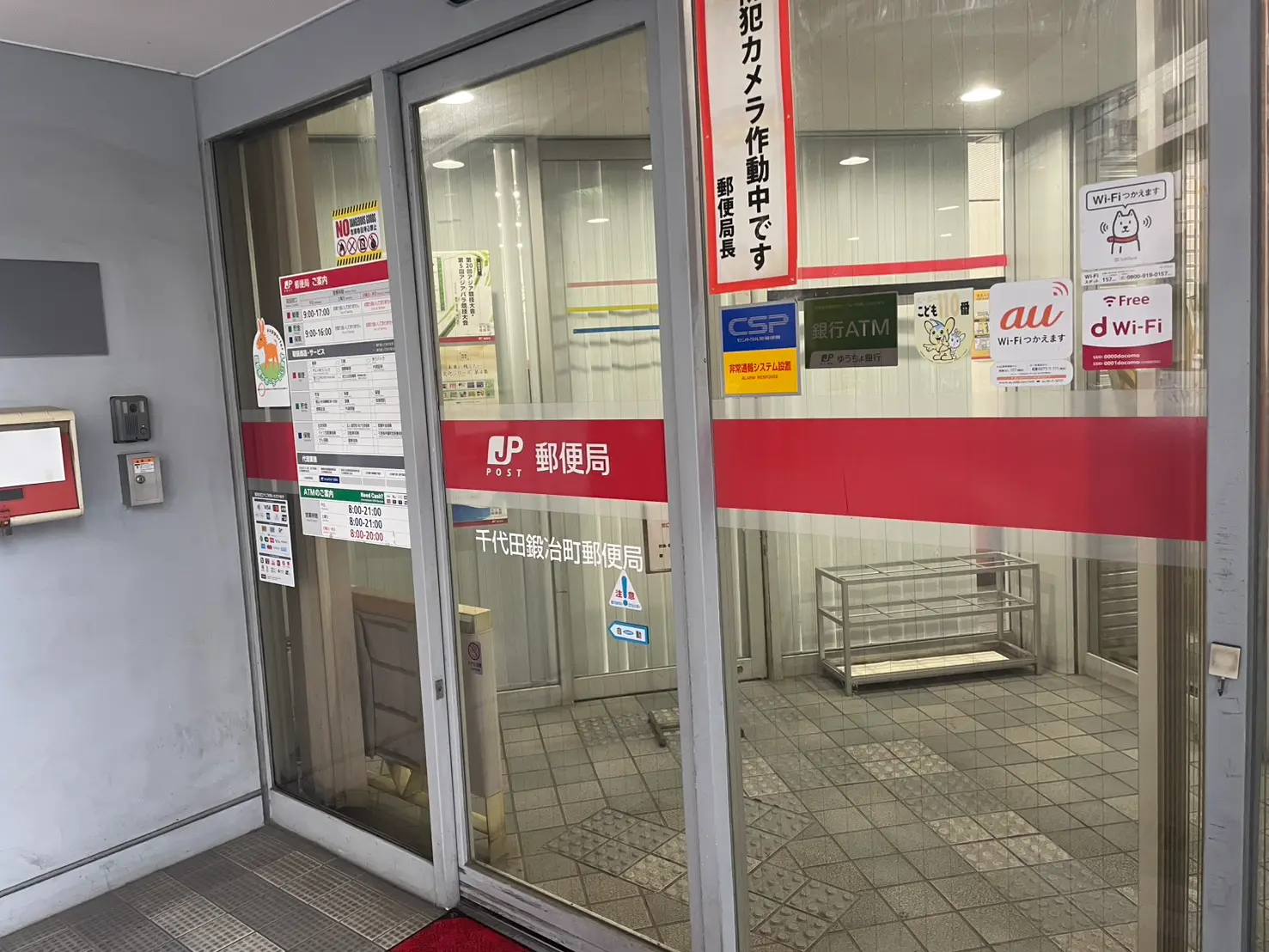
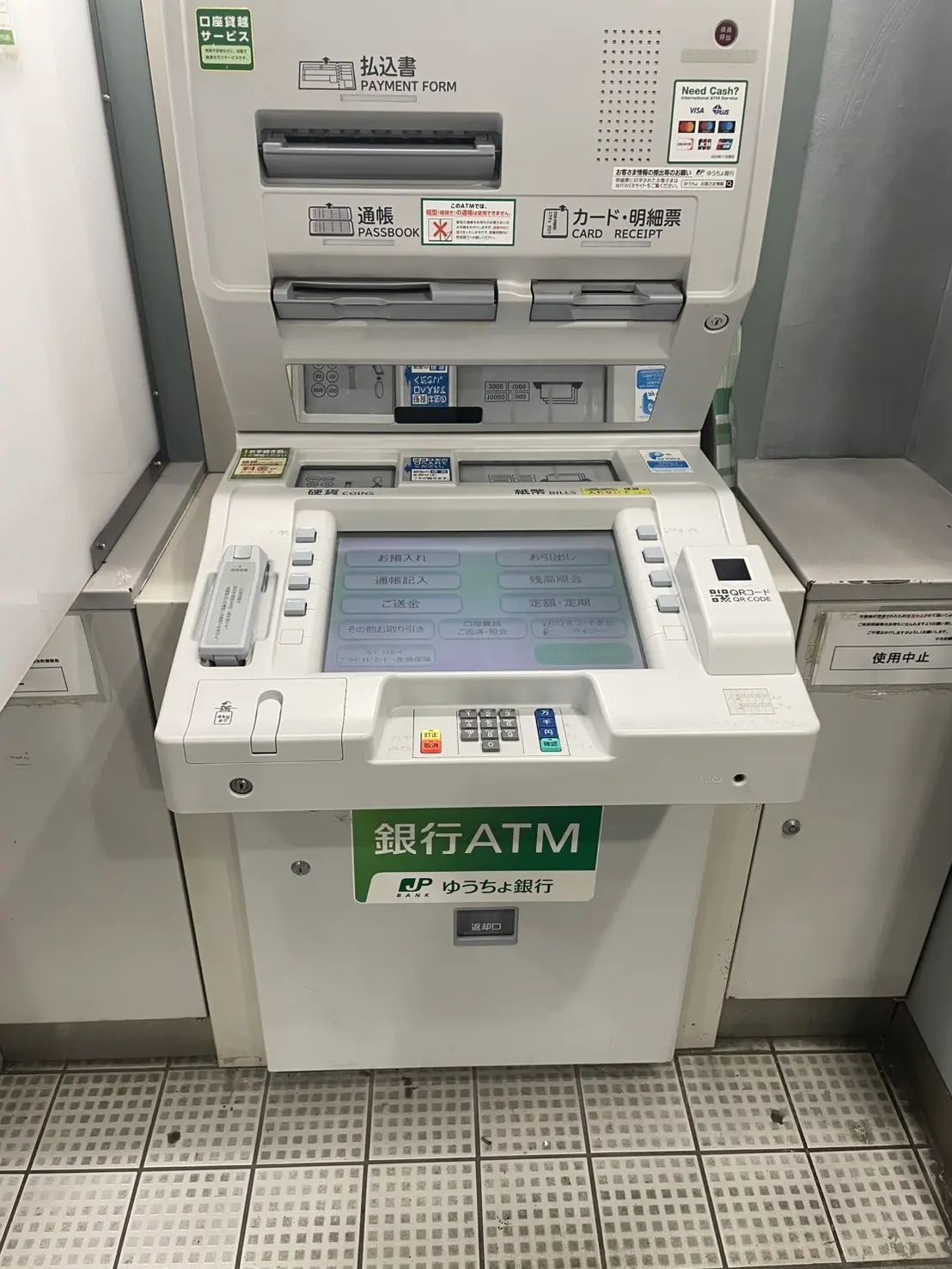
In smaller towns and rural areas, 7-Eleven can be harder to find — and that's where Japan Post Bank, known in Japanese as Yucho Bank, becomes especially useful.
You'll find its ATMs at post offices all over Japan, including in small towns, plus inside some FamilyMart stores. They accept cards carrying the Visa/PLUS, Mastercard/Maestro/Cirrus, JCB, China UnionPay, or Discover marks. Single withdrawals are capped at ¥50,000.
The one thing to watch is opening hours. Unlike Seven Bank, Japan Post ATMs are not open around the clock. Many follow post-office hours and may close in the early evening or have limited weekend service, so don't count on one late at night.
During the day, though, they're a lifesaver in rural areas.
Lawson and FamilyMart — handy backups
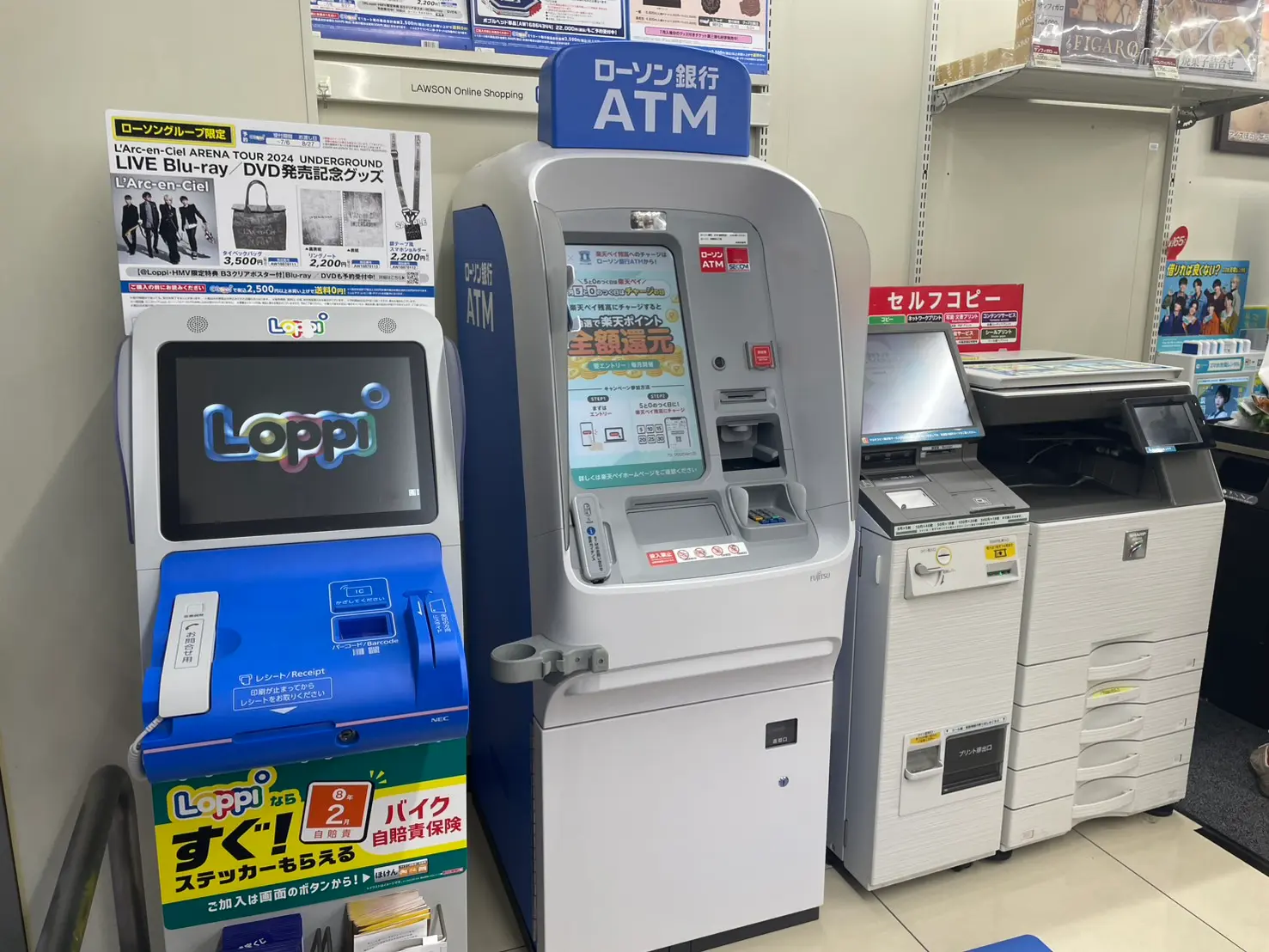
Lawson Bank ATMs accept overseas Visa, Mastercard, JCB, and UnionPay cards at their newer machines, with screens in English, Chinese (Simplified), and Korean as well as Japanese.
Withdrawals are capped at ¥50,000 at a time, and the fee varies by card and bank — your own card issuer may add a charge of its own as well. Just note that not every Lawson has an international-ready ATM, so look for the card logos on the machine.
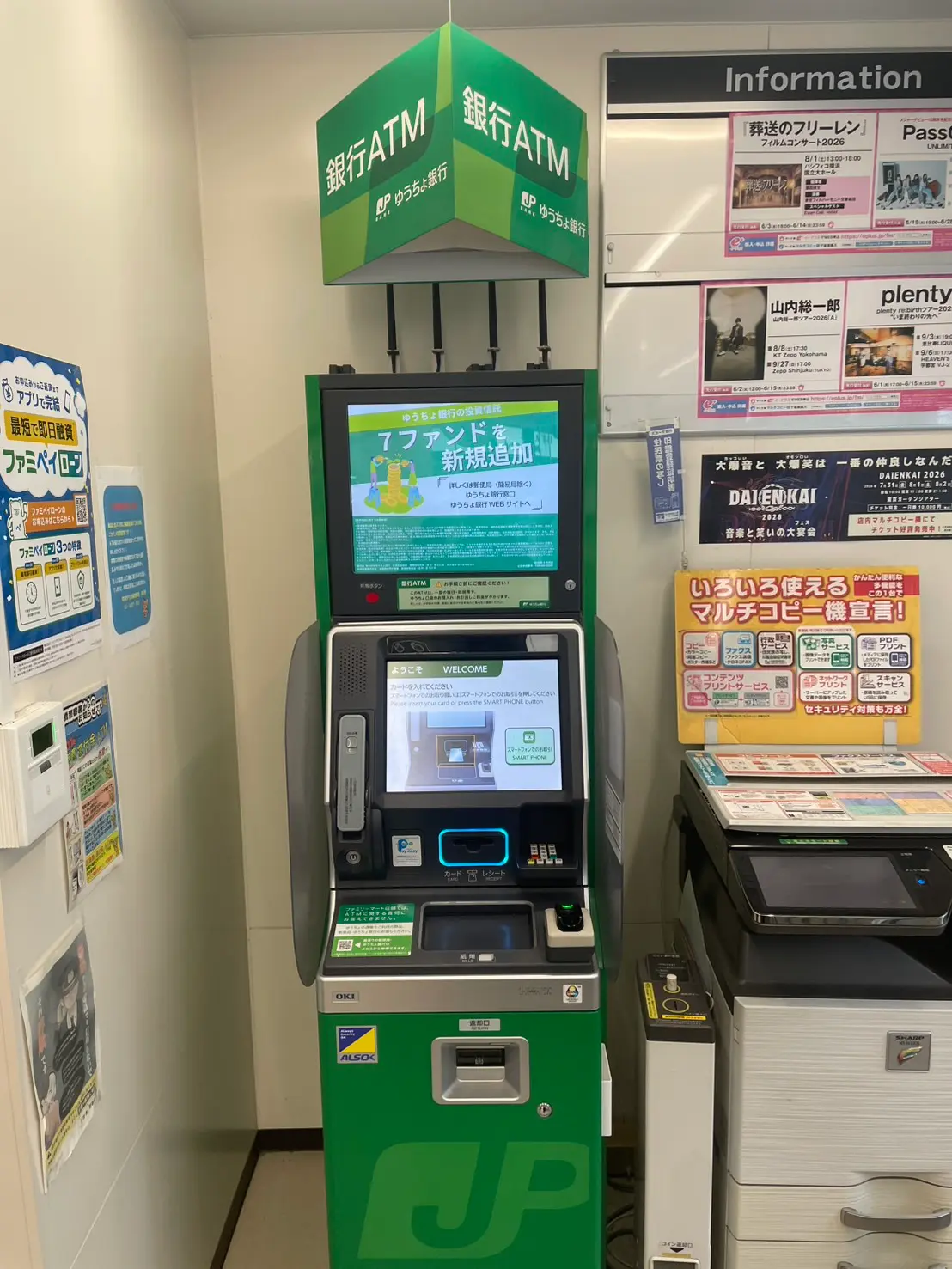
FamilyMart is in the middle of a big change.
Since June 2026, its stores have been rolling out a new in-house machine called the "Famima ATM" — a FamilyMart-branded machine serviced by Seven Bank, which makes it a convenient option for travelers using foreign cards.
The rollout will spread nationwide over the next few years, and in the meantime some stores still have an E-net or Japan Post Bank ATM instead. These ATMs generally support foreign cards, but the exact machine varies from store to store, so check the card logos before you insert anything.
And if you're near a shopping mall or an AEON supermarket, Aeon Bank ATMs can help too. They support the major overseas networks — Visa, Mastercard, JCB, UnionPay, and Discover — with withdrawals capped at ¥50,000.
Step by step at a ATM
Using the machine is straightforward once you know the flow:
- Insert your card (magnetic stripe facing down).
- Choose your language from the on-screen list.
- Select "Withdrawal."
- Choose the account type (for a debit card, usually "Savings" or "Checking").
- Enter your PIN and confirm.
- Choose how much yen you want.
- When asked about currency, choose to be charged in Japanese yen — not your home currency (more on this below).
- Take your cash, your card, and your receipt. Don't walk off without all three.
ATM fees: what you actually pay
The amount you actually pay to withdraw cash comes in three layers, and only one of them shows up on the ATM screen.
First, the ATM's own handling fee. This is usually small — anywhere from free to a few hundred yen, depending on the card brand and the machine. Japan Post Bank, for example, may charge ¥220 (incl. tax) on some foreign cards, while Seven Bank's fee depends on the card network.
Second, and usually bigger, is your own bank's foreign-ATM or cash-withdrawal fee, charged back home. And third is the exchange-rate margin.
That third one hides a trap. When the screen asks whether to bill you in yen or in your home currency, always choose Japanese yen. Picking your home currency triggers "Dynamic Currency Conversion," which usually means a less favorable exchange rate — one set by the ATM or its payment processor rather than your card network. Choosing yen lets your own bank do the conversion, which is almost always cheaper.
Two more money tips.
Because flat fees are charged per transaction, it's cheaper to make a few larger withdrawals than lots of small ones — just keep your cash somewhere safe.
And remember that pulling cash from a credit card is treated as a cash advance, which usually starts charging interest right away; a debit or ATM card is the better choice.
Before you go — and what to do if your card is declined
A little prep saves a lot of stress. Tell your bank you'll be traveling in Japan so it doesn't freeze your card on the first foreign transaction. Make sure you know your PIN.
Japanese ATM screens are generally built around four-digit PINs, so if your card uses a six-digit PIN, check with your card issuer how to enter it. And bring a backup card on a different network (say, a Visa and a Mastercard), kept separately from the first.
If a machine declines your card, don't panic. Try a different operator's ATM — a card that fails at one sometimes works at another. Check that you haven't hit your bank's daily withdrawal limit back home. And if nothing works, contact your card issuer; the block is usually on their end, not Japan's.
How much cash should you actually carry?
You don't need to carry a lot of cash.
A practical approach is to keep enough cash for the cash-only moments — entry fees and goshuin stamps at temples and shrines, festival and market stalls, small restaurants and coffee shops, coin lockers, and some traditional inns — and use cashless payments for the rest. A transit IC card like Suica or PASMO handles trains, vending machines, and most convenience stores with a tap, and major chains, hotels, and department stores generally accept credit cards without issue.
Topping up an IC card or tapping a credit card for everyday spending means you'll reach for the ATM far less often.
While you're in Japan
A few more guides to make the practical side of your trip easier:


Note: fees, withdrawal limits, and accepted card brands can change. Check each operator's official site for the latest details.
▶ Seven Bank — Using cards issued overseas
This article was translated from the original Japanese with AI assistance and reviewed by our editorial team. The Japanese version is authoritative.