
Walk through any Tokyo neighborhood around mid-May, and you’ll start to notice them: little signs taped to the doors of ramen shops and family-run Chinese restaurants — 冷やし中華はじめました (hiyashi chuka hajimemashita), which roughly means “Cold summer noodles are now on the menu.” For people who live in Japan, that sign is a familiar little marker of early summer in Japan. The temperature jumps, short sleeves take over, hot-pot udon vanishes from convenience store shelves — and as the season quietly shifts, restaurants across the country begin rolling out their summer menus, one little sign at a time.
It might come as a surprise to visitors from overseas, but among all of Japan’s noodle dishes, hiyashi chuka is a classic seasonal favorite, usually available only during the warmer months. Here’s what it is and how to enjoy it.
What Is Hiyashi Chuka?
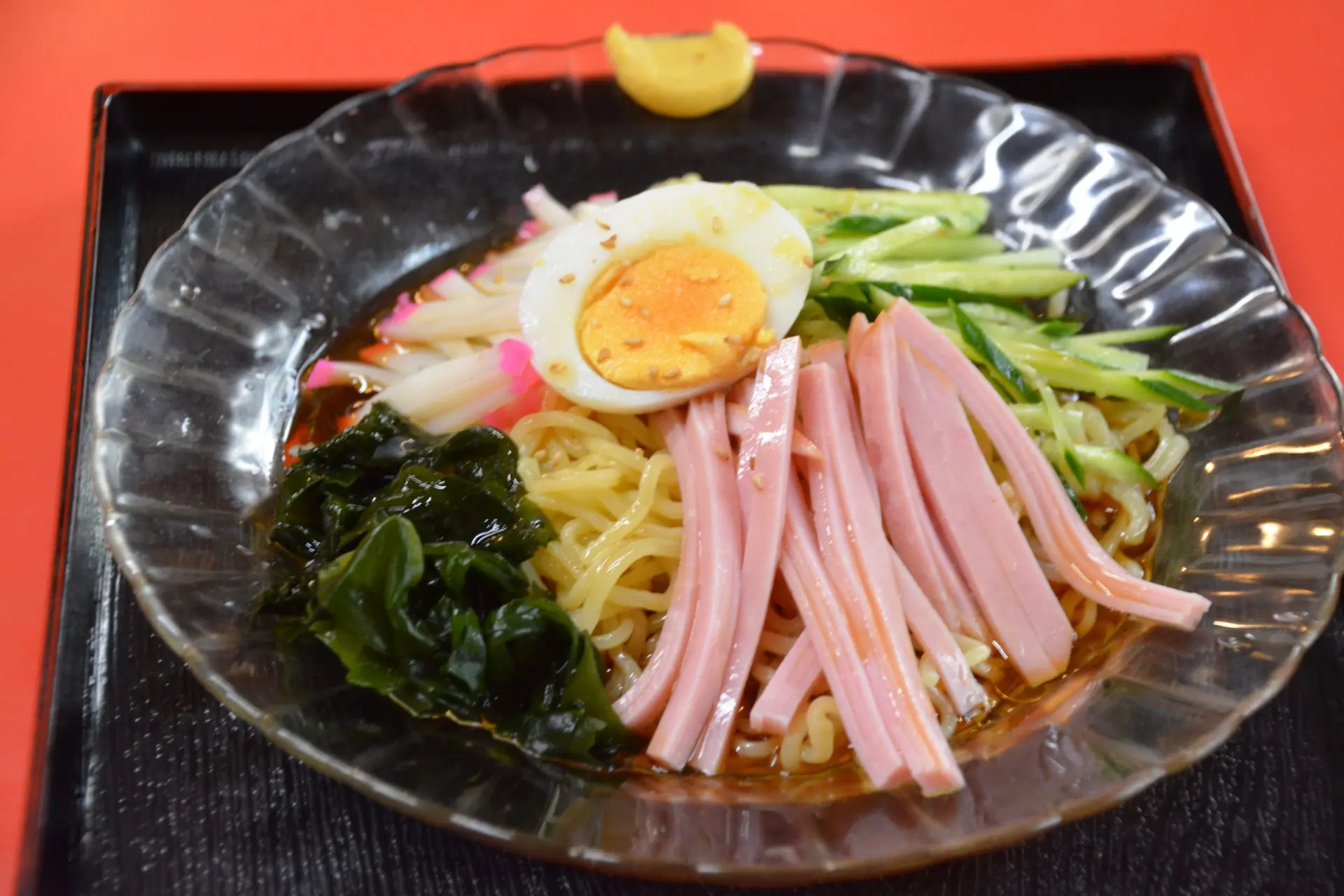
Hiyashi chuka is a summer staple: springy Chinese-style wheat noodles, boiled and rinsed in ice-cold water, then topped with colorful rows of shredded omelette, ham, cucumber, tomato, and pickled ginger. Finish it off with a tangy soy-and-vinegar sauce or a rich sesame sauce, and dig in. It may look like a salad, but make no mistake — this is a proper noodle dish. The chilled noodles, crisp vegetables, and sweet-sour sauce come together into exactly the kind of refreshing meal you want on a hot, humid day.
Where to Try It as a Traveler
For the most local experience, head to a neighborhood Chinese restaurant (the kind locals call machi-chuka, 街中華) or a long-established ramen shop. If you see “hiyashi chuka hajimemashita” on the door, that’s your cue to walk in. Most plates run between 1,000 and 1,500 yen.
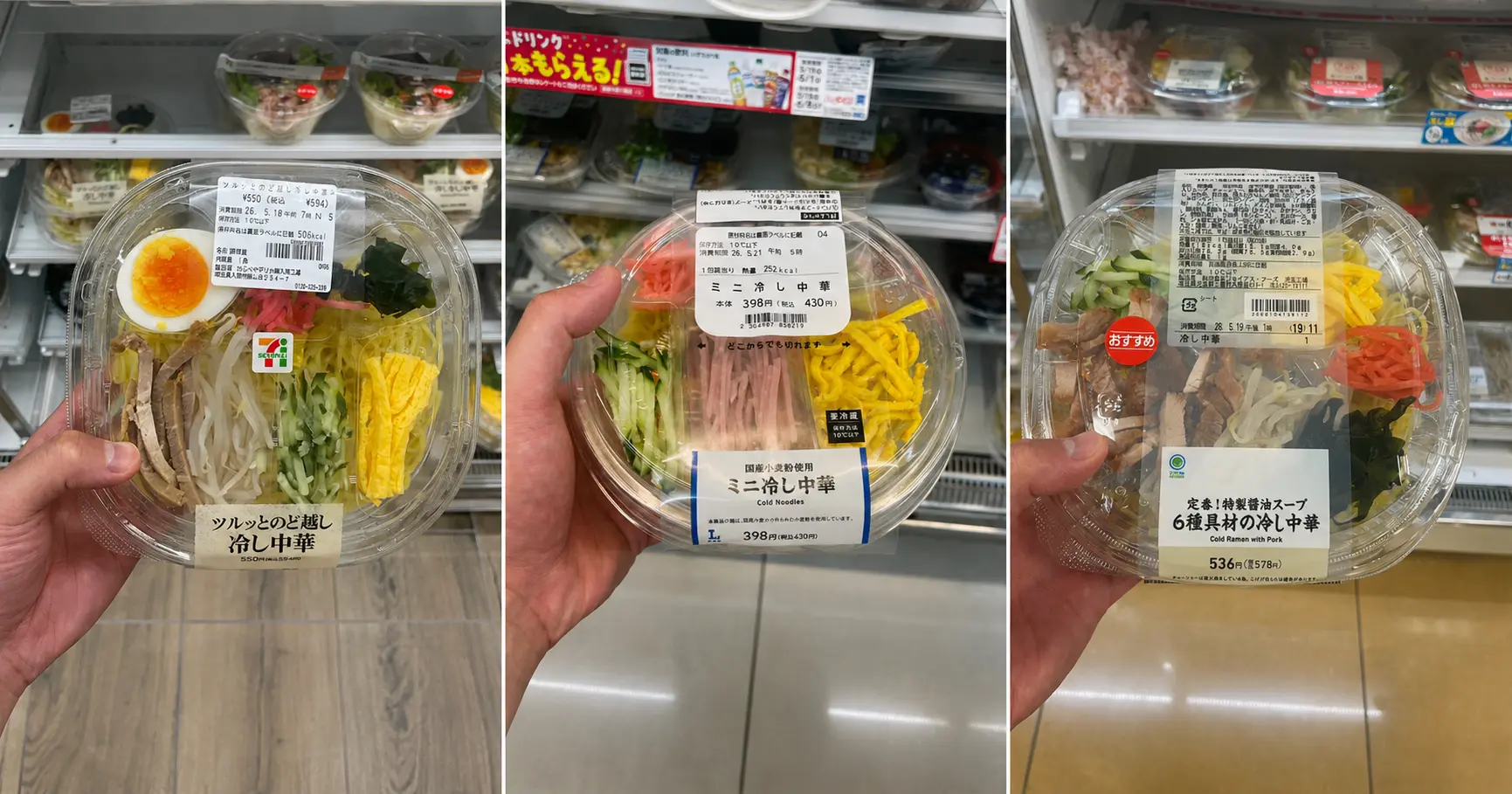
For a more casual first try, convenience stores are a great option. Seven-Eleven, FamilyMart, and Lawson all carry their own hiyashi chuka in the chilled section, usually priced around 430 to 600 yen. Perfect for an easy hotel-room lunch or a quick meal on the Shinkansen.
Here’s a fun fact: July 7 is known as Hiyashi Chuka Day. The date was chosen because it falls around shosho (小暑), one of the traditional seasonal markers that signals the arrival of real summer heat. A bowl eaten on that day might just taste a little more special.
Enjoying the Differences from Shop to Shop
Hiyashi chuka sauces fall into two broad camps: soy-vinegar (shoyu-dare), which is bright and refreshing, and sesame (goma-dare), which is richer and more mellow. Both are delicious in their own way, so try to sample each during your stay.
Depending on the restaurant, you may also find toppings like roast pork, steamed chicken, shrimp, nori seaweed, or wakame. And keep an eye out for a small dab of karashi (Japanese mustard) placed on the edge of the plate — mix a little into your noodles as you go. It’s a small touch that keeps every bite interesting right through to the last, and the kind of small detail that makes eating in Japan so fun.
A Single Sign That Marks the Start of Japan’s Summer
Japan is full of small signals that mark the changing seasons. Cherry blossoms in spring, the scent of osmanthus in autumn — and in summer, a handwritten sign that reads “hiyashi chuka hajimemashita.” If you’re traveling in Japan between May and September, keep an eye out for that sign on a restaurant door. When you spot one, take it as an invitation to step inside and order a chilled plate. For a moment, your trip will feel just a little more like a real Japanese summer.
This article was translated from the original Japanese with AI assistance and reviewed by our editorial team. The Japanese version is authoritative.