
The sidewalk around the Imperial Palace (Kokyo) is the best-known place to run in Tokyo. The loop is about five kilometers, with a wide path and almost no traffic lights to stop at. You'll see all kinds of runners here, from locals heading home from work to visitors who packed their shoes.
You don't need much to enjoy it. Once you know a few local courtesies and where to change and shower, a lap fits easily into a day of sightseeing. This guide covers the basics of the course, local running etiquette, where to start, and the facilities that make it easy for visitors.
The first rule of the loop: run counterclockwise, the way locals go.
The Course: About 5 km With Almost No Stops
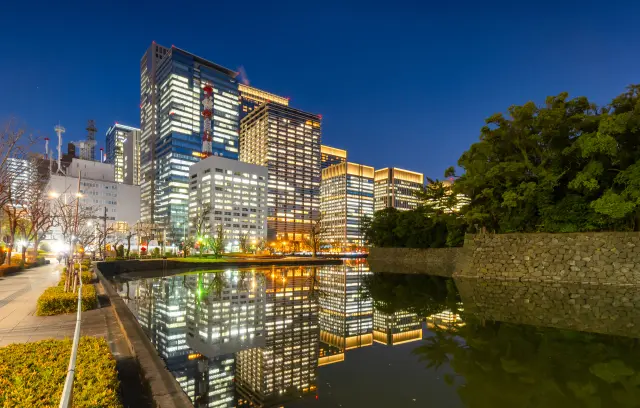
The course is simply the sidewalk that circles the outside of the palace moat. The distance everyone quotes, about 4.97 km, isn't an official figure, but it rounds neatly to five. There's no set place to begin, so you can join the loop wherever is convenient and run a full lap; many people start near Sakuradamon.
There is about 30 meters of elevation change over the lap. The high point is around Hanzomon and the Sakuradamon side is nearly flat, so the only real climb is the stretch up to Hanzomon, which keeps the loop friendly even on a first visit.
Running Etiquette: Counterclockwise, Pedestrians First, Single File
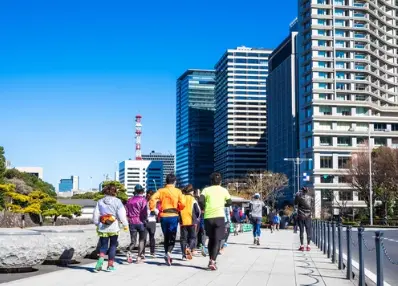
The sidewalk is not just for runners. Plenty of people are walking, commuting, and taking photos. Chiyoda City asks everyone who runs or walks around the palace to follow a few basic courtesies.
Run counterclockwise. It isn't a law, just the local custom the city encourages, so everyone moves the same way and nobody runs into anyone. As a visitor, simply follow the flow.
The city also asks runners to yield to pedestrians, keep left and pass on the right, stay single file where the path narrows, and take all their trash home. It's not the place to chase a fast time, and mornings and evenings get crowded, so it's best not to run too fast then.
If you run on a Sunday, it helps to know about "Palace Cycling." Every Sunday from 10:00 a.m. to 4:00 p.m., part of Uchibori-dori — from Hirakawamon to Iwaidabashi, a round trip of about three kilometers — is given over to cyclists, and cars are kept out.
This applies only to the roadway, so it doesn't affect runners on the outer sidewalk, and you can run as usual on Sundays. (The cycling event itself may be suspended in bad weather or around the New Year.)
One more thing: in the Imperial Palace Outer Garden, the plaza in front of the palace, running is allowed only on the marked roadway, not on the garden's footpaths. That is separate from the outer sidewalk loop, so just keep it in mind if you cut across the plaza.
Getting There and Storing Your Bags: Stations and Coin Lockers
You can start near any of the surrounding stations. The closest are Sakuradamon, Nijubashimae, Otemachi, Takebashi, and Hanzomon; Tokyo Station is within walking distance too.
The tricky part for visitors is luggage. There are no free changing rooms around the palace, so leave larger bags in a station coin locker or use one of the runner stations described below.
If you want to base your Tokyo trip around running the loop, staying in the Marunouchi, Otemachi, or Hibiya area makes it easy to head out morning or night.
Check hotel availability and rates in Tokyo
Toilets and Water: Wadakura Fountain Park
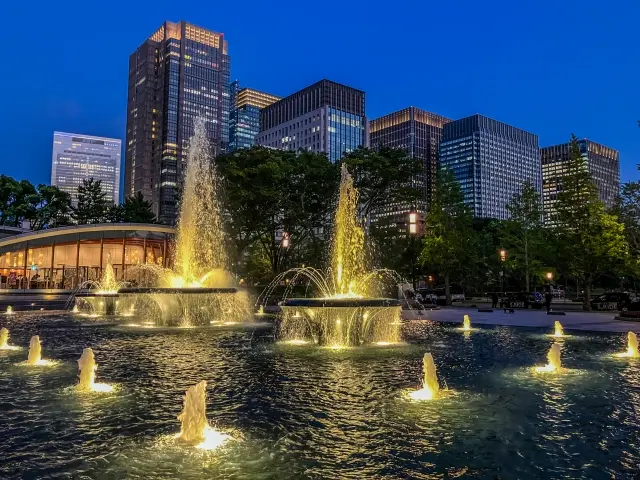
For a longer run, it helps to plan for toilets and water. Wadakura Fountain Park, just inside the course, has a rest house and toilets. The indoor area is open 9:00 a.m. to 5:00 p.m., and the toilets and terrace seats are open 9:00 a.m. to 4:00 p.m. They are shut early in the morning and at night, so keep that in mind.
There are also toilets at major points along the course, such as near Sakuradamon and the palace plaza. Note that most Outer Garden toilets are locked at night for security, so on a night run it's best to use one before it gets late.
For water, the easiest thing is to pick some up at a station or convenience store before you set off.
Running With Others: TOKYO RUN CLUB
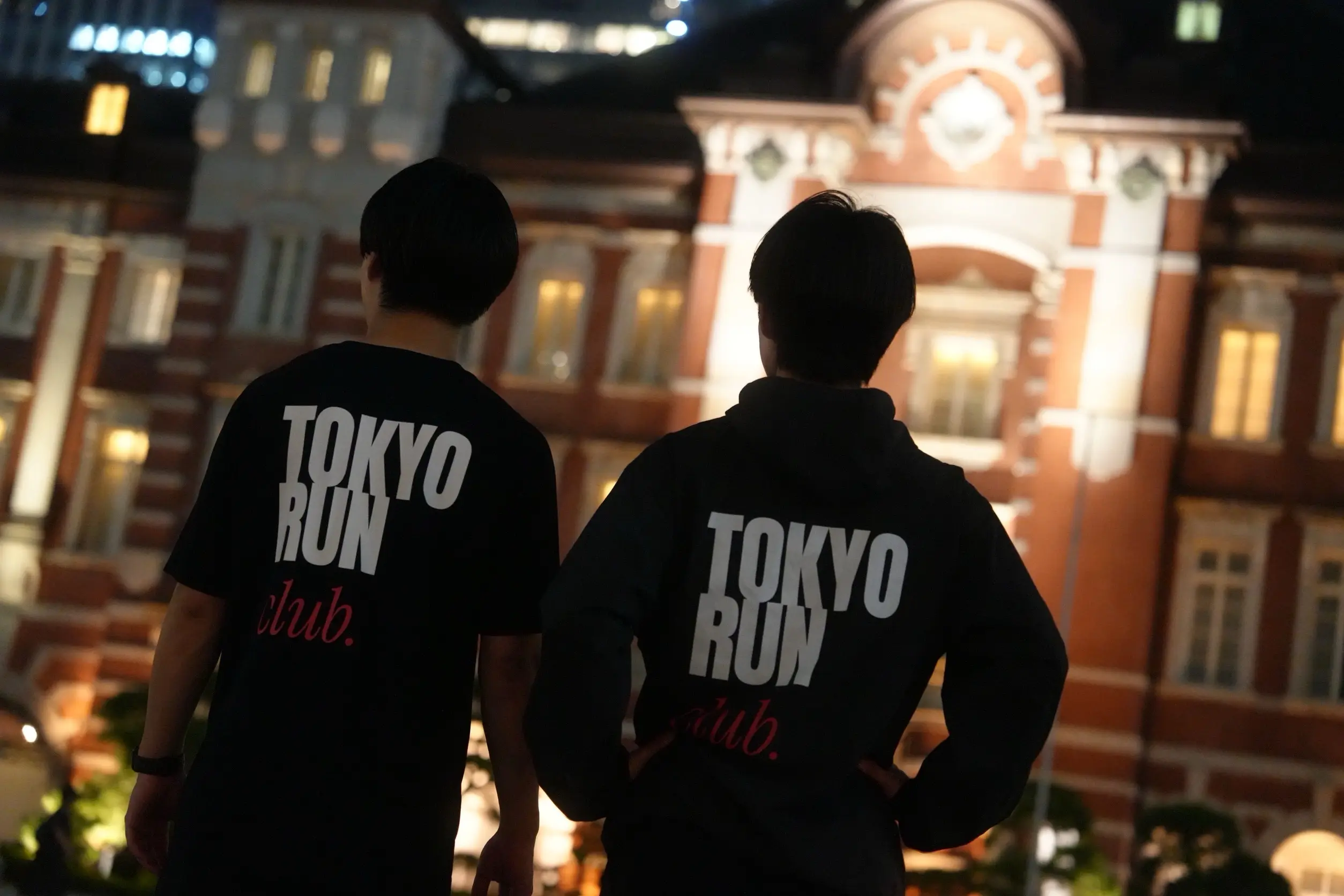
Running alone is fine, but on a trip it can be fun to run with local runners.
Tokyo has an open running community called TOKYO RUN CLUB that anyone can join. It meets three or four times a week, in the morning (around 6:30–9:00 a.m.) or the evening (around 6:00–9:00 p.m.), for runs through the city.
The best part is that you can join in English. Its site says "no Japanese needed," and travelers and people in town for work are welcome. There's no sign-up and no fee for the regular group runs, so you can just show up.
The meeting point changes each time and might be a park, a bridge, or a station exit. The details go up one or two days ahead on Instagram and LINE, so check close to the day you want to run. The runs are held at spots all over the city rather than on the palace loop itself, but joining one gives you instant company from runners who already know the streets.
Official site: TOKYO RUN CLUB
Renting Shoes and Gear for the Loop
Bringing running shoes and a change of clothes on a trip takes up a lot of space, so more travelers now leave their gear at home and rent what they need. For a fuller guide, including four scenic routes such as Kyoto's Kamo River, see this article. Run Japan Without Packing Shoes: Kamo River + 3 More Routes
One service catching on with visitors and locals alike is the clothing rental Laplace closet. Enter your travel dates and hotel when you book online, and running shoes and clothes are delivered there; delivery reaches most of Japan, not just Tokyo. The cheapest items start at 400 yen a day, sign-up is free, and when you're done you return everything, unwashed, in the dedicated return box.
For runners, there is also a special collection made with TOKYO RUN CLUB, called "Laplace closet × TOKYO RUN CLUB." Besides hotel delivery, you can pick it up at one of the club's runs, where the rental is half price.
Official site: Laplace closet
Solo, with a group, or without packing a thing, the loop is one of the simplest ways to see central Tokyo on your own two feet.
This article was translated from the original Japanese with AI assistance and reviewed by our editorial team. The Japanese version is authoritative.