
An early-morning or evening run is one of the best ways to see a Japanese city. You get riverbanks, waterfronts and stone-paved lanes at their quietest, before the crowds arrive or after they've gone.
The hard part is the gear. Running shoes take up a real chunk of a suitcase, and nobody wants damp running clothes in their bag for the rest of the trip.
Here's how to have running gear waiting for you at your hotel in Japan, plus four routes worth lacing up for in Kyoto, Okinawa, Kanazawa and Tokyo.
The early-morning times below are for late spring and summer. In autumn and winter, push them back until it's light out.
Running gear delivered to your hotel

One option runners have started turning to is Laplace closet, a clothing rental service built for travelers in Japan. For runners, there's a dedicated Laplace closet × Tokyo Run Club collection with shoes, running clothes and caps.
How it works

Book online before you fly: enter your travel dates and hotel, and the items are delivered there. Hotel delivery covers the whole country except some remote islands, so it works in Kyoto or Okinawa just as well as in Tokyo.
When you're done, skip the laundry. Put everything in the dedicated return box and hand it in at the front desk when you check out.
Rates vary by item, starting at ¥400 a day for the cheapest pieces. Shoes cost more, so check the site for current prices. Delivery and return add ¥800 combined. Signing up costs nothing, and the daily rate drops the longer you rent.
Items from the Tokyo Run Club collection can also be picked up on-site at a Tokyo Run Club run in Tokyo instead of at your hotel. Check the Laplace closet website for pickup details, available sizes and what's in stock.
To lighten your load even further, you can ship your suitcase ahead to your hotel with takkyubin.
Book with your travel dates and hotel, then hand everything back at checkout. No laundry, and nothing extra in your bag on the way home.
1. Kyoto: Kamo River and the Demachiyanagi stepping stones
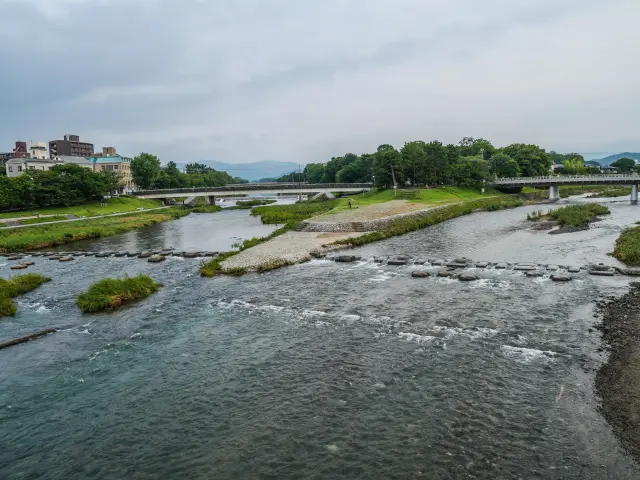
For a morning run in Kyoto, head for the Kamo River (鴨川). Start at the delta in Demachiyanagi (出町柳), where the Kamogawa (賀茂川; same sound, different kanji) meets the Takano River (高野川).
Stepping stones shaped like turtles and birds cross the water at the delta. Hopping across them as the sun comes up over the Higashiyama hills is about as Kyoto as a morning gets.
Afterward, shower at your hotel, toss your damp running clothes in the return box instead of your suitcase, and head straight out to the temples.
Best time: 6:00–7:00 a.m., before the sightseeing crowds get going.
Course: Kyoto City lists three jogging courses, all starting at Kamo Ohashi Bridge (賀茂大橋) right by the delta and Demachiyanagi Station.
The Marutamachi course turns around at Marutamachi Bridge and covers about 2.5 km out and back. The Takano course turns at Matsugasaki Pedestrian Bridge on the Takano River and covers about 4.3 km, while the Kamigamo course continues upstream to Nishigamo Bridge for about 9.2 km.
Kyoto Prefecture advises anyone near its rivers to leave the river area immediately if rain is falling upstream. On rainy mornings, or right after rain, skip the riverbank.
2. Okinawa: west-coast sunsets in Chatan
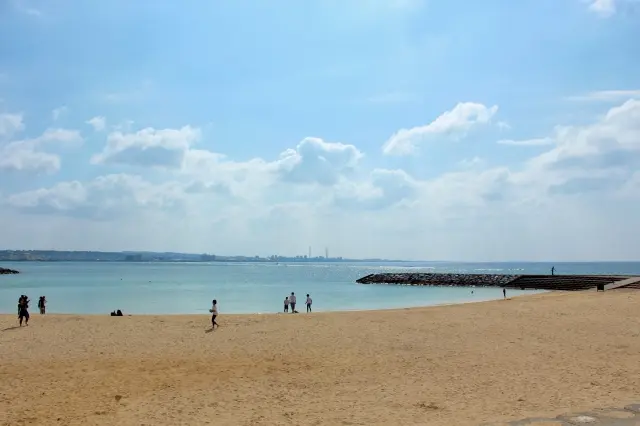
If you're staying in or near Chatan (北谷), in the middle of Okinawa's main island, it's an easy place to run. Chatan Park Sunset Beach sits right next to Mihama American Village, so you can walk straight from the shops to the sand.
Head north from Sunset Beach and you can follow the shoreline toward Miyagi Coast (宮城海岸) and Sunabe (砂辺). Chatan faces west, so an evening run comes with the sun going down over the ocean.
After a run by the sea, there's no stuffing salty, damp clothes into your suitcase. That leaves more room for souvenirs on the way home.
Best time: Around sunset, or early morning.
Course: We couldn't find an official course or distance for this stretch, so treat it as an easy out-and-back from Sunset Beach toward Sunabe. For scale, the Chatan Tourism Association says Sunabe is about a 15-minute walk from the Mihama area.
3. Kanazawa: the Asano River and Higashi Chaya at dawn
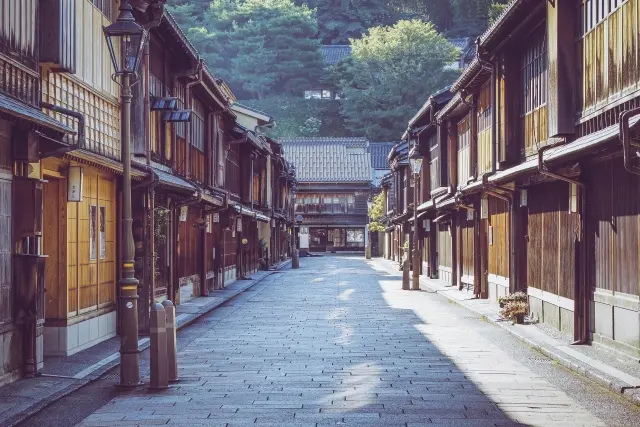
In Kanazawa, run along the Asano River (浅野川), then cool down with a walk through the Higashi Chaya District (ひがし茶屋街). The teahouse quarter is packed with visitors by day and almost silent at dawn.
It's one of Japan's Important Preservation Districts for Groups of Traditional Buildings, with stone-paved lanes lined by old wooden teahouses with finely latticed facades.
People still live and work here, so slow down to a walk once you're inside the district and keep the noise down.
Best time: 5:30–6:30 a.m.
Course: Start at Umenohashi (梅ノ橋), a footbridge over the river, and run out and back along the riverside paths.
Kyoka no Michi (鏡花のみち) runs along the south bank on the Kazuemachi (主計町) side, and Shusei no Michi (秋聲のみち) along the north bank on the Higashi Chaya side. From Umenohashi, the teahouse district's main street is a short walk away.
4. Tokyo: a night run at Toyosu Gururi Park
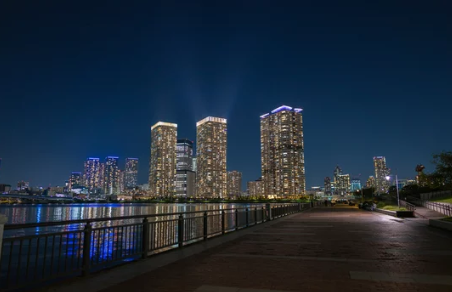
If you're in Tokyo for work, Toyosu Gururi Park (豊洲ぐるり公園) is a good place for an evening run. The path hugs the edge of the Toyosu waterfront, and from the tip you can take in the Rainbow Bridge and the waterfront skyline. After dark, lights from the far shore shimmer on the water.
A business carry-on rarely has room for running shoes. Have them delivered to your hotel instead, and you can head out for a night run as soon as work wraps up.
Best time: Evening, or early morning.
Course: According to Koto City, the park path is 4.5 km long. It isn't a loop, so run out as far as you like and turn back.
Picking your route
Let where you're staying decide. In Kyoto, the 2.5 km Marutamachi out-and-back is an easy first run, and the Kamigamo course gives you about 9.2 km if you want more. In Tokyo, Toyosu is an easy after-work run.
In Chatan, sunset is the time to go. In Kanazawa, go early, before the teahouse district wakes up.
This article was translated from the original Japanese with AI assistance and reviewed by our editorial team. The Japanese version is authoritative.