The first decision at the Kabuki-za Theatre (歌舞伎座) in Tokyo isn't which play to see. It's which ticket to buy. You can buy a full-program ticket for an entire matinee or evening program, or a single-act ticket (一幕見席, hitomakumiseki) for just one act. The two cost very different amounts and are sold in completely different ways.
If this is your first time seeing kabuki, start with a single-act ticket. You watch one act from the 4th floor and pay far less than a full ticket, which makes it an easy, low-commitment way to try the theater.
This guide focuses on single-act tickets: how they differ from a full ticket, what they cost, how to buy them, whether you can get in on the day, and how to follow the story in English.
New to kabuki? Try a single-act ticket. Reserved single-act seats go on sale online at noon the day before; non-reserved seats are sold at the theater from the morning of the performance.
Two kinds of tickets
Kabuki-za changes its program every month. The daily schedule is usually divided into two parts: a matinee starting around 11:00 and an evening show starting around 16:00. Each part contains several plays, or acts, and start times shift month to month, so check the current program page.
A full-program ticket covers one whole part from an assigned seat, chosen by seat class (first-class, third-floor, and so on). A single-act ticket covers just one act, from a seat on the 4th floor.
A full part runs roughly four to four and a half hours. A single act is much shorter, though the exact length varies by act, so check the act's time before you plan the rest of your day.
How to buy a single-act seat
Single-act seats are on the 4th floor. There are two types, reserved and non-reserved, and each is sold differently. You enter through a dedicated 4th-floor entrance and cannot go into the seating or shops on floors 1 to 3.
Reserved seats (about 70) are sold online only, through the Kabuki-za single-act online ticket site. They go on sale at noon the day before the performance, and tickets for all of that day's acts become available at the same time. Payment is by credit card only (Visa, Mastercard, JCB, Amex). You can buy up to four tickets per act, and a ¥110 system fee applies to each ticket. To enter, show the QR code on your phone or bring a copy printed on A4 paper; each ticket admits one person.
Non-reserved seats (about 20) are sold on the day only, at the single-act entrance on the left front of the theater, from around 10:00. Cash only, one per person, and they can sell out, so line up early.
Prices run roughly ¥2,000 to ¥3,500 per act in recent months, depending on the play. You'll find each act's start time and price on the same online single-act page. Plan to arrive for the start of your chosen act, not the beginning of the full program.
Booking from overseas? The single-act site takes the major card brands but doesn't say whether foreign-issued cards are accepted, so test yours ahead of time if you can. If you're set on a specific act, the surest route is a same-day non-reserved seat, bought with cash at the window.
Full-program tickets and prices
Full-program tickets are sold through Ticket Web Shochiku (online), Ticketphone Shochiku (by phone), and the box office in the basement-level Kobikicho Hiroba (木挽町広場, B2). Any seats left on the day can be bought at that box office. Tickets usually go on sale about two weeks before opening, though this varies by month.
Prices depend on the seat class. For example, in the September 2026 program (Sept 2–26), a first-class seat was ¥18,000, a third-floor B seat was ¥5,000, and box and special seats were ¥20,000. Classes and prices change from month to month.
Anyone age 30 or younger can buy a half-price U30 ticket on the day if seats are still available.
Following the story in English (G-marc captions)
Because the actors deliver their lines in stylized, archaic Japanese, you can use the G-marc English captioning service to follow the plot. The tablet shows an English summary and subtitles for the dialogue. It's captioning, not spoken interpretation.
The service costs ¥1,500 for a full show (floors 1 to 3) and ¥1,000 for a single act, cash only. For a full-program seat, you pick up the tablet at the caption counter on the 1st floor. The ¥1,000 rate also applies to single-act ticket holders, but because they enter on the 4th floor and don't normally reach the 1st-floor counter, check the current month's guidance on where to pick one up. If following the story in English matters most to you, a full-program seat on floors 1 to 3 is the more reliable choice.
One warning: Shochiku's English site still carries older, contradictory guidance, saying an English audio guide exists and that G-marc captions aren't available. If you research in English, rely on the current month's program page or ask at the on-site counter instead.
Getting there and the box office
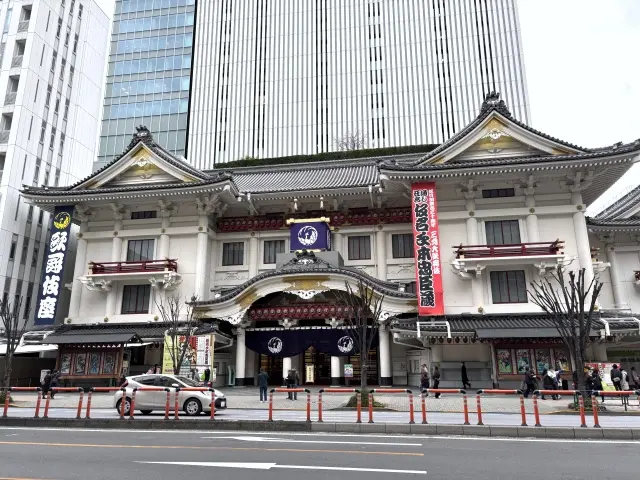
Kabuki-za sits on the east side of Ginza. It's right outside Exit 3 of Higashi-ginza Station (東銀座) on the Hibiya and Asakusa subway lines, and about five minutes from Exit A7 of Ginza Station.
The box office and the basement shopping arcade, Kobikicho Hiroba, are on level B2. You can walk into Kobikicho Hiroba without a ticket, so it's an easy stop before or after a single-act show. The theater is run by Shochiku, and each month's program is posted on the official Kabuki Bito site.
Official site: 松竹が運営する歌舞伎公式サイト。歌舞伎の公演情報、ニュース、俳優インタビューなどをお届けします。こちらのページでは歌舞伎座で上演される歌舞伎公演の情報を配信しています。
歌舞伎座|歌舞伎美人
Seeing another traditional performance in Tokyo? Our Grand Sumo in Tokyo: How to Get Tickets at Ryogoku Kokugikan walks through getting tickets there too. And since several counters here are cash-only, our guide to paying in Japan covers cash and IC cards before you go.
This article was translated from the original Japanese with AI assistance and reviewed by our editorial team. The Japanese version is authoritative.