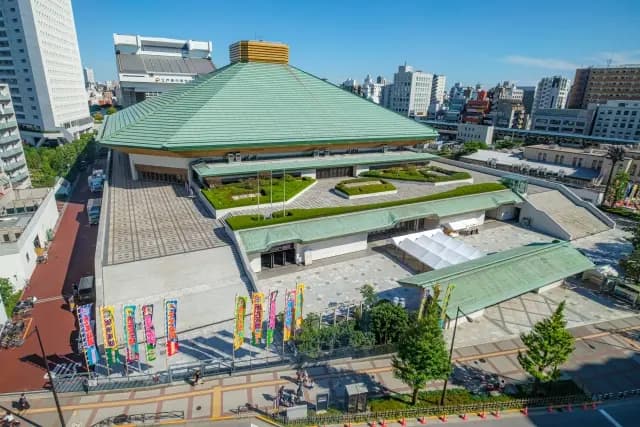
Few experiences feel as distinctly Japanese as watching grand sumo (大相撲) live — the roof suspended over the ring, the salt tossed before each bout, the referee's ringing call carrying across the hall. The hard part isn't enjoying it. It's getting a ticket.
Tickets for popular days sell out as soon as they go on sale, and simply turning up on the day rarely works. This guide walks through the 2026 September tournament (Aki Basho, 秋場所): the schedule, how tickets work, how to choose a seat, and what to do if a tournament is already sold out, so you can plan well before your trip.
Tokyo hosts grand sumo three times a year: in January, May, and September. Popular tournaments sell out within days, and the September 2026 tournament (Sept 13–27) was fully sold out as of August 2026.
The 2026 September Tournament (Aki Basho)
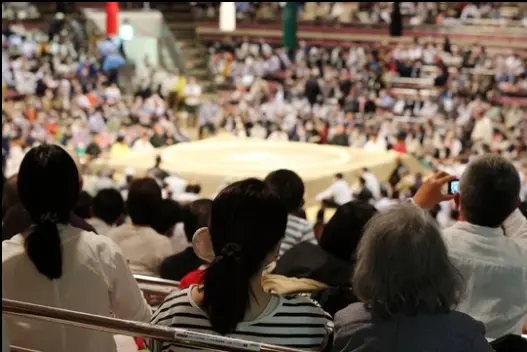
There are six grand sumo tournaments a year, each starting on a Sunday and lasting 15 days. Three are held in Tokyo at Ryōgoku Kokugikan (両国国技館): January (Hatsu Basho), May (Natsu Basho), and September (Aki Basho).
The 2026 September tournament runs from Sunday, September 13 to Sunday, September 27.
Detail | Information |
|---|---|
Dates | Sept 13 (Sun) – Sept 27 (Sun), 2026 · 15 days |
Venue | Ryōgoku Kokugikan (1-3-28 Yokoami, Sumida-ku, Tokyo) |
Doors open | 8:45 a. |
General sale | Aug 8 (Sat), 2026, 10:00 a. |
Status | Sold out for all days as of August 2026; no same-day tickets |
If you miss the September tournament, the next one in Tokyo is the January tournament, running January 10–24, 2027. Counting the regional tournaments in Osaka (March), Nagoya (July), and Fukuoka (November), there are six chances a year.
How Sumo Tickets Work
Tickets are released first through an advance lottery, then through a general sale on a first-come, first-served basis. The general sale usually opens about a month before the tournament, so check the official site early. Anyone age 4 or older needs a ticket.
The main outlet is the Japan Sumo Association's official ticket site, which has an English version, Ticket Oosumo, for overseas buyers. You can also buy at Seven-Eleven stores and by phone. If a tournament doesn't sell out in advance, a limited number of same-day tickets go on sale in the morning, but popular tournaments sell out well before that.
For the 2026 September tournament, the general sale opened on August 8 and sold out for every day soon afterward, with no same-day tickets. If your trip depends on it, plan to buy the moment tickets go on sale. Steer clear of unofficial resale sites charging far above face value; the organizer takes no responsibility for tickets bought there.
Check Tokyo Sumo Wrestling Tournament Tour
Choosing Your Seat
There are three broad seat types: ringside tamari (溜席) seats, traditional masu (マス席) box seats on the floor, and Western-style chair seats (イス席) on the upper level.
Seat type | Approximate price per person (2026) | Notes |
|---|---|---|
Tamari (ringside) | ¥20,000 (age 16+) | Closest to the ring. |
Masu S box | ¥14,000–15,000 | Floor box near the ring. |
Masu A–C box | ¥8,500–13,000 | Floor box for 1–6 people. |
Chair S–C | ¥3,500–9,500 | Upper-level chairs. |
Chair D | ¥2,500 adult / ¥500 child | The most affordable chairs |
Masu boxes are sold by the box, not by the seat, but they come in different sizes: a Masu S box seats one, two, or four, while the A–C boxes seat anywhere from one to six, so you can book one even on your own. A single-person Masu S box costs ¥14,000 on weekdays or ¥15,000 on weekends and holidays.
You sit shoeless on a cushion, usually cross-legged or kneeling, for several hours, so loose clothing and shoes you can slip on and off make a real difference.
Chair seats are the easiest to book for a solo traveler and suit first-timers well. Tamari seats are the closest of all, but they are limited to ages 16 and up, and food, photography, and phone use are not allowed there.
Admission prices for the Tokyo and Osaka tournaments go up from the January 2027 tournament (tamari seats climb to as much as ¥30,000), so the figures above apply only to the 2026 September tournament.
A Day at the Tournament
Bouts begin in the morning, but the early hours feature the lower ranks. The top-division (makuuchi, 幕内) bouts, featuring the wrestlers most people come to see, take place in the late afternoon.
A typical opening-day schedule looks like this, though the times shift from day to day:
- From doors opening through midday: lower-division bouts (jonokuchi to makushita)
- Just after 2:00 p.m.: the juryo ring-entering ceremony
- Around 3:30 p.m.: the makuuchi ring-entering ceremony
- Around 3:55 p.m.: the yokozuna ring-entering ceremony
- Around 4:10 to 6:00 p.m.: the makuuchi bouts and the final match of the day
If you mainly want the top-division bouts and the yokozuna ceremony, arriving between 2:30 and 3:00 p.m. gives you plenty of time. If you would rather soak up the atmosphere and the lower-division action, come earlier in the day.
Getting There and Inside the Venue
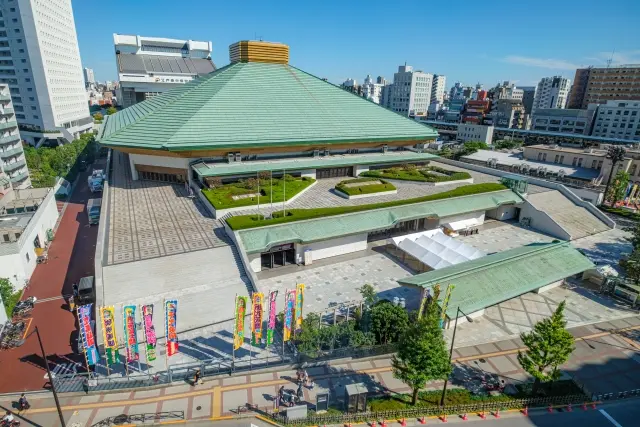
Ryōgoku Kokugikan is about a 1-minute walk from the west exit of Ryōgoku Station on the JR Sobu Line, and a 5-minute walk from Ryōgoku Station on the Toei Oedo Line.
If you're coming from out of town, or want to take in the full day from the morning bouts to the final match, it helps to stay near the arena. For hotels a short walk from Ryōgoku Station, see our guide to where to stay for sumo near Ryogoku Kokugikan.
Inside, try two Kokugikan specialties: yakitori (about ¥750 for five skewers) and chanko stew (about ¥500). You can eat at your masu box, so many fans watch with a snack in hand.
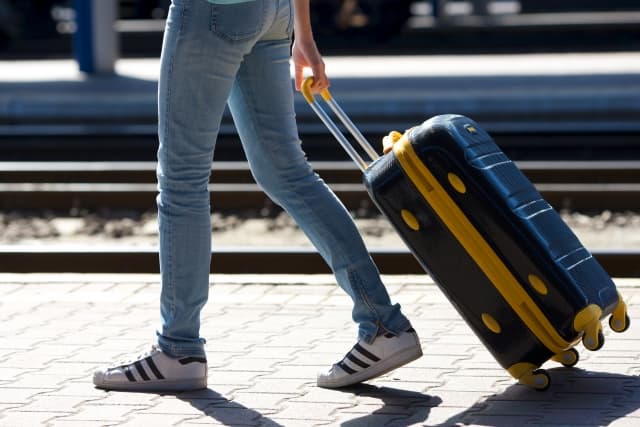
A few points of etiquette: throwing your seat cushion toward the ring is not allowed, and you should not leave your seat during a bout. Bringing a large suitcase into the venue can be awkward, so use the coin lockers (¥200 or ¥300) at the venue or near the station to travel light. For more options nearby, see our guide to luggage storage and coin lockers in Tokyo.
If Tickets Are Sold Out
Even when every day is sold out, you still have options. Your safest bet is to start planning early for the next Tokyo tournament in January 2027; for popular days, the advance lottery is often the most reliable route. Admission prices rise from that tournament, so budget a little more and check the official site for the latest figures.
If you are set on watching during your stay, a guided viewing tour with reserved seats is the most practical route. Klook, Viator, and operators listed on Tokyo's official tourism site GO TOKYO offer sumo tours with reserved seats. Some also include an interpreter and a chanko (ちゃんこ) meal. These tours fill up too, so book early; once individual tickets are gone, a tour is often the only way in.
For the full rundown — official face-value resale, regional jungyo, and morning practice — see our guide to watching sumo when tickets are sold out.
Your first sumo tournament stays with you — not just the results, but the salt-tossing, the referee's call, and the roar of a full house. Plan around your travel dates early, and you'll give yourself the best shot at a seat.
This article was translated from the original Japanese with AI assistance and reviewed by our editorial team. The Japanese version is authoritative.