.jpeg&w=3840&q=75)
Grand sumo tickets in Tokyo sell out fast. In fact, every day of the September 2026 tournament had sold out by early August.
The good news: a sellout doesn't shut you out. There are still several ways to see sumo — and since a tournament that sells out in advance has no same-day tickets at the door either, the options below are how you get in.
This guide covers your options: official face-value resale, guided tours with reserved seats, regional jungyo tours, and morning practice. For how tickets and seats work in the first place, see our Grand Sumo in Tokyo guide.
A guided tour with a reserved seat is the surest way in once a tournament is sold out. The official face-value resale can be cheaper, if a spot opens up.
Official Face-Value Resale First
The first thing to check after a sellout is the official resale on "Ticket Oosumo" (the Japan Sumo Association's ticket site). Fans who can no longer attend list their tickets, and you buy them at face value, with nothing added on top. Cancellations and spare tickets appear from time to time, so check the official resale page often.
If you ever need to sell a ticket yourself, only credit-card purchases can be listed, and a 10% fee applies when a sale goes through. If no one buys it, there's no fee and you keep the ticket to use, so there's no downside.
Steer clear of unofficial resale sites charging well above face value; you also risk being turned away at the door.
Guided Tours with Reserved Seats
.jpeg)
If you're set on seeing the main tournament, a guided tour with a reserved seat is the surest bet. Travel agencies and tour sites bundle a reserved seat with extras like an English guide or interpreter, a chanko (ちゃんこ) hot-pot meal, and a walk around Ryōgoku.
Prices vary widely depending on the seat and what the tour includes. Guided tours with a reserved seat are sold on Klook. They cost more than face value, but they secure a seat even when the tournament is sold out.
Pick the one that fits your dates and budget.
Book guided tours with a reserved seat
Jungyo: Sumo on Tour
Apart from the main tournaments, the wrestlers travel the country for regional exhibition tours called jungyo (巡業). Because the results don't affect the rankings, the mood is relaxed: mornings feature open practice, afternoons the bouts, along with handshake sessions, photo ops, and comic-sumo skits. You get much closer to the wrestlers.
The autumn jungyo runs from early to late October, right after the September tournament, stopping in cities nationwide, including the Kantō region near Tokyo. One example is the Maishima event in Osaka, confirmed for Saturday, October 17, 2026. Prices run from ¥3,000 for grandstand seats up to about ¥19,000 for ringside tamari seats.
Tickets are sold through each host city's official page and outlets like Ticket Pia. If your trip falls in October, check the Osaka Maishima page and the Japan Sumo Association's site for the schedule, and find a venue near where you'll be.
Morning Practice (Asageiko)
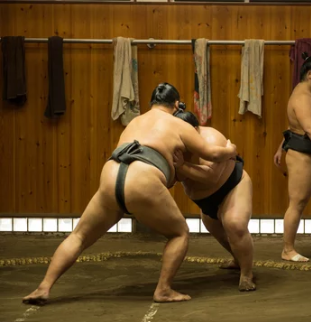
Morning practice (asageiko) is another way to see the wrestlers train up close — with one catch. Practice isn't held during a tournament or for about a week afterward. If you're hoping to catch it in Tokyo during the September 2026 tournament (Sept 13–27), you'll usually come up empty.
If you still want to watch the wrestlers train, consider an October jungyo stop, where the morning practice is open to spectators. A trip that runs into October gives you that chance at venues around the country.
In Tokyo, Arashio Stable (Nihonbashi-Hamacho, Chūō-ku) is known for letting you watch practice for free through its street-facing windows. Practice usually runs from about 7:30 to 9:00 a.m., but check the stable's official calendar to make sure it's being held that day. Keep noise to a minimum, don't use a flash, and don't eat or drink there.
There are also guided morning-practice tours with an English guide sold on Klook; the meeting point and stable are usually confirmed a few days ahead. Rules vary by stable and tour. Some prohibit posting photos of the wrestlers online, so check the guidelines before you go.
Book guided morning-practice tours
Other Options and What to Watch Out For
The Sumo Museum, inside Ryōgoku Kokugikan, is normally free, but during the 15 days of a Tokyo tournament you need a tournament ticket to enter, so without one you can't get in on those days. Outside tournament periods, admission is free on weekdays, but the museum is closed on weekends and holidays. Check the Japan Sumo Association's official schedule before you go.
If you'd rather watch from your hotel, NHK WORLD-JAPAN airs an English-language highlights program during each tournament.
Sellouts aren't always final, either — extra tickets and resales do surface. And if your plans are still flexible, remember there are six tournaments a year, three of them in Tokyo.
This article was translated from the original Japanese with AI assistance and reviewed by our editorial team. The Japanese version is authoritative.


