
Plenty of first-timers get as far as the door of a Japanese karaoke box and stall, unsure what it will cost or what to say at the counter. Once you know how the pricing works, you can be in a room within a few minutes.
This guide covers how you're charged, how check-in works, whether you can sing on your own, and the rules on food, English songs, and age that trip people up. Prices swing a lot by location, so what follows shows how the charges add up rather than listing exact amounts.
Before you look at "how much per 30 minutes," check whether the store offers a free-time plan. If you plan to sing for an hour or two, the flat free-time rate is almost always the better deal.
Two Ways You Get Charged (Per-30-Minutes vs Free Time)
Karaoke pricing in Japan comes in two basic forms. You either pay for the room in 30-minute increments, or choose free time, a flat rate that lets you sing until a set end time. Depending on the store and time of day, free time either runs for a fixed number of hours or lasts until closing.
With the time-based plan, chains like Karaoke Kan (カラオケ館) bill a set amount per person for every 30 minutes, so the total climbs with your group size and how long you stay. It suits a quick one- or two-song stop.
With free time, you pay a flat rate with no extra room charges during the allotted time. Jankara (ジャンカラ / Jumbo Karaoke Hiroba) runs free time at every branch, and some bundle unlimited soft drinks into the price. The longer you sing, the more this plan pays off, so it usually works out cheaper once you're there for an hour or more.
What Moves the Price: Four Factors
Even at one store, the rate shifts with four things: the time of day, weekday versus weekend, member versus non-member, and the location. JOYSOUND's own shops note that prices differ store by store depending on things like whether the branch is right by a station.
Time of day matters most. Daytime is cheapest, the evening rate kicks in from late afternoon at most stores, and late night or early morning is different again. Weekends and holidays run higher than weekdays.
For an exact figure, check the page for the specific store you plan to visit.
The One-Drink Rule vs Drink-Bar Plans
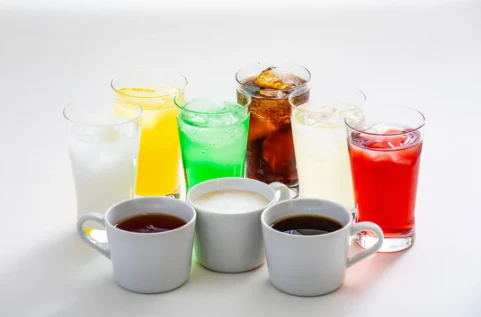
When you check the posted prices, look at how drinks are charged, too: there are two common setups.
A one-drink rule (wan-drink-sei, ワンドリンク制) means each person orders at least one drink on top of the room charge. Big Echo (ビッグエコー) describes it as a system where, separate from the room fee, each guest orders one or more drinks. Read the posted price as room-only, with a drink added per head.
A drink-bar plan folds an all-you-can-drink price into the rate from the start, so no extra order is needed and the listed price looks higher. Which one is cheaper depends on how long you stay and how much you drink.
Checking In, and Your First Song
Most stores let you walk in with no advance booking. Tell the staff how many are in your group, how long you want to stay, and which plan you want, and they'll hand you a room number. On a busy weekend night you may wait for a turn at the front desk.
Staff may ask for a member card or app, but membership is optional at most chains and you can enter without signing up. At Jankara, for example, joining is free and the app handles everything from check-in to payment.
Once inside, you search for songs on the tablet remote (called a Denmoku, デンモク, on DAM machines and a Kyokunavi, キョクナビ, on JOYSOUND ones) and queue them up.
If you want more time, call the front desk from your room or ask at the counter. Some stores call you as your time runs low, but not all do, so keep half an eye on the clock yourself.
How you pay depends on the place: Jankara, for example, charges you automatically through the app when your time ends, while others have you pay at the front desk on your way out. Beyond cash, more stores now take credit cards, e-money, and QR-code payments. To decide how to pay, see our guide to paying in Japan.
Going Solo (Hitokara and Wankara)

Solo karaoke is completely normal. Karaoke Kan and JOYSOUND's directly-run shops both take single guests (they may turn you away mainly when it is crowded), and Manekineko (まねきねこ) sets a dedicated solo rate.
If you want something more low-key, there is Wankara (ワンカラ), a chain built just for solo singers. You hear yourself through headphones instead of speakers, so you can practice without worrying about anyone next door.
Outside Food and Drink: Banned at Some Chains, Welcomed at Others
Don't assume "Japanese karaoke bans outside food." The rule flips from one chain to the next.
Karaoke Kan generally doesn't allow outside food or drinks. Jankara, on the other hand, allows it at every branch, and directly-run JOYSOUND stores welcome it, birthday cakes included. Manekineko allows it too, though the details differ by store.
If you want to bring your own drinks or a cake, just ask at the counter before you go in.
Singing in English, and the Rule for Minors
You can sing in English. Japan's two main machines are DAM and JOYSOUND, and both carry Western pop and K-pop. DAM even has "Nipponglish" tracks that show the English pronunciation in kana, making the words easier to follow if English isn't your first language.
Some directly-run JOYSOUND stores also add English, Chinese, and Korean signage and a smartphone ordering service in around 30 languages.
There are limits on how late minors can stay. As a rule, under-18s can stay until 10 p.m. (11 p.m. with a guardian) and under-16s until 6 p.m., but this is set by each prefecture's ordinance and some areas cut it off earlier. Staff may ask for ID to confirm age.
This article was translated from the original Japanese with AI assistance and reviewed by our editorial team. The Japanese version is authoritative.