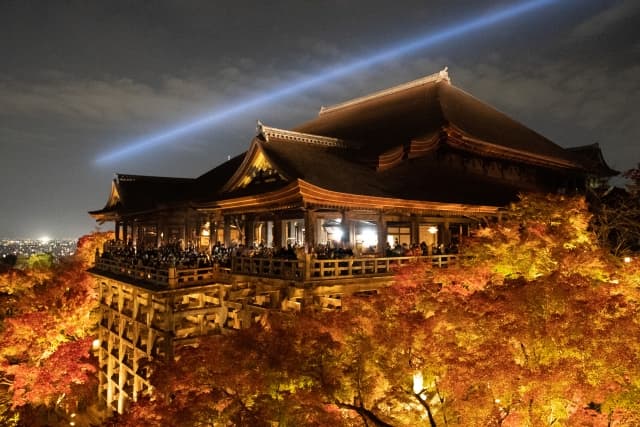
Jidai Matsuri, the "Festival of the Ages," is one of Kyoto's three great festivals, alongside Aoi Matsuri and Gion Matsuri. It is the grand autumn festival of Heian Shrine (Heian Jingū). A procession of about 2,000 people, dressed in costumes that trace Japanese history from the Meiji Restoration back to the Heian period, walks roughly two kilometers from the Kyoto Imperial Palace to the shrine. The procession brings eight eras to life in twenty groups, letting you watch a thousand years of history pass by in about two hours.
In 2026 the festival falls on Thursday, October 22. Kyoto's city-center foliage does not peak until mid-to-late November, so you won't catch the maples in full color this early, but late October is an easy time to fold the festival into an autumn trip. For foliage timing and the best spots, see Kyoto Autumn Leaves 2026.
In 2026, Jidai Matsuri falls on Thursday, October 22. The procession leaves the Kyoto Imperial Palace at noon and reaches Heian Shrine at around 2:30 p.m.
The date, timing, and rain plan
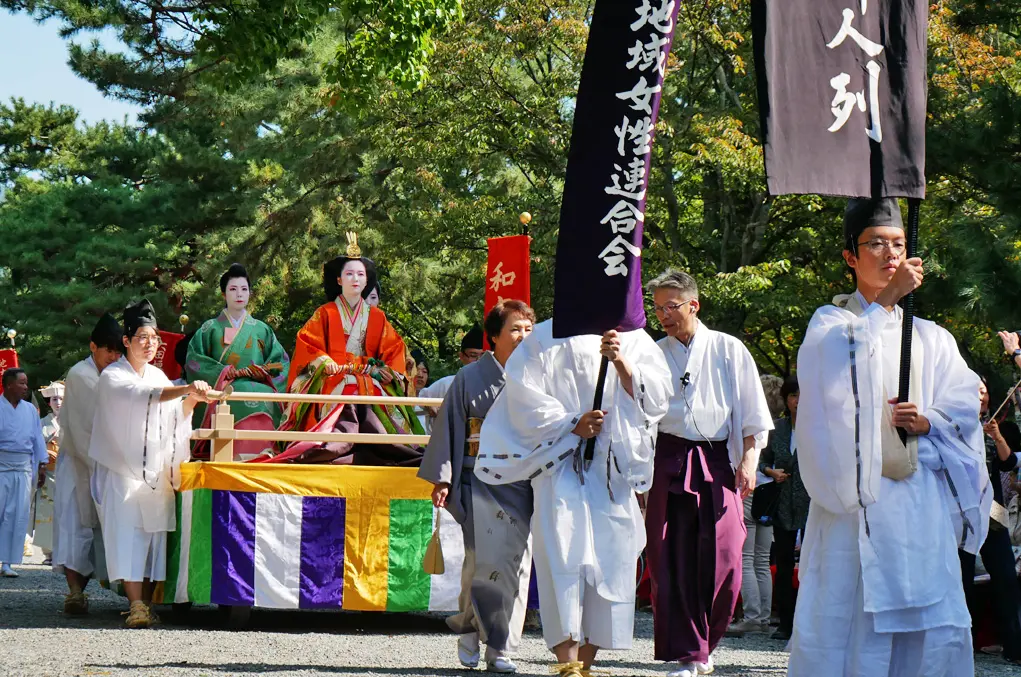
Everything centers on one day. The historical procession — the part visitors come for — leaves the Kyoto Imperial Palace at noon on October 22.
There are rites on the evening of October 21 and on the morning and late afternoon of the 22nd, but these are shrine ceremonies rather than the procession itself. The procession through the streets runs only on the 22nd, so arriving a day early or late means missing it. Plan your date carefully.
If it rains on October 22, the shinkōsai (the main sacred rite) and the events that follow are postponed. Heian Shrine does not publish a fixed postponement date or a decision time in advance, so if the forecast looks bad, check the shrine's official website before you set out.
The procession route and passing times
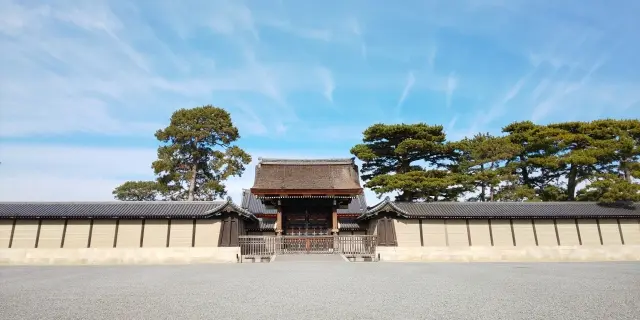
The procession starts in front of the Kenreimon Gate at the Kyoto Imperial Palace at noon, then moves down Karasuma, Oike, Kawaramachi, and Sanjo streets on its way to Heian Shrine. Here are the approximate passing times at key points along the route.
Location | Approx. |
|---|---|
Kyoto Imperial Palace, Kenreimon Gate (start) | 12:00 |
Karasuma-Marutamachi | 12:30 |
Karasuma-Oike | 12:50 |
Kawaramachi-Oike | 13:20 |
Kawaramachi-Sanjo | 13:30 |
Sanjo Ohashi (bridge) | 13:40 |
Sanjo-Jingumichi | 14:10 |
Heian Shrine (arrival) | 14:30 |
The procession stretches for about two kilometers, so it takes quite a while for every group to pass, from first to last. Even from one spot, seeing the whole thing go by takes some time, so settle in and be ready to wait a bit.
Paid grandstand seats in 2026
If you would rather sit, the Kyoto City Tourism Association sets up paid grandstand seats. For 2026, the three locations are Kyoto Gyoen, the park around the Imperial Palace where the procession starts (about 4,100 seats); Oike-dori (about 1,400); and Jingu-michi in front of Heian Shrine (about 1,300). All seats are reserved, and each ticket comes with the official guidebook and a commemorative token.
Seat type (location) | Front row | Second row and beyond |
|---|---|---|
General (Gyoen, Oike-dori, Jingu-michi) | ¥7,500 | ¥5,000 |
Manabi ("learning") seat (Kyoto Gyoen) | ¥10,500 | ¥8,500 |
Otenmon-mae special seat (Jingu-michi) | ¥15,500 | ¥13,500 |
The Manabi seats and the Otenmon-mae special seats come with a live commentary by a dedicated guide. The key point for English-speaking visitors: the Manabi seats offer Japanese commentary only, streamed to your own smartphone and earphones, while the Otenmon-mae special seats, right in front of the shrine's main gate, offer commentary in both Japanese and English through a loaner audio device picked up at reception. If you want the story behind the costumes in English, the Otenmon-mae seat is the one to book.
General sales open at 10:00 a.m. on Tuesday, September 8, 2026. You can buy online through Ticket Pia via the Kyoto Tourism Navi site, or in person at any Seven-Eleven in Japan (P-code 661-579). Note that Ticket Pia requires a member account in Japanese, which can be a hassle to set up from overseas, so give yourself extra time before your trip. Popular venues and front rows fill up quickly.
Watching for free vs. reserving a seat
You can also watch from the roadside for free. The catch is the crowds: you'll need to stake out a spot well before the procession reaches you. Since the line is long, it's more comfortable to wait patiently in one place than to chase the front of it.
If you go for a paid seat, choose the location based on where along the route you'd like to watch. The procession reaches the Kyoto Gyoen seats first, at about noon, then Oike-dori around 1:20 p.m. and Jingu-michi around 2:20 p.m. Pick Gyoen if you can arrive in the morning, or Oike-dori and Jingu-michi if you'd rather start after lunch.
Getting there and what to expect on the day
For the Kyoto Imperial Palace (Kyoto Gyoen), the Karasuma subway line's Marutamachi or Imadegawa stations are closest. Heian Shrine is a short walk from Higashiyama station on the Tozai subway line.
On October 22, roads along the route — Karasuma, Kawaramachi, Sanjo, and Jingu-michi among them — are closed to traffic from midday into the evening. The exact sections and hours are announced by Kyoto Prefectural Police and the city transport bureau closer to the date, so check before you set out if you plan to travel by car or bus.
One thing to know: the October 22 procession is a solemn event, not the kind of festival lined with food stalls, so plan to eat beforehand or look up restaurants nearby. It's an outdoor event running through the afternoon, and late-October Kyoto turns cool once the sun drops, so bring a light layer. For a fuller guide, see What to Wear in Japan in Autumn 2026.
This article was translated from the original Japanese with AI assistance and reviewed by our editorial team. The Japanese version is authoritative.