
Most visitors know about Japan's mid-autumn moon, the famous harvest moon of September. Far fewer know that autumn has a second moon-viewing night, about a month later. It is called Jusanya (十三夜), the "thirteenth night," and in 2026 it falls on Friday, October 23.
There is an old belief attached to it: if you admired the September moon, you were supposed to view this one too. Watching only one of the two was thought to bring bad luck. So Jusanya is less a standalone event than the second half of a pair. This guide covers when it falls, where the odd names come from, the "one-sided moon" superstition, and how people mark the night.
If you caught the harvest moon in September, tradition says you should see the October moon as well — ideally from the same spot.
For the mid-autumn moon itself, see our companion guide: Tsukimi 2026: Japan's Harvest Moon on September 25
Jusanya 2026 date: October 23 (Friday)
Jusanya marks the 13th night of the ninth month in the old lunar-solar calendar. On the modern calendar the date shifts each year; for 2026, Japan's National Astronomical Observatory puts Jusanya on October 23.
The mid-autumn moon (Jugoya), the more famous one, fell on September 25, 2026. That puts the two nights about 28 days apart, roughly a month. First comes Jugoya in September, then Jusanya in October.
Jugoya celebrates the full moon of the eighth lunar month. Jusanya, on the 13th night, falls a little short of full.
Nochi no Tsuki and the chestnut-and-bean names
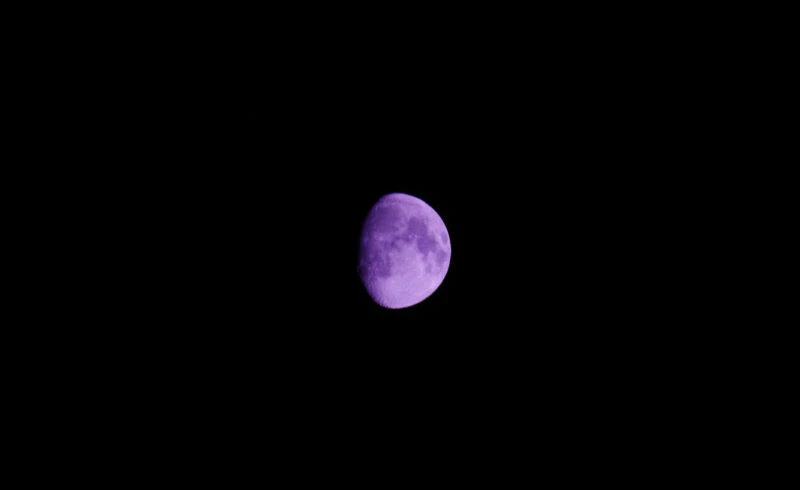
Jusanya goes by a few names. Because it follows the September moon, it is called Nochi no Tsuki, "the later moon." And because chestnuts and soybeans are harvested around this time and offered to the moon, it is also known as Kurimeigetsu (the "chestnut moon") and Mamemeigetsu (the "bean moon").
While the mid-autumn tradition came from China, Jusanya is widely described as homegrown: a custom that started in Japan, tied to the autumn harvest. Each of its names carries a small memory of what the season put on the table.
The "one-sided moon" superstition
The idea most worth knowing is katamitsuki, the "one-sided moon." It refers to viewing only one of the two autumn moons, and it was traditionally considered unlucky. If you watched the September moon from a certain spot, you were meant to watch October's from the same place.
In other words, for anyone who enjoyed Jugoya in September, Jusanya is the missing half.
The origin of the belief is uncertain. One story traces it to Edo-period customs, but no single origin is confirmed. Rather than a strict rule about luck, it is easier to treat it as a gentle excuse to enjoy the autumn sky twice.
An imperfect moon, on purpose

The Jusanya moon is not a full moon. As the 13th-night moon, it sits just short of full — very slightly clipped. Finding beauty in that "almost full" shape is the whole point, and it has long been called the second-loveliest moon of the year, after the harvest moon.
There is even an old saying, "no clouds on Jusanya" — the notion that the October night, after September's autumn rains and typhoon season, is more likely to be clear. Recent weather records don't really bear this out, so treat it as folklore rather than a forecast, and check the actual weather on the day.
How to mark the night
The classic offerings are moon-viewing dango (rice dumplings), chestnuts, edamame, and susuki (pampas grass). For Jusanya the dumplings are often arranged in stacks of 13, or just 3, a different count from Jugoya's 15 (or 5). The susuki is set out partly for decoration and partly, by tradition, to keep bad spirits away.
You don't need any of it to take part. Set a few dumplings and some grass on a windowsill or balcony, look up at the slightly imperfect moon, and that's Jusanya. It's an easy way to celebrate at home.
One practical note if you're out for it: late-October nights turn noticeably cool after dark, colder still in northern and inland areas, so bring a warm layer for standing outside.
Where to see it
If you want more atmosphere, a few places are famous for moon-viewing: Daikaku-ji temple and its Osawa Pond in Kyoto, Ishiyama-dera in Shiga, and Sarusawa Pond in Nara are often named among Japan's classic moon-viewing spots.
One caution, though: temple moon-viewing events are usually timed to the mid-autumn moon in September, and are not guaranteed to run on Jusanya (October 23). If you're traveling for a specific event, confirm the dates, admission, and access on each temple's official site first.
You don't need a famous view, either. Jusanya works anywhere the sky is open. On the night of October 23, look up for a while and enjoy the moon just before it's full.
This article was translated from the original Japanese with AI assistance and reviewed by our editorial team. The Japanese version is authoritative.