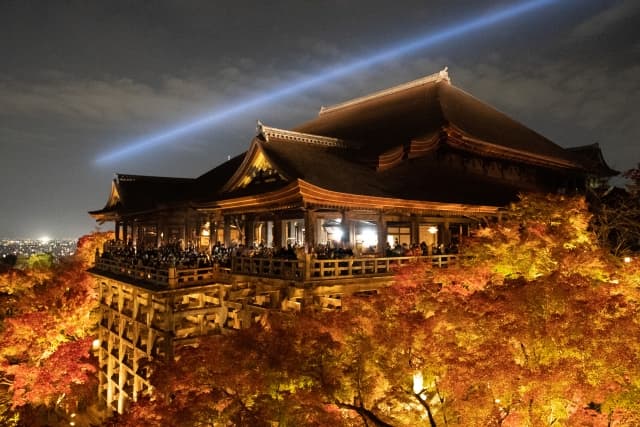
Every autumn, buildings, statues and gardens that are normally closed to visitors open for a few weeks across Kyoto. This is the Kyoto Special Opening of Non-Public Cultural Properties (京都非公開文化財特別公開).
The program is meant to get people to care about cultural heritage. Seeing these places up close makes it clear why they're worth protecting, and the organizer hopes visitors will join owners and officials in passing them on to future generations.
In 2026, the 62nd edition runs from October 30 (Fri) to December 6 (Sun) and covers 32 sites across Kyoto Prefecture. The catch is that not every site is open on the same days.
Each place has its own window, anywhere from three days to more than a month. So the smart approach is to pick the one site you most want to see, then build your trip around it.
If you are timing your trip with the foliage, our guide to Kyoto autumn leaves: best spots and timing 2026 is a useful companion.
If you just show up "sometime in autumn" without checking, the site you came for may not be open.
The essentials for 2026
Here are the basics for the 62nd edition. Admission is paid separately at each site, and the fees go toward maintaining the cultural properties.
Item | Details |
|---|---|
Dates | October 30 – December 6, 2026 (varies by site) |
Scale | 32 sites across Kyoto Prefecture (10 open for the first time) |
Admission | 1,000 yen for adults / 500 yen for students per site (one child of elementary age or younger free with a guardian). |
Hours | Usually 9:00–16:00 (Toji 8:00–16:30; varies by site) |
Reservation | Not usually required (Matsuo-dera requires advance booking; groups of 15+ must contact the office) |
Organizer | Kyoto Society for the Preservation of Cultural Properties (公益財団法人 京都古文化保存協会) |
Because you pay per site, budget about 1,000 yen for each place you plan to visit. The full list of 32 sites, with each site's opening dates and hours, is on the organizer's official page.
Official site: Kyoto Society for the Preservation of Cultural Properties – 62nd Special Opening
What "non-public" means here
These are Buddhist statues, painted screens, gardens and halls that are not normally open to the general public, made accessible only for a limited period. The event began in 1965 and is held each spring and autumn to support the care of cultural heritage.
It is a separate program from the "autumn special viewings" that individual temples run on their own, and also separate from the summer and winter special openings organized by the Kyoto City Tourism Association. The names look alike in English, so do not confuse them when you search.
In 2026, 10 of the 32 sites open to the public for the first time. That list is the real draw this year: temples, shrines and gardens that are not usually open to visitors.
Easy picks in central Kyoto
If this is your first time, start with central Kyoto, where it is easy to get around and pair the sites with autumn foliage. The main seven inside the city are below.
Site (central Kyoto) | Open |
|---|---|
Reizei-ke | Oct 30 – Nov 3 |
Toji (lecture hall & five-story pagoda) | Oct 31 – Nov 8 |
Chion-in (Sanmon gate) | Oct 31 – Nov 13 |
Shimogamo Shrine | Oct 31 – Dec 6 |
Kamigamo Shrine | Oct 31 – Dec 6 |
Omotesenke Kitayama Kaikan (first time) | Oct 31 – Dec 6 |
Rozan-ji | Nov 20 – Dec 6 |
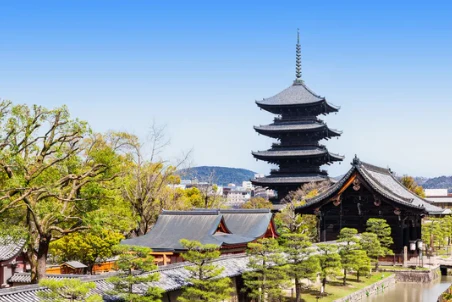
At Toji (東寺) the lecture hall and five-story pagoda are on show; at Chion-in (知恩院) it is the great Sanmon gate. If you want to time your visit to catch Toji's autumn foliage on the same day, our Toji Temple autumn leaves guide helps with timing.
Reizei-ke's opening ends early, on November 3. Even within the city the windows differ a lot, so confirm the date in the table before you finalize your plans.
Ten first-time sites in 2026
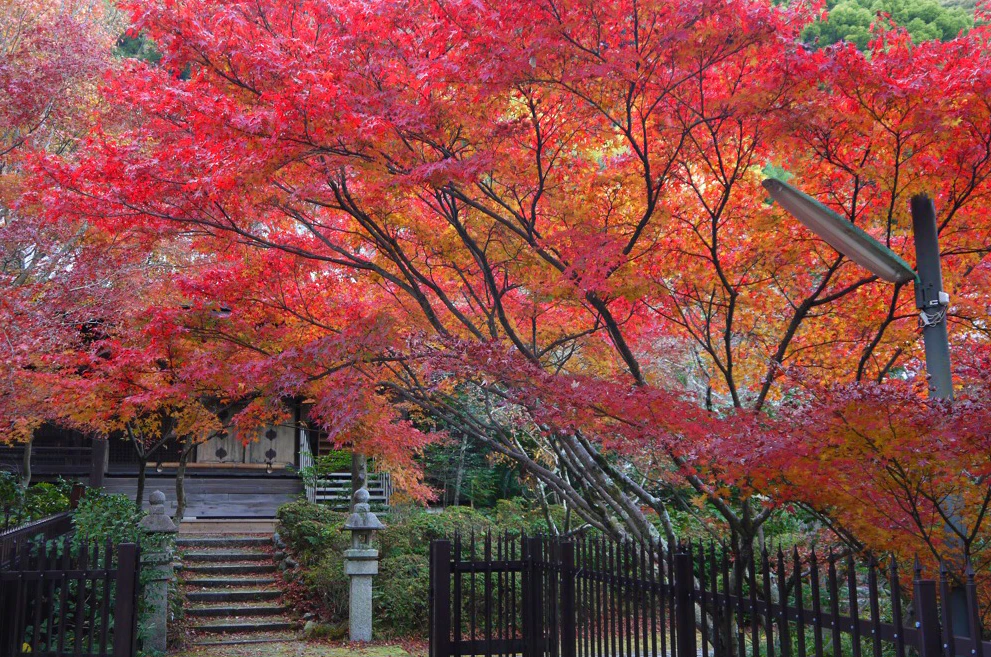
The 10 sites opening to visitors for the first time in 2026 are: Omotesenke Kitayama Kaikan in the city (Oct 31 – Dec 6), Zenpo-ritsu-ji in Yawata (Nov 14–21), Nariai-ji in Miyazu (Nov 21–23), and Jokoku-ji in Ine (Nov 14–29, closed Nov 16–20 and Nov 24–27).
The other six are all in Kameoka: Izumo-daijingu, Jinzo-ji, Horin-ji, Anao-ji, Hojo-ji and the Kameyama Castle ruins. Their openings run roughly from mid to late November (Hojo-ji and the castle ruins from November 21), so they stay open longer than the sites up north.
Note the closed days, though: Izumo-daijingu is closed Nov 21–23 and Hojo-ji Nov 24–26.
Kameoka is about 20 minutes from Kyoto Station by rapid train on the Sagano Line (about 30 minutes by local train), and it is known for foliage too. That makes it a good choice if you want to avoid the crowds at the better-known sites.
Short openings: three to five days
Several sites in northern Kyoto Prefecture (Ayabe, Maizuru and Miyazu) open for only three to five days. This is where visitors most often get caught out.
For example, Ankoku-ji (Ayabe) and Nariai-ji (Miyazu) open November 21–23, Daicho-ji (Miyazu) November 22–24, and Zenpuku-ji (Maizuru) November 20–24 — all just a few days. They cluster around specific weekends, so the farther out the site is, the more important it is to confirm the dates first.
Matsuo-dera (Maizuru, November 14–23) also requires advance booking. Check how to reserve on the organizer's official page linked above before you travel.
If you are traveling for one distant site, reconfirm three things on the official page just before you go: the opening dates, whether a reservation is needed, and the admission hours. Miss a three-day window, and there is no telling when the site will open again.
Practical tips for your visit
You pay admission at each site, and some places do not accept cashless payments, so carry small bills and coins. Photography inside halls and of statues is often restricted; follow the signage on site. English guidance is not always available, so note down the site names and their opening dates before you go.
Late autumn mornings and evenings in Kyoto are chilly, so bring a layer you can add or take off. Many temples ask you to remove your shoes, so slip-on shoes make the day easier. If you plan to visit several sites on a busy autumn day, our getting around Kyoto in autumn guide is useful.
Most of these sites stay behind closed doors for the rest of the year. Seeing them in person gives you a sense of their worth that no photo can.
Keeping this heritage alive isn't only up to its owners and the government. Visitors have a part to play too. Follow the rules at each site, take your time, and enjoy a side of Kyoto you rarely get to see, autumn leaves included.
This article was translated from the original Japanese with AI assistance and reviewed by our editorial team. The Japanese version is authoritative.