
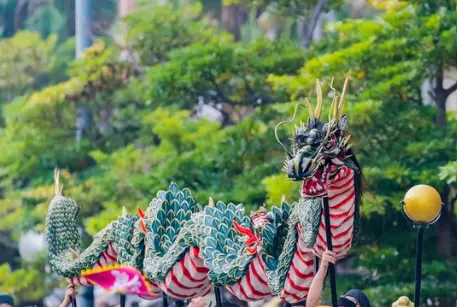
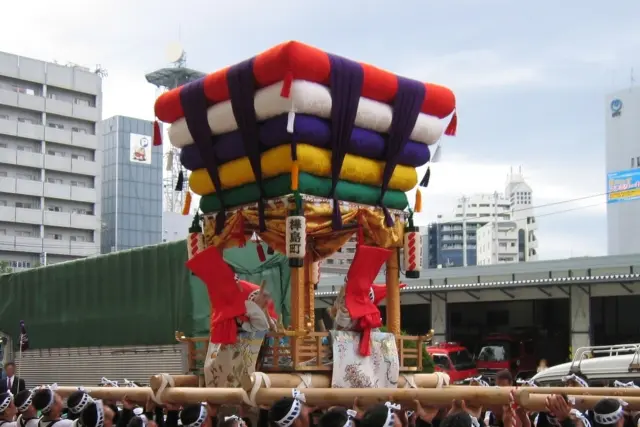
Nagasaki Kunchi is the autumn festival of Suwa Shrine (Chinzei Taisha Suwa Jinja), and it is one of Kyushu's great spectacles. In 2026, it runs for three days: Wednesday, October 7; Thursday, October 8; and Friday, October 9. The images people travel for are the dragon dance (Ja Odori) and Uwamachi's Kokkodesho, a drum-topped float that bearers heave skyward and catch.
Here is the part most visitors find out too late. The reserved box seats (sajiki) that let you sit and watch the dances go on sale in early summer, and by autumn they are gone.
The 2026 box seats are already sold out. If you're coming now, the two things you can still count on are the free street rounds (machimeguri) and, for a paid option, the standing tickets at Suwa Shrine (¥1,500, Oct 7 and 9 only).
If you're planning your trip, this guide covers what you can realistically see, which venues host performances on which days, and how to reach them.
The dates and the six dancing towns of 2026
Nagasaki's neighborhoods take turns performing: the city's districts are split into seven groups, and each group dances once every seven years. The number of performing towns varies from year to year; in 2026 there are six "dancing towns" (odori-cho), and their pieces are:
- Imakago-machi — Hon-Odori (classical dance)
- Aburaya-machi — Kawabune (river boat)
- Motofuna-machi — Tosen Matsuri (Chinese ship)
- Uwamachi — Uwamachi Kokkodesho (the tossed float)
- Kajiya-machi — Takarabune & the Seven Lucky Gods (treasure ship)
- Chikugo-machi — Ja Odori (dragon dance)
The two crowd favorites are Uwamachi's Kokkodesho, where bearers throw a drum-topped float high into the air and catch it, and Chikugo-machi's long, coiling dragon dance. The exact running order and performance times at each venue are confirmed only in late September, on the official schedule map and the program booklet (the "akahon"). Check the official site's timetable page shortly before you go.
Three ways to still see Kunchi without a box seat
With paid box seats at the main venues sold out, you still have three ways to watch from September onward. Each has a different character, so pick the one that fits you.
- Standing tickets at Suwa Shrine (¥1,500, sold on the day): the only paid viewing option you can still buy on the day. Note that performances at Suwa Shrine take place only on October 7 and 9, and there are no standing tickets on the 8th (spend the 8th on the street rounds instead). Tickets are limited, so arrive early. You won't be seated as you would in a box; you'll have to stand while watching the dance floor.
- Machimeguri (free, roadside): the dancing towns parade through the city center and perform in front of shops, offices, and homes. You can watch from the roadside with no ticket and no reservation. It is the easiest way to bump into the dances around town.
- Nagasaka free seats (free, but by advance lottery): Suwa Shrine opens its "Nagasaka" slope as free seating, but it requires applying in advance and winning a lottery — you cannot simply sit down on the day. The 2026 application window has most likely already closed, so check the official site for the current status.
The one thing you can count on without a ticket is the free machimeguri. Pair it with a standing ticket on October 7 or 9 and you can fill a full day.
Four venues, each on its own days
The dances take place at four "dance floors" around the city. The pieces are the same, but each venue hosts performances on different days, and this is the detail visitors get wrong. Show up on the wrong day and the venue you targeted simply isn't in use.
Venue | Performs on | Notes |
|---|---|---|
Suwa Shrine | Oct 7 & 9 | The opening stage. |
Otabisho | Oct 7 & 9 | Flat ground facing Nagasaki Port; easy to reach |
Yasaka Shrine | Oct 8 only | Floor and seats are close together, so it feels intense |
Central Park viewing ground | Oct 7 & 8 | Chair and standing seats, sold per person |
On October 8, performances take place at Yasaka Shrine and Central Park, but their 2026 seats are sold out, so if the 8th is your only day, the free street rounds are your fallback.
The old venue, the plaza in front of the former city hall, is no longer used: Nagasaki City Public Hall closed and was demolished, and since 2017 the Central Park viewing ground has taken its place. If you see "city hall plaza" in an older article, ignore it.
Food stalls do set up around Otabisho during the festival (October 7–9). The days they are open aren't spelled out officially, so if the stalls are your reason for going, check shortly before your visit.
Seat prices, for planning ahead
The 2026 seats are sold out — Suwa Shrine and Central Park show "sold out" on Ticket Pia, and Yasaka Shrine is sold out too — but the prices are worth knowing if you want to plan for next year. Box seats are four-person compartments, and prices and sellers differ by venue.
- Suwa Shrine: S ¥36,000 / A ¥30,000 / B ¥24,000 / C ¥18,000 (seats four)
- Otabisho: S ¥24,000 / A ¥22,000 / B ¥20,000 (seats four, cushions included)
- Yasaka Shrine: S ¥30,000 / A ¥28,000 / B ¥26,000 (seats four)
- Central Park: front chair seats ¥7,000 / stand S ¥6,500 / stand A ¥4,500 (sold per person)
Suwa Shrine and Central Park sell through Ticket Pia (and Seven-Eleven in-store machines); Otabisho and Yasaka Shrine take phone reservations through their own committees. Sales usually open between June and August, and the popular venues sell out early. To land a box seat next year, wait for the early-summer opening and move quickly.
Free viewing: machimeguri and the days before
The free machimeguri is the main event if you'd rather spend nothing, and its routes and times appear on the schedule map handed out in late September.
There is more to see before the festival proper, too. On October 3, during the "niwamise," the towns put their umbrella-floats, costumes, props, and celebratory gifts on public display; on October 4, the "niizoroi" presents the pieces almost as a dress rehearsal. Walking around the city during these lead-up days, rather than only during the three main festival days, gives you a fuller sense of the festival.
Getting there, the weather, and rain
Suwa Shrine, the center of it all, is a short ride from JR Nagasaki Station: take the Nagasaki Electric Tramway toward Hotarujaya, about six minutes, and get off at the "Suwa Jinja" stop. Otabisho sits on the port side in Motofuna-machi and is also reachable by tram.
The mikoshi procession shapes the rhythm of the day. At 1 p.m. on October 7, three portable shrines descend from Suwa Shrine to Otabisho (the "o-kudari"); at 1 p.m. on October 9 they return (the "o-nobori"). Crowds gather in the city center at those hours. Plan your walk around the street rounds and these processions, and you'll have a full day even without a paid seat.
Early October in Nagasaki is mild by day but cools off in the evening, and you'll be outdoors and often standing, so bring a light layer for later in the day. For a fuller month-by-month rundown, see our guide to what to wear in Japan in autumn.
The dances are outdoors, so heavy rain can change the schedule. Refund terms for box-seat tickets when performances are postponed are set out by each venue and by Ticket Pia, so if you hold a ticket, check their notices. When the forecast looks shaky, keep an eye on the official site.
This article was translated from the original Japanese with AI assistance and reviewed by our editorial team. The Japanese version is authoritative.