Enoshima is a small island in Sagami Bay, about an hour by train from Shinjuku, and it packs a shrine, a hilltop observation tower, sea caves, and a beach into a space you can cover in a single day. Walk across the bridge, loop the island, pay your respects at Enoshima Shrine, look out over the water from the Sea Candle, then cross back to the aquarium or the sand. Leave Tokyo in the morning and you'll be back by evening.
This guide covers how to get there, which ticket to buy, the prices and hours for each stop on the island, and the summer draws — the beach and raw shirasu — all with 2026 figures.
Summer is the island's busiest stretch, timed with the official beach-opening season. If you're building a summer itinerary around festivals and fireworks too, it helps to plan alongside our Tokyo Summer 2026: Every Festival & Fireworks Show, in Date Order.
Getting to Enoshima from Tokyo
The simplest route is the Odakyu Line straight from Shinjuku. Ride it to Katase-Enoshima Station, about 65 minutes and ¥649 (about US$4) one way with an IC card. Direct rapid-express trains run mainly on weekends and holidays; at other times you change once at Fujisawa, but it's a short hop from there. From Katase-Enoshima Station, it's about a 10-minute walk across Benten Bridge to the island's entrance.
You can also take JR to Fujisawa and switch to the Enoden (Enoshima Electric Railway), or ride the Shonan Monorail from Ofuna. Both add a transfer but reward you with the Enoden's seaside run or the monorail's suspended views. For a straightforward day trip from Shinjuku, though, start with the Odakyu Line.
Fares work with Suica, PASMO, and other IC cards, including the Welcome Suica made for visitors, so you can just tap in rather than buy a paper ticket. You don't need a limited express to get there — regular trains do the job — but if you'd rather have a reserved seat, the Odakyu Romancecar runs direct from Shinjuku to Katase-Enoshima for the base fare plus a limited-express charge (about ¥450–500), which varies by train; check the official site for the current amount.
Official site : Romancecar fares
One thing that trips people up: three different stations have "Enoshima" in the name. Odakyu's is Katase-Enoshima, the Enoden's is Enoshima, and the Shonan Monorail's is Shonan-Enoshima — all separate stations. Double-check which one your map app is sending you to.
Which Ticket to Buy Depends on Where You're Going
The right ticket comes down to how far you're roaming. If you're only visiting Enoshima itself, the regular one-way fare from Shinjuku is all you need. If you also want to ride the Enoden to Kamakura for the Great Buddha or Hasedera Temple, the Odakyu Enoshima–Kamakura Freepass is the one to get. From Shinjuku it's ¥1,640 for adults (about US$11) and ¥430 for children, valid for one day. It bundles a discounted round trip on the Odakyu Line to Fujisawa, unlimited rides on the Odakyu stretch to Katase-Enoshima and the entire Enoden line, and discounts at temples and attractions along the way. If you're staying on the island and just want to hop the Enoden a few stops without heading to Kamakura, the Enoden one-day pass ("Noriorikun," ¥800 for adults) is another option.
Ticket | Price (adult / child) | What's included |
Enoshima–Kamakura Freepass (from Shinjuku) | ¥1,640 / ¥430 | Odakyu round trip + unlimited Odakyu to Katase-Enoshima + all Enoden lines + area discounts |
Noriorikun (Enoden one-day pass) | ¥800 / ¥400 | Unlimited rides on the entire Enoden line for one day |
Enoshima Sea Candle set ticket | ¥1,100 / ¥550 | Sea Candle + the Escar hillside escalator (the garden is free by day) |
You can buy the Freepass through the EMot app or at Odakyu station ticket machines and windows — you don't need the app. To give you a rough idea of what a day costs, one adult riding in on the Freepass (¥1,640) and paying regular admission for the Sea Candle (¥800 on its own) and the aquarium (¥2,800) spends about ¥5,240 (roughly US$35). If you plan to climb the Sea Candle, the ¥1,100 set ticket (which also covers the Escar escalator) is the better value.
Crossing to the Island and Climbing the Approach
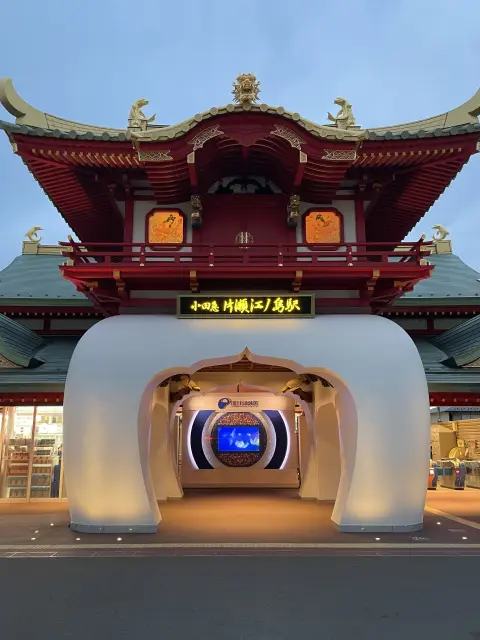
Step out of Katase-Enoshima Station and you're greeted by a vermilion station building modeled on Ryugu, the undersea dragon palace of folklore. Cross Benten Bridge and you're on Enoshima. Looking up at the island from the foot of the bridge — and back at the sweep of Sagami Bay — feels like the proper start to a trip.
Once on the island, you climb an approach lined with souvenir shops and small restaurants. Enoshima is hillier and has more stairs than most people expect. To skip the climb, there's the Enoshima Escar, a paid outdoor escalator (¥500 for adults, ¥250 for elementary students). Just note that it only runs uphill — you walk back down.
Paying Respects at Enoshima Shrine
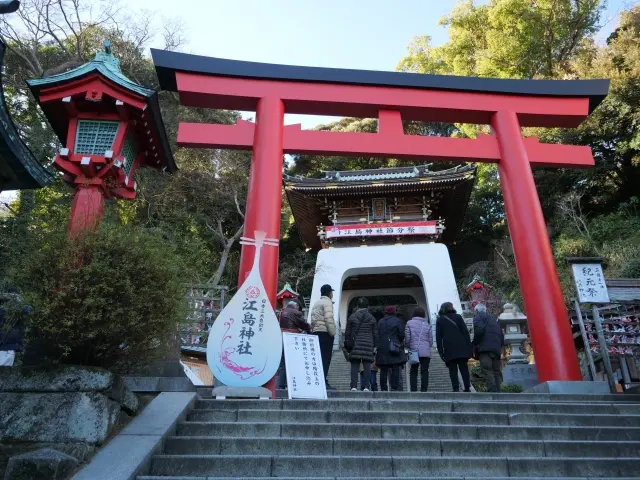
Up the approach sits Enoshima Shrine, counted among Japan's three great Benzaiten shrines.
It isn't a single building but the collective name for three shrines — Hetsunomiya, Nakatsunomiya, and Okutsunomiya — and the traditional way to visit is in order, from the entrance side inward.
Following all three effectively walks you across the length of the island, and a relaxed round takes about an hour to an hour and a half. Amulets and goshuin (shrine seal stamps) are offered from 8:30 a.m. to 5:00 p.m. Some spots ask you not to take photos, so follow the signs posted on site.
Looking Out Over Sagami Bay from the Sea Candle
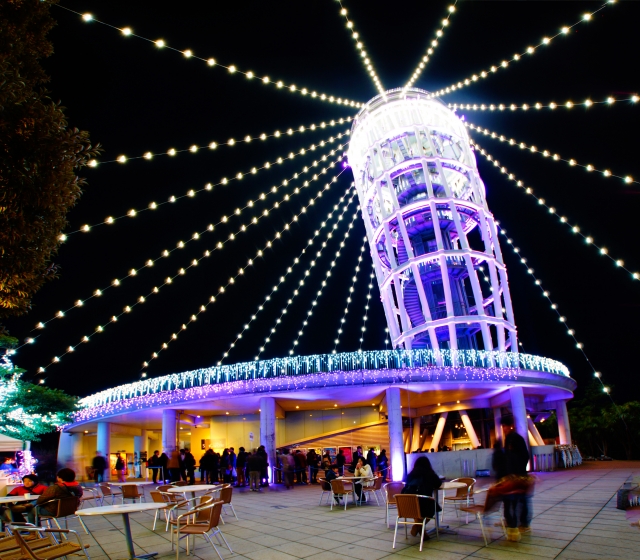
The top of the island holds the Samuel Cocking Garden, planted with seasonal flowers, and the observation tower at its center, the Enoshima Sea Candle. The garden is free to enter during the day, and from the top of the Sea Candle you can take in Sagami Bay and, on clear days, Mount Fuji and Oshima island.
Item | Details |
|---|---|
Samuel Cocking Garden | Free during the day (admission charged only during evening light-up events) |
Enoshima Sea Candle | Adults ¥800, elementary students ¥400 |
Hours | 9:00 a. |
The evening light-up is a draw in its own right. Coming up in the late afternoon and watching the sea darken as the tower lights come on is a lovely way to close out the day.
The Sea Caves: Enoshima Iwaya
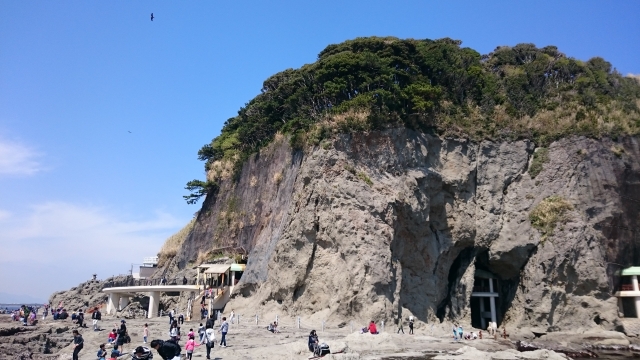
At the far end of the island, beneath the sea-facing cliffs, are the Enoshima Iwaya Caves, hollowed out by the waves over the ages.
You walk the dim interior holding a candle — a stop that works well for families. Admission is ¥500 for junior high students and up, ¥200 for elementary students.
In summer (May–September) the caves are open 9:00 a.m. to 6:00 p.m., though they close on days of high surf. From Chigogafuchi, right by the caves, you can take the Bentenmaru sightseeing boat back toward the island's entrance (about 6 minutes; suspended in rough seas). It saves you re-climbing all those slopes and stairs on the way out — handy when you're tired.
Enoshima Aquarium (Enosui)
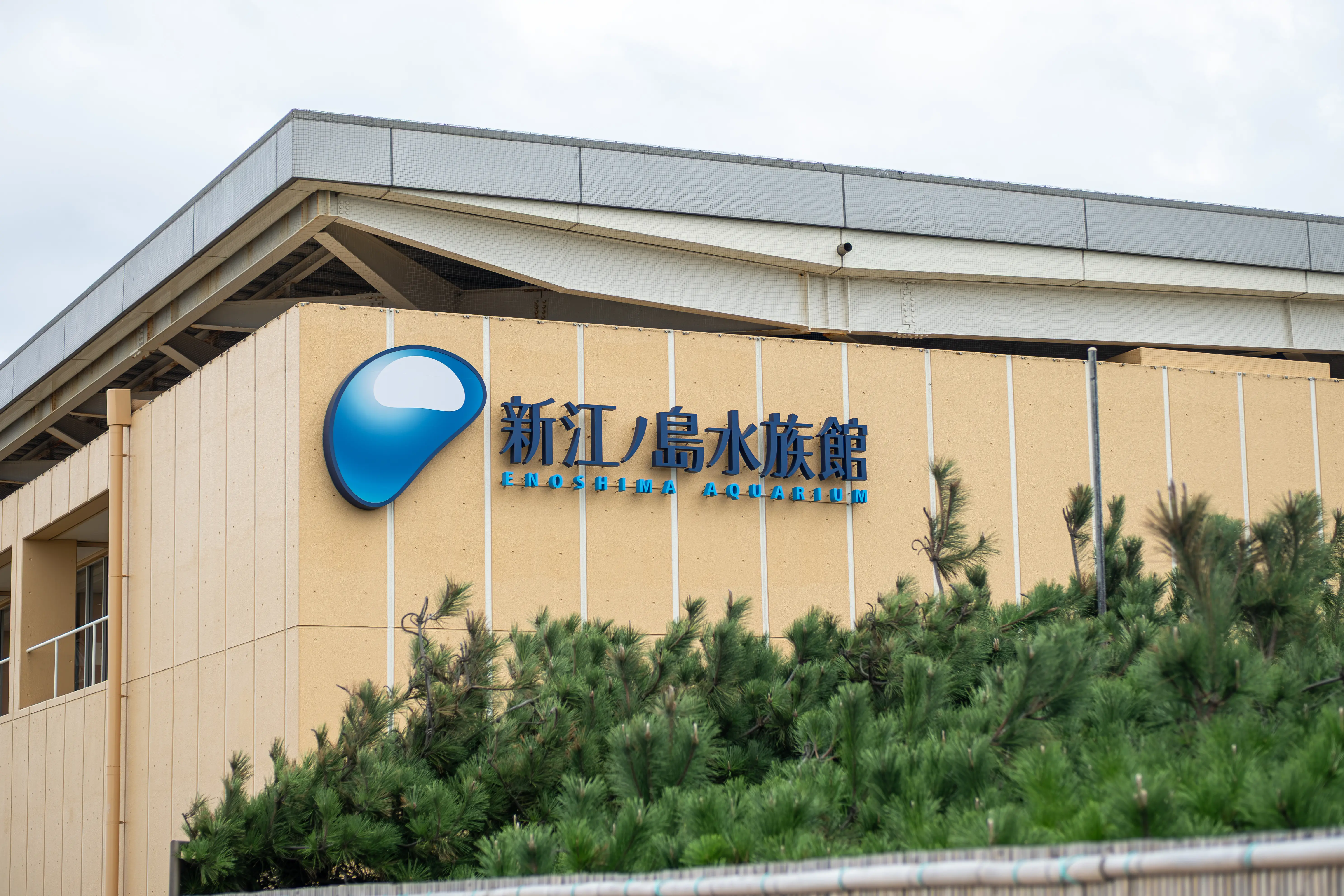
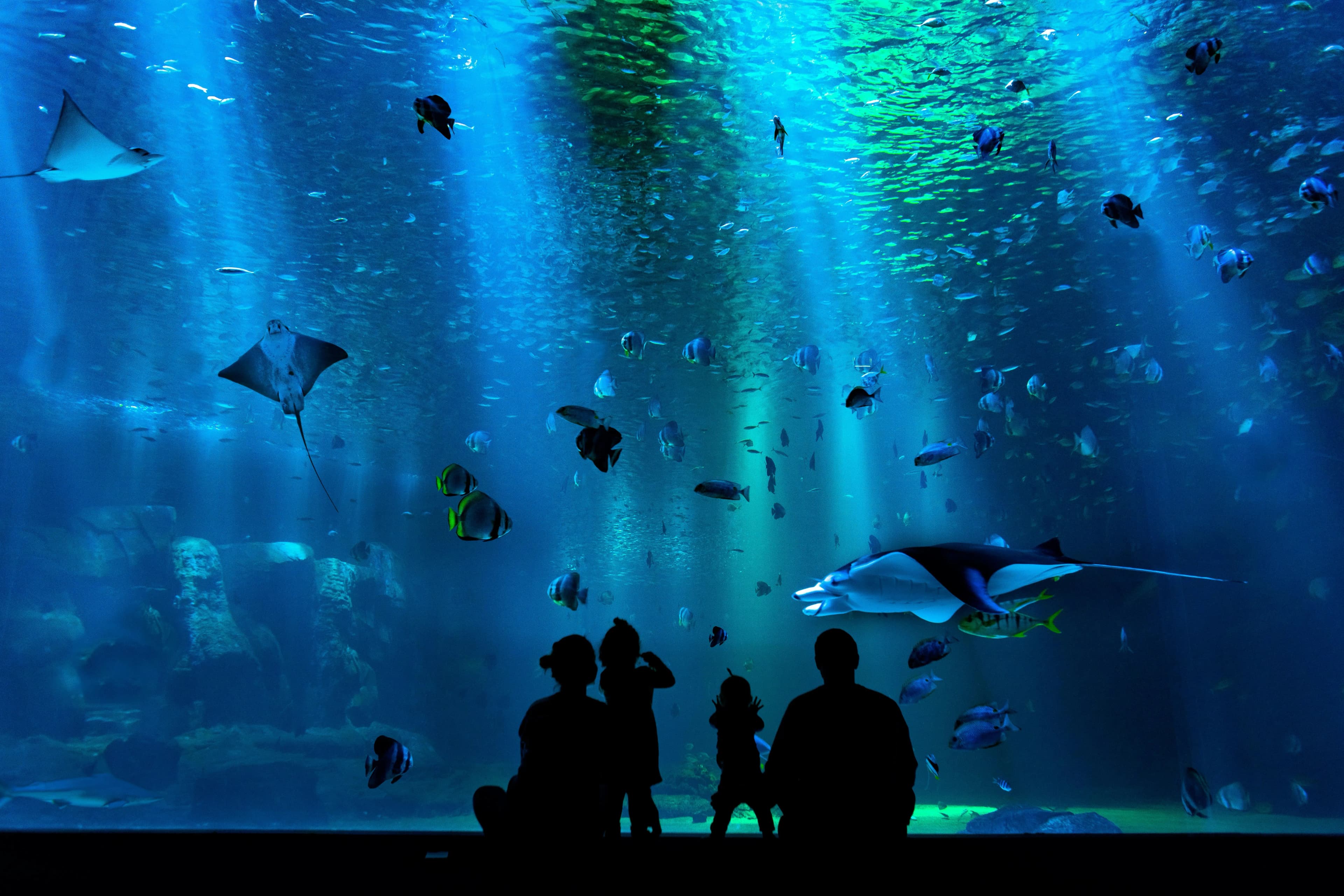
Pair your island visit with the Enoshima Aquarium, which sits along Katase beach on the mainland side, just across from the island. It's a short walk from Katase-Enoshima Station and is known for its Sagami Bay tanks and jellyfish displays. Admission is ¥2,800 (about US$18) for adults, ¥1,800 for high school students, ¥1,300 for junior high and elementary students, and ¥900 for young children (age 3 and up). Summer hours run longer: 9:00 a.m. to 6:00 p.m. is the norm through late July and August, and on some days around the Obon week of August 9–15 the aquarium opens at 8:00 a.m. and stays open until 7:00 p.m. Because it shifts day to day, check the official calendar for the date you're visiting (last entry is one hour before closing).
On busy summer weekends, buying your ticket ahead lets you skip the ticket-window line.
If you're weighing it against other aquariums near Tokyo, our Tokyo Aquarium Guide 2026: 6 Best Compared on Price, Hours & Access compares the options.
Book your Enoshima Aquarium tickets here
Summer at Enoshima: The Beach and Raw Shirasu
In summer, the sand at the island's foot becomes the main event. For 2026, the beach-opening season runs July 1–September 6 at Katase-Higashihama (East Beach) and July 1–September 13 at Katase-Nishihama (West Beach) and Kugenuma. Supervised swimming hours are 9:00 a.m.–5:00 p.m. on weekdays, and 8:00 a.m.–5:00 p.m. on weekends, holidays, and the Obon week (August 8–16).
Beach | 2026 open season |
Katase-Higashihama (East) | July 1 – September 6 |
Katase-Nishihama / Kugenuma (West) | July 1 – September 13 |
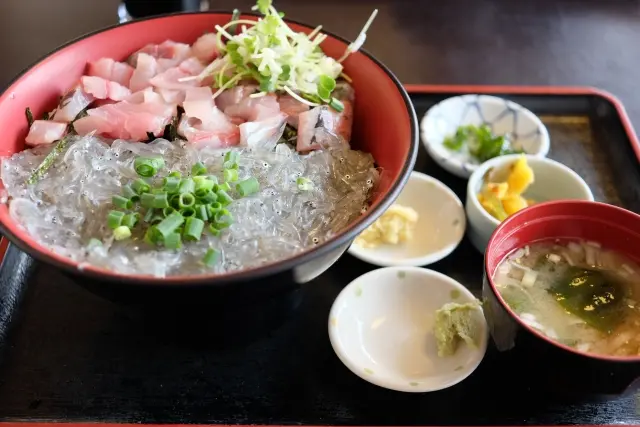
The dish to try is Enoshima's shirasu — tiny, translucent young sardines. Several restaurants along the approach serve a shirasu rice bowl. In summer you can often get it as nama-shirasu, eaten raw the day it's landed; it's a local specialty precisely because raw whitebait spoils fast. When the seas are rough or the catch is thin — and there's an off-season for the fishery in winter — the raw version isn't available and it's served kama-age (lightly boiled) instead. That "depends on the day's sea" quality is part of the fun of a fishing-town meal.
A Half-Day or Full-Day Route
For a first visit, an easy flow is: from Katase-Enoshima Station, cross Benten Bridge, climb the approach, pay respects at the three shrines, ride the Escar up to the Sea Candle, and continue down to the Iwaya Caves at the far end before turning back. That's about half a day. With more time and energy, cross back to the mainland side and add the aquarium or the beach for a full day. If you have the Freepass, you can extend the afternoon by taking the Enoden to Kamakura for the Great Buddha or Hasedera. On the hottest days, it's most comfortable to do the island early, spend midday at the aquarium or over lunch, and return to the shore in the cooler evening.
Before You Go
The island has lots of slopes and stairs and little shade. Wear comfortable shoes and bring a hat, sunscreen, and water. For summer clothing, see our What to Wear in Japan in Summer 2026: Heat, Humidity & Rain.
Small shops on the island and shrine offering boxes are often cash-only, so carry some yen in coins and small bills. Coin lockers are available at Katase-Enoshima Station and nearby.
Summer weekends and the beach season get crowded on both the trains and the approach. Going early helps you dodge the heat and the crush at once.
If you stay for the evening light-up, you can still make it back easily — the Odakyu Line runs late into the night — but check the last train to Shinjuku on the official timetable so you're not caught out.
Typhoons and high surf can suspend the sightseeing boat and close the Iwaya Caves. If rough weather is forecast, check each site's latest updates before you set out.
This article was translated from the original Japanese with AI assistance and reviewed by our editorial team. The Japanese version is authoritative.