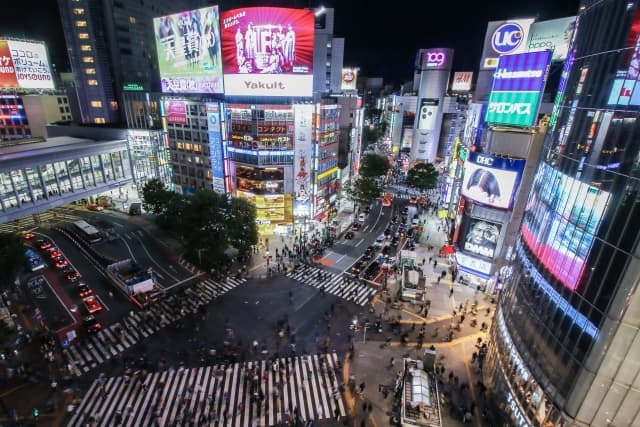
Kawagoe Matsuri (川越まつり) is the autumn festival of Kawagoe Hikawa Shrine, held every October in Kawagoe, Saitama. Towering wooden floats called dashi (山車) roll through the old storehouse district known as "Koedo," or Little Edo, and the festival peaks at night with the hikkawase (曳っかわせ), when floats face off in a battle of music.
In 2026 it falls on Saturday, October 17 and Sunday, October 18. Kawagoe sits about an hour from central Tokyo, which makes it an easy autumn day trip that pairs a stroll through the clay-walled old town with one of the region's major traditional festivals.
For the basics of enjoying a Japanese festival, from what to eat to viewing etiquette, see our guide to Japanese festivals.
The detailed 2026 timetable, the road-closure map and food-stall information are usually released on the official site a month to six weeks before the festival. Plan around the dates (October 17–18) and check the official site for final details just before you go.
The 2026 Festival at a Glance
Item | Details |
|---|---|
Dates | Saturday, October 17 and Sunday, October 18, 2026 (scheduled) |
Where | Central Kawagoe (the Ichibangai main street, Fudanotsuji to Renjakucho, and nearby) |
Nearest stations | Seibu Shinjuku Line Hon-Kawagoe; Tobu Tojo Line Kawagoe-shi and Kawagoe; JR Kawagoe Line Kawagoe |
Admission | Free (held on public streets and shrine grounds) |
Organizer | Kawagoe Matsuri Kyosankai (secretariat within Kawagoe City's tourism division) |
On day one, Saturday, October 17, the highlight is the yoiyama (宵山), when the floats are lit with paper lanterns; the Koedo Kawagoe Tourism Association lists the hours as roughly 6:00 to 7:00 p.m. On day two, Sunday, October 18, the floats parade in front of city hall. The hikkawase float showdown takes place on both nights.
The Main Event: Hikkawase
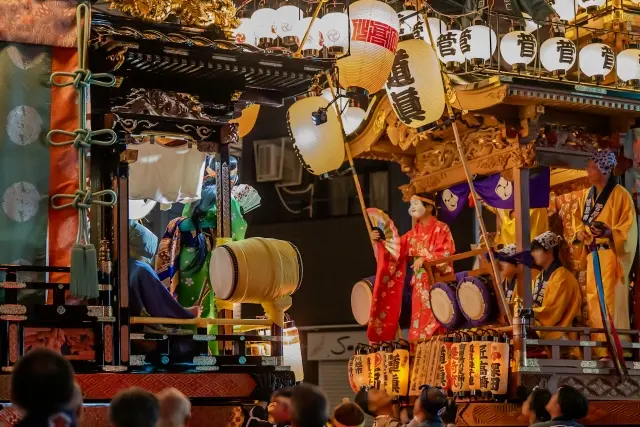
The signature moment of Kawagoe Matsuri is the hikkawase (曳っかわせ). Two or more floats pull up to face each other and their crews go at it with flutes, drums, bells, and dancing. Hikkawase takes place on both nights, October 17 and 18, and hits its high point once the lanterns are lit and the floats gather. The festival is at its liveliest after dark, with Ichibangai serving as the main viewing area, so arrive early to get set up.
In a typical year the first day also brings the shinkosai (神幸祭), when the Hikawa Shrine mikoshi (portable shrine) is carried through town, along with a ladder-acrobatics performance by firefighters. The daytime sight of floats against the old storehouse streets and the lantern-lit hikkawase after dark are both distinctly Kawagoe.
Getting to Kawagoe (Little Edo)
Several rail lines reach Kawagoe from central Tokyo. On the Seibu Shinjuku Line, the limited express runs from Shinjuku to Hon-Kawagoe Station in about 44 minutes. On the JR Kawagoe Line, it is about 23 minutes from Omiya to Kawagoe Station. The Tobu Tojo Line also runs from Ikebukuro to Kawagoe.
The festival area is within walking distance of Hon-Kawagoe and Kawagoe stations, but expect road closures and heavy crowds on both days (October 17–18). Allow extra time to walk from the station.
What to Know on the Day
For 2026 (October 17–18), the exact area and hours of the road closures haven't been announced yet. In 2025, central Kawagoe was closed to vehicles from 10:00 a.m. to 10:00 p.m. on both days, and even bicycles had to be walked, not ridden, inside the restricted zone.
The food stalls are harder to pin down. The 2025 official map marked the location of a "stall village," but the operating dates and full area covered by the stalls are not spelled out on the official site, and the 2026 map for October 17–18 has not been published yet.
Weather can change the program: rain may lead to cancellations or schedule changes. In 2023, the shinkosai and the city-hall float parade were called off because of rain. If bad weather is forecast, check the official notices on the day.
One Option: Paid Grandstand Seats
For those who want a seat and some distance from the crowds, paid grandstand seats (sajiki, 桟敷) are available. Note, however, that these are run by a private group, the "Kawagoe Matsuri wo Tanoshimu Kai," and are not official seats operated by the city or the festival committee.
They are set up on the west side of Kawagoe Kumano Shrine, in Renjakucho. In 2026 there is a daytime session (12:00–5:00 p.m.) and an evening session (6:00–10:00 p.m.). The daytime session is sold only as a single private booking for the whole group (up to 30 seats, 100,000 yen before tax). Evening seats are sold individually: a float seat is 75,000 yen (for two), a music seat 70,000 yen (for two), and a Koedo seat 30,000 yen (for one). Bookings are taken through the reservation site or by phone (049-226-4111).
UNESCO Intangible Cultural Heritage Status
The formal name of the festival is the "Kawagoe Hikawa Festival Float Event." Its roots go back to 1648, when the local lord Matsudaira Nobutsuna donated a mikoshi and other items to Hikawa Shrine. In 2005 it was designated an Important Intangible Folk Cultural Property of Japan, and in 2016 it was inscribed on the UNESCO Intangible Cultural Heritage list as part of the "Yama, Hoko, Yatai float festivals." According to official figures, the 2023 Kawagoe Matsuri drew a combined 561,000 visitors over the two days. Nearly four centuries on, the floats still roll through the storehouse streets by day, and after dark the sounds of flutes and drums still mingle in the lantern light of the hikkawase.
This article was translated from the original Japanese with AI assistance and reviewed by our editorial team. The Japanese version is authoritative.