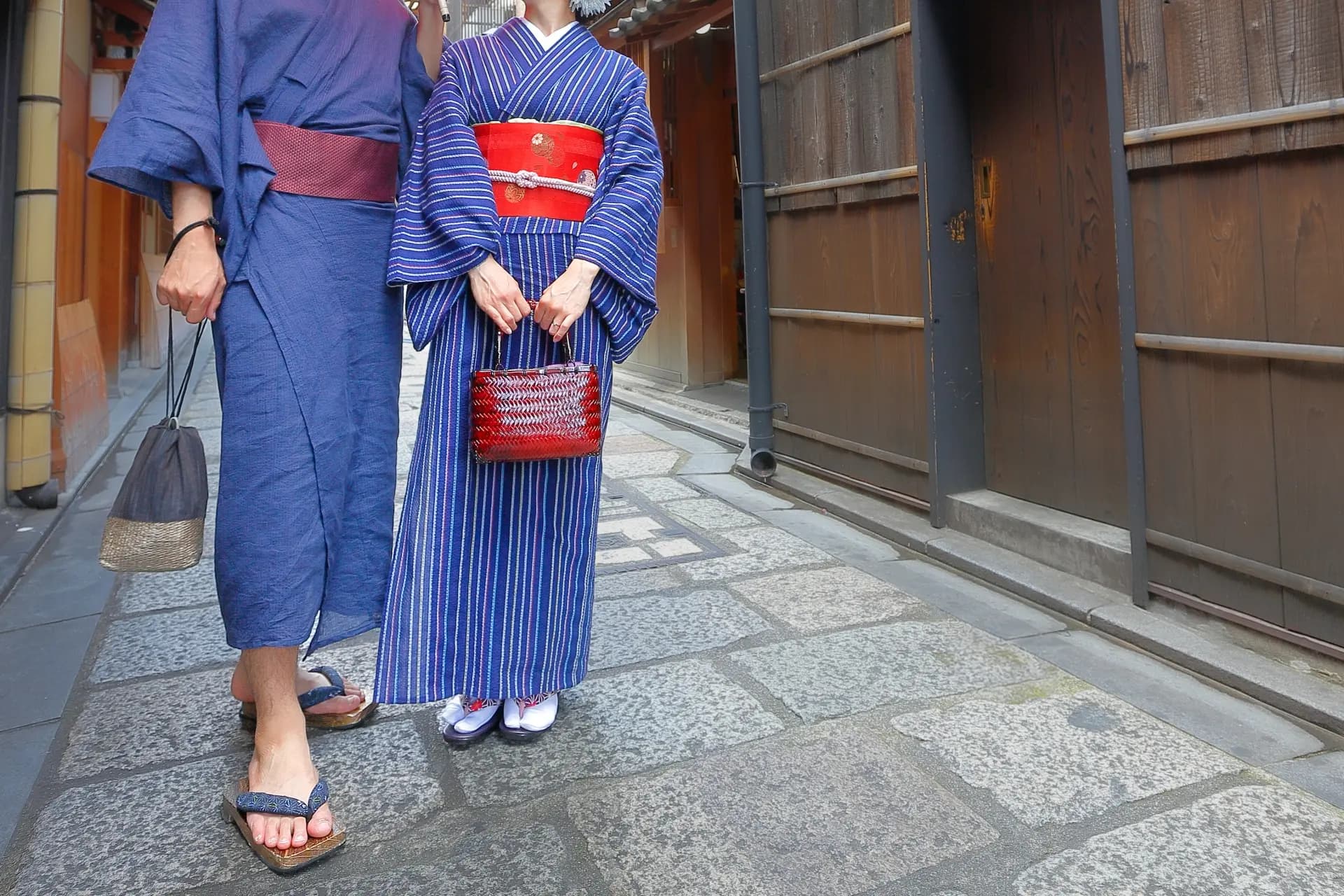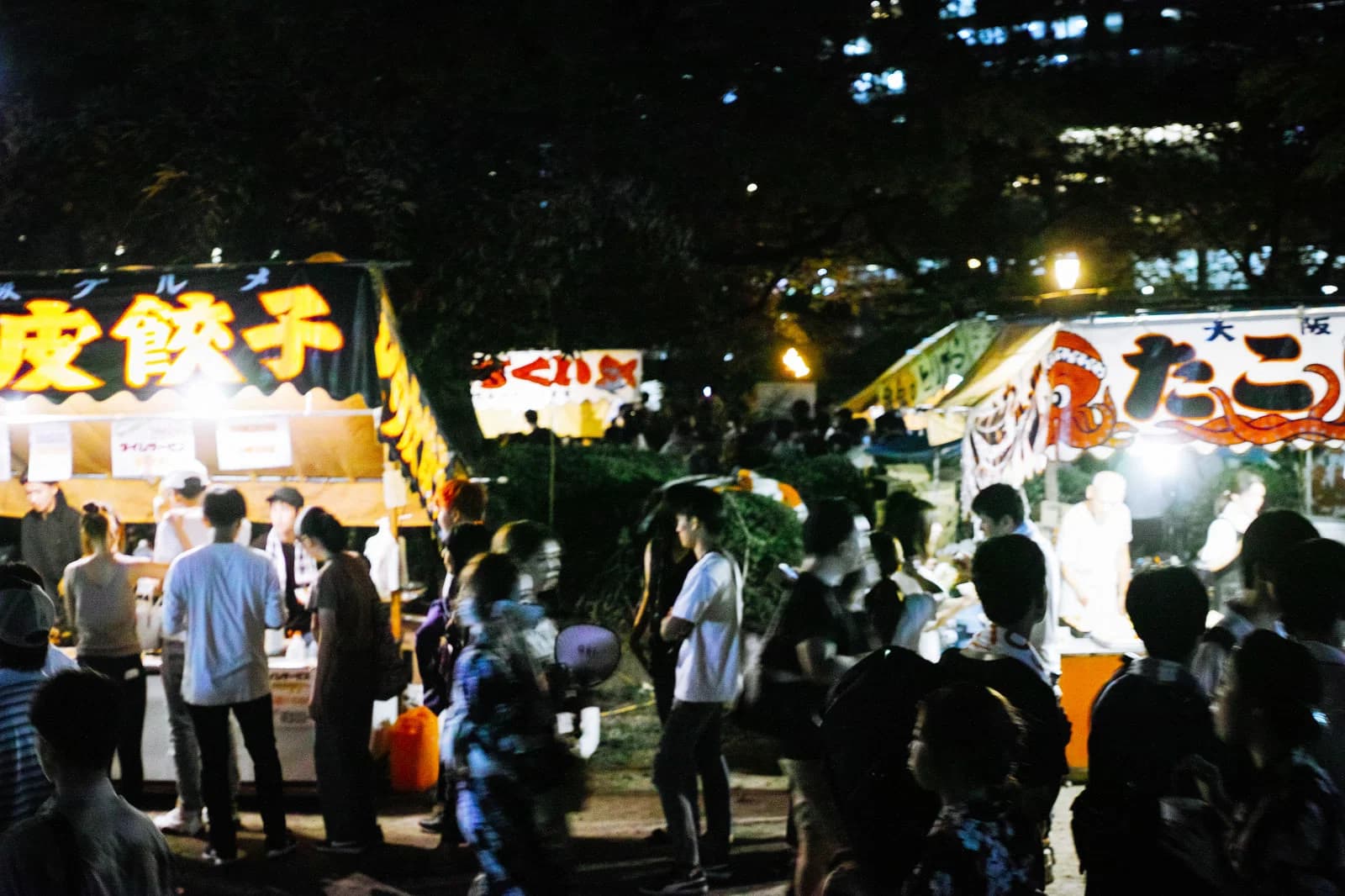
Summer in Japan is festival season. From somewhere down the street comes the beat of taiko drums, paper lanterns flicker to life, and the smell of sauce sizzling on a griddle drifts over from the food stalls.
Once you start seeing people in yukata, you know summer has truly arrived.
For a traveler, a matsuri is the easiest way to taste an ordinary Japanese summer.
Most are shrine festivals, free and open to anyone who wanders by. This guide covers, for first-timers, what a matsuri actually is, how to enjoy the food stalls, what to wear and bring, the etiquette of watching, and the major festivals worth aiming for in summer 2026.
For what to wear, our summer yukata guide has the details; for the fireworks themselves, see our Tokyo Summer Fireworks 2026 roundup.
So what is a matsuri, anyway?
Most Japanese festivals grew out of Shinto shrine rites.
They began as ways to pray for a good harvest and good health, or to calm plagues and misfortune, and over centuries they became the summer celebrations whole neighborhoods throw themselves into.
Kyoto's Gion Matsuri, for instance, traces back to a goryo-e (御霊会), a rite to appease the spirits behind epidemics.
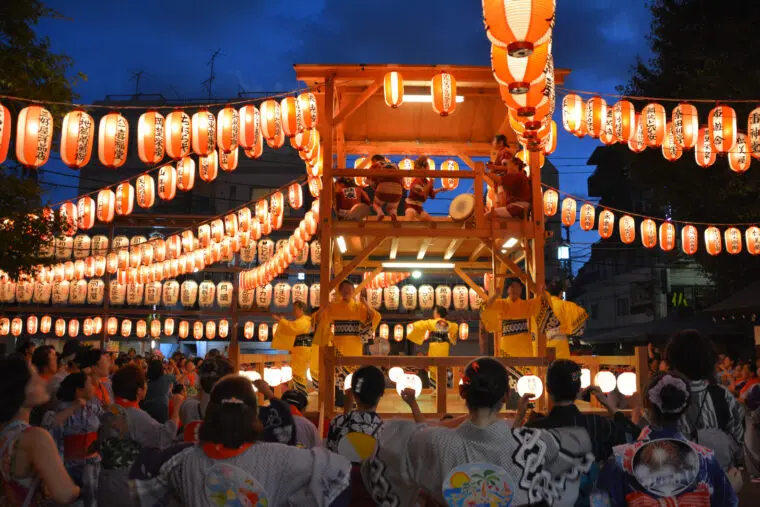
A few things turn up again and again. A mikoshi is a portable shrine, a vehicle for the deity, carried through the streets by a crowd of bearers. Dashi (and danjiri in some regions) are large, ornately decorated floats that are pulled along. Bon odori (盆踊り) are the gentle, communal circle dances held around Obon (お盆) in mid-August. And summer means fireworks. Add the food stalls, and you have the full buzz of a festival. July and August are the busiest stretch of the year for all of this.
Making the most of the food stalls
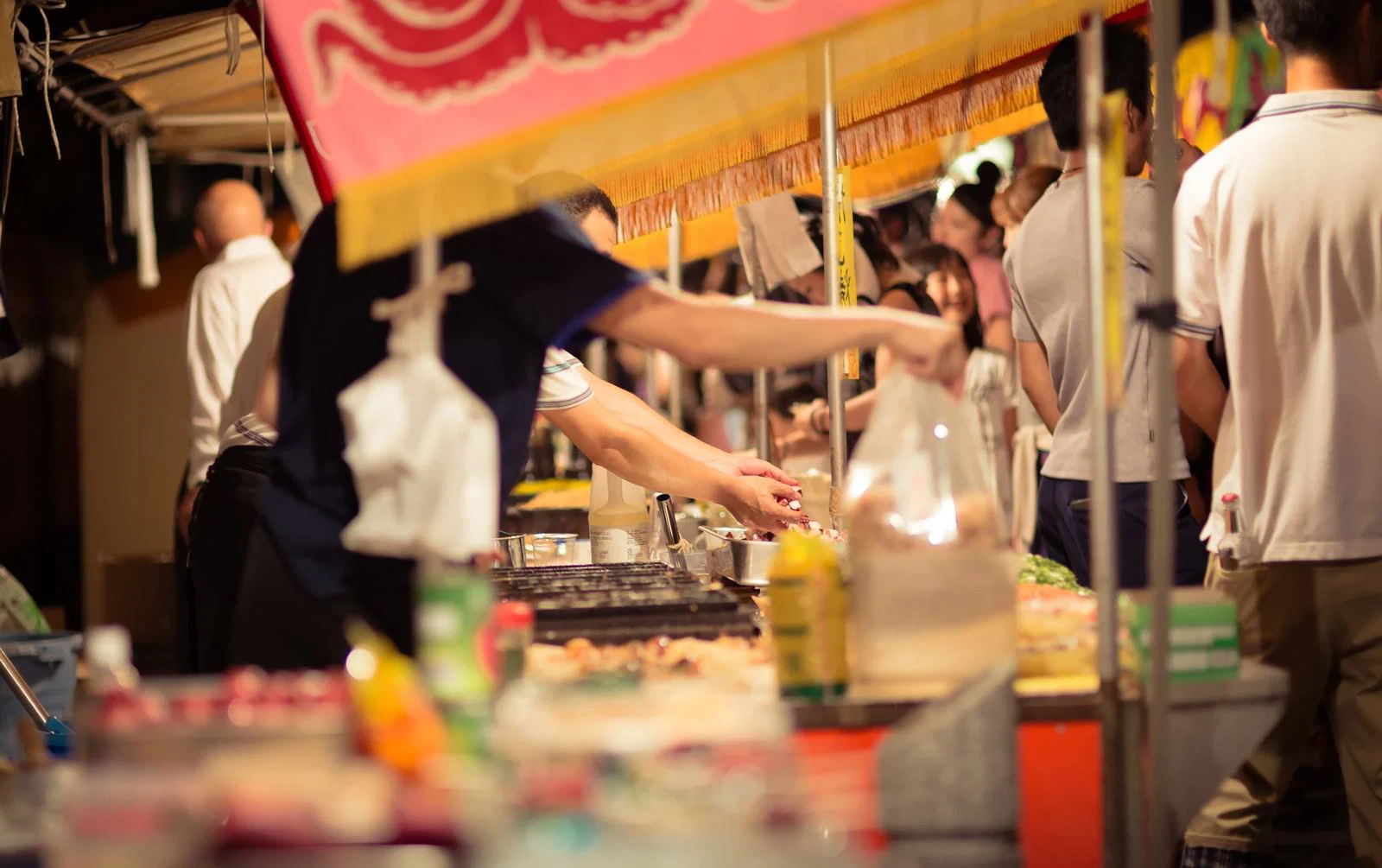
For a lot of people, the food stalls (yatai) are the real star. Grazing your way down a festival lane is the whole point.
The classics are savory: yakisoba (fried noodles), takoyaki (octopus balls), okonomiyaki, kara-age (fried chicken), grilled squid, yakitori.
On the sweet side, there's kakigori (shaved ice), chocolate-dipped bananas, candied apples, baby castella, and cotton candy.
Game stalls round it out, and goldfish scooping, cork-gun shooting, and prize-draw games are fun for kids and adults alike.
One thing worth knowing: most stalls are cash only, in small coins and bills. Bring some small change to keep things smooth, and if you run short, our guide to using convenience store ATMs will help.
Trash cans are also scarce, so plan to carry your trash out with you, and it's more considerate to eat near the stall before moving on rather than walking and eating.
Prices run a touch higher than a shop, but think of it as the price of the atmosphere and it won't bother you.
What to wear and bring
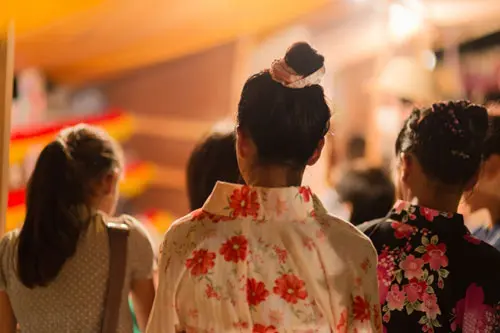
You don't have to wear a yukata, but doing so really lifts the mood. Our summer yukata guide covers renting and buying.
If a yukata isn't for you, no problem. Venues get crowded and you'll be standing and walking for a long time, so breathable clothes and comfortable, broken-in shoes are the move.
The real enemy at a summer festival is the heat. Carry a fan, a towel, and water, and sip often; for the full playbook, see our Japan summer heat survival guide.
Summer evenings can also bring sudden downpours, so a folding umbrella is reassuring. And leave the big luggage behind: hauling a suitcase into festival crowds is miserable.
If you're heading straight to a festival on your arrival day, use our coin locker and luggage storage guide, or send your bags to the hotel by takkyubin (luggage delivery), and travel light.
The etiquette of watching
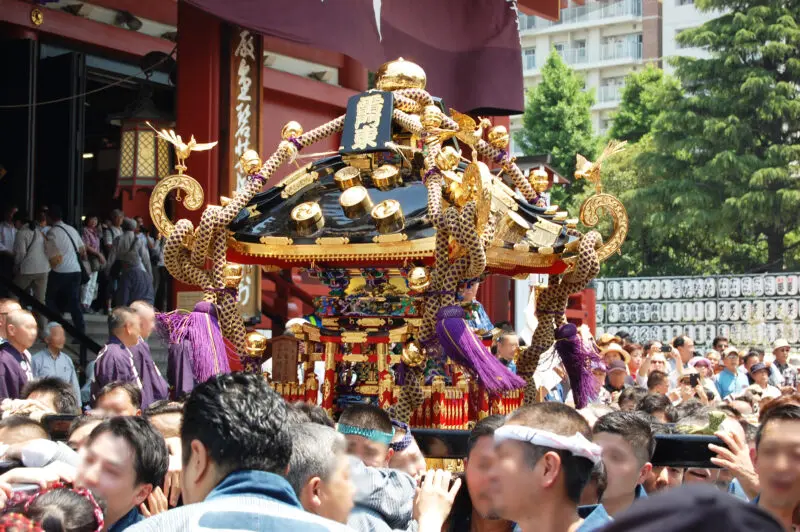
Festivals are for everyone, but they're also meaningful religious events for locals, and a few small habits keep things pleasant on both sides.
When a mikoshi or procession passes, watch from the side of the street rather than blocking its path, and don't touch the mikoshi unless you've been invited to join (the bearers are usually local people registered in advance).
Photography is fine in public spaces, but skip the flash in people's faces, and don't climb over barriers or ignore staff and police. Some shrine grounds restrict photos in certain spots.
Above all, be ready for crowds. Popular festivals and fireworks shows get busier than you'd imagine. Always follow one-way pedestrian controls and police directions, and agree on a meeting point in case you get separated, since phone signals jam when it's packed. Don't sit on shrine steps or in sacred areas, carry your trash out, and queue properly. It's all common sense, and it's all you need.
The festivals to aim for in summer 2026
Finally, here are some of the standout festivals you can enjoy in summer 2026. Dates can change, so check each official source before you go.
Gion Matsuri (Kyoto): runs the whole month of July. The highlight float processions (Yamaboko Junko) fall on July 17 (Fri) and July 24 (Fri). One of Japan's three great festivals; see our Gion Matsuri 2026 guide.
Tenjin Matsuri (Osaka): July 24 (Fri) is the festival eve and July 25 (Sat) the main day, capped by votive fireworks. Another of the big three; head to our Tenjin Matsuri 2026 guide.
Hozuki-ichi (Asakusa): every year on July 9 (Thu) and 10 (Fri), a temple market at Senso-ji and a true sign of summer. See our Hozuki-ichi 2026 guide.
Sumida River Fireworks (Tokyo): Saturday, July 25, with roughly 20,000 shells lighting up the old downtown sky. Our Sumida River Fireworks 2026 guide and Tokyo Summer Fireworks 2026 roundup cover access and quieter viewing spots.
This article was translated from the original Japanese with AI assistance and reviewed by our editorial team. The Japanese version is authoritative.