
Summer in Japan means hanabi—fireworks lighting up the night sky. From July through August, Tokyo hosts a series of major fireworks festivals, including the famous Sumida River Fireworks, with crowds in yukata gathering along the rivers and embankments. Many of these displays feature more than 10,000 fireworks—among the most memorable experiences of a Tokyo summer.
This guide rounds up six major fireworks festivals that travelers can easily add to a summer trip in 2026, listed in date order. For each event, you’ll find the date, time, scale, nearest station, and highlights, along with tips on free versus paid viewing, what to wear and bring, and how to handle the heat and crowds—all based on official information from each festival and its host city.
Note: Dates, times, and paid-seat availability and prices can change, and events may be canceled or postponed in bad weather. Many paid seats go on sale in May or June and sell out for the most popular shows. Always check each festival’s official website for the latest details and traffic restrictions before you go.
Tokyo’s 2026 Fireworks Season at a Glance
Tokyo’s fireworks season peaks from early July into August. In 2026 it opens with the Tokyo Racecourse Fireworks on Wednesday, July 1, followed by the Sumida River Fireworks on Saturday, July 25, the Katsushika Noryo Fireworks on Tuesday, July 28, the Edogawa and Itabashi fireworks both on Saturday, August 1, and the Jingu Gaien Fireworks on Saturday, August 8—a run of big shows clustered around the weekends.
One note: the Adachi Fireworks (Adachi no Hanabi), once a July fixture, has shifted earlier in recent years and was already held on Saturday, May 30 in 2026. If you’re chasing fireworks on a summer trip, the six festivals below are the ones to plan around.
1. Tokyo Racecourse Fireworks 2026 (July 1) — The Season Opener, Set to Music
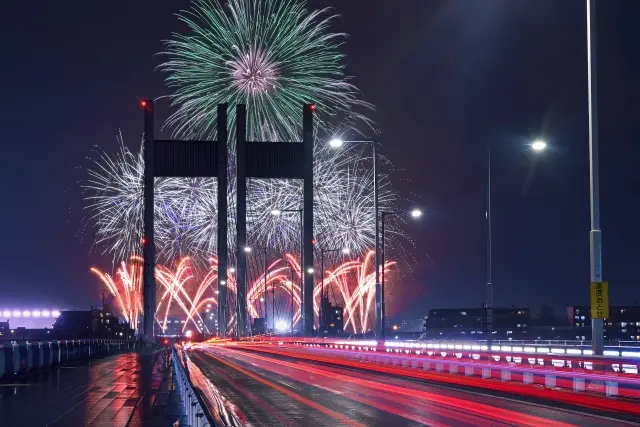
The earliest of the big shows is the Tokyo Racecourse Fireworks, held at the JRA Tokyo Racecourse in Fuchu. In 2026 it takes place on Wednesday, July 1, with gates opening at 5:00 p.m. and the show beginning at 7:30 p.m. The highlight is roughly 14,000 fireworks choreographed to music; the 2026 program is themed around the 50th anniversary of singer Shogo Hamada’s solo debut.
There are no free viewing areas, so you’ll need to buy a ticket in advance. The nearest station, Fuchu-keiba-seimonmae on the Keio Line, is about a 2-minute walk away. Opt for a reserved seat and you can enjoy the show comfortably from where you sit—a good fit if standing in a packed crowd makes you nervous, or if you’re bringing small children. Popular ticket types can sell out, so check the official site early.
Official site: 東京競馬場花火大会2026 公式ホームページ
2. Sumida River Fireworks 2026 (July 25) — Tokyo’s Iconic Tradition
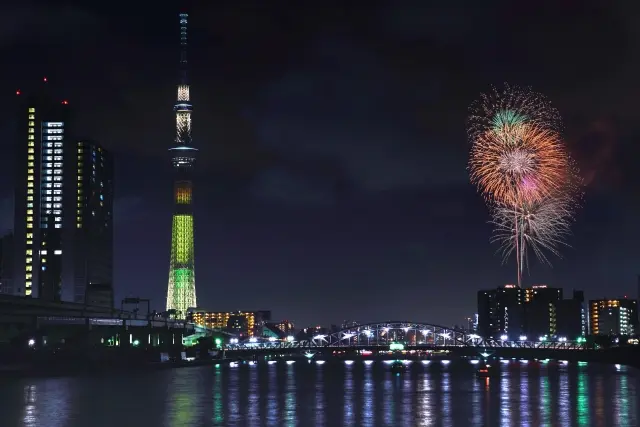
If one festival defines Tokyo fireworks, it’s the Sumida River Fireworks (Sumidagawa Hanabi Taikai). Tracing its roots to an Edo-period riverside event, the 2026 edition—its 49th—falls on Saturday, July 25. Along the Sumida River in the historic Asakusa area, two launch sites (Site 1 between Sakurabashi and Kototoibashi, Site 2 between Komagatabashi and Umayabashi) send up about 20,000 fireworks in total. Site 1 begins at 7:00 p.m. and Site 2 at 7:30 p.m., both finishing around 8:30 p.m.
The nearest hub is Asakusa Station (Tokyo Metro, Toei, and Tobu lines); Site 2 is also about a 5-minute walk from Kuramae Station on the Toei Asakusa Line. Watching the fireworks with Tokyo Skytree in the background is part of the magic here. Be warned, though: about 910,000 people came in 2024, and the stations are most crowded right after the finale. There are free viewing areas along the embankment plus sponsor-supported paid seats, but applications open in May and tend to sell out fast. For more on the Asakusa area, see our guides to the Hozuki-ichi ground-cherry market and the Shitamachi Tanabata Festival.
Official site: 隅田川花火大会 公式ウェブサイト
3. Katsushika Noryo Fireworks 2026 (July 28) — About 20,000 Fireworks, Up Close
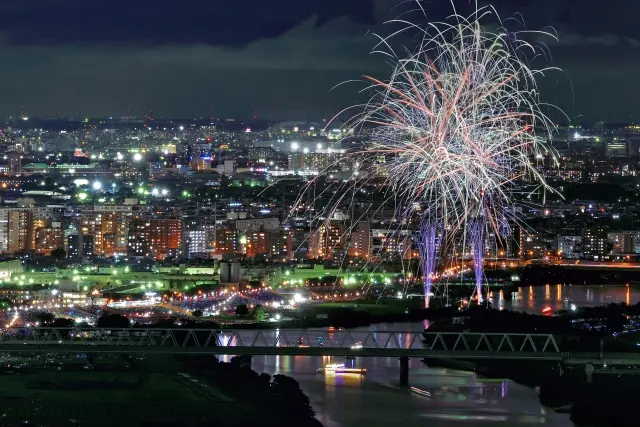
If your goal is to watch fireworks burst directly overhead, head to the Katsushika Noryo Fireworks, held on the Edogawa riverbank in Shibamata, Katsushika Ward. The viewing area sits unusually close to the launch site, so the fireworks feel huge and immediate. In 2026 the festival reaches its milestone 60th edition on Tuesday, July 28, with around 20,000 fireworks plus a commemorative drone show. Fireworks run from 7:20 to 8:30 p.m.
The nearest stations are Shibamata on the Keisei Kanamachi Line and Kanamachi on the JR and Keisei lines. Pair it with Shibamata’s Taishakuten temple town—familiar from the classic film series Otoko wa Tsurai yo—for a full dose of old-town atmosphere.
Official site: 令和8年度 第60回葛飾納涼花火大会の開催について
4. Edogawa Fireworks 2026 (August 1) — 1,000 Fireworks in 5 Seconds
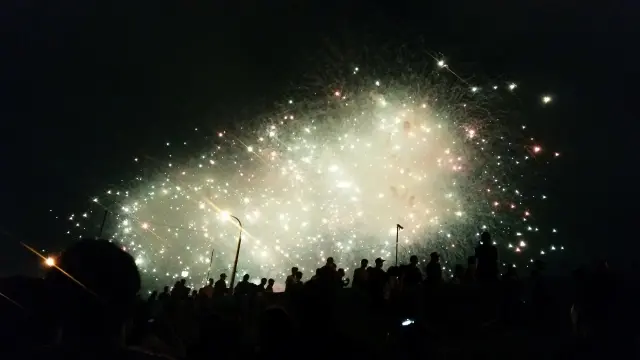
One of the largest shows in the greater Tokyo area is the Edogawa Fireworks. Counted together with the show on the Ichikawa side across the river in Chiba, it draws enormous crowds to both banks of the Edogawa. The 2026 edition, its 51st, takes place on Saturday, August 1, with about 14,000 fireworks from 7:15 to 8:20 p.m. Its signature opening—around 1,000 fireworks in just five seconds—is a highlight in itself.
The venue is the Edogawa riverbank (near Toritsu Shinozaki Park). The nearest station is Shinozaki on the Toei Shinjuku Line, about a 15-minute walk—but it gets extremely crowded on the day, so allow plenty of time. Paid seats range from ¥2,000 to ¥26,000, so if you want a relaxed view, apply early.
Official site: 江戸川区花火大会
5. Itabashi Fireworks 2026 (August 1) — Tokyo’s Only “Shaku-gosun” Shell & a Niagara-Style Cascade
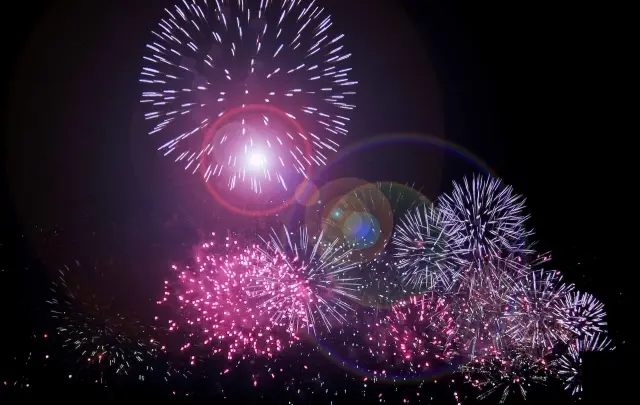
The same Saturday, August 1, brings the Itabashi Fireworks on the Arakawa riverbank in Itabashi Ward. Its biggest draw is a giant “shaku-gosun-dama” (a No. 15 shell)—the only one you can see anywhere in Tokyo’s 23 wards—along with a roughly 300-meter “Niagara Falls” cascade of fire along the river. Fireworks run from 7:00 to 8:30 p.m., with about 7,500 fireworks on the Itabashi side and roughly 15,000 combined with the Toda (Saitama) side opposite.
The site is split into free and paid viewing areas, but the layout changed significantly for 2026: the free area has moved to the upstream side of the Arakawa. If you’re using the free area, the station to head for is Takashimadaira on the Toei Mita Line; Ukima-funado on the JR Saikyo Line serves the paid-seat areas. If you plan to watch for free, check the official venue map before you go. It’s a great choice if you want the punch of jumbo shells and the Niagara-style cascade—a different flavor from the Sumida or Edogawa shows.
Official site: いたばし花火大会
6. Jingu Gaien Fireworks 2026 (August 8) — Fireworks Meets Live Music, Downtown
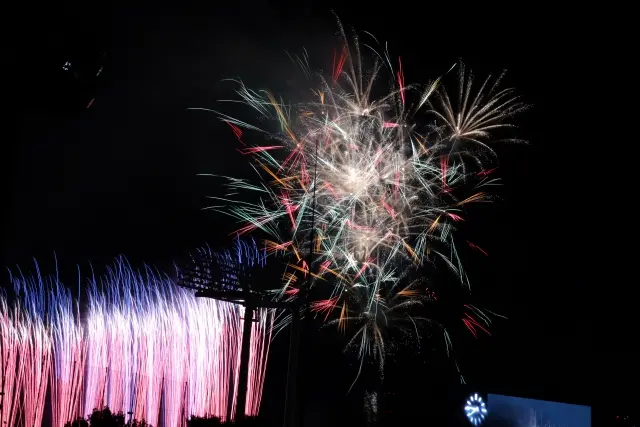
Another highlight of Tokyo’s August fireworks calendar is the Jingu Gaien Fireworks, held at the Meiji Jingu Gaien grounds. The 2026 show is on Saturday, August 8, with about 10,000 fireworks lighting the central-Tokyo sky from 7:30 to 8:30 p.m. (postponed to Sunday, August 9 in severe weather). What sets it apart is the format—live performances by popular artists woven together with the fireworks—enjoyed from viewing venues such as Jingu Stadium (gates 4:00 p.m.) and Chichibunomiya Rugby Stadium.
All seats are paid and must be bought in advance. The nearest stations are Sendagaya and Shinanomachi (JR), Aoyama-itchome (Tokyo Metro and Toei Oedo Line), and Kokuritsu-kyogijo (Toei Oedo Line). With easy access from the city center and a concert built in, it’s perfect for travelers who want music with their fireworks.
Official site: 2026 神宮外苑花火大会 | 花火とアーティストの響宴!
Free or Paid? How to Think About Seats
Tokyo’s fireworks festivals broadly split into two types: shows you can watch for free (from riverbanks and the like) and fully ticketed shows. Sumida, Katsushika, Edogawa, and Itabashi all have free viewing areas, but they get extremely crowded and the good spots start filling up in the early afternoon. The Tokyo Racecourse and Jingu Gaien shows, by contrast, are entirely paid—which buys you a relaxed, seated view.
Decide based on your travel style: do you want the buzz of a free crowd, or the certainty of a paid seat? Paid tickets are popular and, for many festivals, go on sale in May or June and sell out, so if that’s your plan, move early.
Yukata, What to Bring & Beating Heat and Crowds
Fireworks call for a yukata—the light summer kimono that locals and travelers alike wear to festivals. Choose footwear you can walk in; if you’re in unfamiliar geta sandals for any distance, a few bandages are wise. If you’d rather not add to your luggage, you can rent or buy one in Tokyo.
If you’d rather not pack much at all, Laplace closet—a clothing-rental service for travelers in Japan—delivers outfits to your hotel front desk: pick them up at check-in and drop them off at check-out, with no laundry or packing to deal with. It’s a handy way to stay comfortable in the summer heat without filling your suitcase .
Late July and August in Tokyo stay muggy even after dark. Water, a fan (uchiwa), a towel, and a power bank are essentials. Riverbanks draw mosquitoes from early evening, so insect repellent helps—see our guide on where to buy mosquito repellent in Japan. For choosing and finding cooling gear, our Japan summer heat survival guide goes into detail.
The biggest crush is at the stations right after the finale. Rather than rushing off, wait 30 to 40 minutes and the platforms ease up considerably. Use the restroom early, and carry both cash and an IC card (Suica or PASMO) so food stalls and last-minute train rides are never a problem.

You Might Also Like


This article was translated from the original Japanese with AI assistance and reviewed by our editorial team. The Japanese version is authoritative.