
If you're in Osaka in late July, this is the night the whole city builds toward.
Tenjin Matsuri is one of Japan's three great festivals, alongside Kyoto's Gion Matsuri and Tokyo's Kanda Matsuri.
Picture around a hundred boats lit with bonfires gliding along the Okawa River while fireworks burst overhead. People call it the "Festival of Fire and Water," and once you've seen it, you don't forget it.
In 2026, the eve festival (yomiya) falls on Friday, July 24, and the main festival (hongu) on Saturday, July 25.
The Saturday timing makes it easy to fit into a trip, though it also means the busiest night of the year.
This guide walks first-time visitors through the two days, the highlights of the boat procession and fireworks, the paid viewing seats, and how to get there and deal with the crowds.
What Tenjin Matsuri Is
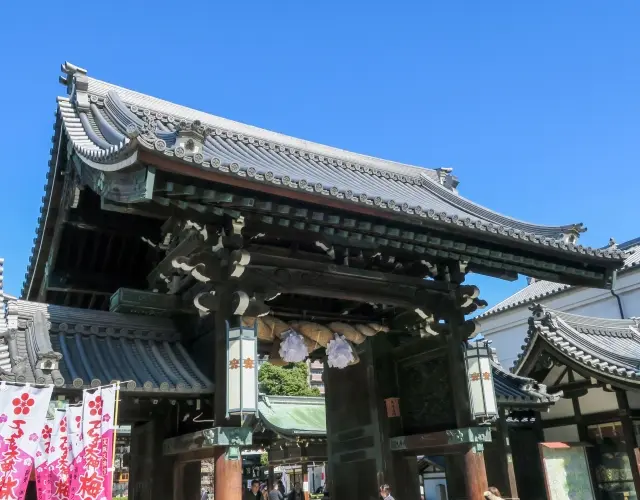
Tenjin Matsuri is the festival of Osaka Tenmangu Shrine, which enshrines Sugawara no Michizane (845–903), the Heian-era scholar later worshipped as the god of learning.
It dates back to 951 (the fifth year of the Tenryaku era), when a sacred halberd was floated from the shore in front of the shrine; a ritual site was set up wherever it drifted ashore, and purification rites were held there.
More than a thousand years on, it remains the festival that defines summer in Osaka.
The full festival actually stretches across about a month, from late June to July 25, but everything worth traveling for is packed into the two days of the eve and main festivals.
The real climax comes on the night of the main festival, when the boat procession (funatogyo) on the Okawa River and the votive fireworks light up the water at the same time.
July 24 (Eve Festival): What to See
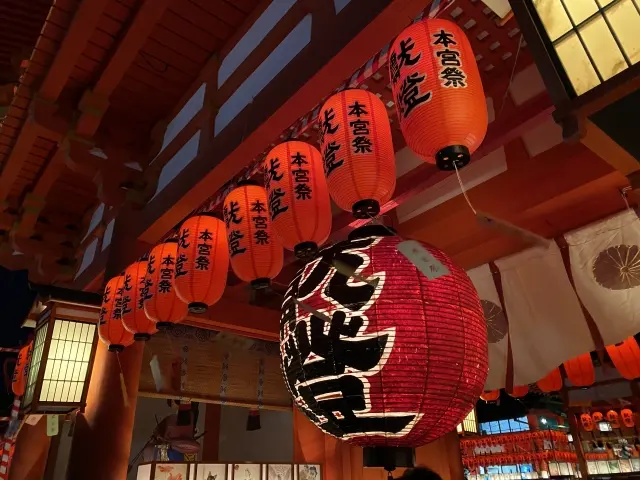
The eve festival opens quietly, with ritual. At 7:45 a.m. the eve festival rite (yomiya-sai) is held in the main shrine hall, and around 8:50 a.m. comes the Hokonagashi Shinji, the halberd-floating rite.
A sacred boat carrying a chosen child (shindo) rows out into the middle of the Dojima River, and the halberd is set adrift midstream. It's a thousand-year-old ceremony that marks the start of the festival.
The site is the old Wakamatsu beach, near the Temma Police Station.
During the day you can catch lion dances and the local processions of the Otori Mikoshi and Tama Mikoshi (portable shrines) around the parish district.
The eve festival draws far smaller crowds than the main day, so if you want to watch the rituals up close, this is actually your best chance.
July 25 (Main Festival): From Land Procession to Boat Procession
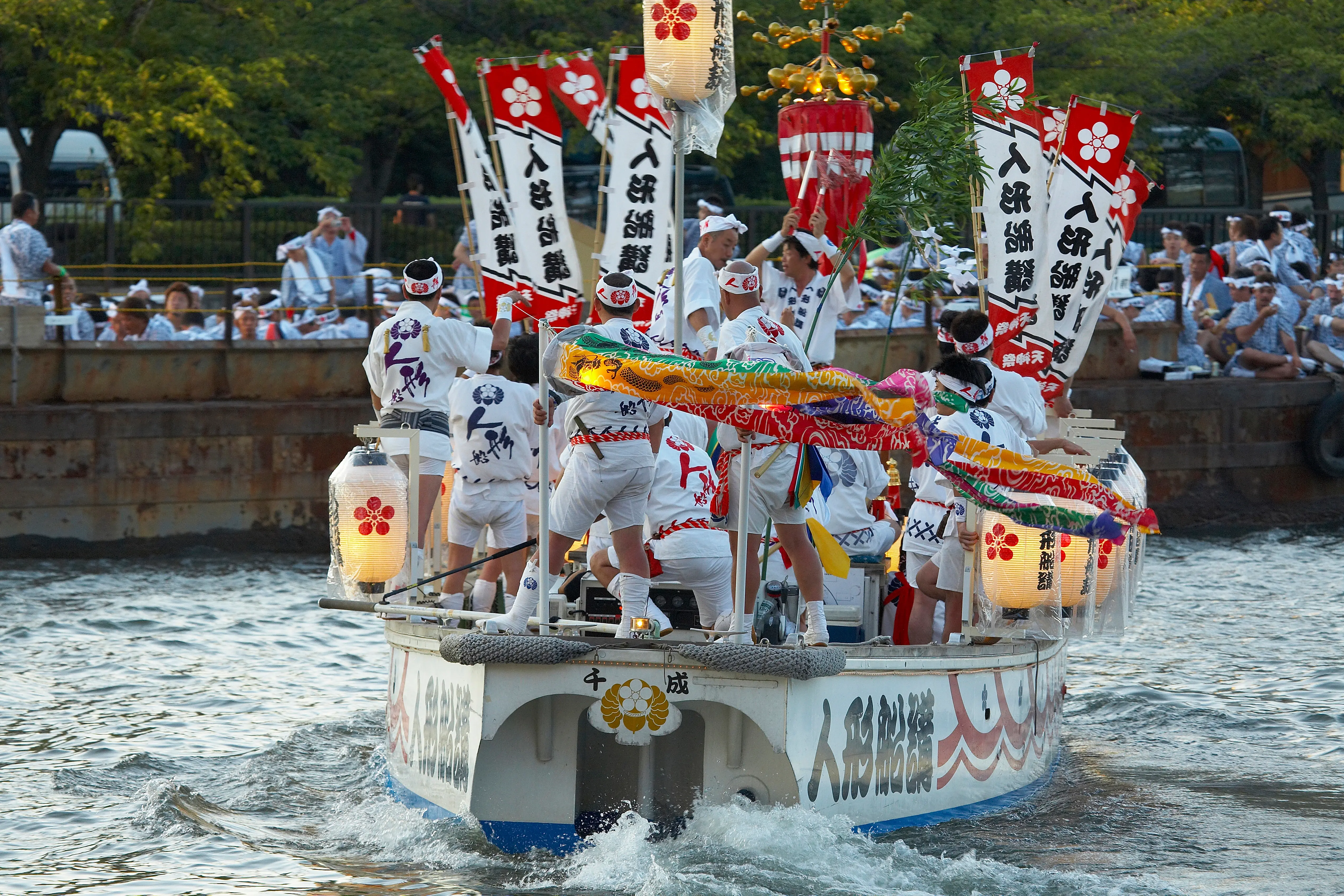
The main festival is the heart of it all. After the daytime rites, two processions take over the streets and the river through the afternoon and evening.
The land procession (rikutogyo) sets out from Osaka Tenmangu in the late afternoon, typically around 3:30 p.m. Some 3,000 people make up the line: Shinto priests, court musicians, shrine maidens, and the gohoren, the sacred palanquin carrying the spirit of Michizane. The pounding of the moyoshi-daiko drums drives the energy higher as the procession winds through the city.
The line eventually reaches the riverbank, and around 6:00 p.m. it shifts into the boat procession (funatogyo). Centered on the boat bearing the sacred palanquin, around a hundred vessels move along the Okawa River, escort boats, dondoko boats, and roofed pleasure boats among them. Bonfire-lit boats fill the water, and crews exchange greetings from boat to boat, a scene you'll see nowhere else.
The Votive Fireworks: Where Fire Meets Water
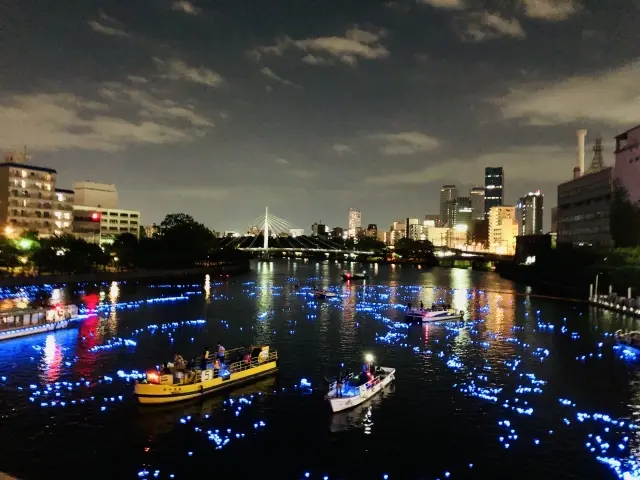
Then, after dark, the fireworks rise directly over the boats on the river. They usually start around 7:00 p.m. and launch from both banks of the Okawa, from Sakuranomiya Park to Kawasaki Park. The count runs to roughly 3,000 shells, though it varies year to year.
Here's the thing to know: the fireworks go up right beside the stretch of river where the boats are moving. Stand along the water near Sakuranomiya Park and you can take in the lanterns of the gliding boats and the fireworks overhead at the same time. That overlap is what people come for.
The signature firework is the "kobai" (red plum blossom), named for the plum that Michizane loved, blooming red against the sky. Boat lights below, fireworks above, both doubled in the river's reflection: that's the Festival of Fire and Water.
Note that the fireworks and other river events can be canceled in bad weather, so keep an eye on the forecast on the day.
Are There Paid Viewing Seats?
If you'd rather sit and watch the boat procession and fireworks in comfort, paid seating is available.
By making a donation to Osaka Tenmangu's Togyo Gyoji Preservation Society (Tenjin Matsuri Togyo Gyoji Hozon Kyokai), you're invited to a viewing seat. In recent years the tiers have run something like 30,000 yen for two seats and 60,000 yen for four (fireworks viewing is limited to those who join by a set deadline).
This is the reserved grandstand route, separate from the same-day seat below.
In 2025, there was also a same-day "special fireworks viewing seat" sold for 20,000 yen per seat (unreserved, with a boxed meal included).
Prices and how they're sold change from year to year, so check Osaka Tenmangu's official announcements once July begins for the 2026 details.
Even without a seat, you can enjoy the fireworks from the riverside parks, such as Sakuranomiya Park. Just know that spots start filling up early in the evening, so it pays to claim your place well ahead.
Getting There and Day-Of Tips
The train is the easiest way to reach Osaka Tenmangu.
Osaka Metro Tanimachi or Sakaisuji Line to Minami-morimachi Station, about a 5-minute walk from Exit 4
JR Tozai Line to Osaka-Tenmangu Station, about a 5-minute walk from Exit 7
On the main day, crowds approach a million people, and large-scale traffic restrictions go up around the area. Osaka Tenmangu posts traffic maps and station guidance on its official site, so check your route both ways before you go. Stations get especially packed once the fireworks end, so it helps to spread out across different stations or shift your timing to make the trip home smoother.
Late July in Osaka is genuinely hot and humid, and the temperature barely drops at night. Drink water often, and graze at the food stalls as you go. The stalls cluster around the riverside parks and the Tenjinbashisuji shopping street. Plenty of people come in yukata (summer kimono), too, so you can soak up the festival mood right along with them.
Other Festivals to Enjoy the Same Summer
If you're building Tenjin Matsuri into your trip, consider pairing it with Kyoto's Gion Matsuri, held the same month in July.
Catching two of Japan's three great festivals on a single trip is a genuine summer treat, and we've laid out the details in our "Gion Matsuri 2026 Complete Guide."
If you're looking for summer fireworks in Tokyo instead, our "Tokyo Fireworks 2026" guide is a good place to start. It's a different flavor from Tenjin Matsuri, where the boats and the fireworks share the same stretch of river.
This article was translated from the original Japanese with AI assistance and reviewed by our editorial team. The Japanese version is authoritative.
