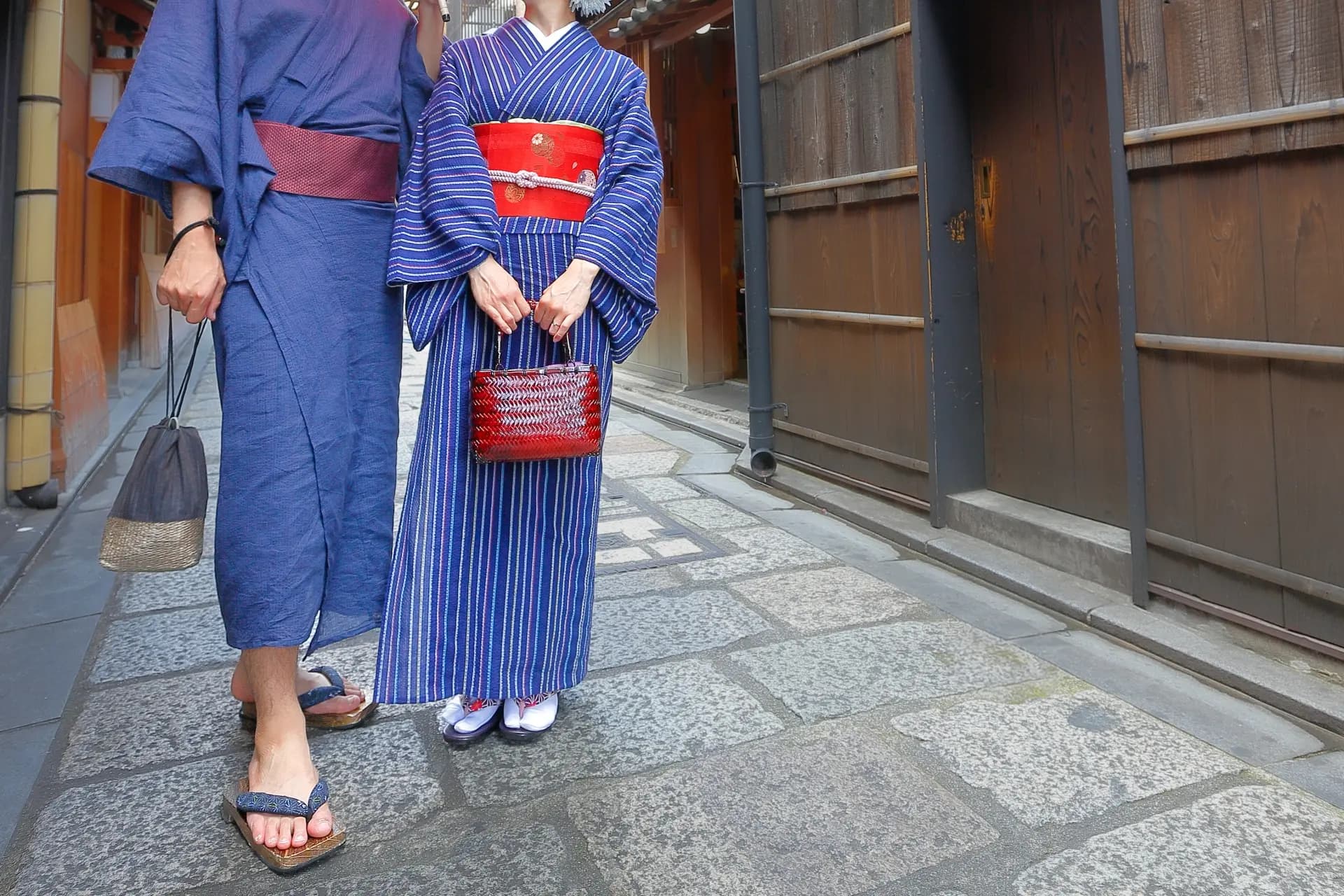
Summer in Tokyo means fireworks and festivals, and once you start spotting people in yukata heading toward the riverbanks, you know the season has truly arrived.
If you're visiting Japan in summer, slipping into a yukata at least once is one of those simple pleasures worth saying yes to.
The trouble is, the moment you decide to actually wear one, the questions pile up.
What's the difference between a yukata and a kimono? Rent or buy? And which way does that collar cross, since you've probably heard there's a wrong way?
This guide walks first-time visitors through the basics, plus the practical side of renting or buying a yukata in Tokyo.
Think of it as the starting point for a summer evening out: when you're ready for the festivals themselves, our Tokyo Summer Fireworks 2026 guide and Sumida River Fireworks 2026 guide cover the dates and access, and our Japan summer heat survival guide helps you stay cool once you're out there. First, let's get you dressed.
Yukata vs. kimono: what's the difference?
A yukata and a kimono are not the same thing. The short version: a yukata is summer casual wear, while a kimono is something you dress up in.
A yukata is a light, unlined summer garment, usually made of cotton, linen, or polyester.
The fabric breathes and soaks up sweat, so it stays surprisingly comfortable even in Tokyo's sticky heat. A kimono, by contrast, is typically lined (a style called awase) and is worn for more formal occasions. Expect a real jump in both price and formality.
They're also worn differently. With a kimono, you layer an underrobe called a nagajuban over your underclothes before putting it on. A yukata skips that step entirely; you wear it right over your underwear. That's exactly why it's the natural choice for fireworks, Bon dances, and summer festivals.
The collar rule: never wear it left over right
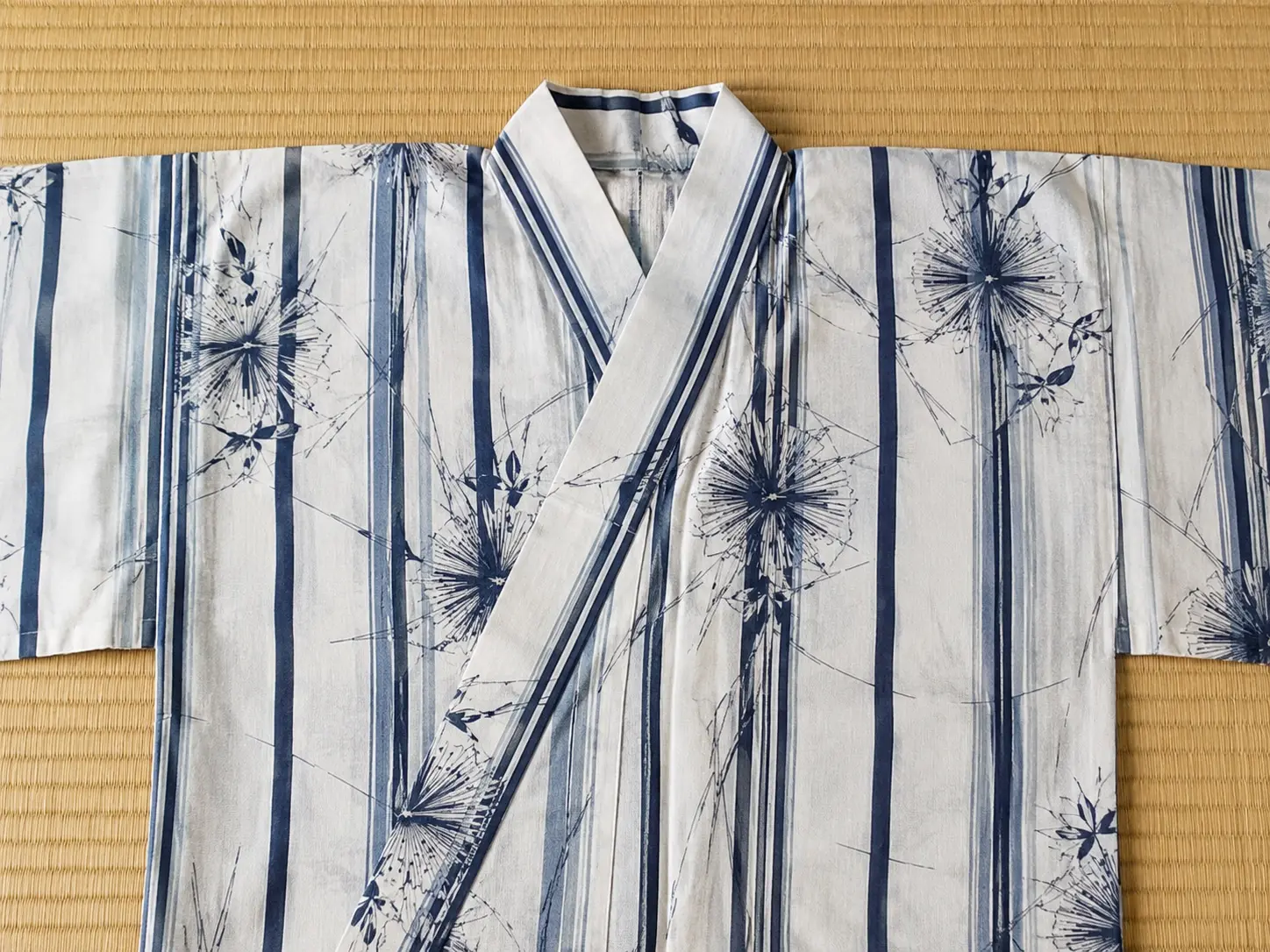
If you rent, the shop staff will handle all the fiddly parts of dressing you. But there's one thing worth committing to memory: how the collar (eri) crosses.
A yukata is always worn migimae, and this is the same for men and women. The word literally means "right-front," but that refers to the panel that goes underneath first, not the side you see on top.
In practice, your right panel goes against your body first, and the left panel wraps over it, so from your own point of view the left side of the collar ends up in front.
An easy check: if your right hand slides naturally into the front of the robe, toward your left hip, you've got it right.
The reverse, hidarimae, with the right side on top, is how the deceased are dressed, so it's considered bad luck for the living. It's a small thing, but realizing you had it backwards only after the photos are taken really stings, so give yourself a quick mirror check before you head out. If a shop dresses you, you won't need to worry at all. The obi (sash) and the length adjustments can all be left to the staff; just keep an eye on which way the collar goes, and you're set.
Renting: nearly everything's included in Asakusa, but mind the return time
For a traveler, renting is by far the easiest route. Asakusa in particular is packed with yukata and kimono rental shops, and the standard plan is an all-in-one set with almost nothing to bring: yukata, obi, geta (wooden sandals), and a small drawstring bag, with the dressing done for you.
Prices vary by shop and plan. A simple plan with dressing included starts in the 3,000-yen range, while plans with hair styling or those at popular shops run more like 5,000 to 6,500 yen. Many shops offer student and couple plans, some have English-speaking staff, and some let you return the yukata the next day. Plenty of shops carry men's yukata too, so it's easy to dress up as a couple or a whole family.
Here's the thing most people overlook when they want to wear a yukata to fireworks: the return time. Many shops close their counter in the early evening (around 5:30 p.m.), which can mean you're expected to return the yukata before the show even starts. There are two ways around this. Either choose a next-day return plan, or pick a shop that extends its return time for fireworks night. Rikawafuku (梨花和服) in Asakusa, for example, lets you keep your yukata until 9:30 p.m. for an extra 2,000 yen or so, but only on the day of the Sumida River Fireworks (July 25, 2026). Either way, book ahead, especially on fireworks days when shops fill up, and confirm "how late can I wear it?" when you reserve.
Book Yukata & Kimono Rentals in Tokyo
Buying: from a few thousand yen, and tax-free at some stores
So which should you do? If you're only wearing a yukata once on this trip, rent: the dressing, the geta, and the return are all handled for you. Buying is really worth it only if you expect to wear one several times, or you want a keepsake to take home. If that's you, the good news is that yukata are easy to find these days, starting from just a few thousand yen.
The most budget-friendly option is a discount store like Don Quijote. In summer, sets that pair a yukata with an obi often appear on the shelves at very reasonable prices. Don Quijote also offers tax-free shopping for overseas visitors if you show your passport (check each store for conditions such as a minimum purchase). Uniqlo sometimes carries yukata in summer as well, with simple, easy-to-wear designs.
If you want something a little nicer, or a keepsake you'll treasure, look into the traditional kimono shops in Asakusa or a dedicated wafuku (Japanese-clothing) store. Prices climb, but so does your choice of fabric and pattern. One tip for international shoppers: Japanese sizing can run small, so check the fit before you buy. And since specific prices shift with the season and the store, confirm in person.
Geta, accessories, and staying comfortable in the heat
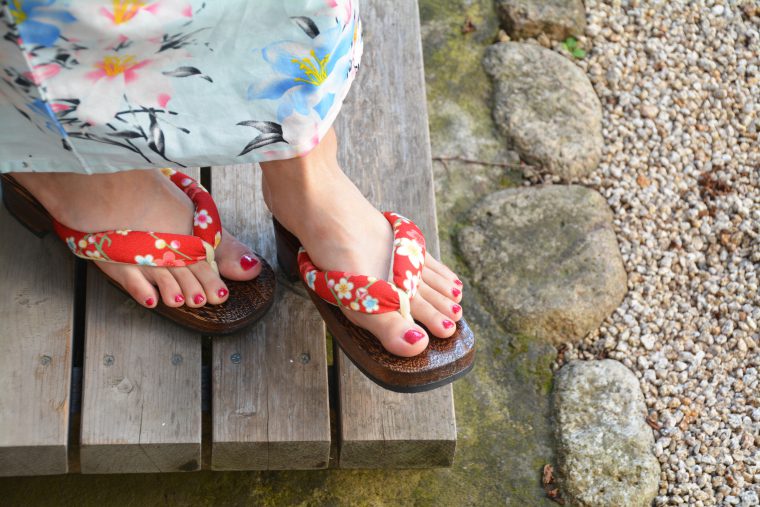
For footwear, geta (wooden sandals) are the classic match for a yukata. Going barefoot is the usual approach, but it isn't a hard rule; you can pair them with tabi (split-toe socks) if you prefer. If bare feet aren't your thing, there's no need to force it.
That said, unfamiliar geta tend to rub against the thong (hanao) and chafe your feet.
When you walk, take slightly smaller steps than usual, and start slow, both to avoid stepping on your hem and to get used to the sandals.
When you sit, perch toward the front of the chair and smooth your hem with one hand; it keeps you looking graceful, too.
For a long evening on your feet at the fireworks, tucking a few bandages into your bag is a smart move.
The trickier part of a summer yukata is the heat. The garment itself is cool, but standing for hours in a packed crowd will still make you sweat.
Bring a hand fan or folding fan, a towel, and drink water often. A compact umbrella is worth packing too, since summer evenings can bring sudden downpours.
Food stalls are frequently cash-only, so keep some coins on hand. For more on beating the heat, our Japan summer heat survival guide goes into detail.
Tokyo's 2026 fireworks worth dressing up for
Once you're ready, all that's left is to go. Here are the main fireworks displays around Tokyo in summer 2026 where a yukata feels right at home.
Sumida River Fireworks: Sat, July 25 / Asakusa, ~20,000 shells. In the home of yukata rentals itself, so you can get dressed steps from the river.
Tachikawa Festival, Showa Kinen Park Fireworks: Sat, July 25 / Tachikawa. The same day as Sumida, and usually a calmer alternative if you'd rather skip the biggest crowds.
Katsushika Noryo Fireworks: Tue, July 28 / Shibamata.
Edogawa-ku Fireworks: Sat, August 1 / Edogawa riverside, ~14,000 shells.
Jingu Gaien Fireworks: Sat, August 8 / Meiji Jingu Gaien, in central Tokyo.
For venue access, free viewing spots, and tips on dodging the crowds, see our Sumida River Fireworks 2026 guide and Tokyo Summer Fireworks 2026 roundup.
Since you'll mostly be getting around by train, first-timers may want to skim our Japan train etiquette guide too. Here's to a summer evening in a yukata that you'll remember for a long time.
This article was translated from the original Japanese with AI assistance and reviewed by our editorial team. The Japanese version is authoritative.

