
In early July, Kappabashi Hondori—the shopping street that runs from the western side of Asakusa toward Ueno, cutting across the Kappabashi kitchenware district—disappears under a canopy of colorful Tanabata decorations. The Shitamachi Tanabata Festival (Shitamachi Tanabata Matsuri) turns roughly 1.2 kilometers of old-town Tokyo into a celebration of giant bamboo displays, parades, street performances, and food stalls. In 2026 it runs from Friday, July 3 to Tuesday, July 7—its 39th edition.
Walk the street and you'll pass wish cards written by local schoolchildren, handmade displays from the neighborhood shops, and dramatic kusudama paper globes swaying overhead. On the main weekend, the road becomes pedestrian-only, and parades and folk dances like Awa Odori fill it with the easygoing spirit of Tokyo's shitamachi (old-town districts).
This guide covers the 2026 dates and location, what Tanabata actually celebrates, the festival's highlights, how to write your own wish, and how to pair a visit with Kappabashi—Tokyo's famous kitchenware district—drawing on official information from Taito City and the Shitamachi Tanabata Festival.
Note: The parade lineup and event times can change from year to year. Check the latest schedule from Taito City or the organizing shopping-street association before you go.
When It Happens in 2026: Dates & Location
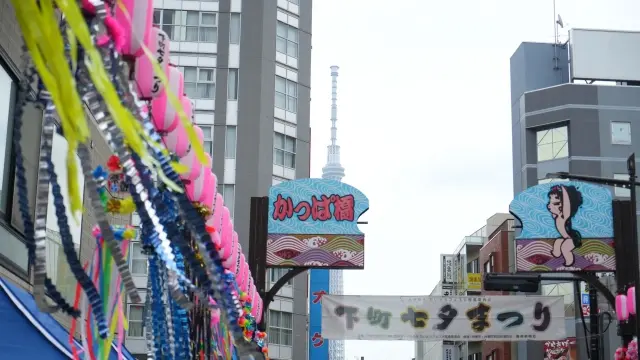
In 2026, the Tanabata decorations are up for five days, from Friday, July 3 to Tuesday, July 7. The main events—food stalls, parades, and performances—take place over the weekend of Saturday, July 4 and Sunday, July 5, roughly 10 a.m. to 7 p.m. The festival is timed around Tanabata itself, which falls on July 7.
The venue is Kappabashi Hondori in Taito Ward, Tokyo: a straight, roughly 1.2 km shopping street running from Showa-dori to Kokusai-dori. On the main Saturday and Sunday, the street goes car-free, so you can stroll beneath the swaying decorations at your own pace.
What Is Tanabata?
Tanabata, the “Star Festival,” comes from a legend in which two lovers—Orihime and Hikoboshi, represented by the stars Vega and Altair—are allowed to meet across the Milky Way just once a year.
It's celebrated every July 7 (in some regions, August 7), and people write wishes on narrow paper strips called tanzaku and tie them to bamboo branches.
That simple ritual—write a wish, hang it on the bamboo—is something anyone can join, kids and travelers alike. The Shitamachi Tanabata Festival is one of the few large-scale Tanabata events in Tokyo where an entire shopping district celebrates together.
Highlights: Decorations, Parades & Stalls
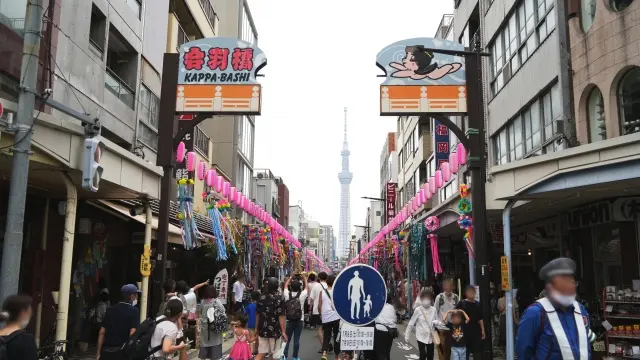
The biggest draw is the sheer wall of color overhead. Local shops, schools, and businesses put together eye-catching bamboo decorations and kusudama globes, and they stretch the full 1.2 km—just walking the street feels festive.
On the main weekend, stalls run by local merchants line the road with festival food like yakisoba and shaved ice. Brass bands, parades by local schools and community groups, and street performances such as Awa Odori and Sado Okesa folk dances make their way down the street, wrapping the whole neighborhood in old-town energy. (The performers and program vary from year to year.)
Write Your Own Wish
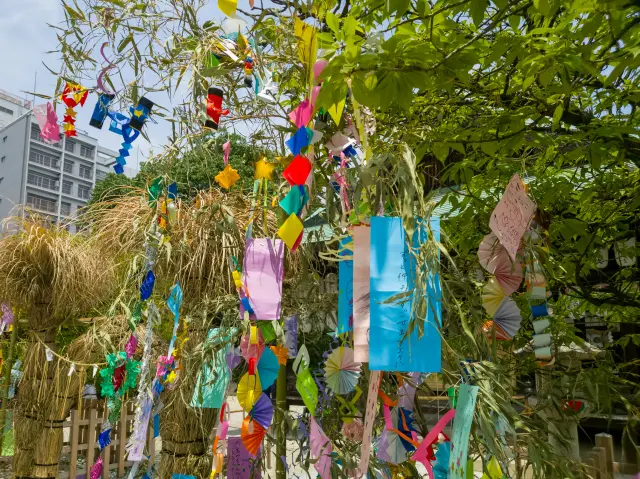
Throughout the festival, bamboo poles are set up at points along the shopping street, where you can usually write a wish on a tanzaku and tie it to the bamboo.
It makes a lovely travel memory—write yours in English or Japanese and send it up toward the Milky Way. Paper strips and pens are usually provided on-site, and joining in is free.
Pair It with Kappabashi
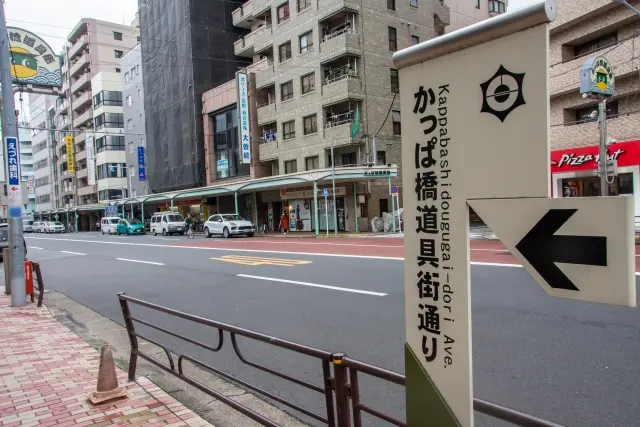
Kappabashi Hondori sits right next to Kappabashi Kitchenware Street, the district famous for its specialty shops. If you're hunting for Japanese knives, uncannily realistic plastic food samples, or beautiful tableware, it's well worth a browse alongside the festival.
The venue is also close to Asakusa, so you can easily combine it with a visit to Senso-ji Temple and a snack crawl along Nakamise Street. Ueno (Ameyoko market and Ueno Park) is within walking distance too, making an Ueno–Kappabashi–Asakusa early-summer stroll a great way to round out the day.
Crowds, Heat & Visiting Tips
You can see the decorations any time during the festival, but the stalls, parades, and performances are concentrated on the main Saturday and Sunday. Come on the weekend for the buzz, or on a weekday afternoon if you'd rather take in the decorations at a calmer pace. Because the main events run until around 7 p.m., you can catch the lanterns and decorations in the early evening, when they take on a softer, gentler feel than they do by day.
Early July in Tokyo is hot and humid, often right around the end of the rainy season. You'll work up a sweat walking the street, so bring a hat or parasol, carry water, and stay hydrated. For where to pick up summer cooling gear, see our Japan summer heat survival guide.

Getting There
The closest entrance is by the ground-level exit of Asakusa Station on the Tsukuba Express—about a 3-minute walk—which brings you out at the Asakusa-side entrance along Kokusai-dori.
Otherwise, it's about a 5-minute walk from Tawaramachi or Inaricho stations on the Tokyo Metro Ginza Line, or from Ueno (JR) and Iriya (Tokyo Metro Hibiya Line). You can join the street from either the Ueno or the Asakusa end. If you're hopping on and off trains, a Suica or PASMO IC card makes getting around much smoother.
You Might Also Like


This article was translated from the original Japanese with AI assistance and reviewed by our editorial team. The Japanese version is authoritative.