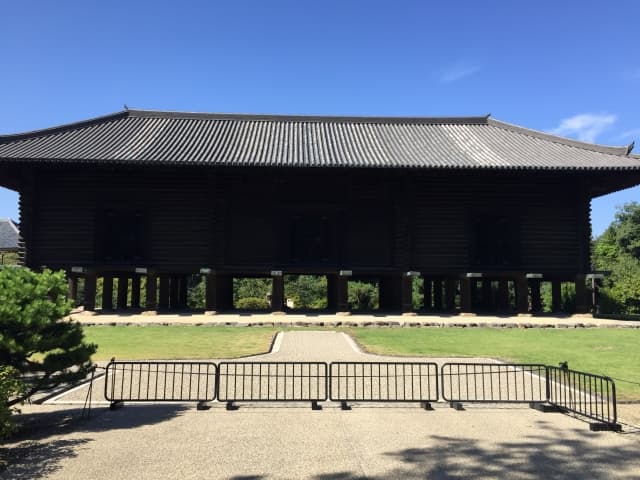
Once a year, the Nara National Museum puts the 8th-century imperial treasures of the Shosoin Repository on public display. The 78th Shosoin Exhibition (Shosoin-ten) runs from October 24 to November 9, 2026 — just 17 days, open every single day.
In 2026 you'll generally need to book a timed-entry ticket in advance rather than rely on buying one at the door. So it pays to understand how the tickets work before you go. This guide walks through the dates, the ticket types and prices, the cheaper evening "Late" ticket, and how to reach the museum.
Book a timed-entry ticket in advance for the day you want to go. Same-day tickets are sold only when a time slot still has space.
Dates and opening hours
The exhibition runs from October 24 (Sat) to November 9 (Mon), 2026, with no closing days.
Opening hours are 8:00 a.m. to 6:00 p.m., extended until 8:00 p.m. on Fridays, Saturdays, Sundays, and public holidays. Last entry is 60 minutes before closing, so watch the cutoff if you're arriving late.
Item | Details |
|---|---|
Dates | October 24 – November 9, 2026 |
Closing days | None (open daily) |
Hours | 8:00 a. |
Extended hours | Until 8:00 p. |
Last entry | 60 minutes before closing |
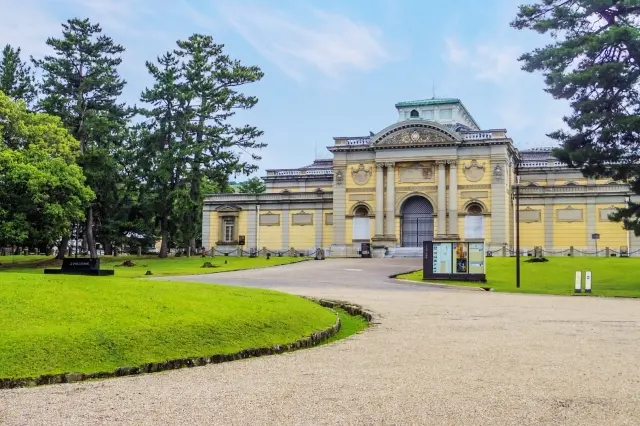
Venue | Nara National Museum, East & West Wings |
How the timed tickets work
For 2026, admission is generally by advance timed-entry ticket: you choose the day and an entry time slot, and sales for each slot end once it fills up. Advance sales opened at 10:00 a.m. on September 4, 2026.
You can buy through Lawson Ticket (available at Lawson and Ministop stores), the exhibition's official online ticket site, the Bijutsuten Navi ticket app, and CN Playguide; you can buy up to eight tickets in a single purchase. The official ticket page has the latest availability.
Admission costs the same whether you buy in advance or on the day:
- Adults: ¥2,000
- High school and university students: ¥1,500
- Elementary and junior high students: ¥500
Any remaining same-day tickets are sold at a special counter on the museum grounds, only for slots that haven't filled, and carry a ¥200 issuing fee per ticket. If your date is fixed, secure an advance timed ticket — that way you skip the same-day counter altogether.
The evening "Late" ticket (¥500 off)
Discounted tickets for later time slots are sold as the "Late" ticket (previously called the Autumn Late ticket). It applies to slots from 4:00 p.m. on Monday through Thursday, and from 5:00 p.m. on Friday, Saturday, Sunday, and holidays. Prices fall to ¥1,500 for adults and ¥1,000 for students, and admission is free for elementary and junior high children — ¥500 off the standard adult rate.
If you want an unhurried evening, aim for a Friday, Saturday, Sunday, or public holiday, when the museum stays open until 8:00 p.m. On Monday through Thursday, however, the museum closes at 6:00 p.m. and last entry is 5:00 p.m., so a Late ticket only lets you enter between 4:00 and 5:00 p.m. — a one-hour entry window. Keep that cutoff in mind if you have your heart set on a weekday evening.
Nara evenings in late October and November get cold, so bring a warm layer if you're coming for a Late slot.
This year's highlights
Sixty treasures go on display in 2026, eleven of them shown for the very first time.
The two pieces drawing the most attention are the Shikkohei (漆胡瓶), a Persian-style ewer, and the Kogebachiru-no-kishi (紅牙撥鏤碁子), a set of go stones carved from ivory dyed red. Other exhibits, drawn from the North, Middle, and South storehouses of the repository, include a gigaku (masked dance-drama) mask known as the Suikoou (酔胡王) and a glass bottle called the Hakururi-no-hei (白瑠璃瓶).
The lineup changes every year, so once these pieces rotate back into the repository they won't be out again for a long time.
Getting there
The Nara National Museum sits within Nara Park. From Kintetsu Nara Station, it is about a 15-minute walk east along Noborioji street.
By bus from JR Nara or Kintetsu Nara Station, take the city loop line (outer route) and get off at "Himuro-jinja / Kokuritsu Hakubutsukan," right in front of the museum. Todaiji, Kofukuji, and Kasuga Taisha all stand nearby, so it is easy to combine the exhibition with a walk through Nara Park.
Late October through November is also peak foliage season across Kansai — if you're building an autumn itinerary, see our guide to Japan's autumn leaves in 2026 to pair Nara with the best color elsewhere.
This article was translated from the original Japanese with AI assistance and reviewed by our editorial team. The Japanese version is authoritative.